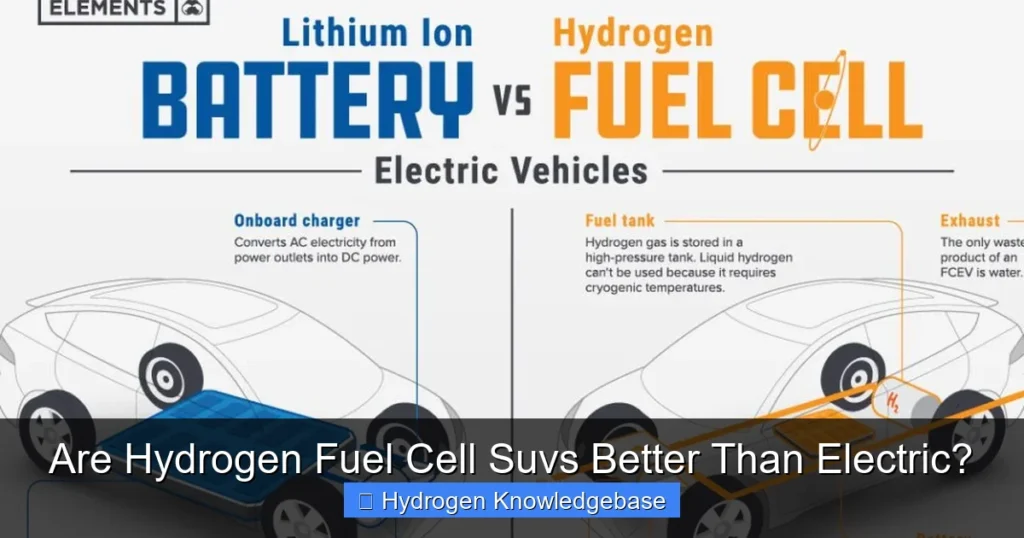
Hydrogen fuel cell SUVs and electric SUVs each offer unique advantages for eco-conscious drivers. While electric vehicles dominate the market today, hydrogen-powered models promise faster refueling and longer range—but face infrastructure and cost challenges.
Key Takeaways
- Refueling Speed: Hydrogen fuel cell SUVs can refuel in 3–5 minutes, similar to gasoline vehicles, while most electric SUVs take 30+ minutes for a fast charge.
- Range Comparison: Many hydrogen SUVs offer 300–400 miles per tank, rivaling top electric models, but real-world efficiency varies by driving conditions.
- Infrastructure Limitations: Electric charging stations are widespread, but hydrogen refueling stations are rare, mostly limited to California and parts of Europe.
- Environmental Impact: Both produce zero tailpipe emissions, but the sustainability of hydrogen depends on how it’s produced—green hydrogen is clean, gray hydrogen is not.
- Vehicle Cost and Availability: Electric SUVs are more affordable and widely available; hydrogen SUVs are expensive and only offered by a few manufacturers.
- Maintenance and Longevity: Electric SUVs have fewer moving parts and lower maintenance costs; hydrogen systems are complex and may require specialized servicing.
- Future Outlook: Electric SUVs are leading the current transition, but hydrogen could gain ground in heavy transport and long-haul applications.
Quick Answers to Common Questions
Are hydrogen fuel cell SUVs better than electric?
Not currently. Electric SUVs are more affordable, widely available, and supported by a robust charging network. Hydrogen SUVs offer faster refueling but face infrastructure and cost challenges.
How long does it take to refuel a hydrogen SUV?
About 3–5 minutes—similar to filling up a gas tank. This is much faster than charging most electric SUVs.
Do hydrogen SUVs produce emissions?
No tailpipe emissions—only water vapor. However, most hydrogen is produced from natural gas, which does emit CO₂.
Can I charge an electric SUV at home?
Yes. Most electric SUVs can be charged using a standard wall outlet or a dedicated Level 2 home charger for faster results.
Where can I refuel a hydrogen SUV?
Mostly in California, with a few stations in Hawaii and the Northeast. Outside the U.S., availability is limited to parts of Europe and Asia.
📑 Table of Contents
Introduction: The Green SUV Dilemma
So you’re ready to go green with your next SUV—congratulations! You’re not just thinking about style and space; you’re also considering the planet. But now you’re stuck at a crossroads: should you go full electric or take a chance on hydrogen fuel cell technology?
It’s a fair question. Electric SUVs like the Tesla Model Y, Ford Mustang Mach-E, and Hyundai Ioniq 5 are everywhere these days. They’re sleek, quiet, and packed with tech. But then you hear about hydrogen fuel cell SUVs—vehicles that emit only water vapor and can be refueled in minutes. Sounds futuristic, right?
Well, it kind of is. Hydrogen fuel cell vehicles (FCEVs) have been around for years, but they’ve never quite broken into the mainstream like their battery-powered cousins. Yet, as climate concerns grow and automakers push innovation, hydrogen is making a quiet comeback—especially in the SUV segment.
What Are Hydrogen Fuel Cell SUVs?
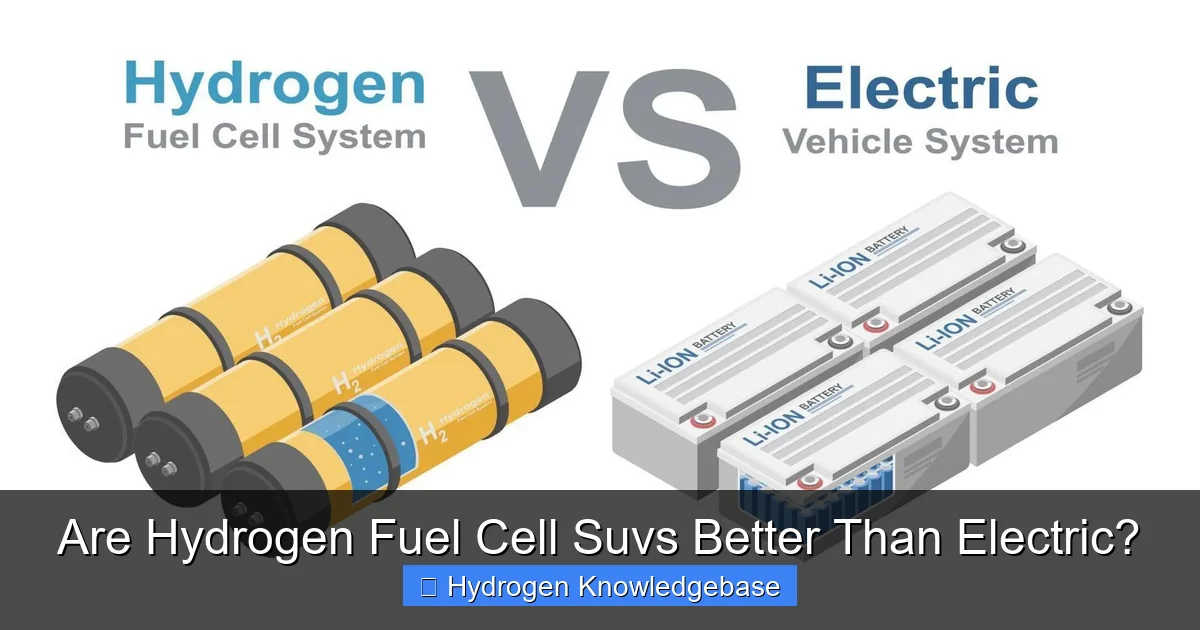
Visual guide about Are Hydrogen Fuel Cell Suvs Better Than Electric?
Image source: static.vecteezy.com
Before we dive into the “better or not” debate, let’s make sure we’re on the same page about what hydrogen fuel cell SUVs actually are.
At their core, hydrogen fuel cell SUVs use hydrogen gas stored in high-pressure tanks. That hydrogen is fed into a fuel cell stack, where it reacts with oxygen from the air to produce electricity. This electricity powers an electric motor—just like in a battery-electric vehicle (BEV)—but without the need for a large, heavy battery pack.
The only byproduct? Water vapor. That’s right—no carbon dioxide, no nitrogen oxides, just H₂O. It’s a clean process, at least at the tailpipe.
How Do They Work?
Imagine your SUV has a mini power plant under the hood. Instead of burning fuel, it uses chemistry to generate power. Here’s the simple breakdown:
– Hydrogen gas is pumped into the vehicle’s tank (usually at 10,000 psi).
– The hydrogen travels to the fuel cell stack.
– Inside the stack, hydrogen atoms are split into protons and electrons.
– The electrons create an electric current that powers the motor.
– The protons pass through a membrane and combine with oxygen to form water, which drips out as exhaust.
It’s a closed-loop system that’s silent, efficient, and emissions-free during operation.
Current Hydrogen SUV Models
As of 2024, only a handful of hydrogen fuel cell SUVs are available to consumers:
– Toyota Mirai (sedan, but SUV-like in tech and size)
– Hyundai Nexo
– BMW iX5 Hydrogen (limited pilot program)
These vehicles are sleek, modern, and offer luxury features comparable to high-end electric SUVs. The Hyundai Nexo, for example, boasts a range of over 380 miles and can refuel in under 5 minutes.
But availability is a big hurdle. Most hydrogen SUVs are only sold in select markets—primarily California, where hydrogen stations are concentrated. In other parts of the U.S. or the world, finding a place to refuel is nearly impossible.
Electric SUVs: The Dominant Force
Now let’s talk about the elephant in the room: electric SUVs. These are the clear leaders in the zero-emission vehicle race.
Electric SUVs run entirely on electricity stored in large lithium-ion batteries. They plug into charging stations—at home, at work, or on the road—and draw power to recharge. When you press the accelerator, that stored energy powers an electric motor, propelling the vehicle forward.
Popular Electric SUV Models
The market is flooded with great options:
– Tesla Model Y – Over 330 miles of range, Supercharger network access, and cutting-edge autopilot features.
– Ford Mustang Mach-E – Sporty design, up to 314 miles of range, and strong performance.
– Hyundai Ioniq 5 – Ultra-fast charging (10–80% in 18 minutes), retro-futuristic style, and 303-mile range.
– Kia EV6 – Similar to the Ioniq 5, with sporty handling and rapid charging.
– Volkswagen ID.4 – Affordable, practical, and eligible for U.S. tax credits.
These vehicles aren’t just eco-friendly—they’re also packed with tech, safety features, and comfort. And because they’re so popular, automakers are constantly improving them.
Charging Infrastructure: A Major Advantage
One of the biggest reasons electric SUVs are winning is infrastructure. There are over 150,000 public charging ports in the U.S. alone, with thousands more added every year. Tesla’s Supercharger network alone has over 50,000 connectors globally.
You can charge at home overnight, at work during the day, or at shopping centers, hotels, and rest stops. Apps like PlugShare and ChargePoint make it easy to find nearby stations.
Compare that to hydrogen: as of 2024, there are fewer than 100 hydrogen refueling stations in the entire United States—and nearly all are in California. That makes long-distance travel in a hydrogen SUV nearly impossible outside the West Coast.
Performance and Range: Head-to-Head
So, how do hydrogen fuel cell SUVs stack up against electric SUVs when it comes to real-world performance?
Let’s break it down.
Refueling vs. Recharging Time
This is where hydrogen has a clear edge.
– Hydrogen SUVs: Refuel in 3–5 minutes. Just pull up, connect the nozzle, and you’re back on the road—just like filling up gas.
– Electric SUVs: Even with fast DC charging, most take 20–40 minutes to go from 10% to 80%. Home charging is even slower—overnight for a full charge.
For road trips or busy families, that time difference matters. Imagine needing to charge every 200 miles versus refueling in the time it takes to grab a coffee.
Driving Range
Both types of SUVs offer impressive range, but there are nuances.
– Hydrogen SUVs: The Hyundai Nexo offers up to 380 miles. The Toyota Mirai gets around 400 miles. These numbers are competitive with top electric models.
– Electric SUVs: The Tesla Model Y Long Range hits 330 miles. The Lucid Air (a sedan, but relevant) claims over 500 miles. Most electric SUVs average 250–320 miles.
However, range can vary. Cold weather reduces battery efficiency in electric SUVs by 20–40%. Hydrogen SUVs also lose some range in extreme temperatures, but not as drastically.
Acceleration and Driving Experience
Both types of SUVs deliver smooth, quiet rides with instant torque—a hallmark of electric motors.
Electric SUVs often have the edge in acceleration. The Tesla Model Y Performance can go 0–60 mph in under 4 seconds. The Ford Mustang Mach-E GT isn’t far behind.
Hydrogen SUVs are no slouches, but they’re generally tuned for efficiency over sportiness. The Hyundai Nexo, for example, takes about 8.5 seconds to reach 60 mph—respectable, but not thrilling.
That said, the driving experience is still premium: quiet cabins, responsive handling, and advanced driver-assist features.
Environmental Impact: Beyond the Tailpipe
Here’s where things get complicated. Both hydrogen and electric SUVs produce zero emissions while driving. But what about the bigger picture?
Well-to-Wheel Emissions
The environmental benefit depends on how the energy is produced.
– Electric SUVs: If charged with renewable energy (solar, wind, hydro), their carbon footprint is extremely low. Even when powered by the grid (which includes fossil fuels), they’re still cleaner than gasoline vehicles over their lifetime.
– Hydrogen SUVs: This is the catch. Most hydrogen today is “gray hydrogen”—produced from natural gas through steam methane reforming. This process emits CO₂. Only about 1% of hydrogen is “green hydrogen,” made using renewable energy to split water via electrolysis.
So unless the hydrogen is green, the environmental advantage shrinks.
Manufacturing and Battery Concerns
Electric SUVs rely on large lithium-ion batteries, which require mining for lithium, cobalt, and nickel. These processes can be environmentally damaging and raise ethical concerns.
Hydrogen SUVs use smaller batteries (for auxiliary systems) and rely on fuel cells with platinum catalysts. Platinum mining also has environmental impacts, but the overall material footprint is generally lower than that of large EV batteries.
However, hydrogen production, storage, and transport are energy-intensive. Compressing hydrogen to 10,000 psi requires significant energy, and leaks can contribute to indirect warming effects.
Long-Term Sustainability
The future looks brighter for both technologies. As renewable energy grows, green hydrogen production is scaling up. Countries like Germany, Japan, and Australia are investing heavily in hydrogen infrastructure.
Meanwhile, battery recycling and solid-state batteries promise to reduce the environmental toll of electric vehicles.
In the long run, both paths could lead to truly sustainable transportation—but we’re not there yet.
Cost and Ownership Experience
Let’s talk money. Because let’s face it—no matter how green a car is, it has to make financial sense.
Upfront Cost
Hydrogen fuel cell SUVs are expensive.
– The Hyundai Nexo starts around $60,000.
– The Toyota Mirai is similar, though Toyota often includes free hydrogen for three years.
– The BMW iX5 Hydrogen isn’t even sold to the public—it’s a lease-only pilot program.
Electric SUVs vary more widely:
– The Tesla Model Y starts around $50,000.
– The Ford Mustang Mach-E begins at $43,000.
– The Volkswagen ID.4 starts under $40,000 (and qualifies for U.S. tax credits).
So while some electric SUVs are price-competitive, hydrogen models are consistently at the high end.
Fuel and Maintenance Costs
Here’s a shocker: hydrogen fuel is expensive.
– As of 2024, hydrogen costs about $16 per kilogram in California.
– A full tank (about 5–6 kg) costs $80–$100.
– That gives you 300–400 miles—so roughly $0.20–$0.25 per mile.
Compare that to electricity:
– Home charging costs about $0.15 per kWh.
– Most electric SUVs use 30–40 kWh per 100 miles.
– That’s $4.50–$6.00 per 100 miles—or $0.045–$0.06 per mile.
Even public fast charging (at $0.30–$0.40 per kWh) is cheaper than hydrogen.
Maintenance is another win for electric SUVs. They have fewer moving parts—no oil changes, no exhaust systems, no complex transmissions. Brake wear is reduced due to regenerative braking.
Hydrogen SUVs have electric motors too, but the fuel cell system is complex. Repairs require specialized technicians, and parts can be costly. Plus, hydrogen tanks must be inspected and recertified every few years—adding to long-term costs.
Resale Value and Incentives
Electric SUVs hold their value well, especially Tesla models. Federal and state incentives (like the $7,500 U.S. tax credit) make them even more attractive.
Hydrogen SUVs have limited resale markets and fewer incentives. While California offers rebates of up to $5,000 for hydrogen vehicles, the overall ownership cost remains high.
The Future: Which Technology Will Win?
So, are hydrogen fuel cell SUVs better than electric?
The short answer: not yet.
Electric SUVs are winning on almost every practical front: cost, availability, infrastructure, and technology maturity. They’re the clear choice for most drivers today.
But hydrogen isn’t dead. It has a role to play—especially in heavy-duty transport, long-haul trucking, and aviation, where batteries are too heavy and charging too slow.
For SUVs, hydrogen could make sense in regions with strong hydrogen infrastructure and abundant renewable energy. Imagine a future where you drive from San Francisco to Seattle, refueling hydrogen in minutes at stations powered by wind and solar.
But that future is still years away.
What Needs to Happen for Hydrogen to Succeed?
– More refueling stations: Governments and private companies need to invest in a national hydrogen network.
– Cheaper green hydrogen: Electrolysis must become more efficient and scalable.
– Lower vehicle costs: Mass production and technological advances could bring prices down.
– Policy support: Incentives and regulations favoring zero-emission vehicles will help both technologies, but hydrogen needs a bigger push.
Until then, electric SUVs remain the smarter, more practical choice for most people.
Conclusion: Choose Based on Your Needs
At the end of the day, the “better” SUV depends on your lifestyle, location, and priorities.
If you want:
– Fast refueling and long range → Hydrogen might appeal to you.
– Lower costs, widespread charging, and proven tech → Go electric.
For most drivers, electric SUVs are the clear winner today. They’re affordable, convenient, and constantly improving. Hydrogen fuel cell SUVs are impressive machines with real potential—but they’re still a niche option.
The future of clean transportation isn’t a battle between hydrogen and electric. It’s likely a mix of both, tailored to different uses. For now, though, if you’re buying an SUV in 2024, electric is the way to go.
But keep an eye on hydrogen. It might just surprise us.
Frequently Asked Questions
Are hydrogen fuel cell SUVs safe?
Yes, they are designed with multiple safety systems. Hydrogen tanks are rigorously tested and built to withstand crashes, fires, and high pressure.
How much does it cost to drive a hydrogen SUV per mile?
About $0.20–$0.25 per mile, which is significantly more than electric SUVs at $0.045–$0.06 per mile.
Can hydrogen SUVs drive in cold weather?
Yes, but range may decrease slightly in extreme cold. However, they generally perform better in winter than battery-electric vehicles.
Are there tax incentives for hydrogen SUVs?
Some states, like California, offer rebates up to $5,000. Federal incentives are limited compared to electric vehicles.
Will hydrogen SUVs replace electric SUVs?
Unlikely in the near term. Electric SUVs dominate the market, but hydrogen may complement them in specific applications like long-haul transport.
How long do hydrogen fuel cells last?
Most manufacturers expect fuel cells to last 10–15 years or 150,000–200,000 miles, similar to traditional engines.