Hydrogen SUVs and electric SUVs both aim to cut emissions, but they take very different paths. In 2025, electric SUVs lead in availability, infrastructure, and affordability, while hydrogen SUVs shine in long-range and fast refueling—but only where stations exist.
Key Takeaways
- Electric SUVs dominate the market in 2025: With over 50 models available globally, they offer better affordability, home charging, and widespread public networks.
- Hydrogen SUVs refuel faster: A 5-minute fill-up beats 30+ minutes for fast EV charging, ideal for long trips and commercial use.
- Range anxiety is lower for hydrogen SUVs: Most hydrogen models offer 300–400 miles per tank, matching or exceeding many EVs.
- Hydrogen infrastructure remains limited: Fewer than 200 public hydrogen stations exist in the U.S., mostly in California, making long-distance travel difficult.
- Electric SUVs are more energy-efficient: EVs convert 77–80% of grid energy to power, while hydrogen vehicles use only 25–35% due to production and conversion losses.
- Total cost of ownership favors EVs: Lower fuel, maintenance, and purchase costs make electric SUVs more economical over time.
- Environmental impact depends on energy source: Green hydrogen (from renewables) is clean, but most hydrogen today comes from natural gas, reducing its eco-benefits.
Quick Answers to Common Questions
Are hydrogen SUVs better than electric SUVs in 2025?
Not for most drivers. Electric SUVs are more affordable, widely available, and supported by better infrastructure. Hydrogen SUVs offer faster refueling and longer range but are limited by high costs and few stations.
How long does it take to refuel a hydrogen SUV?
About 3 to 7 minutes—similar to filling a gas car. This is much faster than charging an electric SUV, which takes 20–30 minutes at best.
Can I charge an electric SUV at home?
Yes. Most electric SUV owners charge overnight using a Level 2 home charger. Hydrogen SUVs cannot be refueled at home.
Are hydrogen SUVs really zero-emission?
Only at the tailpipe. Most hydrogen is made from natural gas, which creates emissions. True zero emissions require green hydrogen from renewable energy.
Which is cheaper to own: hydrogen or electric SUV?
Electric SUVs are far cheaper. They cost less to buy, fuel, and maintain over time. Hydrogen fuel alone can cost 4x more per mile.
📑 Table of Contents
- Are Hydrogen SUVs Better Than Electric SUVs in 2025?
- How Hydrogen and Electric SUVs Work
- Range and Refueling: Speed vs. Convenience
- Cost Comparison: Purchase, Fuel, and Maintenance
- Environmental Impact: Which Is Greener?
- Real-World Usability and Market Trends in 2025
- Conclusion: Which SUV Is Right for You?
Are Hydrogen SUVs Better Than Electric SUVs in 2025?
The race toward cleaner transportation is heating up, and in 2025, two technologies are leading the charge: battery-electric SUVs and hydrogen fuel cell SUVs. Both promise zero tailpipe emissions, but they work in very different ways. Electric SUVs store energy in large batteries and plug into the grid. Hydrogen SUVs generate electricity on board using hydrogen gas and emit only water vapor.
So, which is better? The answer isn’t black and white. It depends on your driving habits, location, budget, and environmental priorities. While electric SUVs have surged ahead in popularity and infrastructure, hydrogen SUVs are quietly gaining ground in niche markets—especially for long-haul travel and fleet operations.
This article breaks down the key differences between hydrogen and electric SUVs in 2025. We’ll compare range, refueling time, cost, environmental impact, and real-world usability. By the end, you’ll have a clear picture of which technology might suit your lifestyle—and whether hydrogen SUVs are truly ready to compete with their electric rivals.
How Hydrogen and Electric SUVs Work

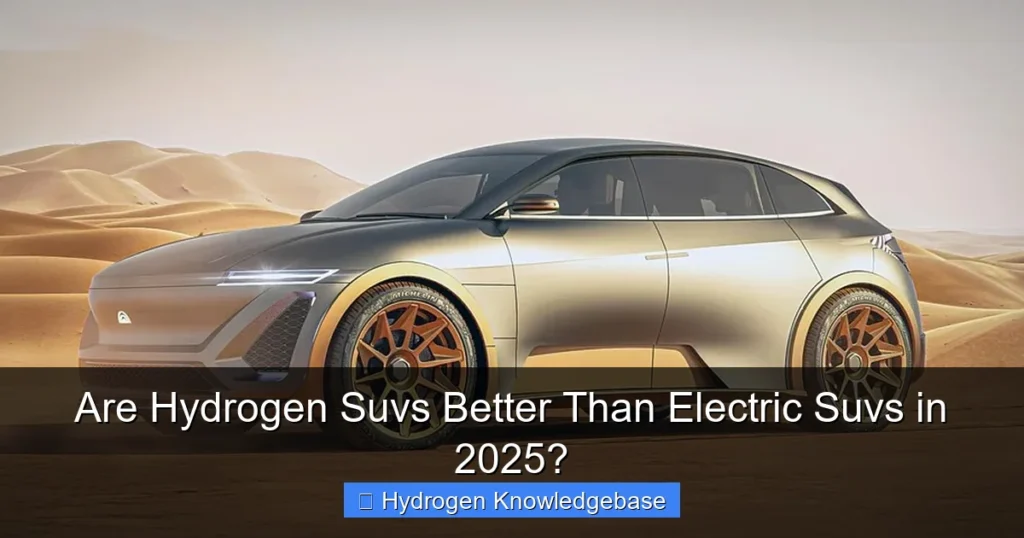
Visual guide about Are Hydrogen Suvs Better Than Electric Suvs in 2025?
Image source: i.ytimg.com
To understand which SUV type is better, it helps to know how each one powers its wheels.
Electric SUVs: Batteries and Charging
Electric SUVs use rechargeable lithium-ion batteries to store electricity. When you press the accelerator, the battery sends power to an electric motor, which turns the wheels. These vehicles are charged by plugging into an electrical outlet or charging station. Home charging is common, using Level 1 (standard outlet) or Level 2 (240V) chargers. Public fast chargers (DC fast charging) can add 200+ miles of range in 20–30 minutes.
Popular electric SUVs in 2025 include the Tesla Model Y, Ford Mustang Mach-E, Hyundai Ioniq 5, and Rivian R1S. These models offer ranges from 250 to over 350 miles, depending on battery size and driving conditions.
Hydrogen SUVs: Fuel Cells and Refueling
Hydrogen SUVs use a fuel cell stack to convert hydrogen gas into electricity. The hydrogen is stored in high-pressure tanks inside the vehicle. Inside the fuel cell, hydrogen atoms are split into protons and electrons. The electrons create an electric current that powers the motor, while the protons move through a membrane. The only byproduct? Water vapor.
Refueling a hydrogen SUV is similar to filling a gas car—just connect a nozzle to the tank and fill up in about 5 minutes. The Toyota Mirai, Hyundai Nexo, and upcoming Honda CR-V Hydrogen are key players in this space. Most hydrogen SUVs offer ranges between 300 and 400 miles per tank.
Key Differences in Technology
While both types produce zero emissions at the tailpipe, their energy paths differ drastically. Electric SUVs pull power directly from the grid. Hydrogen SUVs require hydrogen to be produced, transported, and stored before it reaches the vehicle. This makes hydrogen a “secondary” energy carrier—like electricity—but with added complexity.
In short:
– Electric SUVs = direct energy use (grid → battery → motor)
– Hydrogen SUVs = indirect energy use (grid → hydrogen production → fuel cell → motor)
This difference affects efficiency, cost, and environmental impact—topics we’ll explore next.
Range and Refueling: Speed vs. Convenience
One of the biggest concerns for SUV buyers is range—and how quickly you can “refuel” on the go.
Range Comparison in 2025
In 2025, both hydrogen and electric SUVs offer competitive ranges. Most electric SUVs now deliver 250–350 miles on a full charge. The Tesla Model Y Long Range, for example, achieves up to 330 miles. The Lucid Air SUV (if released) could push past 400 miles.
Hydrogen SUVs generally offer slightly longer ranges. The Hyundai Nexo, for instance, boasts a 380-mile range. The Toyota Mirai reaches about 400 miles. This edge comes from hydrogen’s high energy density—more energy per pound than batteries.
For long-distance travelers or those in rural areas, this range advantage is meaningful. You can drive farther without stopping, which reduces anxiety on road trips.
Refueling Time: The Big Differentiator
Here’s where hydrogen SUVs pull ahead—dramatically. Refueling a hydrogen SUV takes 3 to 7 minutes, just like a gas car. That’s a game-changer for people who hate waiting at charging stations.
In contrast, even the fastest EV chargers take 20–30 minutes to go from 10% to 80% charge. Full charges can take much longer. While “ultra-fast” chargers (350 kW) are rolling out, they’re still rare and can degrade battery health if used frequently.
For commercial fleets, delivery drivers, or frequent road trippers, hydrogen’s quick refuel time is a major advantage. Imagine a taxi or rideshare driver topping up in 5 minutes during a break—no downtime, no range stress.
Charging and Refueling Infrastructure
But here’s the catch: infrastructure. Electric SUVs win hands down in availability. In 2025, the U.S. has over 150,000 public EV charging ports, with fast chargers along major highways. Europe and China have even more.
Hydrogen? Not so much. The U.S. has fewer than 200 public hydrogen stations—over 90% in California. That means if you live outside the Golden State, finding a hydrogen pump is nearly impossible. Even in California, stations are sparse outside urban centers.
This lack of infrastructure is the biggest hurdle for hydrogen SUVs. You can’t rely on them for cross-country trips or daily commuting unless you’re in a supported region.
Practical Example: A Cross-Country Road Trip
Let’s say you’re driving from Los Angeles to New York.
– With an electric SUV: You’ll use apps like PlugShare or A Better Routeplanner to map charging stops. Expect 5–7 charging breaks, each 30–45 minutes. Total trip time: ~40 hours.
– With a hydrogen SUV: You’ll hit a wall after Nevada. No hydrogen stations exist east of the Rockies. Trip impossible without major detours or waiting for future expansion.
This example shows that while hydrogen refuels faster, its usability is limited by geography. Electric SUVs, despite slower charging, are far more practical for most drivers.
Cost Comparison: Purchase, Fuel, and Maintenance
Money matters. Let’s break down the costs of owning each type of SUV in 2025.
Upfront Purchase Price
Electric SUVs are getting cheaper. Thanks to falling battery prices and government incentives, many models now start under $50,000. The Tesla Model Y starts at $47,740. The Ford Mustang Mach-E begins around $43,000. Even luxury options like the BMW iX are more accessible than ever.
Hydrogen SUVs remain expensive. The Toyota Mirai starts at $58,500, and the Hyundai Nexo at $62,000. These prices reflect the high cost of fuel cell technology and low production volumes. There are no federal tax credits for hydrogen vehicles in the U.S. (as of 2025), though some states offer rebates.
Fuel Costs: Electricity vs. Hydrogen
Electricity is far cheaper than hydrogen. On average, driving an electric SUV costs about $0.04–$0.06 per mile. That’s roughly $600–$900 per year for 15,000 miles.
Hydrogen is pricey. The average cost is $12–$16 per kilogram. Since a hydrogen SUV travels about 60–70 miles per kg, that’s $0.17–$0.27 per mile. Annual fuel cost: $2,500–$4,000.
To put it in perspective:
– Electric SUV: $0.05/mile
– Hydrogen SUV: $0.22/mile
That’s over four times more expensive to fuel a hydrogen SUV.
Maintenance and Repairs
Electric SUVs have fewer moving parts—no engine, transmission, or exhaust system. This means lower maintenance costs. No oil changes, fewer brake replacements (thanks to regenerative braking), and fewer mechanical failures.
Hydrogen SUVs also have simple drivetrains, but fuel cells are delicate and expensive to repair. A fuel cell stack can cost $10,000–$15,000 to replace. Hydrogen tanks require regular inspections for safety. While reliability is improving, long-term durability data is still limited.
Total Cost of Ownership (TCO)
Over five years, electric SUVs are significantly cheaper. A 2025 study by Consumer Reports found that the average EV saves $6,000–$10,000 in fuel and maintenance compared to a gas SUV. Hydrogen SUVs, while cleaner than gas, don’t offer the same savings due to high fuel and repair costs.
For budget-conscious buyers, electric SUVs are the clear winner.
Environmental Impact: Which Is Greener?
Both hydrogen and electric SUVs produce zero emissions while driving. But what about their full lifecycle impact?
Electric SUVs: Cleaner When Powered by Renewables
The environmental footprint of an electric SUV depends on the electricity grid. In regions with clean energy (like hydro, wind, or solar), EVs are very green. In areas powered by coal, the benefit shrinks—but they’re still cleaner than gas cars.
Battery production is a concern. Mining lithium, cobalt, and nickel has environmental and ethical issues. However, recycling programs and solid-state batteries (coming in the late 2020s) aim to reduce this impact.
Hydrogen SUVs: Only Green with “Green Hydrogen”
Hydrogen can be produced in several ways:
– **Green hydrogen:** Made using renewable electricity to split water (electrolysis). Zero emissions.
– **Blue hydrogen:** Made from natural gas, with carbon capture. Lower emissions, but not zero.
– **Gray hydrogen:** Made from natural gas without carbon capture. High emissions.
In 2025, over 95% of hydrogen is gray or blue. Only about 5% is green. That means most hydrogen SUVs aren’t as clean as they seem.
Additionally, producing hydrogen is energy-intensive. It takes 3–4 times more electricity to power a hydrogen SUV than an electric one, due to losses in production, compression, transport, and conversion.
Lifecycle Emissions Comparison
Studies show that electric SUVs have lower lifecycle emissions than hydrogen SUVs—unless the hydrogen is 100% green and produced locally. Even then, EVs are more efficient.
For example, a 2024 International Council on Clean Transportation (ICCT) report found:
– Electric SUV: ~100 g CO2/km (average grid)
– Hydrogen SUV (gray hydrogen): ~200 g CO2/km
– Hydrogen SUV (green hydrogen): ~80 g CO2/km
So, hydrogen SUVs can be greener—but only with clean production methods that are rare today.
Real-World Usability and Market Trends in 2025
Let’s look at how these SUVs perform in everyday life—and where the market is heading.
Availability and Model Options
Electric SUVs dominate. In 2025, there are over 50 electric SUV models globally, from compact crossovers to full-size luxury rigs. Every major automaker offers at least one EV SUV.
Hydrogen SUVs? Just a handful. Toyota, Hyundai, and Honda are the main players. GM and BMW have hydrogen prototypes, but no mass-market models yet. Limited choice means fewer features, sizes, and price points.
Home Refueling: A Game-Changer for EVs
One of the biggest advantages of electric SUVs is home charging. Plug in overnight, wake up with a “full tank.” No gas station runs. For most drivers, this is incredibly convenient.
Hydrogen SUVs can’t be refueled at home. There’s no safe or practical way to produce or store hydrogen in a garage. You must visit a station—every time.
Government Support and Incentives
Governments are pushing EVs hard. The U.S. Inflation Reduction Act offers up to $7,500 in tax credits for qualifying EVs. Many states add rebates, HOV lane access, and reduced registration fees.
Hydrogen gets less support. California offers $5,000 rebates for hydrogen vehicles, but no federal incentives. Funding is focused on infrastructure and research, not consumer adoption.
Future Outlook: Will Hydrogen Catch Up?
Hydrogen has potential—especially for heavy transport (trucks, buses, ships) and industrial use. But for passenger SUVs, the path is steep. Building a nationwide hydrogen network would cost tens of billions. Meanwhile, EV charging is expanding rapidly.
Experts predict that by 2030, electric SUVs will make up over 60% of new SUV sales. Hydrogen SUVs may grow—but likely remain under 5%, mostly in fleets and specific regions.
Conclusion: Which SUV Is Right for You?
So, are hydrogen SUVs better than electric SUVs in 2025? The short answer: not for most people.
Electric SUVs win in affordability, convenience, infrastructure, and efficiency. They’re practical for daily driving, long trips (with planning), and home use. With more models, lower costs, and cleaner energy grids, they’re the smart choice for the average buyer.
Hydrogen SUVs excel in refueling speed and range—ideal for commercial users, frequent travelers in supported areas, or those who hate charging stops. But limited stations, high fuel costs, and expensive vehicles make them a niche option.
If you live in California and drive long distances for work, a hydrogen SUV might make sense. For everyone else, an electric SUV is likely the better, greener, and more economical pick.
The future may bring breakthroughs—cheaper green hydrogen, better fuel cells, or home refueling. But in 2025, electric SUVs are the clear leader in the clean SUV race.
Frequently Asked Questions
How many hydrogen stations are there in the U.S. in 2025?
Fewer than 200, with over 90% located in California. This makes long-distance travel nearly impossible for hydrogen SUV owners outside the state.
Do hydrogen SUVs have better range than electric SUVs?
Yes, slightly. Most hydrogen SUVs offer 300–400 miles per tank, while electric SUVs average 250–350 miles. But range isn’t the only factor—refueling access matters more.
Are hydrogen SUVs safe?
Yes. Hydrogen tanks are rigorously tested and designed to withstand crashes. Hydrogen disperses quickly in air, reducing fire risk compared to gasoline.
Can I get a tax credit for a hydrogen SUV?
Not at the federal level in the U.S. Some states, like California, offer rebates up to $5,000, but incentives are limited compared to electric vehicles.
Will hydrogen SUVs become mainstream?
Unlikely in the near term. High costs, lack of infrastructure, and competition from EVs make widespread adoption difficult before 2030.
Which is more energy-efficient: electric or hydrogen SUVs?
Electric SUVs are far more efficient. They convert 77–80% of grid energy to power, while hydrogen SUVs use only 25–35% due to production and conversion losses.