Hydrogen-powered cars are not only eco-friendly but also surprisingly fast. With instant torque delivery and smooth acceleration, models like the Toyota Mirai and Hyundai NEXO rival many gasoline and electric vehicles in performance. This review dives deep into speed, handling, and real-world driving dynamics of hydrogen fuel cell vehicles.
Key Takeaways
- Hydrogen cars deliver instant torque: Like electric vehicles, hydrogen-powered cars use electric motors that provide immediate power, resulting in quick acceleration from a standstill.
- Top speeds are competitive: Many hydrogen models reach top speeds of 100–110 mph, suitable for highway driving and long-distance travel.
- Refueling is fast and convenient: Unlike battery EVs, hydrogen cars refuel in 3–5 minutes, similar to gasoline vehicles, minimizing downtime.
- Performance varies by model: While not all hydrogen cars are sports cars, some, like the upcoming Hyperion XP-1, aim for supercar-level performance.
- Quiet and smooth driving experience: Hydrogen fuel cell vehicles operate silently and offer a refined ride, enhancing comfort during high-speed travel.
- Cold weather performance is strong: Unlike some EVs, hydrogen cars maintain consistent performance in low temperatures without significant range loss.
- Infrastructure limits widespread testing: Limited hydrogen stations restrict real-world performance testing, but existing models show promising capabilities.
Quick Answers to Common Questions
Are hydrogen-powered cars fast?
Yes, hydrogen-powered cars can be fast. They use electric motors that deliver instant torque, allowing for quick acceleration. Models like the Hyundai NEXO can go from 0 to 60 mph in under 9 seconds.
How does hydrogen car speed compare to electric cars?
Hydrogen and electric cars have similar acceleration due to electric motors, but hydrogen cars refuel much faster—in 3–5 minutes—compared to 30+ minutes for most EVs.
What is the top speed of a hydrogen car?
Most current hydrogen cars have top speeds between 100 and 115 mph, which is suitable for highway driving. High-performance models aim for over 200 mph.
Do hydrogen cars perform well in cold weather?
Yes, hydrogen cars maintain consistent performance in cold weather and can start reliably in temperatures as low as -22°F (-30°C).
Can hydrogen cars handle long-distance driving?
Absolutely. With a range of 300–400 miles and fast refueling, hydrogen cars are ideal for long trips without frequent stops.
📑 Table of Contents
- Are Hydrogen-Powered Cars Fast? A Deep Dive into Performance
- How Hydrogen Cars Generate Power and Speed
- Real-World Speed and Acceleration of Current Hydrogen Models
- High-Performance Hydrogen Concepts and Future Models
- Comparing Hydrogen, Electric, and Gasoline Cars
- Driving Dynamics and Handling
- Limitations and Challenges
- The Future of Hydrogen Performance
- Conclusion
Are Hydrogen-Powered Cars Fast? A Deep Dive into Performance
When most people think of fast cars, they picture roaring engines, turbocharged exhausts, and sleek supercars tearing down a track. But what about hydrogen-powered cars? Are they just eco-friendly commuters, or can they actually keep up with—or even outpace—traditional vehicles in terms of speed and performance?
The short answer? Yes, hydrogen-powered cars can be fast. In fact, many of them are impressively quick, thanks to their electric drivetrains and advanced fuel cell technology. Unlike internal combustion engines that rely on mechanical power and gear shifts, hydrogen fuel cell vehicles (FCEVs) generate electricity on board through a chemical reaction between hydrogen and oxygen. This electricity powers an electric motor, delivering instant torque and smooth acceleration—just like a battery electric vehicle (BEV).
But speed isn’t just about 0–60 mph times. It’s also about how a car feels on the road, how it handles at high speeds, and how consistently it performs under different conditions. In this comprehensive performance review, we’ll explore the real-world speed, acceleration, handling, and driving dynamics of hydrogen-powered cars. We’ll look at current models like the Toyota Mirai and Hyundai NEXO, examine upcoming high-performance concepts, and compare hydrogen vehicles to their electric and gasoline counterparts.
Whether you’re a performance enthusiast, an eco-conscious driver, or simply curious about the future of clean transportation, this article will give you a clear picture of just how fast—and capable—hydrogen-powered cars really are.
How Hydrogen Cars Generate Power and Speed
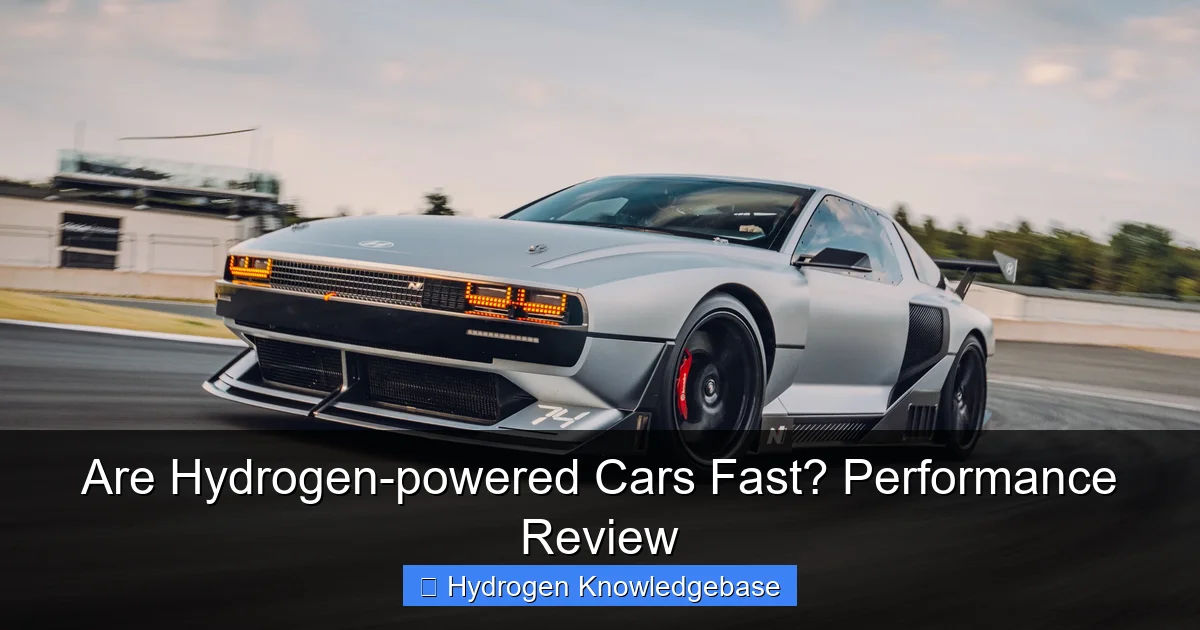
Visual guide about Are Hydrogen-powered Cars Fast? Performance Review
Image source: topgear.com
To understand how fast hydrogen-powered cars can be, it’s important to first grasp how they work. At the heart of every FCEV is a fuel cell stack—a series of electrochemical cells that combine hydrogen (stored in high-pressure tanks) with oxygen from the air to produce electricity. This electricity then powers an electric motor, which drives the wheels.
Unlike gasoline engines, which require complex transmissions and take time to build up power, electric motors deliver 100% of their torque instantly. This means that when you press the accelerator in a hydrogen car, the response is immediate—no lag, no hesitation. It’s the same principle that makes Tesla’s and other EVs so quick off the line.
But hydrogen cars have an advantage over battery EVs in one key area: refueling time. While charging a large EV battery can take 30 minutes to several hours (even with fast chargers), refueling a hydrogen car takes just 3 to 5 minutes—about the same as filling up a gas tank. This makes hydrogen vehicles ideal for long-distance travel and high-speed driving, where frequent stops would otherwise be a major inconvenience.
Another performance benefit comes from the weight distribution. Hydrogen tanks are typically mounted low in the chassis, and the fuel cell system is compact. This results in a low center of gravity, improving handling and stability at high speeds. Plus, because there’s no heavy internal combustion engine up front, many hydrogen cars achieve near-perfect 50:50 weight distribution—something sports car designers dream of.
The Role of Electric Motors in Hydrogen Performance
Electric motors are the secret sauce behind the speed of hydrogen-powered cars. These motors are not only efficient but also capable of producing high levels of power and torque. For example, the Toyota Mirai’s electric motor delivers 182 horsepower and 221 lb-ft of torque. While those numbers might not sound like supercar territory, they’re more than enough for brisk acceleration and confident highway merging.
What’s more, electric motors can sustain high power output for longer periods without overheating—a common issue with gasoline engines during prolonged high-speed driving. This means hydrogen cars can maintain their performance even during extended drives or when climbing steep hills.
Some hydrogen vehicles also use regenerative braking, which captures energy during deceleration and feeds it back into the system. While this doesn’t directly increase speed, it improves overall efficiency and allows for smoother, more controlled braking—important for performance driving.
Fuel Cell Efficiency and Power Output
The efficiency of the fuel cell stack plays a big role in overall performance. Modern fuel cells can convert over 60% of the energy in hydrogen into electricity—far more efficient than the 20–30% efficiency of most gasoline engines. This high efficiency means more of the fuel’s energy goes directly into propulsion, reducing waste and improving range.
However, fuel cells do have limitations. They work best under steady loads and can struggle with rapid power demands unless paired with a battery buffer. That’s why most hydrogen cars include a small lithium-ion battery to handle peak power needs—like sudden acceleration or climbing a steep hill. This hybrid approach ensures smooth, consistent performance across a wide range of driving conditions.
Real-World Speed and Acceleration of Current Hydrogen Models
So, how do today’s hydrogen-powered cars actually perform on the road? Let’s look at some real-world data from the most popular models currently available.
Toyota Mirai: Smooth and Swift
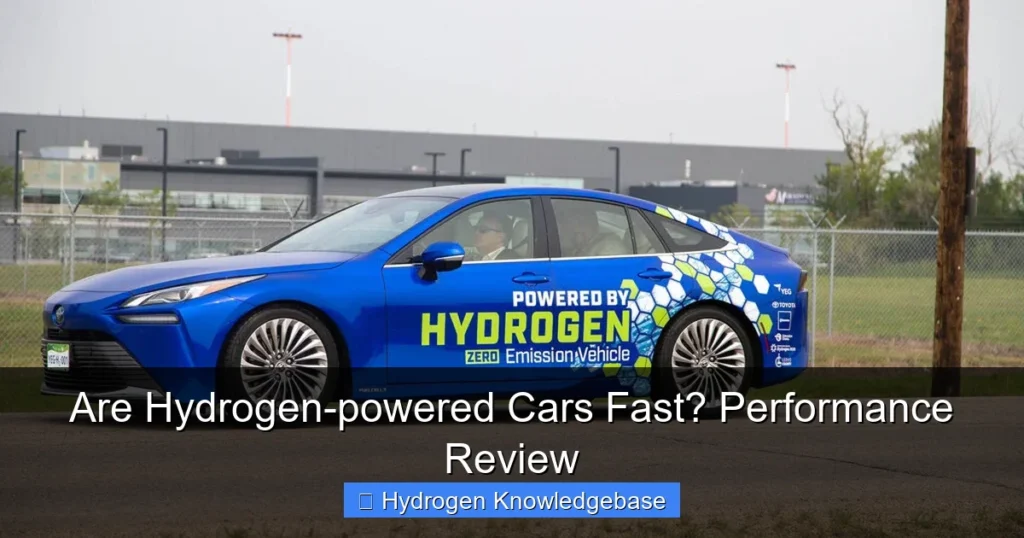
The Toyota Mirai is one of the most well-known hydrogen cars on the market. The latest generation (2021 and newer) features a rear-wheel-drive layout and a more powerful electric motor. It accelerates from 0 to 60 mph in about 9.2 seconds—not blistering by sports car standards, but certainly quick enough for daily driving and highway overtaking.
What stands out about the Mirai is its refinement. The ride is quiet, the acceleration is smooth, and the car feels planted at high speeds. On the highway, it cruises comfortably at 70–80 mph with plenty of reserve power for passing. The top speed is electronically limited to 108 mph, which is more than adequate for most driving scenarios.
Drivers often praise the Mirai for its balanced handling and responsive steering. Thanks to its low center of gravity and well-tuned suspension, it corners confidently and feels stable even in windy conditions. It’s not a sports car, but it’s certainly not sluggish either.
Hyundai NEXO: A Tech-Savvy Performer
The Hyundai NEXO is another strong contender in the hydrogen space. It’s slightly quicker than the Mirai, hitting 60 mph in around 8.9 seconds. With 161 horsepower and 291 lb-ft of torque, it feels more responsive in city driving and offers a sportier feel overall.
The NEXO also features advanced driver-assistance systems and a futuristic interior, but its performance is what really impresses. The electric motor delivers power seamlessly, and the car handles well on winding roads. Like the Mirai, it has a top speed of around 108 mph and offers a smooth, quiet ride.
One standout feature is the NEXO’s ability to operate in cold weather. Hyundai claims the car can start in temperatures as low as -22°F (-30°C) and maintain full performance—something that can be a challenge for some EVs in extreme cold.
Honda Clarity Fuel Cell: A Discontinued but Capable Contender
Though Honda has discontinued the Clarity Fuel Cell, it remains a relevant example of hydrogen performance. With a 0–60 mph time of about 8.5 seconds and a top speed of 100 mph, it was one of the quicker hydrogen cars in its class. It also offered a spacious interior and a comfortable ride, making it a great option for families who wanted clean, efficient transportation without sacrificing performance.
High-Performance Hydrogen Concepts and Future Models
While current hydrogen cars are practical and efficient, the future holds even more exciting possibilities—especially in the realm of high performance.
Hyperion XP-1: The Hydrogen Supercar
The Hyperion XP-1 is a prime example of what hydrogen can do when pushed to the极限. This futuristic supercar claims a 0–60 mph time of just 2.2 seconds and a top speed of over 220 mph. It uses a combination of hydrogen fuel cells and supercapacitors to deliver explosive power and rapid energy recovery.
With a range of up to 1,000 miles on a single tank, the XP-1 aims to solve one of the biggest challenges facing electric supercars: limited range and long charging times. While it’s still in development and not yet in production, the XP-1 shows that hydrogen has the potential to compete with—and even surpass—traditional supercars in both speed and endurance.
BMW iX5 Hydrogen: A Luxury Performance SUV
BMW has also entered the hydrogen race with the iX5 Hydrogen, a luxury SUV that combines the brand’s signature driving dynamics with zero-emission technology. Based on the popular X5 platform, the iX5 features a fuel cell system developed in partnership with Toyota.
While official performance figures are still limited, early reports suggest the iX5 will offer strong acceleration and a top speed of around 115 mph. More importantly, it’s designed to deliver the refined, sporty driving experience BMW is known for—proving that hydrogen cars can be both green and fun to drive.
Other Emerging Players
Several other automakers and startups are exploring high-performance hydrogen vehicles. Companies like Riversimple and Pininfarina are working on lightweight, efficient designs that prioritize both speed and sustainability. Meanwhile, racing series like the Hydrogen Grand Prix are beginning to emerge, showcasing hydrogen-powered race cars that can compete on track.
These developments suggest that hydrogen performance is not just a niche concept—it’s a growing trend that could reshape the automotive landscape in the coming decades.
Comparing Hydrogen, Electric, and Gasoline Cars
To truly understand how fast hydrogen-powered cars are, it’s helpful to compare them directly to battery electric vehicles (BEVs) and traditional internal combustion engine (ICE) vehicles.
Hydrogen vs. Electric: Speed and Refueling
In terms of acceleration, many hydrogen and electric cars are closely matched. Both use electric motors that deliver instant torque, so 0–60 mph times are often similar. For example, the Tesla Model 3 Standard Range accelerates in about 5.8 seconds, while the Hyundai NEXO does it in 8.9 seconds—slower, but still respectable.
However, hydrogen has a clear advantage in refueling. While a Tesla Supercharger can add about 200 miles of range in 15 minutes, most hydrogen stations can fully refuel a car in under 5 minutes. This makes hydrogen more practical for long road trips and high-mileage drivers.
On the downside, hydrogen cars are currently more expensive and less efficient overall. Producing, transporting, and storing hydrogen is energy-intensive, and only about 30–40% of the original energy makes it to the wheels—compared to 70–80% for battery EVs.
Hydrogen vs. Gasoline: Performance and Emissions
Compared to gasoline cars, hydrogen vehicles offer similar refueling times and range, but with zero tailpipe emissions. Performance-wise, most hydrogen cars are on par with mid-range sedans and SUVs. They won’t beat a Porsche 911 in a drag race, but they’re faster than many economy cars and offer a smoother, quieter ride.
One major advantage of hydrogen is cold-weather performance. Unlike gasoline engines, which can struggle in extreme cold, hydrogen fuel cells start reliably and maintain consistent power output. This makes them ideal for drivers in colder climates.
Driving Dynamics and Handling
Speed isn’t just about straight-line acceleration—it’s also about how a car handles corners, brakes, and responds to driver input. So how do hydrogen-powered cars stack up in terms of driving dynamics?
Weight Distribution and Chassis Design
As mentioned earlier, hydrogen cars benefit from excellent weight distribution. The fuel tanks are typically mounted low and centrally, and the electric motor is compact and lightweight. This results in a low center of gravity, which improves cornering stability and reduces body roll.
For example, the Toyota Mirai has a near-perfect 50:50 front-to-rear weight balance, which enhances handling precision. The suspension is tuned for comfort but remains responsive, making it enjoyable to drive on both city streets and winding country roads.
Brake Performance and Regeneration
Hydrogen cars use regenerative braking to capture energy during deceleration. This not only improves efficiency but also provides smoother, more controlled braking. The transition between regenerative and mechanical braking is often seamless, reducing wear on brake pads and improving overall safety.
In performance driving scenarios, this means drivers can brake later and harder without worrying about overheating or fade—a common issue with traditional brake systems.
Noise and Vibration
One of the most noticeable aspects of driving a hydrogen car is how quiet it is. There’s no engine noise, no exhaust rumble—just the gentle hum of the electric motor and the sound of the tires on the road. This makes for a relaxing, premium driving experience, especially on long trips.
Some drivers might miss the sound of a roaring engine, but for most, the silence is a welcome change. It also allows for better conversation, music, and overall cabin comfort.
Limitations and Challenges
Despite their impressive performance, hydrogen-powered cars face several challenges that limit their widespread adoption.
Limited Refueling Infrastructure
The biggest hurdle is the lack of hydrogen refueling stations. As of 2024, there are only a few hundred hydrogen stations worldwide, with most concentrated in California, Japan, and parts of Europe. This makes it difficult to take long road trips or rely on hydrogen as a primary fuel source.
High Production and Distribution Costs
Producing green hydrogen (using renewable energy) is still expensive, and transporting it requires specialized equipment. This drives up the cost of hydrogen fuel, making it less competitive with gasoline or electricity.
Vehicle Availability and Price
Hydrogen cars are currently limited in number and expensive to buy. The Toyota Mirai starts around $50,000, and the Hyundai NEXO is similarly priced. While incentives and tax credits can help, they’re still out of reach for many consumers.
The Future of Hydrogen Performance
Despite these challenges, the future of hydrogen-powered cars looks promising—especially in the performance segment. As technology improves and infrastructure expands, we can expect to see faster, more affordable, and more accessible hydrogen vehicles.
Advancements in fuel cell efficiency, hydrogen storage, and electric motor design will continue to push the boundaries of what’s possible. And as more automakers invest in hydrogen technology, competition will drive innovation and lower costs.
In the meantime, current models like the Mirai and NEXO prove that hydrogen cars are not just eco-friendly—they’re also capable, comfortable, and surprisingly fast.
Conclusion
So, are hydrogen-powered cars fast? The answer is a resounding yes—especially when you consider their instant torque, smooth acceleration, and refined driving experience. While they may not match the raw speed of top-tier supercars, they offer performance that’s more than adequate for everyday driving, highway travel, and even spirited weekend drives.
Models like the Toyota Mirai and Hyundai NEXO demonstrate that hydrogen vehicles can be both practical and enjoyable to drive. And with upcoming high-performance concepts like the Hyperion XP-1, the potential for even greater speed and capability is clear.
Of course, challenges remain—particularly in terms of infrastructure and cost. But as the world moves toward cleaner transportation, hydrogen has a unique role to play. It offers the speed and convenience of gasoline cars with the environmental benefits of electric vehicles.
If you’re looking for a fast, quiet, and eco-friendly car that can handle long distances without frequent stops, a hydrogen-powered vehicle might just be the perfect fit.
Frequently Asked Questions
How fast can a hydrogen-powered car go?
Most hydrogen cars have top speeds between 100 and 115 mph. High-performance models like the Hyperion XP-1 aim for over 220 mph, rivaling supercars.
Are hydrogen cars quicker than electric cars?
Not necessarily. Many electric cars accelerate faster due to higher power outputs, but hydrogen cars match them in responsiveness and offer faster refueling.
Do hydrogen cars have instant acceleration?
Yes. Like electric vehicles, hydrogen cars use electric motors that deliver 100% torque instantly, providing quick and smooth acceleration from a stop.
What affects the performance of a hydrogen car?
Performance depends on the electric motor’s power, fuel cell efficiency, weight distribution, and battery support. Design and aerodynamics also play a role.
Are hydrogen cars good for highway driving?
Yes. They offer strong high-speed performance, quiet operation, and long range, making them well-suited for highway and long-distance travel.
Will hydrogen cars become faster in the future?
Yes. Ongoing advancements in fuel cell technology, motor efficiency, and lightweight materials are expected to increase speed and performance in future models.