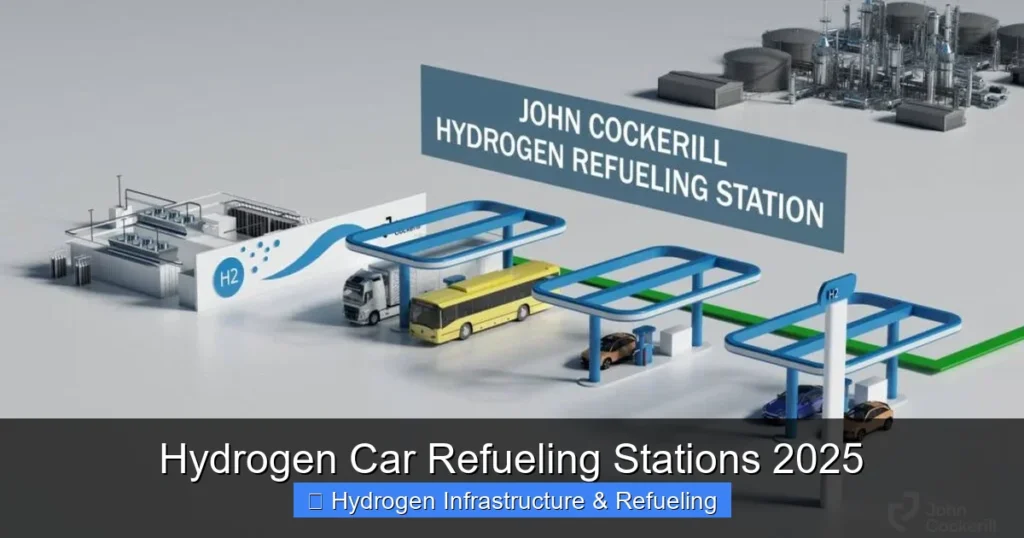
Hydrogen car refueling stations are emerging as a key part of the clean energy revolution, powered increasingly by renewable sources like solar and wind. These stations offer fast, zero-emission fueling for hydrogen vehicles, helping reduce dependence on fossil fuels and cut greenhouse gas emissions.
Key Takeaways
- Hydrogen refueling stations are expanding globally as governments and automakers invest in clean transportation infrastructure.
- Renewable energy powers green hydrogen production, making the entire fuel cycle cleaner and more sustainable.
- Hydrogen vehicles offer quick refueling and long range, rivaling traditional gasoline cars in convenience.
- On-site electrolysis is becoming more common, allowing stations to produce hydrogen using solar or wind power.
- Challenges include high costs and limited infrastructure, but innovation and policy support are accelerating progress.
- Public-private partnerships are driving growth in hydrogen networks, especially in Europe, Japan, and California.
- The future of hydrogen depends on scaling renewables and reducing production costs to compete with batteries and fossil fuels.
📑 Table of Contents
- Introduction: The Rise of Hydrogen Mobility
- The Link Between Hydrogen and Renewable Energy
- How Hydrogen Refueling Stations Work
- The Role of Renewable Energy in Hydrogen Production
- Global Progress in Hydrogen Infrastructure
- Challenges and Barriers to Adoption
- The Future of Hydrogen and Renewable Energy
- Conclusion: Driving Toward a Hydrogen-Powered Future
Introduction: The Rise of Hydrogen Mobility
Imagine pulling up to a fueling station, connecting a nozzle, and in just three to five minutes, your car is ready to go—no emissions, no noise, and no fossil fuels. This isn’t science fiction. It’s the reality of hydrogen-powered vehicles, and the infrastructure to support them is growing fast. Hydrogen car refueling stations are no longer a niche concept. They’re becoming a real part of the clean transportation landscape, especially in regions committed to cutting carbon emissions.
Hydrogen fuel cell vehicles (FCVs) work by combining hydrogen gas with oxygen from the air to produce electricity, which powers the motor. The only byproduct? Water vapor. That makes them a zero-emission alternative to gasoline and diesel cars. But for hydrogen vehicles to truly be green, the hydrogen itself must be produced cleanly. That’s where renewable energy comes in.
The Link Between Hydrogen and Renewable Energy
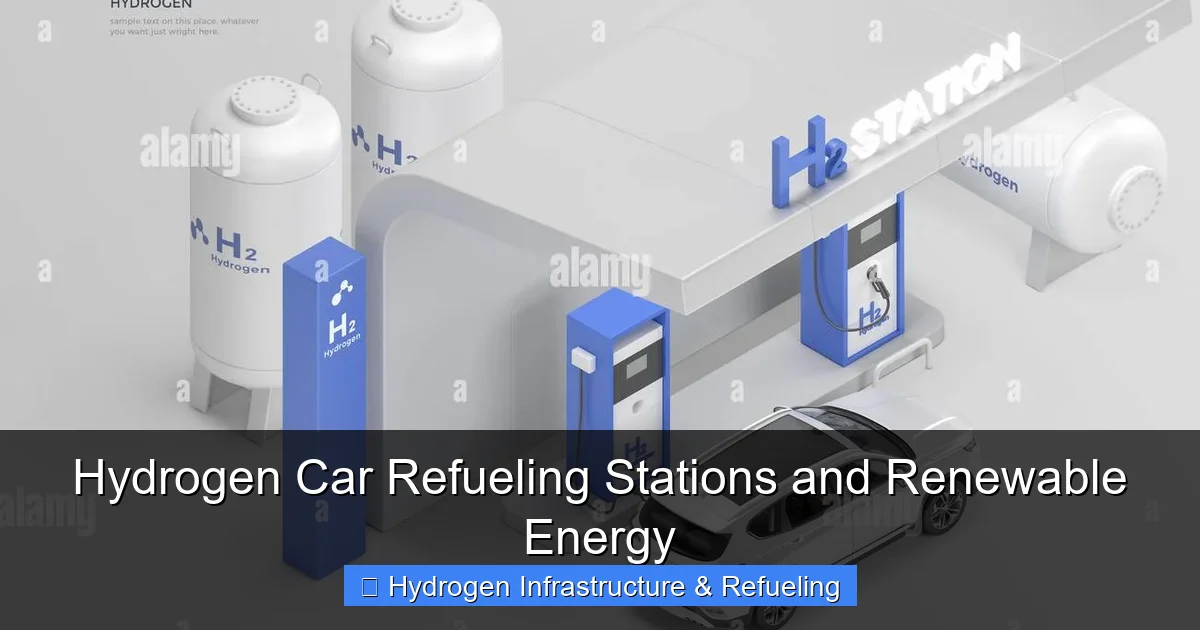
Visual guide about Hydrogen Car Refueling Stations and Renewable Energy
Image source: c8.alamy.com
Hydrogen isn’t naturally abundant in a usable form. It must be extracted from other compounds, like water or natural gas. The method used determines how “clean” the hydrogen is. When hydrogen is made using renewable energy—like solar, wind, or hydropower—it’s called green hydrogen. This is the gold standard for sustainable fuel.
Most hydrogen today is produced from natural gas in a process called steam methane reforming, which releases carbon dioxide. That’s known as gray hydrogen. But as the world shifts toward net-zero emissions, green hydrogen is gaining momentum. Renewable-powered electrolysis—splitting water into hydrogen and oxygen using electricity—is the key technology behind this shift.
Why Green Hydrogen Matters
Green hydrogen is essential for decarbonizing sectors that are hard to electrify, like heavy transport, shipping, and industrial processes. For passenger vehicles, it offers a fast-fueling, long-range alternative to battery electric vehicles (BEVs). While BEVs are great for city driving, hydrogen shines on highways and for larger vehicles like trucks and buses.
Using renewable energy to make hydrogen closes the loop. Solar panels or wind turbines generate electricity during peak production times—often when demand is low. That excess power can be used to produce hydrogen, storing energy for later use. This helps balance the grid and makes better use of renewable resources.
Real-World Examples of Renewable-Powered Hydrogen
In California, the True Zero network operates over 40 hydrogen refueling stations, many powered by renewable energy. Some stations use on-site solar panels to generate electricity for electrolysis. Others purchase renewable energy credits to offset their power use.
In Germany, the H2Mobility initiative is building a nationwide hydrogen network, with stations often linked to wind farms. One station in Hamburg uses wind power to produce hydrogen locally, reducing transportation needs and emissions.
Japan is another leader. The country’s “Hydrogen Society” vision includes over 160 refueling stations, many integrated with solar power. Toyota’s fuel cell vehicles, like the Mirai, are supported by a growing network that prioritizes green hydrogen.
How Hydrogen Refueling Stations Work
Hydrogen refueling stations may look similar to gas stations, but the technology behind them is quite different. Instead of pumping liquid fuel, they deliver compressed hydrogen gas to a vehicle’s tank. The process is fast—typically under five minutes—making it comparable to filling up with gasoline.
Station Components and Operations
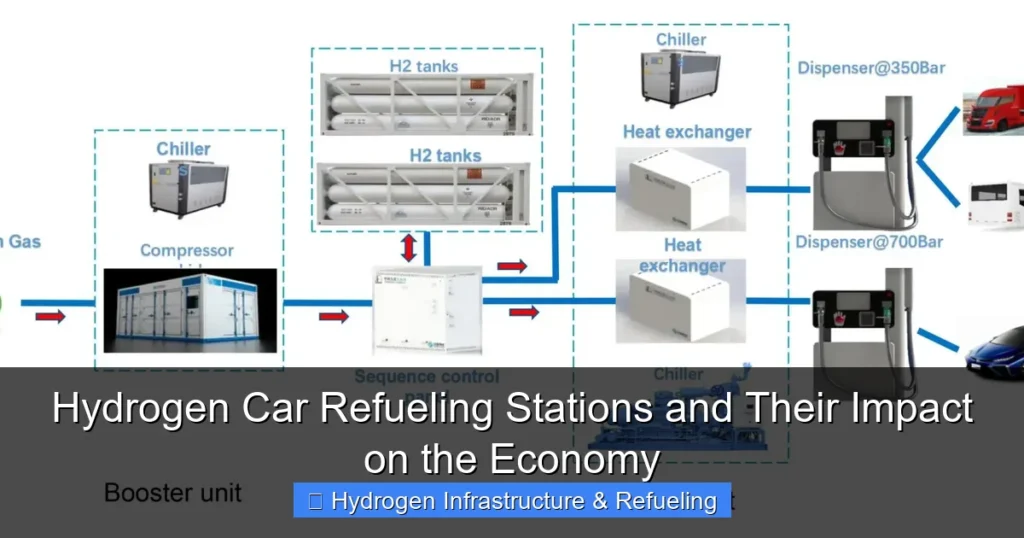
A typical hydrogen refueling station includes several key components:
– Hydrogen storage tanks: High-pressure vessels that hold compressed hydrogen gas, usually at 350 or 700 bar.
– Compressors: Devices that increase the pressure of hydrogen for efficient storage and delivery.
– Dispensers: Nozzles and hoses that connect to the vehicle and safely transfer hydrogen.
– Cooling systems: Used to pre-cool hydrogen before fueling, ensuring safe and efficient transfer.
– Electrolyzers (optional): On-site units that produce hydrogen from water using electricity.
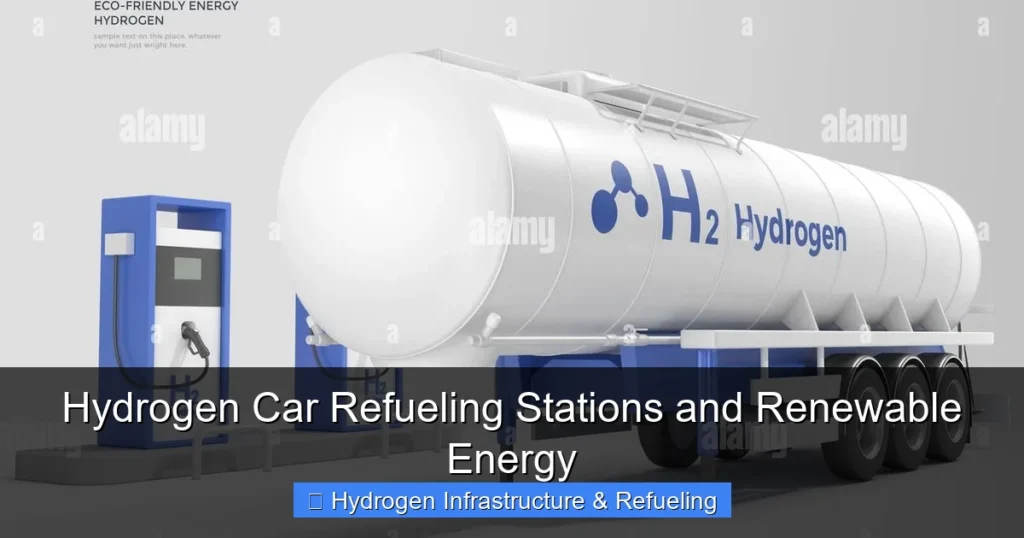
Some stations receive hydrogen via tube trailers from central production facilities. Others produce it on-site using electrolysis, especially when connected to renewable energy sources.
Types of Hydrogen Stations
There are three main types of hydrogen refueling stations:
1. Centralized stations: Hydrogen is produced at a large plant and transported to the station. This is common in early-stage networks but requires energy-intensive transport.
2. Decentralized stations: Hydrogen is produced on-site, often using renewable electricity. This reduces transportation emissions and increases resilience.
3. Mobile stations: Portable units that can be deployed temporarily, such as at events or construction sites. These are useful for testing and emergency support.
On-site production is becoming more popular because it reduces reliance on delivery trucks and allows stations to use local renewable energy. For example, a solar-powered station in Hawaii produces hydrogen during the day and stores it for nighttime use.
The Role of Renewable Energy in Hydrogen Production
Renewable energy isn’t just a nice-to-have for hydrogen production—it’s essential for making the fuel truly sustainable. Without clean power, hydrogen’s environmental benefits are limited.
Electrolysis: The Heart of Green Hydrogen
Electrolysis is the process of splitting water (H₂O) into hydrogen and oxygen using electricity. When that electricity comes from solar panels, wind turbines, or hydropower, the resulting hydrogen is green.
There are three main types of electrolyzers:
– Alkaline electrolyzers: Mature technology, cost-effective, but less flexible with variable power inputs.
– Proton Exchange Membrane (PEM) electrolyzers: More efficient and responsive, ideal for pairing with intermittent renewables like solar and wind.
– Solid oxide electrolyzers: High-temperature systems that can be more efficient but are still in development.
PEM electrolyzers are particularly well-suited for renewable-powered stations because they can ramp up and down quickly, matching the fluctuating output of solar and wind.
Case Study: The HyBalance Project in Denmark
The HyBalance project in Denmark is a great example of renewable-powered hydrogen production. It uses wind energy to power a PEM electrolyzer that produces hydrogen for refueling stations and industrial use. The project has demonstrated that green hydrogen can be produced reliably and cost-effectively at scale.
Similarly, in Australia, the Hydrogen Utility (H2U) is developing a renewable hydrogen plant powered by solar and wind. The hydrogen will fuel buses and trucks in Adelaide, showing how regional energy systems can support clean transport.
Challenges in Scaling Renewable Hydrogen
Despite the promise, scaling renewable-powered hydrogen faces hurdles. Electrolyzers are still expensive, and renewable energy infrastructure needs to expand. Grid integration is also a challenge—hydrogen production must be flexible to avoid overloading the grid during peak generation.
However, costs are falling. The International Renewable Energy Agency (IRENA) reports that green hydrogen could become cost-competitive with gray hydrogen by 2030, especially in regions with abundant solar and wind resources.
Global Progress in Hydrogen Infrastructure
Hydrogen refueling networks are growing around the world, driven by government policies, automaker investments, and public demand for cleaner transport.
Leading Regions and Countries
– California, USA: Home to the largest hydrogen refueling network in the U.S., with over 60 stations. The state offers incentives for both stations and vehicles, and mandates zero-emission vehicle sales.
– Japan: A global leader in hydrogen technology, with over 160 stations and strong government support. Toyota and Honda are major players in fuel cell vehicles.
– Germany: Part of the European Hydrogen Backbone initiative, Germany aims to have 100 stations by 2025. The H2Mobility partnership includes major energy and automotive companies.
– South Korea: Plans to build 1,200 stations by 2040 and has the highest number of fuel cell vehicles per capita.
– China: Rapidly expanding its hydrogen infrastructure, especially for buses and trucks, with strong state backing.
These regions share common traits: strong policy support, public-private collaboration, and a focus on renewable energy integration.
Public and Private Sector Collaboration
Building hydrogen infrastructure requires teamwork. Governments provide funding, set regulations, and create demand through public fleets. Private companies invest in technology, build stations, and manufacture vehicles.
For example, in California, the California Energy Commission funds station development, while companies like Shell, Air Liquide, and FirstElement Fuel operate them. In Europe, the Clean Hydrogen Partnership brings together governments, industry, and researchers to accelerate deployment.
The Role of Automakers
Automakers are key drivers of hydrogen adoption. Toyota’s Mirai, Honda’s Clarity Fuel Cell, and Hyundai’s NEXO are among the few hydrogen vehicles available to consumers. These companies also invest in infrastructure. Toyota, for instance, has partnered with fueling companies to support station development in California and Japan.
Truck manufacturers like Nikola and Hyundai are also exploring hydrogen for long-haul freight, where battery weight and charging time are limiting factors.
Challenges and Barriers to Adoption
Despite progress, hydrogen refueling stations face significant challenges. Overcoming these is crucial for widespread adoption.
High Costs
Hydrogen production, storage, and distribution are expensive. Electrolyzers, compressors, and high-pressure tanks require advanced materials and engineering. Stations can cost $1–3 million to build, compared to $100,000–500,000 for gasoline stations.
Green hydrogen currently costs $3–6 per kilogram, while gasoline equivalent is around $1–2 per liter. However, costs are expected to fall as technology improves and production scales up.
Limited Infrastructure
There are fewer than 1,000 hydrogen refueling stations worldwide, compared to millions of gas stations. This creates a “chicken-and-egg” problem: people won’t buy hydrogen cars without stations, and companies won’t build stations without demand.
Solutions include focusing on high-demand corridors, like highways between major cities, and targeting fleets (taxis, buses, delivery trucks) that can justify station investment.
Safety Concerns
Hydrogen is highly flammable and requires careful handling. However, it’s also lighter than air, so it disperses quickly in open areas. Modern stations include multiple safety systems: leak detectors, emergency shut-offs, and flame arrestors.
In practice, hydrogen has a strong safety record. The U.S. Department of Energy notes that hydrogen vehicles and stations meet or exceed safety standards for gasoline and natural gas.
Energy Efficiency
Hydrogen is less energy-efficient than batteries. It takes about three times more energy to power a hydrogen vehicle than a battery electric vehicle, due to losses in production, compression, and conversion.
However, hydrogen’s advantages—fast refueling, long range, and suitability for heavy transport—make it valuable in specific applications. The goal isn’t to replace batteries, but to complement them in a diversified clean energy system.
The Future of Hydrogen and Renewable Energy
The future of hydrogen car refueling stations is bright, especially as renewable energy becomes cheaper and more widespread. Innovation is accelerating across the entire hydrogen value chain.
Emerging Technologies
New electrolyzer designs, such as anion exchange membrane (AEM) systems, promise lower costs and better performance. Researchers are also exploring alternative production methods, like photoelectrochemical water splitting, which uses sunlight directly to produce hydrogen.
Station designs are becoming more compact and modular, allowing for easier deployment in urban areas. Some companies are developing “hydrogen hubs” that combine refueling, storage, and renewable generation in one location.
Policy and Investment Trends
Governments are stepping up support. The U.S. Inflation Reduction Act includes tax credits for clean hydrogen production. The European Union’s REPowerEU plan aims to produce 10 million tons of renewable hydrogen by 2030. China’s national hydrogen strategy targets 100,000 fuel cell vehicles by 2025.
Private investment is also surging. Companies like Plug Power, Nel Hydrogen, and ITM Power are expanding production capacity. Venture capital is flowing into startups focused on electrolysis, storage, and fuel cells.
A Vision for 2030 and Beyond
By 2030, we could see thousands of hydrogen refueling stations worldwide, many powered entirely by renewables. Hydrogen could play a major role in decarbonizing transport, especially for trucks, ships, and planes. In cities, hydrogen buses and taxis could become common.
The ultimate goal is a circular energy system: renewables generate power, excess electricity makes hydrogen, and hydrogen fuels vehicles and industry. This creates a clean, resilient, and sustainable energy future.
Conclusion: Driving Toward a Hydrogen-Powered Future
Hydrogen car refueling stations and renewable energy are not just complementary—they’re essential partners in the transition to clean transportation. While challenges remain, the momentum is undeniable. From solar-powered stations in California to wind-driven production in Denmark, real-world examples prove that green hydrogen is viable.
The path forward requires continued innovation, investment, and collaboration. But the benefits are clear: zero-emission vehicles, energy independence, and a healthier planet. As renewable energy becomes the backbone of our power systems, hydrogen can become the fuel of choice for a new generation of clean, efficient, and convenient mobility.
The future isn’t just electric—it’s also hydrogen. And it’s closer than you think.
Frequently Asked Questions
What is a hydrogen car refueling station?
A hydrogen car refueling station dispenses compressed hydrogen gas to fuel cell vehicles. It works similarly to a gas station but delivers hydrogen instead of gasoline, enabling zero-emission driving.
How is hydrogen produced for refueling stations?
Hydrogen can be produced through electrolysis, where electricity splits water into hydrogen and oxygen. When powered by renewable energy like solar or wind, this creates green hydrogen with minimal emissions.
Are hydrogen refueling stations safe?
Yes, hydrogen stations are designed with multiple safety features, including leak detectors, pressure relief systems, and emergency shut-offs. Hydrogen disperses quickly in open air, reducing fire risk.
How long does it take to refuel a hydrogen car?
Refueling a hydrogen car takes about 3 to 5 minutes, similar to filling up a gasoline vehicle. This is much faster than charging most electric cars.
Can hydrogen stations use renewable energy?
Yes, many stations are integrating solar panels, wind power, or grid-purchased renewable energy to produce hydrogen on-site, making the entire fuel cycle cleaner and more sustainable.
Where are hydrogen refueling stations available?
Hydrogen stations are most common in California, Japan, Germany, South Korea, and parts of China. Networks are expanding rapidly in these regions due to government support and industry investment.