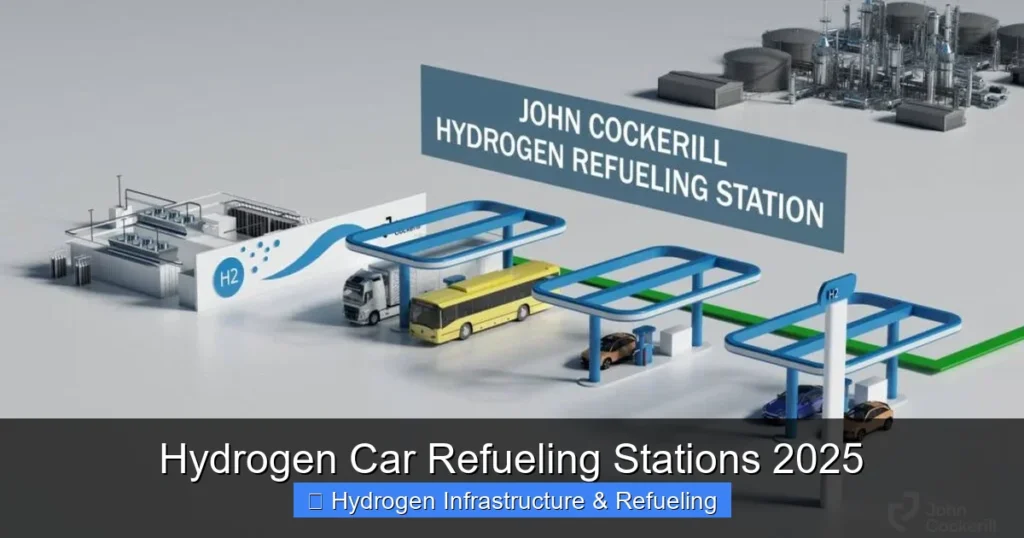
Hydrogen car refueling stations are expanding, but remote drivers still face limited access. This article explores current infrastructure, challenges, and innovations making hydrogen travel more viable for off-grid and long-distance drivers.
Key Takeaways
- Limited but growing network: Hydrogen refueling stations are concentrated in urban areas, with slow expansion into rural and remote regions.
- Fast refueling, zero emissions: Hydrogen vehicles refuel in 3–5 minutes and emit only water, making them ideal for eco-conscious long-haul drivers.
- High infrastructure costs: Building hydrogen stations is expensive due to production, storage, and transportation challenges.
- Mobile and portable solutions emerging: Companies are testing mobile refuelers and portable hydrogen tanks to serve remote areas.
- Government and private investment increasing: Incentives and partnerships are accelerating station deployment, especially along major highways.
- Range anxiety lessens with planning: Apps and route planners now include hydrogen station locations, helping remote drivers plan efficient trips.
- Future looks promising: Advances in green hydrogen and modular stations may soon make remote hydrogen refueling a reality.
[FEATURED_IMAGE_PLACEHOLDER]
Hydrogen Car Refueling Stations for Remote Drivers
Imagine driving through a vast desert, miles from the nearest town, with your hydrogen-powered car humming along silently. The sun beats down, the landscape stretches endlessly, and your fuel gauge shows you’re running low. You pull out your phone, check a route app, and—relief—there’s a hydrogen refueling station just 20 miles ahead. No gas pumps, no charging cables, just a quick stop, a few minutes to refuel, and you’re back on the road, emissions-free.
This scenario is no longer pure fantasy. While hydrogen car refueling stations are still sparse, especially in remote areas, the infrastructure is slowly expanding. For drivers who love road trips, live off-grid, or work in isolated regions, hydrogen vehicles offer a compelling alternative to battery-electric cars—especially when it comes to range and refueling speed. But the real challenge isn’t the technology inside the car. It’s the lack of stations where they’re needed most.
Hydrogen fuel cell electric vehicles (FCEVs) are gaining attention as a clean transportation solution. Unlike battery-electric vehicles (BEVs), which can take hours to recharge, FCEVs refuel in about the same time as a gasoline car—just 3 to 5 minutes. And instead of plugging in, you fill up with compressed hydrogen gas, which powers a fuel cell to generate electricity and propel the vehicle. The only byproduct? Water vapor.
But here’s the catch: while cities like Los Angeles, Tokyo, and Berlin have growing networks of hydrogen stations, rural and remote areas are often left out. This leaves drivers in less populated regions wondering: Can I really rely on hydrogen for long-distance or off-grid travel?
The good news is that solutions are on the horizon. From mobile refueling units to government-backed infrastructure projects, the hydrogen refueling landscape is evolving. This article dives deep into the current state of hydrogen car refueling stations for remote drivers, the challenges they face, and the innovations making long-range, clean driving more accessible than ever.
Why Hydrogen? The Case for FCEVs in Remote Areas
So why consider a hydrogen car if you’re driving through remote regions? Let’s break it down.
First, range. Most hydrogen vehicles today offer 300 to 400 miles on a single tank—comparable to gasoline cars and significantly more than many battery-electric vehicles, especially in cold weather. For drivers crossing deserts, mountains, or vast farmlands, that kind of range is a game-changer.
Second, refueling speed. If you’re on a long road trip, stopping for 30 minutes to charge a BEV can eat into your time. With hydrogen, you’re back on the road in minutes. That’s a huge advantage for delivery drivers, emergency responders, or travelers who value efficiency.
Third, environmental impact. Hydrogen fuel, especially when produced using renewable energy (known as “green hydrogen”), is one of the cleanest fuels available. It produces zero tailpipe emissions and, when sourced sustainably, has a much lower carbon footprint than gasoline or even grid-powered electricity in some regions.
But perhaps the most compelling reason for remote drivers is reliability. In areas with weak electrical grids or frequent power outages, charging a BEV can be a gamble. Hydrogen stations, once built, operate independently of the grid and can provide consistent service—even in extreme weather.
Real-World Example: The Trans-Australian Hydrogen Highway
Australia, a country known for its vast outback and long distances between towns, is pioneering a hydrogen highway project. The initiative aims to install hydrogen refueling stations along major freight routes, enabling trucks and passenger vehicles to travel from coast to coast using clean fuel.
One pilot station in Port Augusta, a remote town in South Australia, already serves both public and commercial vehicles. The station uses solar power to produce hydrogen on-site, reducing transportation costs and emissions. For drivers crossing the Nullarbor Plain—a 760-mile stretch with few services—this kind of infrastructure could mean the difference between a smooth journey and being stranded.
Challenges for Remote Hydrogen Adoption
Despite the benefits, several hurdles remain. The biggest is infrastructure. Building a hydrogen station costs between $1 million and $3 million, depending on size and technology. That’s far more than a standard gas station or even a high-speed EV charger.
Then there’s the issue of hydrogen production. Most hydrogen today is made from natural gas, a process that emits carbon. For hydrogen to be truly green, it must be produced using renewable energy—like wind or solar—through electrolysis. But that requires significant investment in both energy and water resources.
Transportation is another challenge. Hydrogen is a lightweight, low-density gas, making it difficult and expensive to move over long distances. It must be compressed or liquefied, which adds cost and complexity. For remote areas, this often means relying on trucked-in hydrogen, which increases prices and reduces sustainability.
Finally, there’s the chicken-and-egg problem: without enough vehicles on the road, companies won’t build stations. And without stations, consumers won’t buy hydrogen cars. Breaking this cycle requires coordinated effort from governments, automakers, and energy providers.
Current State of Hydrogen Refueling Infrastructure
As of 2024, there are approximately 1,000 hydrogen refueling stations worldwide. The majority are in just a few countries: Japan, South Korea, Germany, and the United States—particularly California.
In the U.S., California leads the way with over 60 operational stations, mostly in the Los Angeles and San Francisco Bay areas. The state has invested heavily in hydrogen infrastructure through programs like the California Energy Commission’s Clean Transportation Program. But even there, coverage is uneven. Rural counties like Humboldt or Alpine have little to no access.
Europe is making strides too. Germany’s H2 Mobility initiative aims to have 100 stations by 2025, with a focus on connecting major cities and highways. France, the Netherlands, and the UK are also expanding their networks, often integrating hydrogen into broader clean energy strategies.
Asia is the global leader. Japan has over 160 stations, supported by government subsidies and strong automaker involvement—Toyota and Honda are major players. South Korea is even more ambitious, targeting 310 stations by 2025 as part of its hydrogen economy roadmap.
But for remote drivers, these numbers don’t tell the full story. A station in downtown Tokyo doesn’t help someone driving through the Australian outback or the Canadian Rockies. The real test of hydrogen infrastructure is whether it can serve people far from urban centers.
Mapping the Gaps: Where Remote Drivers Are Left Behind
Let’s look at a few examples.
In the American West, Interstate 80 stretches from California to New Jersey—over 2,900 miles. Yet, hydrogen stations are clustered in California and a few in Nevada. Cross-country hydrogen travel remains impractical.
In Canada, the Trans-Canada Highway spans 4,860 miles. But hydrogen stations are limited to a handful in British Columbia and Quebec. A driver from Vancouver to Halifax would face long stretches with no refueling options.
Even in countries with strong hydrogen policies, rural areas are often overlooked. In Germany, most stations are within 50 miles of major cities. A farmer in Bavaria or a hiker in the Black Forest still can’t rely on hydrogen for daily travel.
This gap is especially problematic for commercial fleets. Delivery trucks, agricultural vehicles, and emergency services in remote regions need reliable, fast refueling. Without it, hydrogen remains a niche option.
The Role of Government and Policy
Governments play a crucial role in closing this gap. In the U.S., the Bipartisan Infrastructure Law includes $8 billion for hydrogen hubs—regional networks that produce, process, and distribute hydrogen. Several of these hubs are targeting rural and industrial areas, which could bring stations closer to remote drivers.
The European Union’s Hydrogen Strategy aims to install at least 1,000 hydrogen refueling stations by 2030, with a focus on trans-European transport corridors. This includes routes that pass through remote regions.
In Australia, the government’s National Hydrogen Strategy supports pilot projects in remote areas, including mining regions and indigenous communities. These projects test not only refueling but also local hydrogen production using solar and wind.
But policy alone isn’t enough. Private investment is essential. Companies like Shell, Air Liquide, and Nikola are building stations and partnering with automakers to create demand. Startups are also emerging with innovative solutions, from modular stations to mobile refuelers.
Innovations Making Remote Hydrogen Refueling Possible
The future of hydrogen refueling for remote drivers isn’t just about building more stations. It’s about smarter, more flexible solutions.
One promising innovation is mobile hydrogen refuelers. These are truck-mounted units that can travel to remote locations and refuel vehicles on-site. Imagine a mobile unit showing up at a national park, a mining site, or a rural highway rest stop. Drivers could schedule a refuel just like ordering a food truck.
Companies like Hyzon Motors and Plug Power are already testing mobile refueling in industrial and fleet applications. In 2023, a pilot program in Wyoming used a mobile refueler to service hydrogen-powered mining trucks in a remote quarry. The unit carried compressed hydrogen and could refuel multiple vehicles per day.
Another breakthrough is portable hydrogen tanks. These are small, safe canisters that store hydrogen and can be swapped into vehicles—similar to propane tanks for grills. A driver could carry a spare tank or exchange an empty one at a remote station.
Toyota has experimented with this concept with its “Hydrogen Cartridge” project. The cartridges are lightweight, easy to transport, and could be distributed via existing supply chains—like gas stations or convenience stores.
On-Site Hydrogen Production: The Ultimate Remote Solution
The most transformative innovation may be on-site hydrogen production. Instead of trucking hydrogen from a central plant, remote stations could generate it locally using renewable energy.
Solar-powered electrolysis is the leading approach. A small solar array and electrolyzer can split water into hydrogen and oxygen, storing the hydrogen in tanks for later use. This eliminates transportation costs and reduces emissions.
In 2022, a pilot station in Iceland used geothermal energy to produce hydrogen for buses in a remote town. The system operated year-round, even in harsh weather, proving that renewable hydrogen can work in isolated areas.
Similarly, in the U.S., the Department of Energy is funding projects to integrate hydrogen production with wind farms in the Midwest. Excess wind energy, which would otherwise go to waste, is used to make hydrogen—creating a clean fuel source for nearby rural communities.
Modular and Scalable Stations
Traditional hydrogen stations are large, permanent structures. But new modular designs are changing that.
Companies like Nel Hydrogen and ITM Power offer compact, containerized stations that can be shipped and installed quickly. These units are ideal for remote areas where construction is difficult or expensive.
A modular station can be set up in a week, powered by solar or grid electricity, and scaled up as demand grows. Some models even include on-site hydrogen production, making them completely self-sufficient.
In Alaska, a remote village recently installed a modular hydrogen station to power local buses and emergency vehicles. The station uses wind and solar energy and is maintained by a local technician trained by the manufacturer.
Planning Your Trip: Tools for Remote Hydrogen Drivers
Even with limited infrastructure, remote drivers can plan successful hydrogen journeys—if they use the right tools.
Several apps and websites now map hydrogen refueling stations worldwide. The most popular include:
– Hydrogen Fuel Cell Partnership (California): Offers real-time station status, including availability and pricing.
– H2.Live: A global map with over 1,000 stations, including user reviews and photos.
– PlugShare: While primarily for EVs, it now includes hydrogen stations and allows users to report outages.
These tools help drivers find the nearest station, check if it’s operational, and plan routes accordingly. Some even integrate with GPS systems for turn-by-turn directions.
Tips for Long-Distance Hydrogen Travel
If you’re planning a remote hydrogen road trip, here are some practical tips:
1. Plan your route in advance. Use mapping tools to identify stations along your path. Avoid routes with long gaps between stations.
2. Carry extra range. Choose a vehicle with a longer range (350+ miles) to reduce stress.
3. Check station status. Call ahead or use apps to confirm the station is open and functional.
4. Have a backup plan. Know the location of the nearest gas station or EV charger, just in case.
5. Travel with others. If possible, travel in a group with another hydrogen vehicle. You can share information and support.
6. Stay informed. Join hydrogen driver forums or social media groups to get real-time updates from other users.
Case Study: A Cross-Country Hydrogen Journey
In 2023, a team of engineers drove a Toyota Mirai from San Francisco to Washington, D.C., using only hydrogen refueling stations. The trip covered 3,000 miles and took 10 days.
They used a combination of public stations and mobile refuelers arranged in advance. In remote areas like Nevada and West Virginia, they coordinated with local energy companies to have hydrogen delivered.
The journey wasn’t without challenges. One station was out of service, forcing a 100-mile detour. Another required a special adapter. But overall, the trip proved that long-distance hydrogen travel is possible—with careful planning.
The Road Ahead: What’s Next for Remote Hydrogen Refueling?
The future of hydrogen car refueling stations for remote drivers is bright—but it will take time, investment, and innovation.
Experts predict that by 2030, hydrogen stations will be common along major highways and in rural hubs. Advances in green hydrogen production will make fuel cheaper and cleaner. And new technologies—like solid-state hydrogen storage and AI-powered route optimization—will improve reliability.
Governments are stepping up. The U.S. aims to have a national hydrogen network by 2035. The EU plans to make hydrogen refueling as common as gasoline. Countries like Canada and Australia are investing in remote hydrogen projects.
But the real change will come from collaboration. Automakers, energy companies, and local communities must work together to build infrastructure where it’s needed most.
For remote drivers, the message is clear: hydrogen is coming. It may not be here today, but the foundation is being laid. With each new station, each mobile refueler, and each on-site production unit, the dream of emissions-free travel in the farthest corners of the world gets a little closer.
Conclusion
Hydrogen car refueling stations are still a rare sight in remote areas, but they’re no longer a distant dream. While urban centers lead the way, innovations in mobile refueling, portable tanks, and on-site production are opening new possibilities for off-grid and long-distance drivers.
The challenges are real—high costs, limited infrastructure, and production hurdles—but so are the solutions. With growing government support, private investment, and technological breakthroughs, hydrogen is poised to become a viable option for remote travel.
For drivers who value speed, range, and sustainability, hydrogen offers a compelling alternative. And as the network expands, the freedom to explore—without compromise—will become a reality for more and more people.
The road ahead is long, but it’s powered by clean energy.
FAQs
Are there hydrogen refueling stations in rural or remote areas?
Currently, most hydrogen stations are in urban areas, but rural and remote stations are slowly being added. Projects in Australia, Alaska, and along major highways are expanding access for remote drivers.
How long does it take to refuel a hydrogen car?
Hydrogen refueling takes just 3 to 5 minutes—similar to gasoline—making it much faster than charging an electric vehicle.
Can I produce hydrogen at home for my car?
Home hydrogen production is possible with solar-powered electrolyzers, but it’s not yet practical for most drivers due to cost and space requirements. Portable systems are being tested.
What happens if I run out of hydrogen in a remote area?
Running out is rare with proper planning, but if it happens, roadside assistance for hydrogen vehicles is limited. Always carry a backup plan and use route-planning apps.
Are hydrogen cars safe for long-distance travel?
Yes. Hydrogen cars are rigorously tested for safety and perform well in extreme conditions. Modern tanks are designed to withstand crashes and high pressure.
Will hydrogen stations become as common as gas stations?
Experts predict significant growth by 2030–2035, especially along highways and in regions with strong clean energy policies. Full parity with gas stations may take longer.
This is a comprehensive guide about Hydrogen car refueling stations for remote drivers.
Key Takeaways
- Understanding Hydrogen car refueling stations for remote drivers: Provides essential knowledge
Frequently Asked Questions
What is Hydrogen car refueling stations for remote drivers?
Hydrogen car refueling stations for remote drivers is an important topic with many practical applications.