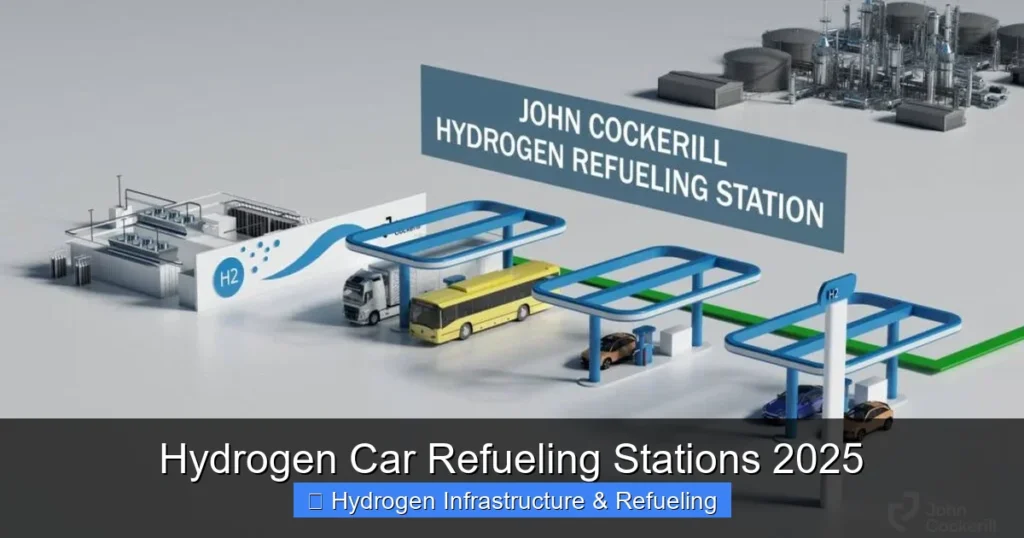
Hydrogen car refueling stations in Europe are expanding rapidly, driven by climate goals and government support. Countries like Germany, France, and the Netherlands are leading the charge, building networks to support zero-emission hydrogen vehicles. While still limited compared to EV charging, the infrastructure is growing steadily with strong public and private investment.
Imagine pulling up to a fuel station, not to plug in your car, but to fill it with hydrogen gas—clean, quiet, and ready to go in under five minutes. No long charging times, no range anxiety. Just a quick refuel and you’re back on the road, emitting nothing but water vapor. This isn’t science fiction. It’s happening right now in parts of Europe, where hydrogen car refueling stations are quietly building the foundation for a new era of clean transportation.
Hydrogen-powered vehicles, also known as fuel cell electric vehicles (FCEVs), are gaining attention as a viable alternative to battery electric vehicles (BEVs), especially for long-haul transport, heavy-duty trucks, and regions with limited charging infrastructure. Unlike BEVs, which rely on large batteries and hours of charging, FCEVs generate electricity on board using hydrogen and oxygen, offering faster refueling and longer range. But for this vision to become reality, one critical piece is missing in many places: a reliable network of hydrogen refueling stations.
Europe is stepping up to meet this challenge. With ambitious climate goals and a strong push toward decarbonization, the continent is investing in hydrogen as a key part of its clean energy future. Governments, automakers, and energy companies are collaborating to build the infrastructure needed to support hydrogen vehicles. While the network is still in its early stages compared to electric charging stations, the momentum is undeniable. From Germany’s extensive hydrogen highway to pilot projects in Scandinavia and the UK, Europe is laying the groundwork for a hydrogen-powered mobility revolution.
Key Takeaways
- Europe is investing heavily in hydrogen infrastructure: Over 200 hydrogen refueling stations are operational across the continent, with plans to exceed 1,000 by 2030.
- Germany leads in station deployment: With more than 100 stations, Germany has the densest hydrogen refueling network in Europe.
- Hydrogen vehicles are still niche but growing: Models like the Toyota Mirai and Hyundai NEXO are available, though adoption remains low due to limited infrastructure and high costs.
- Green hydrogen is the long-term goal: Most new stations prioritize renewable-powered hydrogen production to ensure true zero emissions.
- Public-private partnerships are key: Initiatives like H2 Mobility and the Clean Hydrogen Partnership drive expansion through shared funding and innovation.
- Challenges remain in cost and scalability: High production and distribution costs, plus energy inefficiencies, slow widespread adoption.
- Future outlook is promising: With EU climate targets and falling technology costs, hydrogen refueling is expected to grow significantly in the next decade.
📑 Table of Contents
The Current State of Hydrogen Refueling in Europe
As of 2024, Europe has over 200 operational hydrogen refueling stations, according to the latest data from the European Alternative Fuels Observatory (EAFO). This number may seem small compared to the hundreds of thousands of EV charging points, but it represents significant progress from just a decade ago, when only a handful of stations existed.
Germany stands out as the clear leader, with more than 100 stations in operation—nearly half of the European total. The country’s H2 Mobility initiative, a public-private partnership, has been instrumental in building this network. Stations are strategically placed along major highways and in urban centers like Berlin, Munich, and Hamburg, making it possible to travel across the country in a hydrogen car.
France follows closely, with around 40 stations, many located in the Paris region and along the A6 and A10 motorways. The French government has committed €7 billion to hydrogen development through its national hydrogen strategy, aiming for 100 stations by 2028. Meanwhile, the Netherlands has over 20 stations, with plans to expand to 50 by 2030. The Dutch focus is on integrating hydrogen into public transport and freight, with hydrogen buses and trucks already in service in cities like Rotterdam and Amsterdam.
Other countries are also making strides. Italy has around 15 stations, primarily in the north, while Spain and Portugal are developing cross-border hydrogen corridors. The UK has about 15 stations, with strong growth expected in Scotland and the Midlands. Even smaller nations like Denmark and Norway are investing in hydrogen infrastructure, often powered by their abundant renewable energy.
Despite this progress, the network remains fragmented. Many stations are clustered in specific regions, leaving large gaps in coverage. For example, while Germany has excellent connectivity between major cities, neighboring countries like Poland and the Czech Republic have only a few stations each. This limits cross-border travel and slows adoption.
Moreover, not all stations are created equal. Some are publicly accessible, while others serve only fleets like taxis or delivery vehicles. Availability can also vary—some stations operate 24/7, while others have limited hours. Reliability is another concern; occasional technical issues or maintenance downtime can disrupt service.
Still, the trend is clear: Europe is building a hydrogen refueling backbone. And with each new station, the vision of a hydrogen-powered future becomes a little more tangible.
How Hydrogen Refueling Stations Work
To understand the potential—and the challenges—of hydrogen refueling, it helps to know how these stations actually work. At first glance, they look similar to traditional gas stations, with pumps and hoses. But beneath the surface, the technology is quite different.
Hydrogen refueling stations store compressed hydrogen gas at high pressure—typically 350 or 700 bar—and deliver it directly to the vehicle’s fuel tank. The process is fast: most FCEVs can be refueled in 3 to 5 minutes, comparable to gasoline or diesel. This is a major advantage over battery electric vehicles, which can take 30 minutes to several hours to recharge, depending on the charger type.
The hydrogen used in these stations can come from two main sources: on-site production or delivery from centralized plants. On-site production often involves electrolysis, where electricity splits water into hydrogen and oxygen. If the electricity comes from renewable sources like wind or solar, the hydrogen is considered “green”—truly zero-emission. Some stations also use steam methane reforming (SMR), a process that extracts hydrogen from natural gas. While cheaper, SMR produces carbon emissions unless paired with carbon capture technology.
Most European stations today use delivered hydrogen, transported by truck from production facilities. This adds complexity and cost, but it allows for quicker deployment. As green hydrogen production scales up, more stations are expected to produce hydrogen on-site using renewable energy.
Safety is a top priority. Hydrogen is highly flammable and lighter than air, so stations are equipped with advanced sensors, ventilation systems, and emergency shut-offs. Refueling procedures are standardized across Europe, ensuring compatibility with all FCEVs. Drivers simply connect the nozzle, follow the prompts on the screen, and wait a few minutes—no special training required.
One practical tip for hydrogen car owners: always check station status before traveling. Apps like H2.LIVE and the H2 Mobility map provide real-time information on availability, location, and compatibility. Planning your route around operational stations can save time and avoid frustration.
Leading Countries in Hydrogen Infrastructure
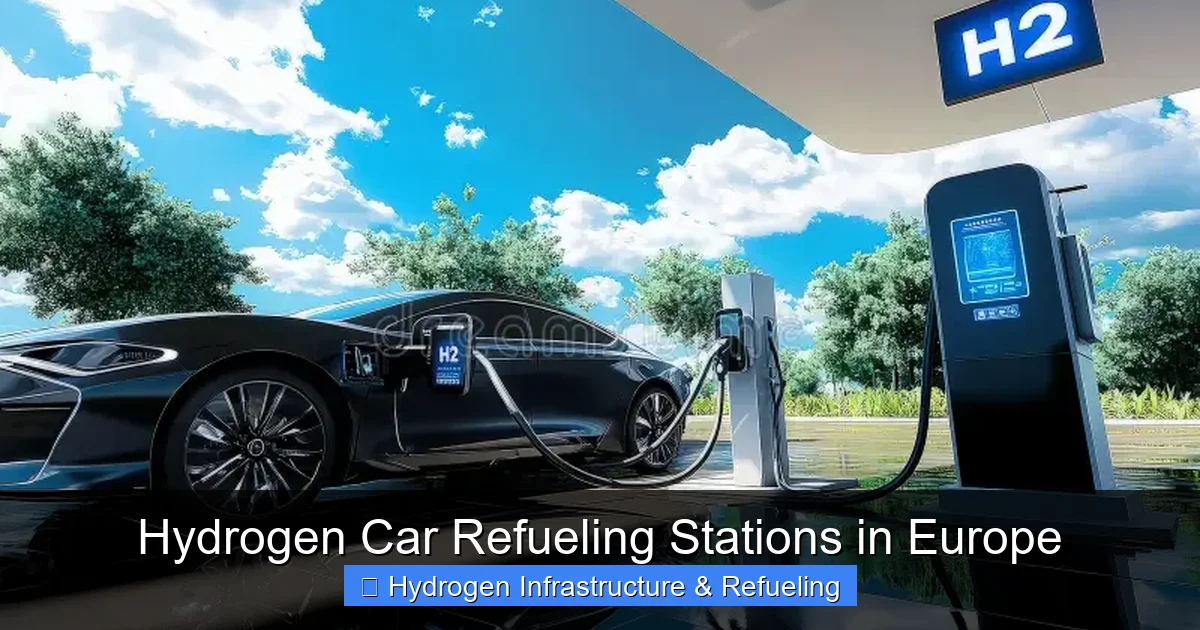
Visual guide about Hydrogen Car Refueling Stations in Europe
Image source: thumbs.dreamstime.com
While hydrogen refueling is still a niche market, a few European countries are setting the pace with aggressive investment and innovation. These leaders are not only building stations but also shaping policies, funding research, and fostering collaboration across industries.
Germany: The Hydrogen Pioneer
Germany is the undisputed leader in hydrogen refueling infrastructure. With over 100 stations, it has the most extensive network in Europe. The backbone of this success is H2 Mobility, a joint venture involving companies like Air Liquide, Linde, Shell, and TotalEnergies, with support from the German government.
The network is designed for practicality. Stations are located every 90 kilometers along major highways, enabling long-distance travel. Urban centers like Berlin, Frankfurt, and Stuttgart have multiple stations, making it easy for city dwellers to refuel. The government has committed €9 billion to hydrogen development, with a goal of 100 stations by 2025 and 400 by 2030.
Germany is also investing in green hydrogen production. Projects like the HySupply and H2Giga initiatives aim to scale up electrolyzer manufacturing and renewable-powered hydrogen plants. The country’s strong industrial base and engineering expertise make it a natural hub for hydrogen innovation.
France: Ambitious Expansion Plans
France is rapidly catching up. With around 40 stations today, it aims to reach 100 by 2028. The French strategy focuses on both passenger vehicles and heavy transport. Paris, Lyon, and Strasbourg are key hubs, with plans to connect them via hydrogen corridors.
The government’s €7 billion hydrogen plan includes support for electrolysis, research, and infrastructure. Companies like McPhy and Elogen are developing advanced electrolyzers, while automakers like Renault are exploring hydrogen-powered vans and trucks. France is also part of the European Hydrogen Backbone initiative, which aims to create a continent-wide pipeline network for hydrogen transport.
The Netherlands: A Hub for Innovation
The Netherlands punches above its weight in hydrogen development. With over 20 stations, it has one of the highest densities of hydrogen refueling per capita in Europe. Rotterdam, Europe’s largest port, is a key location for hydrogen import and distribution.
The Dutch government supports hydrogen through the National Hydrogen Program, which funds pilot projects and infrastructure. Companies like Shell and BP are investing in green hydrogen production using offshore wind energy. The country is also testing hydrogen-powered buses, ferries, and garbage trucks, demonstrating real-world applications.
Scandinavia and the UK: Emerging Players
Scandinavian countries like Denmark and Norway are leveraging their abundant renewable energy to produce green hydrogen. Denmark has several stations, with plans to expand along the E45 highway. Norway, known for its electric vehicle adoption, is now exploring hydrogen for heavy transport and maritime use.
The UK has about 15 stations, with growth focused on Scotland and the Midlands. The government’s Hydrogen Strategy aims for 10 GW of low-carbon hydrogen production by 2030. Projects like the HyNet cluster in northwest England are developing hydrogen pipelines and refueling networks for industry and transport.
Challenges Facing Hydrogen Refueling Expansion
Despite the progress, hydrogen refueling in Europe faces significant hurdles. These challenges span technology, economics, policy, and public perception.
High Costs and Limited Scale
One of the biggest barriers is cost. Building a hydrogen refueling station can cost between €1 million and €2 million—far more than a fast-charging EV station. Hydrogen production, especially green hydrogen, is also expensive. Electrolyzers require large amounts of renewable electricity, and current production costs are around €5–€7 per kilogram, compared to €1–€2 for gray hydrogen (from natural gas).
Vehicle costs are another issue. FCEVs like the Toyota Mirai and Hyundai NEXO start at around €70,000, making them inaccessible to most consumers. Limited production volumes and high material costs (like platinum in fuel cells) keep prices high.
Infrastructure Gaps and Fragmentation
While Germany and France have strong networks, many regions still lack coverage. Rural areas, smaller cities, and cross-border routes are often underserved. This fragmentation discourages adoption, as drivers worry about running out of fuel with no station nearby.
Interoperability is another concern. Although standards exist, differences in nozzle types, pressure levels, and payment systems can create confusion. A unified European approach is needed to ensure seamless travel across borders.
Energy Efficiency and Sustainability
Hydrogen is less energy-efficient than batteries. Producing, compressing, transporting, and converting hydrogen to electricity in a fuel cell loses about 60–70% of the original energy. In contrast, battery electric vehicles are 75–90% efficient. This makes hydrogen less suitable for passenger cars but more viable for applications where weight and refueling time matter, like trucks and ships.
Sustainability also depends on the hydrogen source. Gray hydrogen, made from fossil fuels, can have a higher carbon footprint than gasoline. Only green hydrogen, produced with renewables, offers true zero emissions. Europe is pushing for green hydrogen, but scaling up production remains a challenge.
Public Awareness and Adoption
Many people still don’t know hydrogen cars exist. Unlike electric vehicles, which have seen massive media coverage and government incentives, hydrogen vehicles remain a mystery to most. Automakers have been slow to market FCEVs, and dealerships rarely stock them.
Safety concerns also persist, despite hydrogen’s excellent safety record. Public education campaigns and test-drive events can help build trust and familiarity.
The Role of Policy and Investment
Government support is crucial for hydrogen infrastructure. Without subsidies, mandates, and long-term planning, the market will struggle to grow.
The European Union has made hydrogen a cornerstone of its Green Deal and REPowerEU plan. The EU aims to produce 10 million tons of renewable hydrogen domestically and import another 10 million tons by 2030. The Clean Hydrogen Partnership, a €1.5 billion public-private initiative, funds research and demonstration projects.
National governments are also stepping up. Germany’s H2Global program auctions hydrogen imports to support market development. France offers grants for station construction and vehicle purchases. The UK provides funding through the Net Zero Innovation Portfolio.
Private investment is growing too. Energy giants like Shell, TotalEnergies, and BP are building hydrogen refueling networks. Automakers like Toyota, Hyundai, and BMW are developing FCEVs and partnering with infrastructure providers. Startups are innovating in electrolysis, storage, and distribution.
One practical example is the H2 Mobility Deutschland project, which has built a nationwide network with shared funding from industry and government. Similar models are emerging in other countries, proving that collaboration can accelerate progress.
The Future of Hydrogen Refueling in Europe
Looking ahead, the future of hydrogen car refueling stations in Europe is promising but uncertain. The next decade will be critical in determining whether hydrogen can become a mainstream fuel.
By 2030, Europe could have over 1,000 hydrogen refueling stations, according to industry forecasts. This would support a growing fleet of FCEVs, especially in commercial and heavy-duty sectors. Green hydrogen production is expected to fall in cost, driven by economies of scale and cheaper renewable energy.
New technologies could also improve efficiency. Liquid organic hydrogen carriers (LOHCs) and underground salt cavern storage may make hydrogen transport and storage easier. Advances in fuel cell design could reduce costs and extend vehicle range.
However, hydrogen will likely complement, not replace, battery electric vehicles. BEVs are better suited for short-range, urban driving, while hydrogen excels in long-haul, high-utilization applications. The two technologies can coexist, each serving different needs.
For consumers, the key will be convenience and affordability. As stations become more common and vehicles cheaper, hydrogen cars could become a viable option for more drivers. Planning tools, mobile apps, and integrated payment systems will make refueling as easy as filling up with gas.
In the long term, hydrogen could play a vital role in decarbonizing transport, industry, and energy. Europe’s investment today is laying the foundation for a cleaner, more sustainable future.
Conclusion
Hydrogen car refueling stations in Europe are no longer a distant dream—they are a growing reality. From Germany’s extensive network to emerging projects across the continent, the infrastructure is expanding steadily. While challenges remain in cost, coverage, and public awareness, the momentum is undeniable.
With strong government support, private investment, and technological innovation, hydrogen has the potential to become a key part of Europe’s clean mobility future. It won’t replace electric vehicles, but it can fill important gaps, especially for long-distance and heavy-duty transport.
For now, hydrogen refueling is a niche market, but one with enormous potential. As more stations open and more vehicles hit the road, the vision of a hydrogen-powered Europe is coming into focus. The journey is just beginning, but the destination—a cleaner, greener transportation system—is worth the effort.
Frequently Asked Questions
How many hydrogen refueling stations are there in Europe?
As of 2024, there are over 200 operational hydrogen refueling stations across Europe, with Germany leading the way with more than 100 stations. The network is expected to grow to over 1,000 by 2030.
Are hydrogen cars available for regular consumers in Europe?
Yes, hydrogen cars like the Toyota Mirai and Hyundai NEXO are available in several European countries, though they are still relatively rare and expensive, typically starting around €70,000.
Is hydrogen refueling safe?
Yes, hydrogen refueling is safe. Stations are equipped with advanced safety systems, and hydrogen dissipates quickly into the air if released. The technology has been used safely in industrial applications for decades.
How long does it take to refuel a hydrogen car?
Refueling a hydrogen car takes about 3 to 5 minutes, similar to filling up a gasoline vehicle—much faster than charging a battery electric car.
What is green hydrogen, and why does it matter?
Green hydrogen is produced using renewable energy to split water into hydrogen and oxygen. It’s important because it’s truly zero-emission, unlike hydrogen made from fossil fuels.
Can I drive a hydrogen car across Europe?
Currently, cross-border travel is limited due to uneven station distribution. Germany, France, and the Netherlands offer the best connectivity, but gaps remain in Eastern and Southern Europe. Planning your route using apps like H2.LIVE is recommended.