Hydrogen car refueling stations are expanding rapidly, offering zero-emission fueling for fuel cell electric vehicles (FCEVs). While still limited compared to EV chargers, these stations are critical infrastructure for a clean transportation future.
Key Takeaways
- Limited but growing network: As of 2024, over 1,000 hydrogen refueling stations operate globally, with strong growth in California, Japan, and Europe.
- Fast refueling times: Hydrogen cars refuel in 3–5 minutes—similar to gasoline—making them ideal for long-distance and commercial use.
- High infrastructure costs: Building a hydrogen station costs $1–3 million, limiting rapid expansion compared to electric charging.
- Green hydrogen is key: Stations using renewable-powered electrolysis offer true zero emissions; gray hydrogen undermines environmental benefits.
- Government support drives adoption: Subsidies and mandates in the U.S., EU, and Asia are accelerating station deployment and vehicle sales.
- FCEVs complement EVs: Hydrogen excels in heavy-duty transport, while battery EVs dominate passenger cars—both are needed for decarbonization.
- User experience is improving: Modern stations offer app-based payments, real-time availability, and seamless integration with navigation systems.
📑 Table of Contents
- Hydrogen Car Refueling Stations Review: The Future of Clean Fuel Is Here
- How Hydrogen Refueling Stations Work
- Global Coverage: Where Are Hydrogen Stations Located?
- User Experience: What It’s Like to Refuel a Hydrogen Car
- Costs and Economics of Hydrogen Refueling
- The Future of Hydrogen Refueling Stations
- Conclusion: Is Hydrogen the Right Choice for You?
Hydrogen Car Refueling Stations Review: The Future of Clean Fuel Is Here
Imagine pulling up to a fuel pump, filling your car in under five minutes, and driving away with nothing but water vapor coming out of the tailpipe. No plugs, no long waits, and no range anxiety. That’s the promise of hydrogen car refueling stations—and it’s not science fiction. It’s happening right now, especially in regions like California, Japan, South Korea, and parts of Europe.
Hydrogen fuel cell electric vehicles (FCEVs) like the Toyota Mirai, Hyundai NEXO, and Honda Clarity Fuel Cell are quietly gaining traction. But unlike battery electric vehicles (BEVs), which rely on charging stations, FCEVs need a completely different kind of infrastructure: hydrogen refueling stations. These stations compress and dispense high-purity hydrogen gas into vehicle tanks, where it reacts with oxygen in a fuel cell to generate electricity—powering the car and producing only water as a byproduct.
While the technology is impressive, the real challenge lies in building out the network. As of 2024, there are just over 1,000 hydrogen refueling stations worldwide. That’s a tiny fraction compared to the millions of EV chargers, but the growth is accelerating. Governments, automakers, and energy companies are investing billions to expand access, improve efficiency, and lower costs. This review dives deep into how hydrogen refueling stations work, where they’re located, what it’s like to use them, and what the future holds for this promising—but still emerging—technology.
How Hydrogen Refueling Stations Work

Visual guide about Hydrogen Car Refueling Stations Review
Image source: energynews.biz
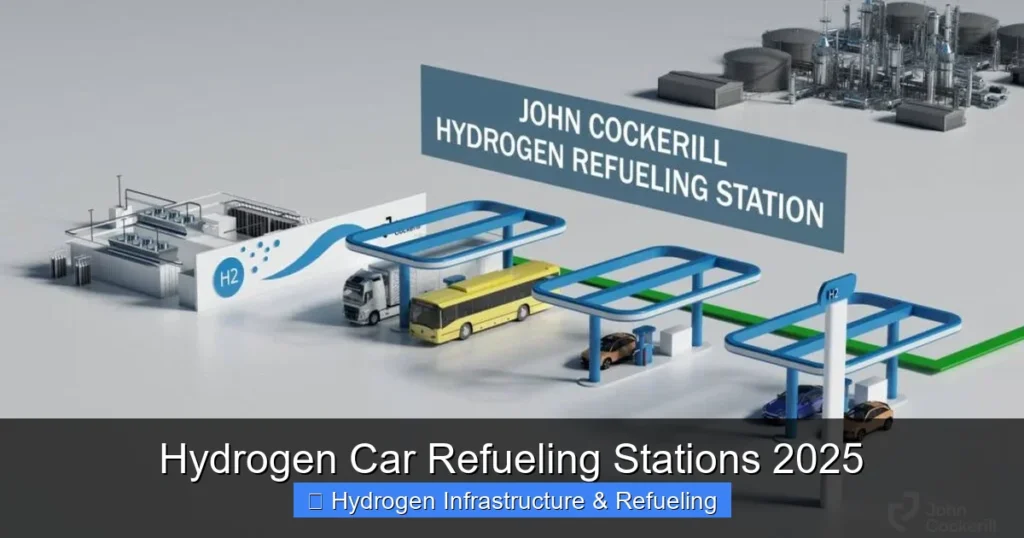
At first glance, a hydrogen refueling station looks a lot like a traditional gas station. There’s a pump, a hose, and a nozzle. But underneath the surface, the technology is far more complex—and far cleaner.
The Science Behind the Pump
Hydrogen refueling stations store hydrogen gas at extremely high pressures—typically 350 bar (5,000 psi) or 700 bar (10,000 psi)—depending on the vehicle. Most modern FCEVs, like the Toyota Mirai, are designed for 700-bar systems, allowing them to store more hydrogen and achieve longer ranges—up to 400 miles on a single fill.
When you pull up to the station, the process is surprisingly simple. You open the fuel door, connect the nozzle (which is specially designed to prevent leaks and ensure safety), and initiate the refuel via a touchscreen or mobile app. The station then communicates with your vehicle to confirm compatibility and begin transferring hydrogen. The entire process takes just 3 to 5 minutes—about the same as filling up a gasoline car.
But where does the hydrogen come from? That’s where things get interesting. Most stations today use hydrogen delivered by truck from centralized production facilities. This hydrogen is often produced via steam methane reforming (SMR), which uses natural gas and emits CO₂—so it’s not truly “green.” However, a growing number of stations are now using “green hydrogen,” produced by electrolysis powered by renewable energy like wind or solar. This method splits water into hydrogen and oxygen with zero emissions, making it the gold standard for sustainable fuel.
On-Site vs. Delivered Hydrogen
There are two main types of hydrogen refueling stations: those that produce hydrogen on-site and those that rely on delivered hydrogen.
On-site production stations use electrolyzers to generate hydrogen directly at the station. This reduces transportation costs and emissions, but it requires a reliable source of clean electricity and significant upfront investment. These stations are ideal for areas with abundant renewable energy and high hydrogen demand.
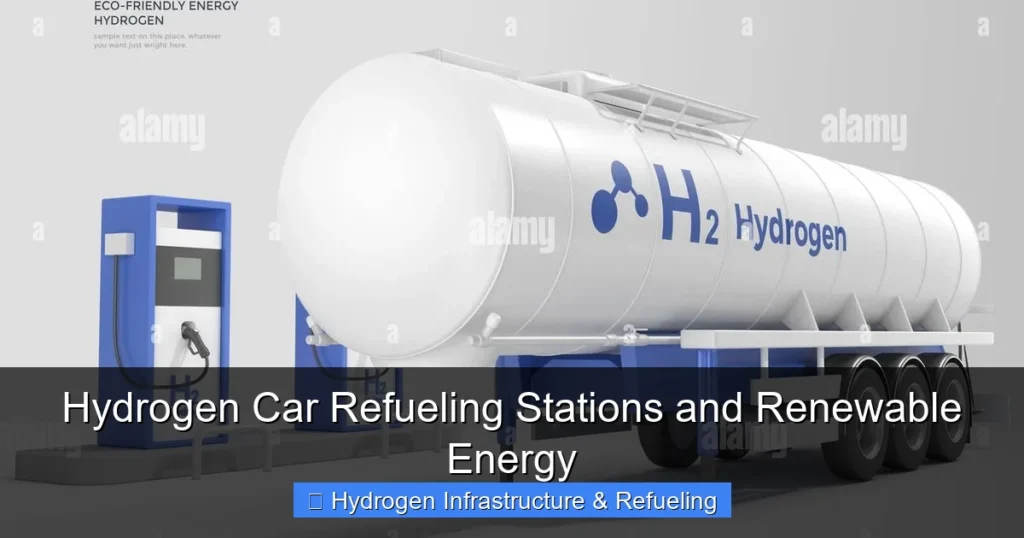
Delivered hydrogen stations, on the other hand, receive hydrogen via tube trailers from industrial gas suppliers. While this method is more common today due to lower initial costs, it comes with logistical challenges—like scheduling deliveries and managing storage. It also means the station’s environmental impact depends heavily on how the hydrogen was produced upstream.
Some stations are now adopting a hybrid model, combining on-site production with backup delivery to ensure reliability. For example, the True Zero network in California uses a mix of both, with plans to transition fully to green hydrogen by 2030.
Safety and Regulations
Safety is a top concern with hydrogen, given its flammability and low ignition energy. But modern refueling stations are designed with multiple layers of protection. Hydrogen is lighter than air, so it disperses quickly if leaked, reducing the risk of explosion. Stations are equipped with sensors, automatic shut-off valves, and ventilation systems to detect and respond to any issues.
Regulations also play a key role. In the U.S., the National Fire Protection Association (NFPA) sets strict standards for hydrogen fueling (NFPA 2), covering everything from storage to dispensing. Similar regulations exist in Europe (ISO/TS 19887) and Japan. These rules ensure that stations are built and operated safely, giving drivers peace of mind.
Global Coverage: Where Are Hydrogen Stations Located?
One of the biggest hurdles for hydrogen car adoption is availability. Unlike EV chargers, which can be installed almost anywhere, hydrogen stations require significant infrastructure and investment. As a result, coverage is still sparse—but it’s growing fast.
United States: California Leads the Way
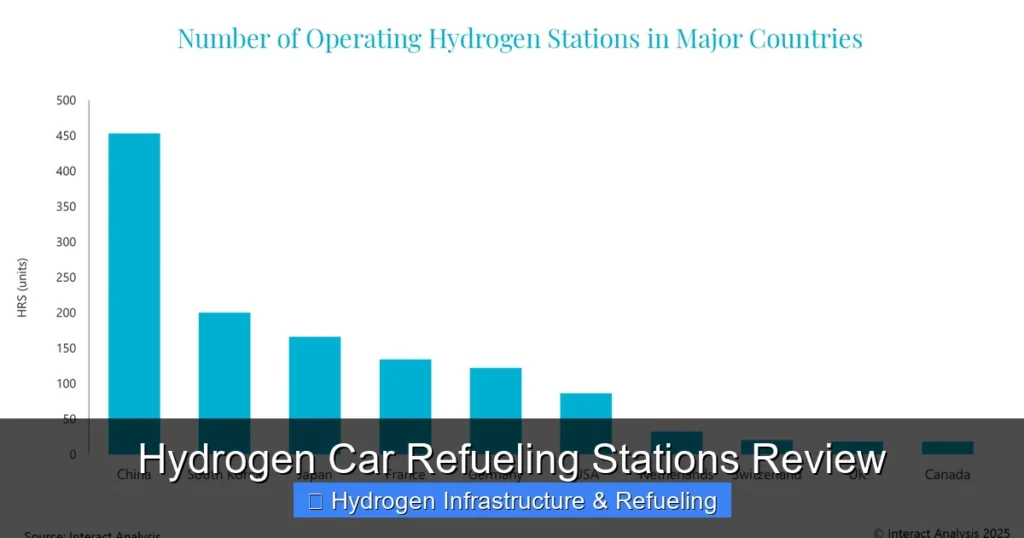
The U.S. has over 70 hydrogen refueling stations, with nearly all of them located in California. The state has been a pioneer in hydrogen infrastructure, thanks to aggressive climate goals and strong government support. The California Fuel Cell Partnership (CaFCP) has set a target of 1,000 stations by 2030, and progress is on track.
Major cities like Los Angeles, San Francisco, and San Diego have multiple stations, often located near highways or commercial hubs. The True Zero network, operated by FirstElement Fuel, is the largest in the state, with stations offering 700-bar refueling and real-time status updates via a mobile app.
Outside California, hydrogen infrastructure is limited. A few stations exist in Hawaii, Connecticut, and New York, but they’re mostly pilot projects. The U.S. Department of Energy’s H2@Scale initiative and the Bipartisan Infrastructure Law are funding new stations, but expansion will take time.
Europe: A Patchwork of Progress
Europe has around 200 hydrogen refueling stations, with Germany, France, the UK, and Scandinavia leading the charge. Germany’s H2 Mobility initiative aims to build 100 stations by 2025, with support from automakers like BMW and Daimler.
France has invested heavily in hydrogen, with stations along major highways and in urban centers like Paris and Lyon. The UK has a smaller network, but the government’s Hydrogen Strategy includes plans for 1,000 stations by 2030.
Scandinavian countries are also making strides. Norway, despite its focus on EVs, is building hydrogen stations for heavy transport, while Sweden and Denmark are testing green hydrogen production for refueling.
Asia: Japan and South Korea Are Ahead
Japan and South Korea are global leaders in hydrogen infrastructure. Japan has over 160 stations, thanks to strong government backing and partnerships between Toyota, Honda, and energy companies. The country’s “Basic Hydrogen Strategy” aims for 900 stations by 2030.
South Korea has around 120 stations, with Hyundai playing a major role. The government offers subsidies for both stations and FCEVs, and plans to deploy 31,000 hydrogen vehicles by 2025.
China is also investing heavily, with over 300 stations—mostly for buses and trucks. While passenger FCEVs are still rare, the country’s focus on heavy-duty transport could drive future growth.
Other Regions: Emerging Markets
Australia, Canada, and the Middle East are beginning to explore hydrogen infrastructure. Australia’s Renewable Energy Agency is funding green hydrogen projects, while Canada has stations in British Columbia and Quebec. In the Middle East, Saudi Arabia and the UAE are investing in hydrogen as part of their clean energy strategies.
User Experience: What It’s Like to Refuel a Hydrogen Car
So, what’s it actually like to use a hydrogen refueling station? For drivers of FCEVs, the experience is surprisingly familiar—and refreshingly fast.
Step-by-Step Refueling
1. **Locate a Station:** Use apps like PlugShare, H2.Live, or the automaker’s own navigation system to find nearby stations. Many FCEVs have built-in route planners that include hydrogen stops.
2. **Pull Up and Park:** Position your car so the fuel door aligns with the pump. Most stations have clear markings and ample space.
3. **Connect the Nozzle:** Open the fuel door and attach the nozzle. It’s designed to fit only one way, so there’s no risk of incorrect connection.
4. **Initiate Refuel:** Follow the on-screen prompts. Some stations require a membership or payment method, while others accept credit cards or mobile payments.
5. **Wait and Watch:** The pump will display the fill level and time remaining. Most fills take 3–5 minutes for a full tank.
6. **Disconnect and Go:** Once complete, the nozzle automatically releases. Close the fuel door and drive off.
Payment and Access
Payment methods vary by station. Some require a membership (like True Zero’s app-based system), while others accept credit cards or contactless payments. Many stations are open 24/7, but it’s wise to check hours and availability before heading out.
One tip: always check the station’s status before you go. Apps like H2.Live show real-time availability, so you don’t waste time driving to a closed or out-of-service pump.
Real-World Example: Driving the Toyota Mirai in California
Let’s say you’re driving a Toyota Mirai from San Francisco to Los Angeles—about 380 miles. With a range of 400 miles, you might not need to refuel. But if you do, you’ll find stations in cities like Santa Barbara, San Luis Obispo, and Santa Clarita.
Using the Toyota app, you can plan your route, reserve a pump, and pay seamlessly. The entire refuel takes less time than a coffee break. And because hydrogen is dispensed quickly, you’re back on the road in no time.
Costs and Economics of Hydrogen Refueling
Hydrogen may be clean, but it’s not cheap—at least not yet.
Price Per Fill
In the U.S., hydrogen typically costs between $12 and $16 per kilogram. A Toyota Mirai holds about 5.6 kg of hydrogen, so a full tank costs around $70–$90. That’s comparable to filling a gasoline SUV, but more expensive than charging an EV.
However, many automakers include free hydrogen for the first few years. Toyota offers $15,000 worth of free fuel with the Mirai, which covers about 7–8 fills. Hyundai provides similar incentives for the NEXO.
Infrastructure Costs
Building a hydrogen station is expensive—anywhere from $1 million to $3 million, depending on size and technology. That’s 10–20 times more than a fast EV charger. Costs include compressors, storage tanks, dispensers, safety systems, and land.
But prices are falling. Advances in electrolysis and manufacturing are reducing equipment costs. And as demand grows, economies of scale will help.
Who Pays?
Governments and private companies share the cost. In California, the state covers up to 75% of station costs through grants. In Europe, the EU’s Clean Hydrogen Partnership funds infrastructure projects. Automakers like Toyota and Hyundai also invest directly to support their vehicles.
The Future of Hydrogen Refueling Stations
The future looks bright—but it’s not without challenges.
Growth Projections
Analysts predict the global hydrogen refueling market will grow from $1.2 billion in 2023 to over $10 billion by 2030. Key drivers include government mandates, falling production costs, and increasing FCEV sales.
By 2030, experts expect 5,000–10,000 stations worldwide, with strong growth in North America, Europe, and Asia.
Technology Advances
New technologies are making stations smarter and more efficient. Mobile refuelers—trucks that deliver hydrogen to remote locations—are being tested for fleet operators. Liquid hydrogen storage could increase capacity and reduce delivery costs. And AI-powered systems are optimizing station operations and predicting maintenance needs.
Integration with Renewables
The biggest shift will be toward green hydrogen. As solar and wind power become cheaper, more stations will use on-site electrolysis powered by renewables. This closes the loop, creating a truly zero-emission fuel cycle.
Conclusion: Is Hydrogen the Right Choice for You?
Hydrogen car refueling stations are still a niche—but they’re no longer a fantasy. With fast refueling, zero emissions, and growing infrastructure, they offer a compelling alternative to both gasoline and battery electric vehicles.
For now, FCEVs make the most sense in regions with strong hydrogen networks, like California, Japan, and parts of Europe. They’re ideal for drivers who need long range and quick refueling, especially for road trips or commercial use.
But challenges remain: high costs, limited availability, and the need for green hydrogen production. As technology improves and investment increases, these barriers will fall.
If you’re considering a hydrogen car, do your research. Check station coverage in your area, understand the total cost of ownership, and take advantage of incentives. And remember: hydrogen isn’t replacing EVs—it’s complementing them. Together, they’re driving us toward a cleaner, greener future.
Frequently Asked Questions
How many hydrogen refueling stations are there in the U.S.?
As of 2024, there are over 70 hydrogen refueling stations in the U.S., with nearly all located in California. Expansion is underway in other states, but coverage remains limited compared to EV chargers.
How long does it take to refuel a hydrogen car?
Hydrogen cars refuel in just 3 to 5 minutes—similar to gasoline vehicles. This makes them ideal for long-distance driving and commercial applications where downtime must be minimized.
Is hydrogen fuel safe?
Yes, hydrogen is safe when handled properly. Stations are built with multiple safety systems, including leak detection, automatic shut-offs, and ventilation. Hydrogen’s low density also helps it disperse quickly if released.
Can I produce hydrogen at home?
Home hydrogen production is technically possible with electrolyzers, but it’s not practical for most people due to cost, space, and energy requirements. Most drivers rely on public stations.
What is green hydrogen?
Green hydrogen is produced by electrolysis using renewable energy like wind or solar. It emits no CO₂ and is the most sustainable form of hydrogen fuel.
Are hydrogen cars better than electric cars?
It depends on your needs. Hydrogen cars offer faster refueling and longer range, making them better for long trips or heavy-duty use. Battery EVs are more efficient and have broader charging infrastructure, making them ideal for daily commuting.