Hydrogen fuel cell vehicle refueling speed is one of the biggest advantages over battery electric vehicles (BEVs), offering a fill-up time similar to gasoline cars—typically under 10 minutes. This makes hydrogen a strong contender for long-distance travel and commercial fleets where downtime matters.
Key Takeaways
- Refueling Speed: Most hydrogen fuel cell vehicles (FCEVs) can be refueled in 3 to 10 minutes, rivaling traditional gasoline vehicles.
- Technology Behind the Speed: High-pressure hydrogen dispensers (700 bar) enable rapid fueling by compressing gas into the onboard tank.
- Comparison to EVs: While Level 2 EV charging takes hours and even fast DC charging requires 30+ minutes, hydrogen refueling is significantly faster.
- Infrastructure Challenges: Limited hydrogen stations and high production costs currently restrict widespread adoption, despite the speed advantage.
- Ideal Use Cases: FCEVs are best suited for long-haul trucking, buses, and fleet vehicles where quick turnaround is essential.
- Safety and Standards: Strict safety protocols and international standards ensure safe, reliable refueling at certified stations.
- Future Outlook: Advances in green hydrogen production and station deployment could make fast refueling more accessible by 2030.
📑 Table of Contents
- Why Hydrogen Fuel Cell Vehicle Refueling Speed Matters
- How Hydrogen Refueling Works: The Science Behind the Speed
- Comparing Refueling Speeds: Hydrogen vs. Gasoline vs. Electric
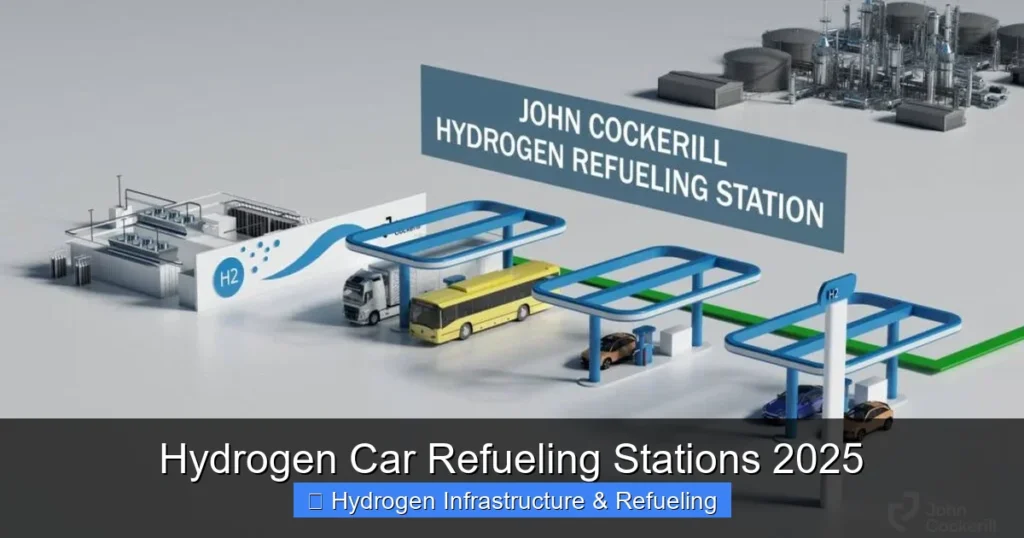
- The Role of Hydrogen Infrastructure in Refueling Speed
- Safety and Reliability of Fast Hydrogen Refueling
- Who Benefits Most from Fast Hydrogen Refueling?
- The Future of Hydrogen Refueling Speed
- Conclusion
Why Hydrogen Fuel Cell Vehicle Refueling Speed Matters
Imagine pulling up to a fueling station, stepping out of your car, and being back on the road in under ten minutes—just like you would with gasoline. That’s the reality for drivers of hydrogen fuel cell vehicles (FCEVs). Unlike battery electric vehicles (BEVs), which can take anywhere from 30 minutes to several hours to recharge, hydrogen-powered cars offer a near-instant refueling experience. This speed isn’t just a convenience—it’s a game-changer for transportation efficiency, especially for commercial fleets, long-distance travelers, and emergency services.
The appeal of hydrogen fuel cell vehicle refueling speed lies in its simplicity. You don’t need to wait for a battery to charge. Instead, hydrogen gas is pumped directly into a high-pressure tank under the vehicle, much like filling up with gas or diesel. The process is clean, quiet, and remarkably fast. In fact, most modern FCEVs—like the Toyota Mirai, Hyundai NEXO, and Honda Clarity Fuel Cell—can be refueled in just 3 to 5 minutes for a full tank. That’s faster than it takes to grab a coffee and use the restroom during a road trip.
But why does this matter so much? For one, it eliminates “range anxiety” in a different way than BEVs. While EVs worry about finding a charger and waiting, FCEV drivers worry less about downtime. This makes hydrogen a compelling option for industries where time is money—think delivery trucks, taxis, and public transit. Even for everyday drivers, the ability to refuel quickly means less time spent at stations and more time on the road.
How Hydrogen Refueling Works: The Science Behind the Speed
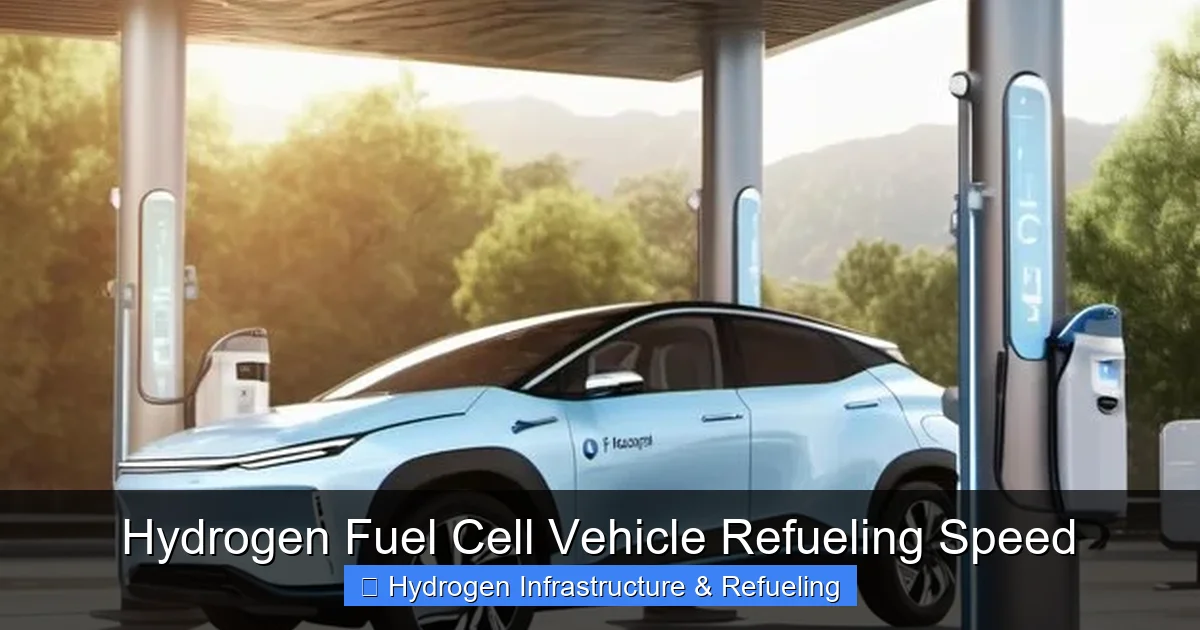
Visual guide about Hydrogen Fuel Cell Vehicle Refueling Speed
Image source: img.freepik.com
To understand why hydrogen fuel cell vehicle refueling speed is so impressive, it helps to know how the process works. Unlike electric vehicles that store energy in heavy lithium-ion batteries, FCEVs generate electricity on demand using hydrogen gas and oxygen from the air. The hydrogen is stored in high-strength carbon-fiber tanks at extremely high pressures—typically 700 bar (about 10,000 psi). This compression allows a large amount of hydrogen to fit into a relatively small space, giving the vehicle a long driving range.
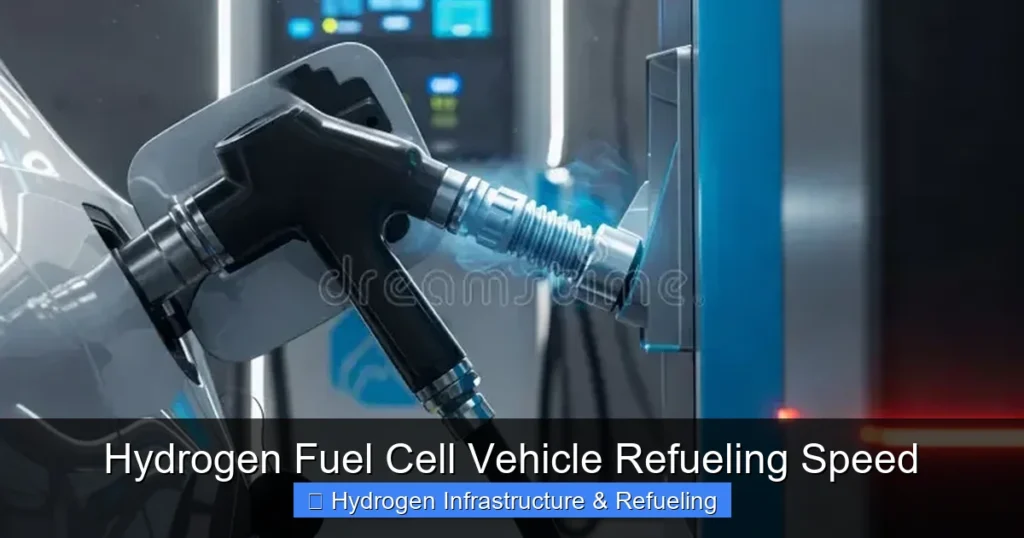
When you arrive at a hydrogen refueling station, the process begins with a safety check. The dispenser connects to the vehicle’s fueling port using a specialized nozzle that locks in place. Once the connection is secure, the system performs a series of automated checks to ensure there are no leaks and that the tank is ready to receive fuel. This entire pre-check phase usually takes less than a minute.
Then comes the actual refueling. High-pressure hydrogen gas flows from the station’s storage tanks into the vehicle’s onboard tank. Because the gas is already compressed and the dispensing system is optimized for speed, the fill-up happens rapidly. Most stations can deliver hydrogen at a rate of about 1 kg per minute. Since a typical FCEV holds around 5 to 6 kg of hydrogen, a full refuel takes just 5 to 6 minutes. Some advanced stations and vehicles can even achieve fills in under 3 minutes.
One key factor enabling this speed is thermal management. As hydrogen is compressed and injected into the tank, it heats up. If the temperature gets too high, the tank’s safety systems may slow or stop the flow to prevent damage. To counteract this, modern refueling systems use pre-cooled hydrogen (often cooled to -40°C) and advanced algorithms that adjust flow rates in real time. This ensures a safe, consistent, and fast fill—even on hot days.
Comparing Refueling Speeds: Hydrogen vs. Gasoline vs. Electric
When it comes to refueling speed, hydrogen fuel cell vehicles hold a unique position in the clean transportation landscape. Let’s break down how they compare to traditional gasoline cars and battery electric vehicles.
Gasoline vehicles are the gold standard for refueling speed. Most drivers can fill up a 12-gallon tank in 3 to 5 minutes. The process is familiar, widely available, and requires no waiting. Hydrogen FCEVs match this experience almost exactly. In fact, many drivers report that refueling a hydrogen car feels nearly identical to pumping gas—just with a different nozzle and a quieter engine.
Now, compare that to electric vehicles. Level 2 charging, the most common type found at homes and public stations, delivers about 25 miles of range per hour. That means a full charge could take 8 to 12 hours for a long-range EV. Even fast DC charging—available at select stations—typically takes 30 to 45 minutes to reach 80% capacity. And that’s under ideal conditions. In cold weather or with older batteries, charging times can increase significantly.
Here’s a quick comparison:
- Gasoline car: 3–5 minutes for a full tank (400+ mile range)
- Hydrogen FCEV: 3–10 minutes for a full tank (300–400 mile range)
- BEV (DC fast charging): 30–45 minutes for 80% charge (200–300 mile range)
- BEV (Level 2 charging): 6–12 hours for a full charge
The difference is stark. While BEVs excel in energy efficiency and home charging convenience, they can’t match the speed of hydrogen refueling. This makes FCEVs a better fit for applications where downtime is costly. For example, a delivery truck that needs to make multiple stops in a day can’t afford to sit at a charger for an hour. A hydrogen-powered truck, however, can refuel in minutes and keep moving.
It’s also worth noting that hydrogen refueling doesn’t degrade over time like battery charging. Lithium-ion batteries lose capacity with repeated fast charging, especially at high speeds. Hydrogen tanks, on the other hand, don’t suffer from the same wear and tear. As long as the tank is properly maintained, it can handle thousands of refuels without losing performance.
The Role of Hydrogen Infrastructure in Refueling Speed
While hydrogen fuel cell vehicle refueling speed is impressive, its real-world impact depends heavily on infrastructure. Unlike gasoline stations, which are on nearly every corner, hydrogen refueling stations are still rare—especially outside of California, Japan, South Korea, and parts of Europe.
As of 2024, there are fewer than 200 public hydrogen stations in the United States, with over 90% located in California. This limited network means that even if your FCEV can refuel in 5 minutes, you might have to drive 50 miles to find a station. That’s a major barrier to adoption.
However, the infrastructure is growing. Governments and private companies are investing billions in hydrogen production and distribution. The U.S. Department of Energy’s H2@Scale initiative aims to make hydrogen a key part of the clean energy future. Similarly, the European Union’s Hydrogen Strategy targets 1,000 hydrogen refueling stations by 2030.
One of the biggest challenges is the cost of building and operating hydrogen stations. Unlike gasoline pumps, which rely on existing oil infrastructure, hydrogen stations require specialized equipment—high-pressure compressors, cryogenic cooling systems, and safety monitors. These components are expensive, and the low volume of FCEVs means stations often operate at a loss.
But there’s progress. Newer stations are becoming more efficient. For example, some use on-site electrolysis to produce hydrogen from water and renewable electricity, reducing reliance on trucked-in fuel. Others are co-located with gasoline stations, making them more accessible to drivers.
Another factor is standardization. Early hydrogen stations used different nozzles and protocols, making it hard for vehicles from different manufacturers to refuel at the same station. Today, most stations comply with SAE J2601, an international standard that ensures compatibility and safe, fast refueling across brands.
As infrastructure improves, hydrogen fuel cell vehicle refueling speed will become more than just a technical advantage—it will be a practical one. Imagine a future where hydrogen stations are as common as gas stations, and drivers can top up in minutes during a cross-country trip. That future is still a few years away, but it’s getting closer.
Safety and Reliability of Fast Hydrogen Refueling
With any high-pressure system, safety is a top concern. After all, hydrogen is a flammable gas, and refueling involves pumping it at 10,000 psi. So how can hydrogen fuel cell vehicle refueling speed be both fast and safe?
The answer lies in rigorous engineering, strict regulations, and multiple layers of safety systems. Every component—from the nozzle to the tank—is designed to prevent leaks, over-pressurization, and ignition.
One key safety feature is the use of breakaway couplings. If a driver drives away while the nozzle is still connected, the coupling automatically disconnects and seals both the vehicle and the dispenser, preventing gas release. Similarly, thermal sensors monitor the temperature of the hydrogen during refueling. If the gas gets too hot, the system slows or stops the flow to protect the tank.
Hydrogen itself is also safer than many people think. It’s lighter than air, so if a leak occurs, it quickly rises and disperses—unlike gasoline vapors, which pool near the ground. Plus, hydrogen burns with a nearly invisible flame, but modern detectors can sense leaks long before they become dangerous.
International standards play a big role in ensuring safety. The SAE J2601 protocol, mentioned earlier, includes detailed procedures for safe refueling, including pre-cooling requirements and maximum flow rates. Stations are also required to have emergency shut-off systems, fire suppression equipment, and regular inspections.
Drivers also play a part. Before refueling, you’ll typically need to ground the vehicle to prevent static discharge. The dispenser will guide you through the steps, and many systems won’t start until all safety checks are complete.
In practice, hydrogen refueling has an excellent safety record. There have been no major incidents at public hydrogen stations, and manufacturers like Toyota and Hyundai have put their FCEVs through extensive crash and fire testing. The tanks are designed to withstand extreme conditions—including high-speed impacts and direct flame exposure—without rupturing.
So while the idea of pumping high-pressure gas into your car might sound risky, the reality is that hydrogen refueling is one of the safest forms of vehicle fueling available today—especially when done at certified stations.
Who Benefits Most from Fast Hydrogen Refueling?
Not every driver needs to refuel in under 10 minutes. For city dwellers who charge their EVs overnight at home, speed isn’t a priority. But for certain users, hydrogen fuel cell vehicle refueling speed is a critical advantage.
Long-haul trucking is one of the biggest beneficiaries. Semi-trucks travel hundreds of miles a day and can’t afford to stop for hours to recharge. Hydrogen-powered trucks, like the Nikola Tre or Hyundai XCIENT, can refuel in 15 to 20 minutes and travel over 500 miles on a single tank. That’s a game-changer for logistics companies.
Public transit is another ideal use case. Buses operate on fixed routes and return to depots daily. A hydrogen bus can refuel in minutes during a layover, ensuring it’s ready for the next shift. Cities like Aberdeen, Scotland, and Cologne, Germany, have already deployed hydrogen bus fleets with great success.
Emergency services also benefit. Fire trucks, ambulances, and police vehicles need to be ready at a moment’s notice. Waiting 30 minutes for a charge could mean the difference between life and death. Hydrogen allows these vehicles to refuel quickly and stay mission-ready.
Even ride-sharing and taxi services see value. A driver who spends 30 minutes charging loses half an hour of income. With hydrogen, they can refuel in the time it takes to grab a snack and be back on the road.
Of course, individual consumers can benefit too—especially those who take frequent road trips or live in areas with limited EV charging. If you’re driving from Los Angeles to San Francisco, a hydrogen car lets you stop once, refuel in minutes, and keep going. No need to plan your route around charging stations.
As hydrogen infrastructure expands, these benefits will become more accessible. And with advancements in green hydrogen—produced using renewable energy—the environmental upside grows even larger.
The Future of Hydrogen Refueling Speed
The future of hydrogen fuel cell vehicle refueling speed looks bright. As technology improves and infrastructure expands, we can expect even faster, safer, and more convenient refueling experiences.
One area of innovation is higher-flow dispensers. Current stations deliver about 1 kg of hydrogen per minute. Researchers are working on systems that can double or even triple that rate, potentially cutting refuel times to under 2 minutes for some vehicles.
Another trend is mobile refueling. Companies like Hyzon and Plug Power are developing truck-mounted hydrogen dispensers that can deliver fuel directly to fleets at depots or job sites. This eliminates the need for drivers to travel to a station, saving time and increasing efficiency.
Green hydrogen production is also advancing. Using renewable energy to split water into hydrogen and oxygen creates a truly zero-emission fuel. As solar and wind power become cheaper, green hydrogen will become more affordable and sustainable.
Governments are stepping up too. The U.S. Inflation Reduction Act includes tax credits for hydrogen production, while the European Union is funding hydrogen corridors along major highways. These investments will accelerate station deployment and make fast refueling a reality for more drivers.
By 2030, we could see hydrogen stations in every major city and along key travel routes. With faster dispensers, better safety systems, and lower costs, hydrogen fuel cell vehicle refueling speed will no longer be a niche advantage—it will be a standard expectation.
Conclusion
Hydrogen fuel cell vehicle refueling speed is one of the most compelling reasons to consider an FCEV. In just 3 to 10 minutes, you can fill up and hit the road with a range of 300 to 400 miles—no waiting, no anxiety. While battery electric vehicles dominate the headlines, hydrogen offers a faster, more familiar refueling experience that’s especially valuable for commercial fleets and long-distance travel.
Yes, infrastructure is still limited, and costs remain high. But with ongoing investments and technological advances, the gap is closing. As hydrogen stations become more common and production shifts to renewable sources, fast refueling will become a reality for more drivers.
If you’re looking for a clean, efficient, and time-saving way to fuel your vehicle, hydrogen is worth a closer look. It’s not just about speed—it’s about freedom. The freedom to go where you want, when you want, without waiting around.
The future of transportation isn’t just electric. It’s fast, flexible, and fueled by innovation. And hydrogen is leading the charge.
Frequently Asked Questions
How long does it take to refuel a hydrogen fuel cell vehicle?
Most hydrogen fuel cell vehicles can be refueled in 3 to 10 minutes, depending on the station and vehicle model. This is similar to the time it takes to fill up a gasoline car.
Is hydrogen refueling safe?
Yes, hydrogen refueling is very safe. Stations use multiple safety systems, including leak detectors, thermal sensors, and emergency shut-offs. Hydrogen also disperses quickly if released, reducing fire risk.
Can I refuel a hydrogen car at home?
Currently, home hydrogen refueling is not widely available due to cost and safety regulations. Most drivers rely on public stations, though some companies are developing home refueling units for the future.
How does hydrogen refueling compare to EV charging?
Hydrogen refueling is much faster than EV charging. While fast EV charging takes 30+ minutes, hydrogen refueling takes under 10 minutes—making it better for long trips and commercial use.
Are there enough hydrogen stations to support widespread use?
Not yet. As of 2024, there are fewer than 200 public hydrogen stations in the U.S., mostly in California. However, governments and companies are investing in expansion, with goals to build thousands by 2030.
What vehicles use hydrogen fuel cells?
Popular hydrogen fuel cell vehicles include the Toyota Mirai, Hyundai NEXO, and Honda Clarity Fuel Cell. Hydrogen is also used in buses, trucks, and forklifts.