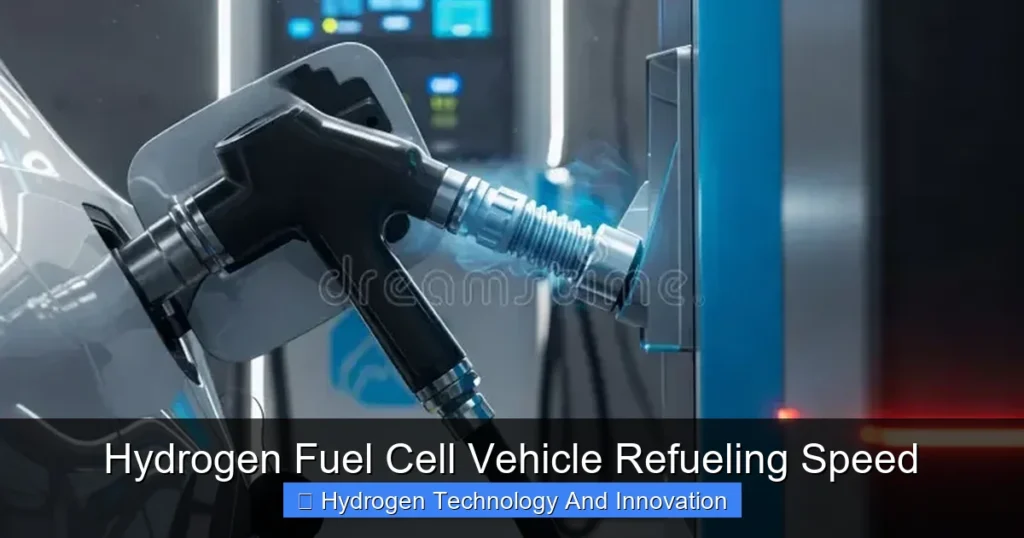
Hydrogen fuel cell vehicle refueling speed rivals gasoline cars, taking just 3–5 minutes for a full tank. Unlike battery electric vehicles that need hours to recharge, hydrogen offers quick, clean energy—making it ideal for long-distance travel and fleet operations.
Key Takeaways
- Refueling is fast: Most hydrogen fuel cell vehicles refill in 3–5 minutes, similar to gasoline cars.
- No long charging waits: Unlike EVs, you don’t need to plug in for hours—just fill up and go.
- Consistent performance: Refueling speed remains stable in cold weather, unlike battery charging.
- Growing infrastructure: More hydrogen stations are opening, especially in California, Japan, and Europe.
- Ideal for fleets: Trucks, buses, and taxis benefit from quick refueling and long range.
- Safety and reliability: Modern stations meet strict safety standards, ensuring safe, fast fills.
- Future-ready tech: Advances in compression and storage will make refueling even faster and more efficient.
📑 Table of Contents
- Introduction: The Need for Speed in Clean Transportation
- How Hydrogen Refueling Works: A Closer Look
- Comparing Refueling Speed: Hydrogen vs. Electric vs. Gasoline
- The State of Hydrogen Refueling Infrastructure
- Advantages of Fast Refueling for Consumers and Fleets
- Safety and Reliability of Hydrogen Refueling
- The Future of Hydrogen Refueling Speed
- Conclusion: Speed, Sustainability, and the Road Ahead
Introduction: The Need for Speed in Clean Transportation
Imagine pulling up to a fueling station, filling your car in under five minutes, and driving 300–400 miles on a single tank—all without emitting a single drop of pollution. That’s not a dream. It’s the reality of hydrogen fuel cell vehicles (FCEVs). While electric vehicles (EVs) have dominated the clean car conversation, hydrogen-powered cars offer a compelling alternative—especially when it comes to refueling speed.
One of the biggest concerns for drivers switching from gasoline to electric is “range anxiety” and long charging times. Even with fast chargers, most EVs take 30 minutes to an hour to reach 80% charge. Full charges can take much longer. For road trips or busy professionals, that downtime adds up. Hydrogen fuel cell vehicles solve this problem with refueling times that match traditional gas cars. In just 3 to 5 minutes, you can top off your hydrogen tank and be back on the road.
This speed isn’t just convenient—it’s transformative. It makes hydrogen a strong contender for commercial fleets, long-haul trucking, and public transportation, where downtime costs money. As the world pushes toward zero-emission transportation, understanding hydrogen fuel cell vehicle refueling speed is key to evaluating the future of clean mobility.
How Hydrogen Refueling Works: A Closer Look
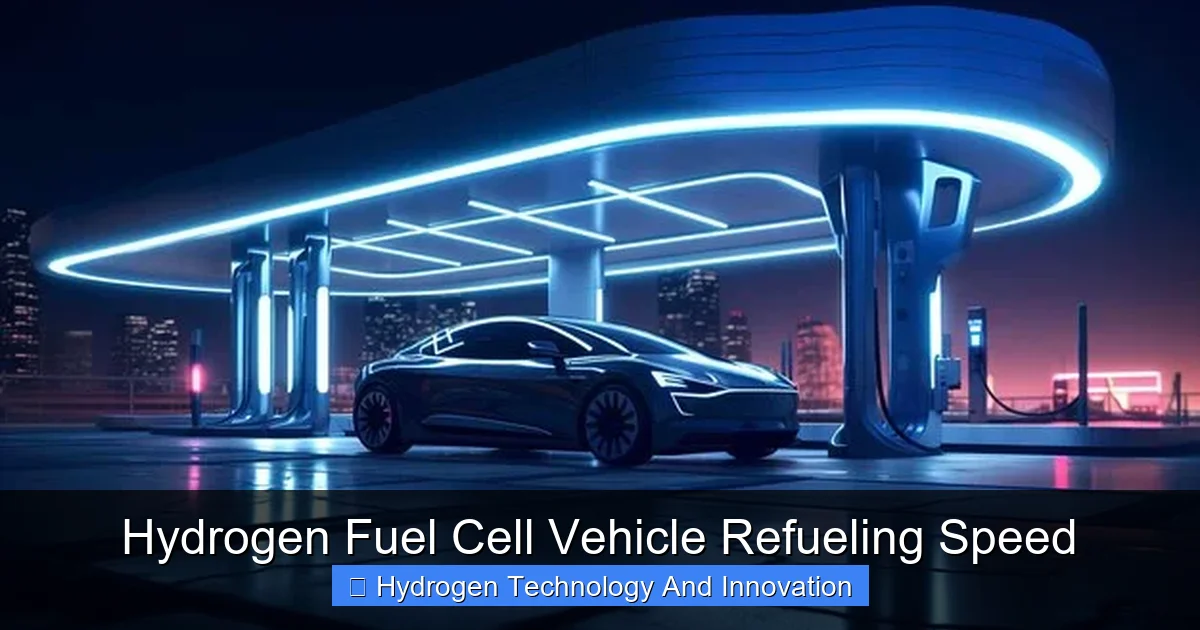
Visual guide about Hydrogen Fuel Cell Vehicle Refueling Speed
Image source: img.freepik.com
To appreciate why hydrogen refueling is so fast, it helps to understand how the process works. Unlike battery electric vehicles that store energy in large, heavy batteries, hydrogen fuel cell vehicles generate electricity on board using hydrogen gas and oxygen from the air. The only byproduct? Clean water vapor.
When you pull up to a hydrogen refueling station, the process is surprisingly similar to filling up with gasoline. You open the fuel door, connect a dispenser nozzle to the vehicle’s fuel port, and the station pumps compressed hydrogen gas directly into the car’s high-pressure storage tanks. These tanks are designed to hold hydrogen at extremely high pressures—typically 700 bar (about 10,000 psi)—which allows them to store enough fuel for a long driving range.
The entire refueling process is automated and monitored by both the station and the vehicle. Sensors check for leaks, ensure proper pressure levels, and confirm the connection is secure before fuel begins to flow. Most modern FCEVs also have safety systems that prevent overfilling or over-pressurization. Once the tank reaches the correct pressure, the pump automatically shuts off—usually in just a few minutes.
The Science Behind the Speed
So why is this so fast? The answer lies in the physical properties of hydrogen and the way it’s stored. Hydrogen is the lightest element, but it’s also the least dense gas at normal pressure. To make it practical for vehicles, it must be compressed to very high pressures. This compression allows a lot of energy to be stored in a relatively small space.
Because hydrogen is a gas, it flows quickly through the fuel line—much faster than liquid fuels like gasoline or diesel. This high flow rate means the tank can be filled rapidly. In contrast, charging an EV involves moving electrons into a battery, which is a slower chemical process. Even with ultra-fast chargers, the rate is limited by heat generation and battery chemistry.
Another factor is the simplicity of the refueling interface. There’s no need for complex charging protocols or communication between the car and the grid. The hydrogen dispenser communicates directly with the vehicle’s fuel system to ensure a safe, fast fill. This streamlined process is one reason why hydrogen refueling can be completed in under five minutes—even in cold weather.
Real-World Refueling Experience
If you’ve ever used a hydrogen station, you know it’s a smooth, quiet experience. Take the Toyota Mirai, for example. When you pull up to a station like those operated by Shell or FirstElement Fuel in California, the process is intuitive. You swipe a payment card, connect the nozzle, and within moments, the pump begins filling the tank. A display on the dispenser shows the fill level and estimated time remaining.
Most drivers report that the entire process—from arrival to departure—takes less than 10 minutes, with the actual fueling taking just 3 to 5 minutes. That’s faster than many gas stations, where you might spend time paying, getting a receipt, or grabbing a coffee. For fleet operators, this efficiency translates into higher vehicle utilization and lower operational costs.
Comparing Refueling Speed: Hydrogen vs. Electric vs. Gasoline
When evaluating clean transportation options, refueling speed is a critical factor. Let’s compare hydrogen fuel cell vehicles with battery electric vehicles (BEVs) and traditional internal combustion engine (ICE) vehicles.
Gasoline cars are the gold standard for speed. A full tank takes 2 to 5 minutes to fill, and you can drive 300–400 miles. The infrastructure is everywhere, and the process is familiar. But of course, gasoline vehicles emit carbon dioxide and other pollutants.
Battery electric vehicles offer zero emissions, but charging takes much longer. Even with a Level 3 DC fast charger, most EVs need 30 to 45 minutes to go from 10% to 80% charge. A full charge can take over an hour. Level 2 chargers, common at homes and workplaces, can take 4 to 10 hours for a full charge. This makes EVs less practical for long trips or time-sensitive operations.
Hydrogen fuel cell vehicles strike a balance. They offer the refueling speed of gasoline cars—typically 3 to 5 minutes for a full tank—while producing zero emissions. The driving range is also comparable: most FCEVs can travel 300–400 miles on a single fill. This makes them ideal for drivers who want clean energy without sacrificing convenience.
Weather and Refueling Performance
One advantage hydrogen has over batteries is consistent performance in cold weather. In freezing temperatures, EV charging slows down significantly. Batteries lose efficiency, and charging times can double or even triple. Preconditioning the battery helps, but it still adds time.
Hydrogen refueling, on the other hand, is largely unaffected by cold weather. The gas flows just as quickly, and the tanks maintain their pressure. This reliability is a major benefit for drivers in northern climates or for commercial fleets that operate year-round.
Real-World Examples
Consider the Hyundai NEXO, one of the most popular hydrogen SUVs. It has a range of over 380 miles and refuels in about 5 minutes. Compare that to a Tesla Model Y, which has a similar range but takes at least 30 minutes to fast-charge to 80%. For a family on a road trip, that’s a significant difference in travel time.
In commercial use, the speed advantage is even more pronounced. The Kenworth T680 FCEV truck, designed for long-haul freight, can refuel in under 15 minutes—compared to several hours for a battery-electric truck. This allows trucks to stay on the road longer, improving delivery times and reducing costs.
The State of Hydrogen Refueling Infrastructure
One of the biggest challenges for hydrogen vehicles is the availability of refueling stations. Unlike gasoline stations, which number in the hundreds of thousands across the U.S., hydrogen stations are still limited. As of 2024, there are fewer than 100 public hydrogen stations in the United States, with the vast majority located in California.
However, the infrastructure is growing. California leads the way with over 60 stations, and the state has committed to building 200 by 2026. Companies like Air Liquide, Shell, and Toyota are investing heavily in hydrogen networks. In Europe, countries like Germany, France, and the Netherlands are expanding their hydrogen corridors. Japan and South Korea also have robust hydrogen infrastructures, with hundreds of stations supporting government-backed FCEV adoption.
How Stations Are Built and Operated
Hydrogen refueling stations are more complex than gas stations. They require high-pressure compressors, storage tanks, cooling systems, and advanced safety monitoring. Most stations use hydrogen delivered by truck from industrial gas plants, though some are starting to produce hydrogen on-site using electrolysis powered by renewable energy.
The cost of building a hydrogen station is high—typically $1 to $3 million—compared to $500,000 for a fast-charging EV station. This has slowed expansion, but costs are expected to fall as technology improves and demand grows.
User Experience and Accessibility
Despite the limited number of stations, the user experience is generally positive. Stations are clean, quiet, and easy to use. Payment is typically done via credit card or mobile app, and many stations offer real-time status updates online. Some, like those in California, are open 24/7.
For drivers, the key is planning. Apps like H2USA and PlugShare show station locations, availability, and wait times. As the network grows, finding a station will become as easy as finding a gas station today.
Advantages of Fast Refueling for Consumers and Fleets
The speed of hydrogen refueling isn’t just a convenience—it’s a game-changer for both individual drivers and commercial operators.
For everyday consumers, fast refueling means less time spent at the pump and more time on the road. It eliminates the need to plan charging stops on long trips. It also reduces “range anxiety,” the fear of running out of power before reaching a charger. With hydrogen, you can fill up quickly and drive confidently, just like with a gasoline car.
For fleet operators, the benefits are even greater. Delivery trucks, taxis, and buses operate on tight schedules. Downtime for charging can disrupt routes and reduce revenue. Hydrogen allows these vehicles to refuel in minutes and return to service immediately. This improves efficiency, lowers operating costs, and supports sustainability goals.
Case Study: Hydrogen Buses in Europe
In cities like Aberdeen, Scotland, and Cologne, Germany, hydrogen-powered buses are already in service. These buses refuel in under 10 minutes and can operate all day on a single tank. They emit only water, improving air quality in urban areas. The fast refueling allows for continuous operation, making them a practical alternative to diesel buses.
Future of Long-Haul Trucking
One of the most promising applications for hydrogen is in long-haul trucking. Companies like Nikola, Toyota, and Hyundai are developing hydrogen-powered semis that can travel 500–750 miles on a single fill. Refueling takes 15–20 minutes—far faster than the hours required for battery-electric trucks. This could revolutionize freight transport, reducing emissions without sacrificing efficiency.
Safety and Reliability of Hydrogen Refueling
Safety is a common concern when it comes to hydrogen, but modern refueling systems are designed with multiple layers of protection. Hydrogen is flammable, but it’s also lighter than air, so it disperses quickly if leaked. Unlike gasoline, it doesn’t pool on the ground.
Hydrogen stations are built to meet strict international safety standards, including those from the Society of Automotive Engineers (SAE) and the International Organization for Standardization (ISO). Sensors monitor for leaks, pressure anomalies, and temperature changes. If a problem is detected, the system shuts down automatically.
Vehicles are also equipped with safety features. The fuel tanks are made of carbon fiber and designed to withstand extreme impacts and pressures. They undergo rigorous testing, including fire exposure and crash simulations. In the event of a collision, valves close automatically to prevent leaks.
Public Perception and Education
Despite these safeguards, public perception lags behind reality. Many people still associate hydrogen with the Hindenburg disaster, but modern hydrogen technology is far safer. Education and transparency are key to building trust. Automakers and station operators are working to inform the public about the safety and reliability of hydrogen refueling.
The Future of Hydrogen Refueling Speed
As technology advances, hydrogen refueling is expected to become even faster and more efficient. Researchers are exploring new compression methods, improved storage materials, and on-site hydrogen production using renewable energy.
One promising development is “high-flow” refueling, which could reduce fill times to under 3 minutes. Another is the use of liquid hydrogen, which stores more energy per volume but requires cryogenic cooling. While more complex, liquid hydrogen could enable longer ranges and faster refueling for heavy-duty vehicles.
Integration with Renewable Energy
The future of hydrogen lies in green hydrogen—hydrogen produced using renewable electricity to split water into hydrogen and oxygen. This process, called electrolysis, emits no carbon. When paired with solar or wind power, it creates a truly sustainable fuel cycle.
As green hydrogen production scales up, refueling stations could generate their own fuel on-site, reducing delivery costs and increasing availability. This would make hydrogen even more attractive for widespread adoption.
Conclusion: Speed, Sustainability, and the Road Ahead
Hydrogen fuel cell vehicle refueling speed is one of the technology’s most compelling advantages. In just 3 to 5 minutes, drivers can fill up and drive hundreds of miles—without emissions. This speed matches gasoline cars and far surpasses the charging times of electric vehicles, making hydrogen a practical choice for a wide range of applications.
While infrastructure is still developing, progress is being made in key markets like California, Europe, and Asia. As stations multiply and technology improves, hydrogen could play a major role in the clean transportation revolution. For fleets, long-haul transport, and drivers who value convenience, hydrogen offers a fast, reliable, and sustainable solution.
The future of transportation isn’t just about going electric—it’s about choosing the right tool for the job. And when it comes to speed, hydrogen is leading the charge.
Frequently Asked Questions
How long does it take to refuel a hydrogen fuel cell vehicle?
Most hydrogen fuel cell vehicles refuel in 3 to 5 minutes, similar to gasoline cars. This includes the time to connect the nozzle and fill the high-pressure tank.
Is hydrogen refueling safe?
Yes, hydrogen refueling is safe. Stations and vehicles have multiple safety systems, including leak detection, automatic shutoff, and reinforced fuel tanks. Hydrogen disperses quickly if released, reducing fire risk.
Can I refuel a hydrogen car in cold weather?
Yes, hydrogen refueling works well in cold weather. Unlike EV charging, which slows down in the cold, hydrogen flows quickly and tanks maintain pressure, ensuring fast fills year-round.
Where can I find hydrogen refueling stations?
Most hydrogen stations are in California, with growing networks in Europe, Japan, and South Korea. Use apps like PlugShare or H2USA to locate stations near you.
How does hydrogen refueling compare to EV charging?
Hydrogen refueling is much faster—3–5 minutes vs. 30+ minutes for fast EV charging. It also offers consistent performance in cold weather and doesn’t require long downtimes.
Are hydrogen vehicles practical for long trips?
Yes, hydrogen vehicles are ideal for long trips. With a range of 300–400 miles and quick refueling, they eliminate the need for frequent stops and reduce travel time compared to EVs.