Hydrogen fuel cell vehicles (FCEVs) offer a zero-emission alternative to gasoline-powered cars, using clean hydrogen to generate electricity and emit only water vapor. As part of broader clean energy adoption, FCEVs are gaining momentum in transportation, industry, and energy storage, helping nations meet climate goals and reduce dependence on fossil fuels.
Key Takeaways
- Zero Tailpipe Emissions: Hydrogen fuel cell vehicles produce only water vapor as exhaust, making them a truly clean transportation option.
- Fast Refueling and Long Range: FCEVs can refuel in under 5 minutes and travel 300–400 miles on a single tank, rivaling conventional vehicles.
- Complementary to Battery Electric Vehicles: FCEVs and EVs serve different needs—FCEVs excel in heavy-duty and long-haul transport where battery weight and charging time are limiting factors.
- Green Hydrogen is Key: For FCEVs to be truly sustainable, the hydrogen must be produced using renewable energy sources like wind, solar, or hydroelectric power.
- Infrastructure Challenges Remain: Limited hydrogen refueling stations and high production costs are current barriers, but investment and innovation are accelerating progress.
- Government and Industry Support Growing: Countries like Japan, South Korea, Germany, and the U.S. are investing heavily in hydrogen technology and clean energy adoption.
- Future Potential Beyond Transportation: Hydrogen fuel cells are being used in buses, trucks, trains, ships, and even backup power systems, expanding clean energy adoption across sectors.
📑 Table of Contents
Introduction: The Road to Cleaner Transportation
Imagine driving a car that runs on hydrogen, refuels in minutes, travels hundreds of miles, and leaves behind nothing but water vapor. Sounds like science fiction? It’s not—it’s the reality of hydrogen fuel cell vehicles (FCEVs), a cutting-edge technology that’s quietly transforming the way we think about clean energy adoption.
As the world grapples with climate change, air pollution, and the urgent need to reduce greenhouse gas emissions, transportation remains one of the biggest challenges. Cars, trucks, ships, and planes account for nearly a quarter of global CO₂ emissions. While battery electric vehicles (EVs) have made impressive strides in passenger cars, they’re not the only solution—especially for heavy-duty transport and long-distance travel. That’s where hydrogen fuel cell vehicles come in.
FCEVs use hydrogen gas to generate electricity through a chemical reaction in a fuel cell stack. This electricity powers an electric motor, just like in a battery EV, but without the need for lengthy charging times or heavy battery packs. The only byproduct? Pure water. No carbon dioxide, no nitrogen oxides, no particulate matter. Just clean, quiet, efficient mobility.
How Hydrogen Fuel Cell Vehicles Work

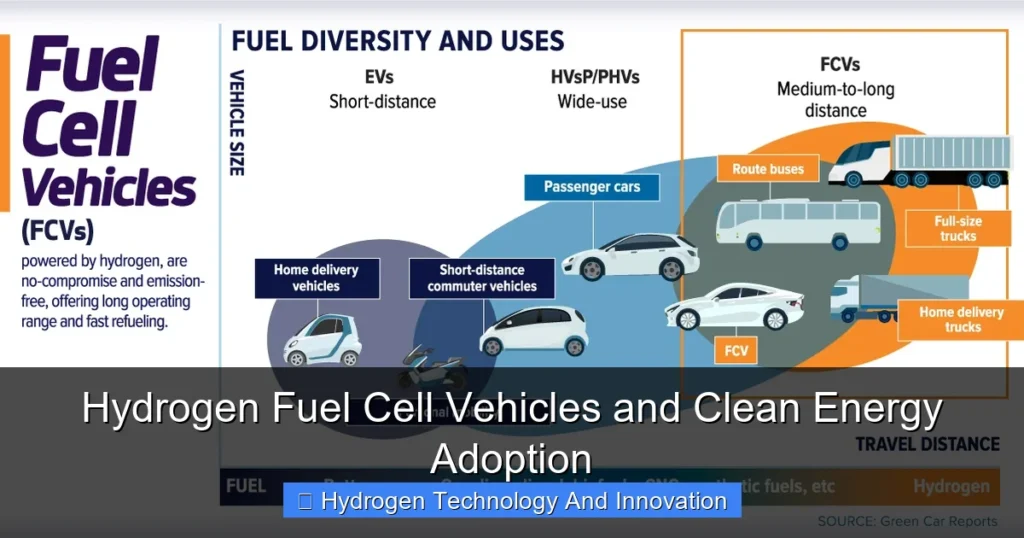
Visual guide about Hydrogen Fuel Cell Vehicles and Clean Energy Adoption
Image source: innovationnewsnetwork.com
To understand why hydrogen fuel cell vehicles are such a promising part of clean energy adoption, it helps to know how they actually work. At first glance, they might seem similar to electric cars, but the energy source and delivery system are fundamentally different.
The Fuel Cell: Heart of the System
At the core of every FCEV is the fuel cell stack. This is where the magic happens. Hydrogen gas (H₂) from the vehicle’s high-pressure tank flows into the anode side of the fuel cell. Meanwhile, oxygen from the air enters the cathode side. Inside the fuel cell, a catalyst—usually platinum—splits the hydrogen atoms into protons and electrons.
The protons pass through a special membrane (the electrolyte) to the cathode, while the electrons are forced to travel through an external circuit, creating an electric current. This current powers the vehicle’s motor. When the protons and electrons reunite at the cathode with oxygen, they form water (H₂O)—the only emission.
Hydrogen Storage and Delivery
Storing hydrogen safely and efficiently is one of the biggest engineering challenges. FCEVs use high-pressure tanks—typically rated at 700 bar (10,000 psi)—to store compressed hydrogen gas. These tanks are made from advanced composite materials to ensure strength and safety. Modern FCEVs can carry enough hydrogen to travel 300 to 400 miles on a single fill-up.
Refueling is quick and simple. You pull up to a hydrogen station, connect the nozzle, and in under five minutes, your tank is full—similar to filling a gasoline car. This is a major advantage over battery EVs, which can take 30 minutes to several hours to recharge, depending on the charger type.
Electric Motor and Energy Management
Like battery EVs, FCEVs use electric motors for propulsion. The electricity generated by the fuel cell powers the motor directly. Some FCEVs also include a small battery or supercapacitor to store excess energy and provide extra power during acceleration. This hybrid approach improves efficiency and performance.
The vehicle’s energy management system constantly balances power from the fuel cell and the battery, ensuring smooth operation and optimal fuel economy. Regenerative braking also captures energy during deceleration, further boosting efficiency.
The Role of Hydrogen in Clean Energy Adoption
Hydrogen isn’t just for cars. It’s emerging as a cornerstone of global clean energy adoption, with applications far beyond transportation. As countries aim to reach net-zero emissions by 2050, hydrogen offers a versatile, scalable solution for decarbonizing hard-to-abate sectors.
Green Hydrogen: The Cleanest Option
Not all hydrogen is created equal. The color-coding system helps distinguish between different production methods:
– Grey hydrogen is made from natural gas through steam methane reforming, releasing CO₂.
– Blue hydrogen uses the same process but captures and stores the CO₂ emissions.
– Green hydrogen is produced using renewable electricity to split water into hydrogen and oxygen via electrolysis—emission-free.
For hydrogen fuel cell vehicles to truly support clean energy adoption, they must run on green hydrogen. This ensures the entire lifecycle—from production to use—is sustainable. Fortunately, the cost of green hydrogen is falling rapidly as renewable energy prices drop and electrolyzer technology improves.
Hydrogen in Heavy-Duty Transport
While battery EVs are great for passenger cars, they face limitations in weight, range, and charging time for heavy-duty applications. Hydrogen fuel cell vehicles shine in this space.
For example, Toyota’s Project Portal has developed hydrogen-powered Class 8 trucks for port drayage in California. These trucks can carry heavy loads, refuel quickly, and operate for long shifts—something that would be difficult with current battery technology.
Similarly, companies like Hyundai and Nikola are rolling out hydrogen-powered trucks for freight and logistics. In Europe, hydrogen trains are already in service on non-electrified rail lines, offering a clean alternative to diesel locomotives.
Hydrogen for Energy Storage and Grid Stability
One of the biggest challenges with renewable energy is intermittency—the sun doesn’t always shine, and the wind doesn’t always blow. Hydrogen can help by storing excess renewable energy.
During periods of low demand or high generation, surplus electricity can power electrolyzers to produce hydrogen. This hydrogen can then be stored underground or in tanks and used later—either to generate electricity in fuel cells or to power vehicles. This creates a flexible, long-duration energy storage solution that supports grid stability and clean energy adoption.
Current State of Hydrogen Fuel Cell Vehicles
Despite their promise, hydrogen fuel cell vehicles are still a niche market. As of 2024, there are only a few thousand FCEVs on the road in the U.S., with the majority in California—the only state with a significant hydrogen refueling network. Globally, countries like Japan, South Korea, and Germany are leading the charge.
Leading FCEV Models
Several automakers have brought hydrogen fuel cell vehicles to market:
– Toyota Mirai: One of the most well-known FCEVs, the Mirai offers a sleek design, 400-mile range, and quick refueling. Toyota has also partnered with other companies to develop hydrogen-powered forklifts, buses, and trucks.
– Hyundai NEXO: This SUV boasts advanced driver assistance features, a 380-mile range, and a spacious interior. Hyundai has also launched hydrogen-powered trucks in Europe and Asia.
– Honda Clarity Fuel Cell: Although discontinued in 2021, the Clarity was a pioneer in the FCEV space and helped prove the technology’s viability.
These vehicles are often leased rather than sold, with many including free hydrogen fuel for several years—a strategy to encourage adoption and offset high upfront costs.
Infrastructure: The Biggest Hurdle
The biggest barrier to widespread FCEV adoption is infrastructure. As of 2024, the U.S. has fewer than 100 hydrogen refueling stations, almost all in California. Building a nationwide network is expensive and complex, requiring new pipelines, compression systems, and safety protocols.
However, progress is being made. The U.S. Department of Energy’s H2@Scale initiative aims to expand hydrogen infrastructure. In Europe, the Hydrogen Backbone initiative plans to develop a continent-wide hydrogen pipeline network. Japan and South Korea are investing billions in hydrogen stations and green hydrogen production.
Cost and Affordability
FCEVs are currently more expensive than both gasoline cars and battery EVs. The Toyota Mirai, for example, starts around $50,000—before incentives. High costs are due to expensive materials (like platinum catalysts), low production volumes, and limited economies of scale.
But prices are expected to fall as technology improves and production scales up. According to the International Energy Agency (IEA), fuel cell costs could drop by 60% by 2030 with increased manufacturing and innovation.
Environmental and Economic Benefits
Hydrogen fuel cell vehicles offer compelling environmental and economic advantages, especially when integrated into a broader clean energy strategy.
Reducing Greenhouse Gas Emissions
When powered by green hydrogen, FCEVs produce zero greenhouse gas emissions during operation. Even when using blue hydrogen, emissions are significantly lower than gasoline or diesel vehicles. This makes FCEVs a powerful tool for decarbonizing transportation, particularly in sectors where electrification is challenging.
For example, a hydrogen-powered freight truck can eliminate over 100 tons of CO₂ emissions per year compared to a diesel equivalent. Over its lifetime, that’s thousands of tons of avoided emissions.
Improving Air Quality
Beyond CO₂, FCEVs eliminate harmful pollutants like nitrogen oxides (NOx) and particulate matter (PM), which are major contributors to smog and respiratory diseases. In cities with high traffic density, switching to hydrogen buses and delivery vehicles can dramatically improve air quality and public health.
In Seoul, South Korea, hydrogen-powered city buses have reduced local air pollution and noise levels, creating a cleaner, quieter urban environment.
Energy Security and Diversification
Hydrogen can be produced domestically from a variety of sources—renewable energy, nuclear power, or even biomass. This reduces dependence on imported oil and enhances energy security. Countries with abundant renewable resources, like Australia or Chile, can become major hydrogen exporters, creating new economic opportunities.
Job Creation and Innovation
The hydrogen economy is driving innovation and creating jobs in engineering, manufacturing, infrastructure, and research. From electrolyzer factories to hydrogen refueling stations, the sector is becoming a key driver of green jobs.
For example, the U.S. Inflation Reduction Act includes tax credits for clean hydrogen production, spurring investment and job growth in the sector.
Challenges and Future Outlook
Despite the promise, hydrogen fuel cell vehicles face significant challenges. Overcoming them will require continued innovation, investment, and policy support.
Production and Distribution Costs
Green hydrogen is still more expensive than grey hydrogen, primarily due to the cost of electrolyzers and renewable electricity. However, as solar and wind power become cheaper and electrolyzer efficiency improves, green hydrogen is expected to reach cost parity with fossil fuels by 2030 in many regions.
Distribution is another challenge. Transporting hydrogen is complex—it’s a light, low-density gas that requires compression or liquefaction. Building a hydrogen pipeline network or developing liquid organic hydrogen carriers (LOHCs) could help, but these solutions are still in development.
Public Awareness and Acceptance
Many consumers are unfamiliar with hydrogen fuel cell vehicles or have safety concerns. While hydrogen is highly flammable, modern FCEVs are designed with multiple safety systems—including leak detectors, automatic shutoffs, and reinforced tanks—to prevent accidents.
Education and outreach are essential to build public trust. Test drives, public demonstrations, and partnerships with transit agencies can help familiarize people with the technology.
Policy and Regulatory Support
Government policies play a crucial role in accelerating clean energy adoption. Incentives like tax credits, grants, and low-interest loans can make FCEVs more affordable. Regulations that promote zero-emission vehicles, such as California’s Advanced Clean Trucks rule, also drive demand.
International cooperation is also important. The Hydrogen Council, a global CEO-led initiative, brings together companies and governments to advance hydrogen technologies and share best practices.
The Road Ahead
The future of hydrogen fuel cell vehicles is bright. As battery EVs dominate the passenger car market, FCEVs are likely to find their niche in heavy-duty transport, fleet vehicles, and regions with strong hydrogen infrastructure.
By 2030, analysts predict that hydrogen could power millions of vehicles worldwide, supported by a growing network of refueling stations and falling production costs. In the long term, hydrogen could become a key pillar of the global energy system—powering not just vehicles, but homes, industries, and power grids.
Conclusion: A Cleaner Future on the Horizon
Hydrogen fuel cell vehicles represent a bold step toward a cleaner, more sustainable future. While they’re not a silver bullet, they are a vital part of the clean energy adoption puzzle—especially for applications where battery electric vehicles fall short.
From zero-emission buses in cities to long-haul trucks crossing continents, FCEVs are proving that clean transportation is possible. With continued innovation, investment, and collaboration, hydrogen can help us break free from fossil fuels and build a world powered by clean, renewable energy.
The road ahead won’t be easy, but the destination is worth it: cleaner air, healthier communities, and a planet that can thrive for generations to come.
Frequently Asked Questions
Are hydrogen fuel cell vehicles really zero-emission?
Yes, hydrogen fuel cell vehicles produce zero tailpipe emissions—only water vapor comes out of the exhaust. However, the overall environmental impact depends on how the hydrogen is produced. If it’s made using renewable energy (green hydrogen), the entire lifecycle is clean.
How long does it take to refuel a hydrogen car?
Refueling a hydrogen fuel cell vehicle takes about 3 to 5 minutes, similar to filling up a gasoline car. This is much faster than charging a battery electric vehicle, which can take 30 minutes to several hours.
Are hydrogen cars safe?
Yes, hydrogen fuel cell vehicles are designed with multiple safety features, including leak detectors, automatic shutoff valves, and reinforced hydrogen tanks. They undergo rigorous testing and meet strict safety standards.
Where can I refuel a hydrogen car?
As of 2024, most hydrogen refueling stations are in California, with a growing number in Europe, Japan, and South Korea. Infrastructure is expanding, but it’s still limited compared to gasoline or EV charging stations.
Why aren’t hydrogen cars more popular?
Hydrogen fuel cell vehicles face challenges like high costs, limited refueling infrastructure, and competition from battery EVs. However, they’re gaining traction in heavy-duty transport and regions with strong government support.
Can hydrogen be used for more than just cars?
Absolutely. Hydrogen is being used in buses, trucks, trains, ships, and even backup power systems. It’s also a promising solution for storing renewable energy and decarbonizing industries like steel and chemicals.