Hydrogen fuel cell vehicles (FCEVs) offer a promising path to energy independence by using domestically produced hydrogen to power clean, zero-emission transportation. Unlike battery electric vehicles, FCEVs refuel quickly and travel long distances, making them ideal for heavy-duty and long-range applications while reducing reliance on imported oil.
Key Takeaways
- Hydrogen fuel cell vehicles produce zero tailpipe emissions, emitting only water vapor, making them a clean alternative to gasoline-powered cars.
- FCEVs support energy independence by enabling countries to produce hydrogen from domestic renewable sources like wind, solar, and nuclear power.
- Refueling a hydrogen vehicle takes just 3–5 minutes, similar to gasoline, offering convenience over long charging times for electric vehicles.
- Hydrogen can be produced domestically using water electrolysis powered by renewable energy, reducing reliance on foreign oil and enhancing national energy security.
- FCEVs are especially effective in heavy-duty transport, such as trucks, buses, and trains, where battery weight and charging time are limiting factors.
- Government incentives and infrastructure investments are accelerating hydrogen adoption, with countries like Japan, Germany, and the U.S. leading the way.
- Green hydrogen production is key to sustainability, requiring renewable energy to split water molecules and avoid carbon emissions from fossil fuels.
📑 Table of Contents
- Introduction: The Road to Cleaner, More Independent Energy
- What Are Hydrogen Fuel Cell Vehicles?
- The Link Between Hydrogen Vehicles and Energy Independence
- Environmental Benefits of Hydrogen Fuel Cell Vehicles
- Challenges and Barriers to Adoption
- The Future of Hydrogen: Innovation and Global Momentum
- Conclusion: A Cleaner, More Independent Future
Introduction: The Road to Cleaner, More Independent Energy
Imagine driving a car that emits nothing but water vapor, refuels in minutes, and runs on fuel made from sunlight, wind, or even tap water. Sounds like science fiction? It’s not. Hydrogen fuel cell vehicles (FCEVs) are here, and they’re quietly reshaping the future of transportation. As the world grapples with climate change, air pollution, and energy insecurity, FCEVs offer a compelling solution—one that aligns clean mobility with national energy independence.
Unlike traditional gasoline cars or even battery electric vehicles (BEVs), hydrogen-powered cars generate electricity on board using a chemical reaction between hydrogen and oxygen. This process powers the motor and produces only water as a byproduct. No smog, no carbon dioxide, no noise. But beyond environmental benefits, hydrogen vehicles hold a unique advantage: they can be fueled with hydrogen produced right here at home, using domestic energy sources. That means less dependence on foreign oil, more resilient energy systems, and a stronger economy.
What Are Hydrogen Fuel Cell Vehicles?
Visual guide about Hydrogen Fuel Cell Vehicles and Energy Independence
Image source: images.squarespace-cdn.com
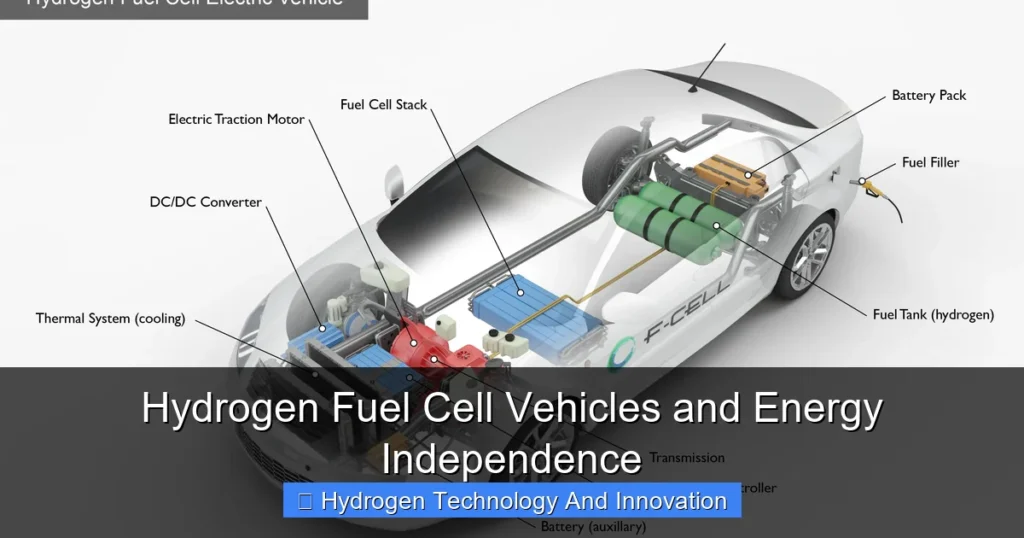
Hydrogen fuel cell vehicles are electric vehicles that generate their own electricity using a fuel cell stack. Instead of relying on a large battery that must be charged from an external power source, FCEVs carry compressed hydrogen gas in onboard tanks. When hydrogen flows into the fuel cell, it reacts with oxygen from the air to produce electricity, water, and a small amount of heat. This electricity powers the vehicle’s motor, just like in a battery EV, but without the need for lengthy charging sessions.
How Fuel Cells Work
At the heart of every FCEV is the proton exchange membrane (PEM) fuel cell. This compact, efficient device uses a catalyst—typically platinum—to split hydrogen molecules into protons and electrons. The protons pass through a membrane to the other side of the cell, while the electrons are forced to travel through an external circuit, creating an electric current. When the protons and electrons reunite with oxygen, they form water—pure H₂O—which drips out of the tailpipe.
This process is silent, efficient, and emission-free. Modern fuel cells can convert up to 60% of the energy in hydrogen into electricity, compared to about 20–30% for internal combustion engines. That means more miles per kilogram of fuel and less wasted energy.
Types of Hydrogen Vehicles
Not all hydrogen vehicles are the same. There are two main types:
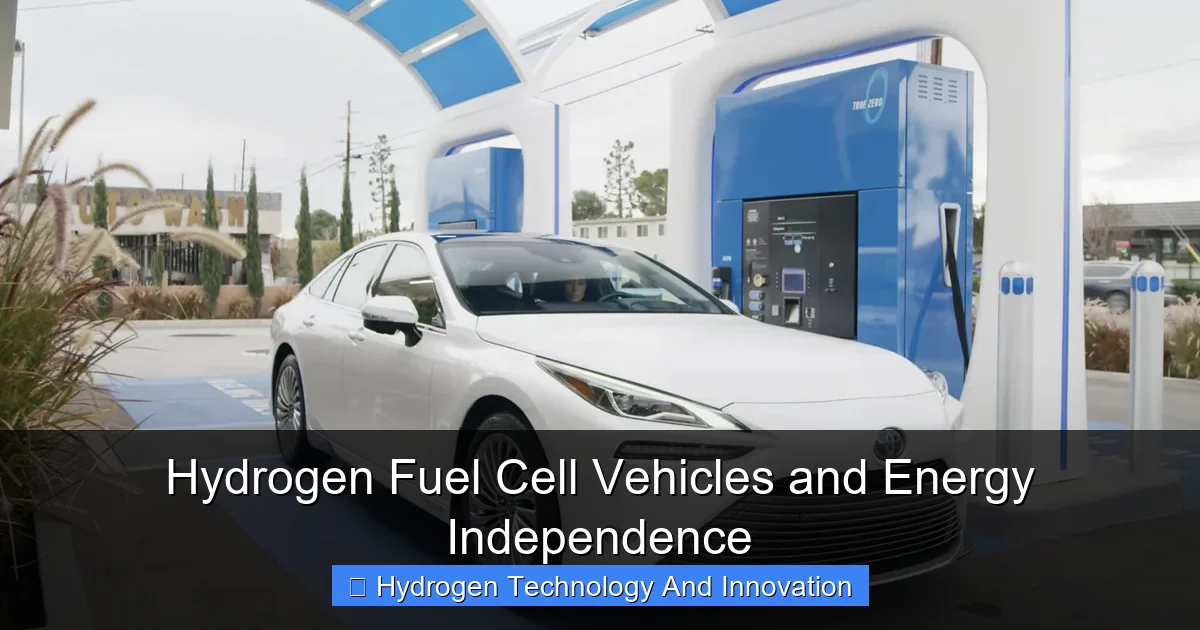
– Fuel Cell Electric Vehicles (FCEVs): These are fully electric vehicles powered by hydrogen fuel cells. Examples include the Toyota Mirai, Hyundai NEXO, and Honda Clarity Fuel Cell. They store hydrogen in high-pressure tanks and generate electricity on demand.
– Hydrogen Internal Combustion Engine Vehicles (HICEVs): These use hydrogen as fuel in a modified gasoline engine. While they still produce some emissions (like nitrogen oxides), they are cleaner than traditional engines and are mainly used in experimental or heavy-duty applications.
For now, FCEVs dominate the market due to their higher efficiency and zero emissions. They’re especially well-suited for passenger cars, buses, and delivery trucks.
The Link Between Hydrogen Vehicles and Energy Independence
Energy independence means a country can meet its energy needs without relying on imports. For decades, nations have depended on foreign oil to fuel their transportation systems—making them vulnerable to price shocks, geopolitical conflicts, and supply disruptions. Hydrogen fuel cell vehicles offer a way out.
Domestic Hydrogen Production
One of the biggest advantages of hydrogen is that it can be produced anywhere there’s water and energy. Unlike oil, which is concentrated in a few regions, hydrogen can be made locally using renewable resources. This is known as “green hydrogen”—hydrogen produced by electrolysis, where electricity from wind, solar, or hydro power splits water (H₂O) into hydrogen and oxygen.
For example, a solar farm in Arizona could power electrolyzers to produce hydrogen during the day, storing it for use in vehicles at night. Similarly, offshore wind farms in the North Sea can generate hydrogen for use in European cities. This decentralization reduces the need for long-distance fuel transport and strengthens national energy security.
Reducing Reliance on Imported Oil
Transportation accounts for nearly 30% of U.S. energy consumption, and most of it comes from petroleum. In 2022, the U.S. imported about 8 million barrels of oil per day. By shifting to hydrogen vehicles powered by domestic energy, countries can drastically cut oil imports.
Japan, for instance, imports nearly all of its oil and has embraced hydrogen as a strategic energy carrier. The country’s “Basic Hydrogen Strategy” aims to build a hydrogen-based society by 2050, with FCEVs playing a central role. Germany, meanwhile, is investing billions in hydrogen infrastructure to reduce dependence on Russian gas and imported oil.
Energy Resilience and Grid Stability
Hydrogen also enhances energy resilience. During natural disasters or grid outages, hydrogen can be stored and used to power emergency vehicles, hospitals, or even entire communities. Unlike batteries, which lose charge over time, hydrogen can be stored for months with minimal loss.
Moreover, excess renewable energy—such as solar power generated at midday—can be used to produce hydrogen, which is then stored and used later. This helps balance the grid and prevents renewable energy from being wasted.
Environmental Benefits of Hydrogen Fuel Cell Vehicles
While energy independence is a major driver, the environmental advantages of FCEVs are equally compelling. These vehicles offer a clean, sustainable alternative to fossil fuels.
Zero Tailpipe Emissions
The most obvious benefit is that FCEVs emit only water vapor. No carbon dioxide, no nitrogen oxides, no particulate matter. This makes them ideal for improving urban air quality, especially in cities plagued by smog and respiratory illnesses.
In California, where air pollution is a major concern, FCEVs are part of the state’s plan to achieve zero-emission transportation. The state has invested heavily in hydrogen refueling stations and offers rebates for FCEV buyers.
Lifecycle Emissions Matter
It’s important to note that the environmental impact of hydrogen depends on how it’s produced. “Grey hydrogen,” made from natural gas without carbon capture, still emits CO₂. “Blue hydrogen” uses carbon capture and storage to reduce emissions. But “green hydrogen,” produced with renewable energy, is truly clean.
As renewable energy becomes cheaper and more widespread, green hydrogen is becoming increasingly viable. According to the International Energy Agency (IEA), green hydrogen could supply up to 24% of global energy by 2050.
Comparing FCEVs to Battery EVs
Both FCEVs and battery electric vehicles (BEVs) are zero-emission at the tailpipe, but they differ in key ways:
– Refueling time: FCEVs refuel in 3–5 minutes; BEVs can take 30 minutes to several hours.
– Range: FCEVs typically offer 300–400 miles per tank; many BEVs offer similar ranges, but long trips require careful planning.
– Weight and space: Batteries are heavy and take up space; hydrogen tanks are lighter and allow for more cargo room.
– Production emissions: Battery production involves mining for lithium, cobalt, and nickel, which has environmental and ethical concerns. Hydrogen production, especially green hydrogen, has a lower footprint.
For long-haul trucking, aviation, and shipping, hydrogen may be the better option due to its energy density and fast refueling.
Challenges and Barriers to Adoption
Despite their promise, hydrogen fuel cell vehicles face several hurdles. Overcoming these challenges is key to widespread adoption.
Limited Refueling Infrastructure
The biggest barrier is the lack of hydrogen refueling stations. As of 2023, the U.S. has fewer than 100 public hydrogen stations, mostly in California. In contrast, there are over 150,000 gas stations and more than 50,000 public EV chargers.
Building a hydrogen network is expensive. Each station can cost $1–2 million, compared to $50,000–$100,000 for a fast EV charger. However, governments and private companies are investing in expansion. The U.S. Department of Energy’s “H₂@Scale” initiative aims to lower costs and build a national hydrogen network.
High Cost of Vehicles and Hydrogen
FCEVs are currently more expensive than gasoline cars and even many BEVs. The Toyota Mirai starts around $50,000, and hydrogen fuel costs about $16 per kilogram—equivalent to $4–$5 per gallon of gasoline. While prices are expected to fall as production scales up, affordability remains a concern.
Government incentives can help. In California, buyers can receive up to $15,000 in rebates. Federal tax credits may also apply. As demand grows and technology improves, costs are likely to decrease.
Hydrogen Production and Storage Challenges
Producing, transporting, and storing hydrogen is complex. Hydrogen is the lightest element and can leak easily. It must be compressed to 10,000 psi or liquefied at -253°C, both of which require energy and specialized equipment.
However, innovations are underway. New materials like metal-organic frameworks (MOFs) could allow safer, more efficient hydrogen storage. Pipeline networks, similar to natural gas systems, are being explored for large-scale transport.
The Future of Hydrogen: Innovation and Global Momentum
The future of hydrogen fuel cell vehicles is bright, driven by technological advances, policy support, and growing environmental awareness.
Government Policies and Investments
Countries around the world are betting on hydrogen. The European Union’s “Hydrogen Strategy” aims to install 40 gigawatts of electrolyzers by 2030. Japan and South Korea are building hydrogen cities and subsidizing FCEVs. The U.S. Inflation Reduction Act includes tax credits for clean hydrogen production, potentially cutting costs by 90%.
These policies are creating a favorable environment for innovation and investment. Automakers like Toyota, Hyundai, and BMW are expanding their FCEV lineups, while startups are developing next-generation fuel cells and refueling tech.
Hydrogen in Heavy-Duty Transport
While passenger cars get most of the attention, hydrogen’s real potential may lie in heavy-duty applications. Trucks, buses, ships, and trains require high energy density and quick refueling—areas where hydrogen excels.
For example, Hyundai’s XCIENT Fuel Cell trucks are already operating in Switzerland and California. The company plans to deliver 1,600 units by 2025. In Germany, hydrogen-powered trains are replacing diesel locomotives on non-electrified lines.
Integration with Renewable Energy
The synergy between hydrogen and renewables is a game-changer. Excess solar and wind power can be used to produce hydrogen, which is then stored and used when energy demand is high. This creates a flexible, resilient energy system.
Projects like the HyDeal Ambition initiative in Europe aim to produce green hydrogen at $1.50 per kilogram by 2030—making it competitive with fossil fuels. Similar efforts are underway in Australia, Chile, and the Middle East.
Conclusion: A Cleaner, More Independent Future
Hydrogen fuel cell vehicles are more than just a technological curiosity—they’re a vital piece of the puzzle in achieving energy independence and combating climate change. By enabling countries to produce clean fuel domestically, FCEVs reduce reliance on imported oil, enhance energy security, and cut greenhouse gas emissions.
While challenges remain—especially in infrastructure and cost—the momentum is undeniable. With continued innovation, supportive policies, and public awareness, hydrogen could become a cornerstone of sustainable transportation. Whether you’re driving a passenger car, hauling freight, or powering a city bus, hydrogen offers a fast, clean, and independent way forward.
The road ahead is long, but every mile driven on hydrogen brings us closer to a future where energy is clean, local, and secure.
Frequently Asked Questions
How do hydrogen fuel cell vehicles work?
Hydrogen fuel cell vehicles generate electricity through a chemical reaction between hydrogen and oxygen in a fuel cell stack. This electricity powers the motor, and the only byproduct is water vapor. The hydrogen is stored in high-pressure tanks onboard the vehicle.
Are hydrogen cars really zero emission?
Yes, hydrogen fuel cell vehicles produce zero tailpipe emissions—only water comes out of the exhaust. However, the overall environmental impact depends on how the hydrogen is produced. Green hydrogen, made with renewable energy, is truly clean.
How long does it take to refuel a hydrogen car?
Refueling a hydrogen vehicle takes about 3 to 5 minutes, similar to filling up a gasoline car. This is much faster than charging a battery electric vehicle, which can take 30 minutes to several hours depending on the charger.
Can hydrogen be produced without fossil fuels?
Yes, hydrogen can be produced cleanly using electrolysis, where electricity from wind, solar, or hydro power splits water into hydrogen and oxygen. This “green hydrogen” process emits no carbon dioxide and supports energy independence.
Why aren’t there more hydrogen refueling stations?
Hydrogen refueling infrastructure is still limited due to high costs and low demand. Building a station can cost over $1 million. However, governments and companies are investing in expansion, especially in regions like California, Japan, and Europe.
Are hydrogen vehicles safe?
Yes, hydrogen vehicles are designed with multiple safety features, including leak detection, pressure relief devices, and reinforced tanks. Hydrogen is lighter than air and disperses quickly if released, reducing fire risk. Extensive testing ensures they meet strict safety standards.