Hydrogen fuel cell vehicles (FCEVs) generate electricity on board using hydrogen and oxygen, emitting only water vapor. They offer fast refueling, long range, and zero tailpipe emissions, making them a promising alternative to gasoline and battery-electric cars.
Key Takeaways
- Hydrogen fuel cell vehicles produce electricity through a chemical reaction, not combustion. This process combines hydrogen from the tank with oxygen from the air to generate power for the motor.
- FCEVs emit only water vapor, making them truly zero-emission at the tailpipe. This helps reduce air pollution and greenhouse gas emissions when hydrogen is produced cleanly.
- Refueling a hydrogen car takes just 3–5 minutes, similar to gasoline vehicles. This is much faster than charging most battery-electric vehicles.
- FCEVs typically have a driving range of 300–400 miles per fill-up. This makes them ideal for long-distance travel and fleet operations.
- Hydrogen can be produced from renewable sources like wind, solar, and water. Green hydrogen supports a sustainable energy future.
- Current challenges include limited refueling infrastructure and high production costs. However, government and industry investments are rapidly improving accessibility.
- Major automakers like Toyota, Hyundai, and Honda are leading FCEV development. Models like the Toyota Mirai and Hyundai NEXO are already on the road.
📑 Table of Contents
Introduction to Hydrogen Fuel Cell Vehicles
Imagine driving a car that runs quietly, emits nothing but clean water vapor, and refuels in just a few minutes—like filling up at a gas station. That’s not science fiction. It’s the reality of hydrogen fuel cell vehicles (FCEVs), a cutting-edge technology that’s quietly gaining momentum in the world of clean transportation.
Unlike traditional gasoline cars that burn fuel and release harmful emissions, or even battery-electric vehicles (BEVs) that rely on stored electricity, hydrogen fuel cell vehicles generate their own power on board. They do this through a remarkable chemical process that combines hydrogen and oxygen to produce electricity—powering the car’s motor while emitting only water. It’s a clean, efficient, and increasingly viable alternative for drivers who want sustainability without sacrificing convenience.
As the world pushes toward reducing carbon emissions and fighting climate change, hydrogen technology is emerging as a key player. While electric vehicles have dominated the headlines, hydrogen-powered cars offer unique advantages, especially for long-distance travel, heavy-duty transport, and regions with limited charging infrastructure. In this article, we’ll dive deep into how hydrogen fuel cell vehicles work, explore their benefits and challenges, and look at where this innovative technology is headed.
What Is a Hydrogen Fuel Cell?
Visual guide about How Do Hydrogen Fuel Cell Vehicles Work?
Image source: hydrogenfuelnews.com
At the heart of every hydrogen fuel cell vehicle is the fuel cell itself—a device that converts chemical energy into electrical energy. Think of it as a kind of battery that never needs recharging, as long as it has a steady supply of hydrogen and oxygen. But unlike a traditional battery, which stores energy, a fuel cell generates it continuously through a clean chemical reaction.
The Science Behind the Reaction
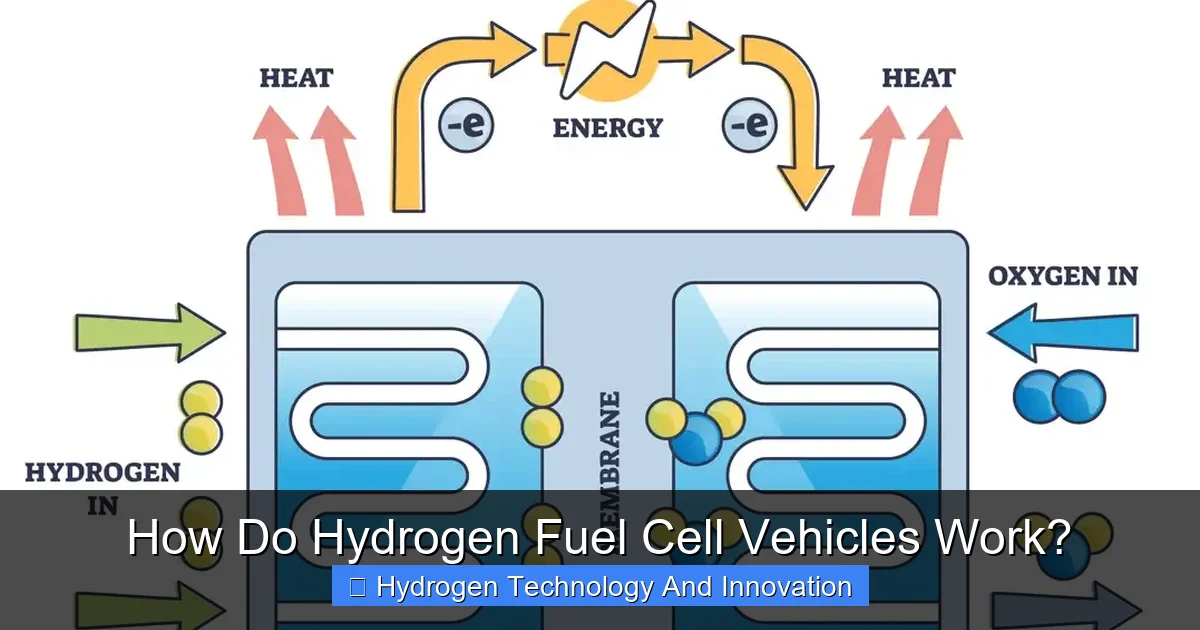
A fuel cell consists of two electrodes—an anode and a cathode—sandwiched around an electrolyte. When hydrogen gas (H₂) is fed into the anode, a catalyst (usually platinum) splits the hydrogen molecules into protons and electrons. The protons pass through the electrolyte membrane to the cathode, while the electrons are forced to travel through an external circuit, creating an electric current. This current powers the vehicle’s electric motor.
Meanwhile, oxygen from the air enters the cathode, where it combines with the protons and electrons to form water (H₂O)—the only byproduct. This entire process is called electrochemical conversion, and it happens silently and efficiently, with no combustion involved.
Types of Fuel Cells Used in Vehicles
Not all fuel cells are the same. For automotive use, the most common type is the Proton Exchange Membrane Fuel Cell (PEMFC). It operates at relatively low temperatures (around 80°C or 176°F), starts quickly, and is compact enough to fit in a car. PEMFCs are ideal for passenger vehicles because they respond well to changes in power demand—like accelerating or climbing hills.
Other types, such as Solid Oxide Fuel Cells (SOFCs), operate at much higher temperatures and are better suited for stationary power generation or large vehicles like buses and trucks. But for everyday cars, PEMFCs are the go-to choice due to their efficiency, durability, and fast startup time.
How the Fuel Cell Stack Works
A single fuel cell produces only about 0.7 volts of electricity—far too little to power a car. That’s why multiple cells are stacked together to form a “fuel cell stack.” A typical FCEV might have a stack containing 300 to 400 individual cells. When combined, they can generate enough power—often between 80 and 120 kilowatts—to drive an electric motor efficiently.
The stack is the powerhouse of the vehicle, but it doesn’t work alone. It’s supported by a complex system that manages hydrogen flow, air supply, temperature, and moisture levels. Too much or too little water in the membrane can reduce efficiency, so precise control is essential.
How Hydrogen Fuel Cell Vehicles Generate Power
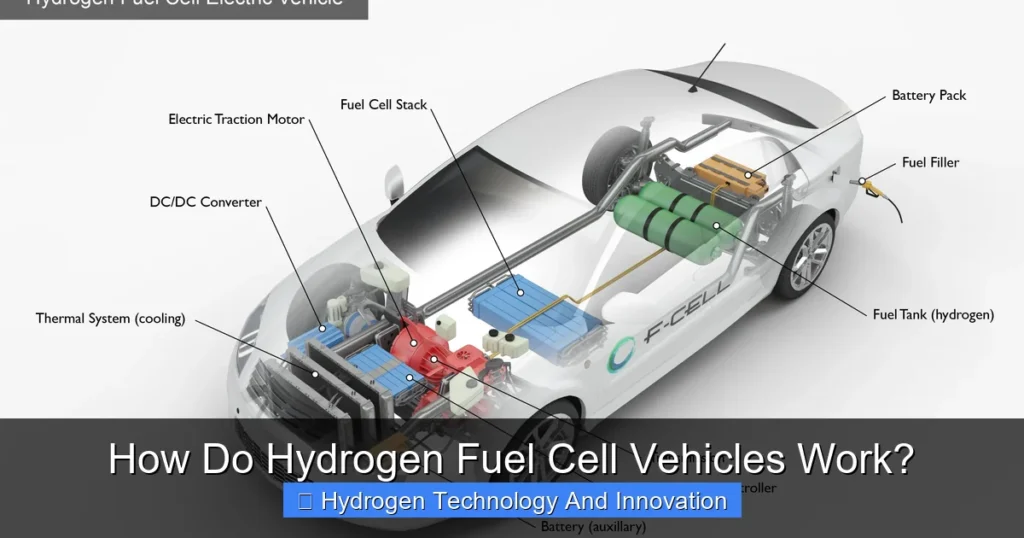
Now that we understand the fuel cell, let’s see how it fits into the bigger picture of a hydrogen-powered car. The journey from hydrogen tank to motion involves several key components working in harmony.
The Hydrogen Storage System
Hydrogen is stored in high-pressure tanks, usually made of carbon fiber composites, located beneath the vehicle. These tanks can hold hydrogen at pressures of 5,000 to 10,000 psi (pounds per square inch)—much higher than a typical scuba tank. Despite the pressure, modern tanks are designed to be safe and durable, with multiple layers to prevent leaks and withstand impacts.
Most FCEVs carry between 4 to 6 kilograms of hydrogen. While that might not sound like much, hydrogen is incredibly energy-dense by weight. In fact, it contains about three times more energy per kilogram than gasoline. The challenge is that it’s also very light and takes up a lot of space, which is why high-pressure storage is necessary.
From Hydrogen to Electricity
When you press the accelerator, the vehicle’s control system opens a valve, allowing hydrogen gas to flow from the tank into the fuel cell stack. At the same time, air is drawn in from the environment and filtered to supply oxygen to the cathode side of the fuel cell.
Inside the stack, the electrochemical reaction begins: hydrogen splits into protons and electrons at the anode, the electrons flow through the circuit to power the motor, and the protons move across the membrane. At the cathode, oxygen combines with the protons and electrons to form water, which is then expelled as vapor through the exhaust.
This entire process happens in real time, generating electricity as long as hydrogen and oxygen are supplied. The electricity either powers the motor directly or charges a small buffer battery (often called a traction battery) that helps manage power demands during acceleration or regenerative braking.
The Electric Motor and Drivetrain
Like battery-electric vehicles, hydrogen fuel cell cars use electric motors to drive the wheels. The motor converts electrical energy into mechanical energy, providing smooth, quiet, and responsive acceleration. Most FCEVs use a single-speed transmission, similar to many EVs, because electric motors deliver maximum torque instantly.
The drivetrain is typically rear-wheel or all-wheel drive, depending on the model. For example, the Toyota Mirai uses a rear-wheel-drive layout, while the Hyundai NEXO offers all-wheel drive for better traction and performance.
One key advantage of this setup is regenerative braking. When you slow down, the motor acts as a generator, converting kinetic energy back into electricity and storing it in the buffer battery. This improves overall efficiency and extends the vehicle’s range.
Advantages of Hydrogen Fuel Cell Vehicles
Hydrogen fuel cell vehicles offer several compelling benefits that make them an attractive option for eco-conscious drivers and fleet operators.
Zero Tailpipe Emissions
The most obvious advantage is environmental. FCEVs emit only water vapor from the tailpipe—no carbon dioxide, no nitrogen oxides, no particulate matter. This makes them truly zero-emission vehicles (ZEVs) at the point of use. In cities with poor air quality, widespread adoption of FCEVs could significantly reduce smog and respiratory illnesses.
Of course, the overall environmental impact depends on how the hydrogen is produced. If it’s made using renewable energy (called “green hydrogen”), the entire lifecycle is nearly carbon-free. Even if hydrogen is produced from natural gas (“gray hydrogen”), FCEVs still emit less CO₂ than gasoline cars.
Fast Refueling and Long Range
One of the biggest drawbacks of battery-electric vehicles is charging time. Even with fast chargers, it can take 30 minutes to an hour to recharge a depleted battery. In contrast, refueling a hydrogen car takes just 3 to 5 minutes—comparable to filling up a gas tank.
Additionally, FCEVs typically offer a range of 300 to 400 miles on a full tank. The Toyota Mirai, for example, has an EPA-estimated range of 402 miles. This makes hydrogen cars ideal for long road trips, ride-sharing services, and commercial fleets that need minimal downtime.
Quiet and Smooth Operation
Because FCEVs are electric, they deliver the same quiet, smooth driving experience as battery-electric cars. There’s no engine noise, no gear shifts, and instant torque delivery. This makes for a comfortable and relaxing ride, especially in stop-and-go traffic.
Potential for Renewable Integration
Hydrogen can be produced using excess renewable energy. For example, during sunny or windy days when solar and wind farms generate more electricity than the grid needs, that surplus power can be used to split water into hydrogen and oxygen through electrolysis. This “green hydrogen” can then be stored and used later in fuel cell vehicles, creating a clean energy loop.
This ability to store and transport energy makes hydrogen a valuable tool in the transition to a renewable-powered grid. Unlike batteries, which degrade over time, hydrogen can be stored for long periods without losing energy.
Challenges and Limitations
Despite their promise, hydrogen fuel cell vehicles face several hurdles that have slowed widespread adoption.
Limited Refueling Infrastructure
The biggest barrier today is the lack of hydrogen refueling stations. As of 2024, there are fewer than 100 public hydrogen stations in the United States, with most concentrated in California. This makes it difficult for drivers outside major metropolitan areas to own or operate an FCEV.
Building a nationwide hydrogen network requires massive investment. Each station costs millions of dollars to construct and maintain, and there’s limited demand until more vehicles are on the road. It’s a classic “chicken-and-egg” problem: no stations without cars, and no cars without stations.
High Production and Distribution Costs
Producing, compressing, transporting, and storing hydrogen is expensive. Most hydrogen today is made from natural gas through a process called steam methane reforming, which emits CO₂. While green hydrogen is cleaner, it’s currently much more costly due to the price of electrolyzers and renewable electricity.
Transporting hydrogen is also challenging. It’s a small, leak-prone molecule that requires high-pressure tanks or cryogenic temperatures to liquefy. Pipelines can be used, but few exist, and retrofitting natural gas lines for hydrogen is complex and costly.
Energy Efficiency Concerns
When you compare the entire energy chain—from production to wheels—hydrogen fuel cell vehicles are less efficient than battery-electric vehicles. It takes about three times more energy to power an FCEV than a BEV over the same distance.
Here’s why: producing hydrogen via electrolysis is about 70–80% efficient. Compressing and transporting it loses another 10–15%. Then, converting it back to electricity in the fuel cell is about 60% efficient. Add it all up, and only about 30–35% of the original energy reaches the wheels.
In contrast, battery-electric vehicles use about 77% of the grid energy to move the car, thanks to more efficient charging and motor systems. This efficiency gap means FCEVs are better suited for applications where batteries fall short—like long-haul trucking or aviation—rather than everyday passenger cars.
Public Perception and Safety Concerns
Hydrogen has a reputation for being dangerous, largely due to historical events like the Hindenburg disaster. But modern hydrogen systems are designed with safety as a top priority. Tanks are rigorously tested to withstand crashes, fires, and punctures. Sensors detect leaks and shut off the system automatically.
Still, public awareness remains low. Many people don’t understand how FCEVs work or believe they’re less safe than gasoline cars. Education and real-world adoption will be key to changing perceptions.
Real-World Examples and Industry Leaders
Despite the challenges, several automakers are pushing forward with hydrogen technology, proving that FCEVs are more than just a concept.
Toyota Mirai
Toyota has been a pioneer in hydrogen vehicles with the Mirai, first launched in 2015. The second-generation Mirai, introduced in 2021, features a sleeker design, improved range (up to 402 miles), and a more efficient fuel cell system. Toyota has also partnered with companies like Shell and Air Liquide to expand hydrogen refueling networks.
Hyundai NEXO
Hyundai’s NEXO is another leading FCEV, offering up to 380 miles of range and advanced driver-assistance features. Hyundai has also developed hydrogen-powered trucks and buses, showing the technology’s versatility beyond passenger cars.
Honda Clarity Fuel Cell
Although Honda discontinued the Clarity Fuel Cell in 2021, it was one of the first mass-market FCEVs available in the U.S. Honda continues to invest in hydrogen technology, focusing on fuel cell systems for larger vehicles and stationary power.
Commercial and Fleet Applications
Beyond passenger cars, hydrogen is gaining traction in commercial transportation. Companies like Nikola, Hyzon, and Toyota are developing hydrogen-powered trucks for freight and logistics. Hydrogen buses are already in service in cities like London, Tokyo, and Shanghai.
Forklifts in warehouses are another success story. Many large distribution centers use hydrogen fuel cell forklifts because they refuel quickly and operate cleanly indoors.
The Future of Hydrogen Fuel Cell Vehicles
The future of hydrogen fuel cell vehicles depends on several factors: technological advances, infrastructure development, policy support, and market demand.
Technological Improvements
Researchers are working to reduce the cost of fuel cells by using less platinum or alternative catalysts. New membrane materials could improve efficiency and durability. Solid-state hydrogen storage—where hydrogen is absorbed into a solid material—could make tanks safer and more compact.
Infrastructure Expansion
Governments and private companies are investing in hydrogen infrastructure. The U.S. Department of Energy’s H₂@Scale initiative aims to make hydrogen production and distribution more affordable. The European Union has launched the Hydrogen Strategy, targeting 40 gigawatts of electrolyzer capacity by 2030.
California, a leader in clean transportation, plans to have 200 hydrogen stations by 2025. Similar efforts are underway in Japan, South Korea, and Germany.
Policy and Incentives
Tax credits, rebates, and zero-emission vehicle mandates are helping drive adoption. In the U.S., the Inflation Reduction Act includes incentives for clean hydrogen production. Countries like Japan and South Korea offer subsidies for FCEV purchases and station construction.
Integration with Renewable Energy
As solar and wind power grow, so does the potential for green hydrogen. Excess renewable energy can be used to produce hydrogen during off-peak hours, storing it for later use in vehicles or industrial processes. This creates a flexible, sustainable energy system.
Conclusion
Hydrogen fuel cell vehicles represent a bold step toward a cleaner, more sustainable transportation future. By generating electricity on board through a clean chemical reaction, they offer zero tailpipe emissions, fast refueling, and long range—advantages that make them uniquely suited for certain applications.
While challenges like infrastructure, cost, and efficiency remain, rapid advancements in technology and growing investment are paving the way for broader adoption. As renewable energy becomes more prevalent and hydrogen production gets greener, FCEVs could play a vital role in decarbonizing not just cars, but also trucks, buses, ships, and even airplanes.
For now, hydrogen fuel cell vehicles are a niche but promising part of the clean mobility landscape. Whether they become mainstream will depend on continued innovation, supportive policies, and public acceptance. But one thing is clear: the future of transportation isn’t just electric—it’s also hydrogen.
Frequently Asked Questions
How do hydrogen fuel cell vehicles work?
Hydrogen fuel cell vehicles generate electricity on board by combining hydrogen from the tank with oxygen from the air in a fuel cell. This chemical reaction produces electricity to power the motor, with water vapor as the only emission.
Are hydrogen cars safe?
Yes, hydrogen fuel cell vehicles are designed with multiple safety features, including reinforced tanks, leak detection sensors, and automatic shut-off systems. They undergo rigorous testing to ensure safety in crashes and extreme conditions.
How long does it take to refuel a hydrogen car?
Refueling a hydrogen fuel cell vehicle takes just 3 to 5 minutes, similar to filling up a gasoline car. This is much faster than charging most battery-electric vehicles.
What is the range of a hydrogen fuel cell vehicle?
Most hydrogen fuel cell vehicles have a range of 300 to 400 miles on a full tank. For example, the Toyota Mirai offers up to 402 miles of range, making it suitable for long-distance travel.
Is hydrogen production environmentally friendly?
It depends on the method. Green hydrogen, produced using renewable energy, is clean and sustainable. Gray hydrogen, made from natural gas, emits CO₂. The shift toward green hydrogen is key to maximizing environmental benefits.
Why aren’t there more hydrogen fueling stations?
The main reason is cost and low demand. Building hydrogen stations is expensive, and without enough vehicles on the road, there’s little incentive for investment. However, government and industry efforts are expanding infrastructure in key regions.