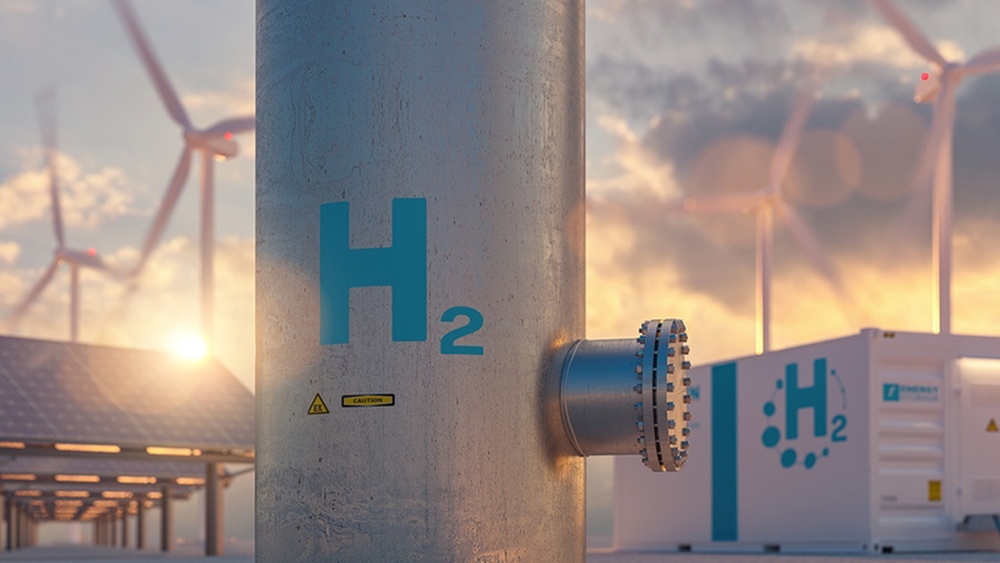
Hydrogen fuel cell technology offers a clean, quiet, and efficient alternative to traditional internal combustion engines. While ICEs rely on burning fossil fuels and emit harmful pollutants, hydrogen fuel cells produce only water vapor and heat as byproducts—making them a promising solution for a sustainable transportation future.
Key Takeaways
- Zero Emissions at the Tailpipe: Hydrogen fuel cells emit only water vapor, unlike internal combustion engines that release CO₂, NOx, and particulate matter.
- Higher Energy Efficiency: Fuel cells convert 60% of hydrogen’s energy into electricity, while ICEs waste over 70% as heat.
- Refueling Speed and Range: Hydrogen vehicles refuel in 3–5 minutes and match or exceed the range of gasoline cars, unlike most battery EVs.
- Infrastructure Challenges: Hydrogen refueling stations are scarce compared to gas stations, limiting widespread adoption today.
- Production Methods Matter: Most hydrogen is currently “grey” (from natural gas), but “green” hydrogen (from renewables) is key to true sustainability.
- Cost and Scalability: Fuel cell systems are currently expensive, but costs are dropping as production scales up and technology improves.
- Ideal for Heavy-Duty Transport: Hydrogen excels in trucks, buses, and shipping—sectors where batteries struggle with weight and charging time.
📑 Table of Contents
- Introduction: The Race for Cleaner Power
- How Hydrogen Fuel Cells Work
- How Internal Combustion Engines Work
- Efficiency Comparison: Fuel Cells vs. ICEs
- Environmental Impact: Emissions and Sustainability
- Cost, Infrastructure, and Practicality
- Applications: Where Each Technology Shines
- The Future: Innovation and Outlook
- Conclusion: A Cleaner, Quieter Road Ahead
Introduction: The Race for Cleaner Power
Imagine driving a car that runs quietly, refuels in minutes, and leaves behind nothing but water droplets. Sounds like science fiction? Not anymore. Hydrogen fuel cell technology is turning this vision into reality, offering a compelling alternative to the internal combustion engine (ICE) that has dominated transportation for over a century.
For decades, ICEs powered by gasoline or diesel have been the backbone of personal and commercial vehicles. They’re reliable, widely supported by infrastructure, and familiar to mechanics and drivers alike. But their environmental cost is steep—burning fossil fuels releases carbon dioxide, nitrogen oxides, and other pollutants that contribute to climate change and poor air quality. As the world pushes toward net-zero emissions, the search for cleaner alternatives has intensified.
Enter hydrogen fuel cells. These devices generate electricity through a chemical reaction between hydrogen and oxygen, producing only water and heat as byproducts. No combustion. No smoke. Just clean energy. While still in the early stages of mass adoption, hydrogen technology is gaining traction—especially in heavy-duty vehicles, public transit, and industrial applications. But how does it really stack up against the tried-and-true internal combustion engine? Let’s dive in.
How Hydrogen Fuel Cells Work
Visual guide about Hydrogen Fuel Cell Technology Vs Internal Combustion Engines
Image source: h2-view.com
At the heart of a hydrogen fuel cell vehicle (FCEV) is the fuel cell stack—a series of individual cells that work together to produce electricity. Each cell contains an anode, a cathode, and an electrolyte membrane. Here’s how it all comes together.
The Science Behind the Reaction
Hydrogen gas (H₂) is fed into the anode side of the fuel cell. At the anode, a catalyst—usually platinum—splits the hydrogen molecules into protons and electrons. The protons pass through the electrolyte membrane to the cathode, while the electrons are forced to travel through an external circuit, creating an electric current. This current powers the vehicle’s motor.
Meanwhile, oxygen from the air enters the cathode. There, it combines with the protons and electrons to form water (H₂O)—the only emission. The entire process is silent, efficient, and produces no greenhouse gases during operation.
Types of Fuel Cells
Not all fuel cells are the same. The most common type used in vehicles is the Proton Exchange Membrane (PEM) fuel cell. It operates at relatively low temperatures (around 80°C), starts quickly, and is compact—ideal for cars and buses.
Other types include Solid Oxide Fuel Cells (SOFC), which run hotter and are better suited for stationary power generation, and Alkaline Fuel Cells (AFC), used in space missions like the Apollo program. But for transportation, PEM remains the gold standard.
Hydrogen Storage and Delivery
Storing hydrogen safely and efficiently is a key challenge. Most FCEVs use high-pressure tanks that store hydrogen gas at 700 bar (over 10,000 psi)—about 3–4 times the pressure of a scuba tank. These tanks are made of carbon fiber and designed to withstand extreme conditions.
Alternatively, some research focuses on liquid hydrogen or solid-state storage (like metal hydrides), but these methods are less mature. Refueling is similar to gasoline: you pull up to a station, connect a nozzle, and fill the tank in minutes.
How Internal Combustion Engines Work
To understand the advantages of hydrogen, it helps to revisit how internal combustion engines operate. Despite their environmental drawbacks, ICEs are engineering marvels that have evolved over 150 years.
The Four-Stroke Cycle
Most gasoline engines use a four-stroke cycle: intake, compression, power, and exhaust. During intake, a mixture of air and fuel enters the cylinder. The piston compresses this mixture, and a spark plug ignites it. The resulting explosion pushes the piston down, generating power. Finally, exhaust gases are expelled.
Diesel engines skip the spark plug—instead, they compress air so much that it heats up, then inject fuel, which ignites spontaneously. Both types rely on controlled explosions to produce motion.
Energy Loss and Inefficiency
Here’s the catch: ICEs are incredibly inefficient. Only about 20–30% of the energy in gasoline actually moves the car. The rest is lost as heat through the engine, exhaust, and cooling system. Even the most advanced engines struggle to break 40% efficiency.
This inefficiency means more fuel is burned to go the same distance, increasing emissions and fuel costs. It also leads to engine wear, noise, and vibration—things hydrogen vehicles don’t have to worry about.
Emissions and Environmental Impact
Every time you start a gasoline car, you’re releasing carbon dioxide (CO₂), a major greenhouse gas. ICEs also emit nitrogen oxides (NOx), carbon monoxide (CO), and particulate matter—pollutants linked to respiratory diseases and smog.
Even with catalytic converters and modern emissions controls, ICEs can’t eliminate these outputs. In contrast, hydrogen fuel cells produce zero tailpipe emissions. The only “exhaust” is pure water vapor.
Efficiency Comparison: Fuel Cells vs. ICEs
When it comes to energy efficiency, hydrogen fuel cells have a clear advantage. But let’s break it down with real numbers.
Well-to-Wheel Efficiency
To compare fairly, we need to look at “well-to-wheel” efficiency—the total energy used from production to propulsion.
For a gasoline car:
– Crude oil is extracted, refined, transported, and burned in an engine.
– The overall efficiency is around 15–20%. That means only 15–20% of the original energy in the oil actually moves the car.
For a hydrogen fuel cell vehicle:
– Hydrogen is produced (via electrolysis or steam reforming), compressed, transported, and used in a fuel cell.
– With green hydrogen (from renewable electricity), well-to-wheel efficiency is about 25–35%.
– With grey hydrogen (from natural gas), it drops to 15–20%—similar to gasoline.
So, while hydrogen can be more efficient, it depends heavily on how the hydrogen is made.
Tank-to-Wheel Efficiency
If we focus only on the vehicle itself (tank-to-wheel), the difference is striking.
– Internal combustion engines: 20–30% efficient.
– Hydrogen fuel cells: 50–60% efficient.
– Battery electric vehicles (BEVs): 70–90% efficient.
Fuel cells are nearly twice as efficient as ICEs at converting stored energy into motion. This means less energy waste, longer range, and lower operating costs over time.
Real-World Examples
Take the Toyota Mirai, a hydrogen-powered sedan. It has a range of about 400 miles and refuels in 5 minutes. Compare that to a gasoline Toyota Camry, which also gets around 400 miles but emits over 4 tons of CO₂ per year.
Or consider the Hyundai Xcient Fuel Cell truck, used in Switzerland for freight transport. It can carry heavy loads over long distances without the weight penalty of large battery packs—something BEVs struggle with.
Environmental Impact: Emissions and Sustainability
The environmental footprint of any vehicle depends not just on what comes out of the tailpipe, but how the fuel is produced.
Tailpipe Emissions
This is where hydrogen shines. FCEVs emit nothing but water vapor. No CO₂. No NOx. No soot. In cities with poor air quality, replacing diesel buses with hydrogen models can significantly reduce smog and health risks.
ICEs, by contrast, are major contributors to urban pollution. Even with hybrid technology, they still burn fossil fuels and release harmful emissions.
Upstream Emissions: The Hydrogen Production Problem
Here’s the catch: most hydrogen today is “grey” hydrogen, produced from natural gas through steam methane reforming (SMR). This process emits CO₂—about 9–12 kg of CO₂ per kg of hydrogen.
“Blue” hydrogen uses carbon capture to reduce these emissions, but it’s not zero-carbon. Only “green” hydrogen—made by splitting water using renewable electricity (wind, solar, hydro)—is truly clean.
Currently, green hydrogen makes up less than 1% of global production. But as renewable energy costs fall and electrolyzer technology improves, this is changing.
Lifecycle Analysis
A full lifecycle analysis considers manufacturing, operation, and disposal. Studies show that FCEVs powered by green hydrogen have a much lower carbon footprint than ICEs—sometimes 50–70% lower.
Even with grey hydrogen, FCEVs can be cleaner than gasoline cars, especially in regions with low-carbon electricity grids. But the real environmental benefit comes when hydrogen is produced sustainably.
Cost, Infrastructure, and Practicality
Technology is one thing. Real-world adoption is another. Let’s look at the practical challenges.
Vehicle Cost
Hydrogen fuel cell vehicles are expensive. The Toyota Mirai starts around $50,000, and commercial trucks can cost over $300,000. Why? Fuel cell stacks use rare materials like platinum, and production volumes are low.
In contrast, gasoline cars are mass-produced and widely available at lower prices. Even electric vehicles, while still pricier than ICEs, are becoming more affordable.
But costs are dropping. As fuel cell production scales up and platinum use decreases (through better catalysts), prices are expected to fall. Some analysts predict FCEVs could reach cost parity with BEVs by 2030.
Refueling Infrastructure
This is the biggest hurdle. As of 2024, there are fewer than 200 hydrogen refueling stations in the U.S., mostly in California. Compare that to over 150,000 gas stations nationwide.
Building hydrogen infrastructure is expensive. Stations require high-pressure compressors, storage tanks, and safety systems. But governments and companies are investing. The U.S. Department of Energy has funded hydrogen hubs, and countries like Germany, Japan, and South Korea are expanding their networks.
Refueling Time and Range
One area where hydrogen beats both gasoline and batteries is refueling speed. A 5-minute fill-up is standard for FCEVs—similar to gasoline and much faster than even the fastest EV chargers (which take 20–30 minutes for 80% charge).
Range is also competitive. Most FCEVs offer 300–400 miles per tank, matching or exceeding gasoline cars and outperforming many EVs.
Maintenance and Durability
Fuel cell vehicles have fewer moving parts than ICEs—no pistons, crankshafts, or exhaust systems. This means less wear and lower maintenance costs over time.
However, fuel cells can degrade over time, especially if exposed to impurities in hydrogen or extreme temperatures. Research is ongoing to improve durability and lifespan.
Applications: Where Each Technology Shines
Not all vehicles are created equal. The best power source depends on the use case.
Passenger Cars
For daily commuting and city driving, battery electric vehicles (BEVs) are currently the most practical and cost-effective option. They’re efficient, quiet, and benefit from growing charging networks.
Hydrogen cars make sense in regions with strong hydrogen infrastructure, like California or Japan. But for most consumers, BEVs are easier and cheaper to own.
Heavy-Duty Transport
This is where hydrogen has a real advantage. Long-haul trucks, buses, and delivery vans need high energy density, fast refueling, and long range—things batteries struggle with.
A battery big enough to power a truck for 500 miles would be extremely heavy, reducing cargo capacity. Hydrogen tanks are lighter and refuel in minutes. Companies like Nikola, Toyota, and Hyundai are developing hydrogen trucks for freight and logistics.
Public Transit and Fleets
Cities are increasingly adopting hydrogen buses. London, for example, has a fleet of hydrogen double-decker buses that reduce emissions in high-traffic areas. Fleets with centralized refueling (like taxis or delivery vans) can benefit from dedicated hydrogen stations.
Marine and Aviation
Shipping and aviation are hard to decarbonize. Batteries are too heavy for planes, and LNG (liquefied natural gas) still emits CO₂. Hydrogen—especially in liquid form or as ammonia—is being explored as a fuel for ships and future aircraft.
Stationary Power and Backup Energy
Beyond transportation, fuel cells can provide clean electricity for buildings, data centers, and emergency backup. They’re quieter and cleaner than diesel generators and can run continuously as long as hydrogen is supplied.
The Future: Innovation and Outlook
The race between hydrogen and internal combustion engines isn’t just about today—it’s about the next 20 years.
Advancements in Fuel Cell Technology
Researchers are working to reduce costs and improve performance. New catalysts use less platinum or replace it entirely with iron or cobalt. Membranes are becoming more durable and efficient. Stack designs are getting smaller and more powerful.
Solid-state hydrogen storage and organic liquid carriers (like LOHCs) could make transport safer and cheaper. And advances in electrolysis are driving down the cost of green hydrogen.
Policy and Investment
Governments are stepping in. The U.S. Inflation Reduction Act offers tax credits for clean hydrogen production. The European Union has a Hydrogen Strategy aiming for 40 GW of electrolyzers by 2030. China is investing heavily in hydrogen infrastructure.
These policies are accelerating innovation and deployment.
Will Hydrogen Replace ICEs?
Not overnight. Internal combustion engines will remain in use for years, especially in developing countries and legacy fleets. But in the long term, hydrogen—alongside batteries—will play a key role in decarbonizing transport.
The future is likely a mix: BEVs for light-duty vehicles, hydrogen for heavy transport and industrial use, and ICEs phased out gradually.
Conclusion: A Cleaner, Quieter Road Ahead
Hydrogen fuel cell technology isn’t just a futuristic dream—it’s a practical, scalable solution for reducing emissions and improving efficiency. While internal combustion engines have served us well, their environmental toll is too high for a sustainable future.
Fuel cells offer a cleaner alternative: zero tailpipe emissions, high efficiency, and fast refueling. They’re especially promising for trucks, buses, and industries where batteries fall short. But challenges remain—cost, infrastructure, and hydrogen production must improve.
The transition won’t happen overnight, but the momentum is building. With continued innovation, investment, and policy support, hydrogen could power a significant share of our transportation needs in the decades to come.
So, while the internal combustion engine may not disappear tomorrow, its days are numbered. The road ahead is quieter, cleaner, and powered by hydrogen.
Frequently Asked Questions
Are hydrogen fuel cell vehicles safe?
Yes, hydrogen fuel cell vehicles are designed with multiple safety features, including leak detection, automatic shutoff valves, and reinforced storage tanks. Hydrogen is lighter than air and disperses quickly if leaked, reducing fire risk.
Can I refuel a hydrogen car at home?
Currently, home hydrogen refueling is not widely available. Most FCEV owners rely on public stations, though some companies are developing home refueling units that produce hydrogen from water using electricity.
Is hydrogen more efficient than batteries?
In terms of tank-to-wheel efficiency, batteries are more efficient (70–90%) than hydrogen fuel cells (50–60%). However, hydrogen has advantages in refueling speed and energy density, making it better for heavy-duty applications.
What happens to hydrogen fuel cells at the end of their life?
Fuel cells can be recycled. Materials like platinum can be recovered and reused, and the rest of the components can be processed for raw materials, reducing waste and environmental impact.
Why isn’t hydrogen used more if it’s so clean?
The main barriers are cost, infrastructure, and hydrogen production methods. Most hydrogen today is made from fossil fuels, and refueling stations are scarce. But as green hydrogen scales up, adoption is expected to grow.
Can existing gas stations be converted to hydrogen?
Yes, in theory. Some gas stations are adding hydrogen pumps alongside gasoline and EV chargers. However, hydrogen requires specialized equipment and safety systems, so retrofitting is complex and expensive.