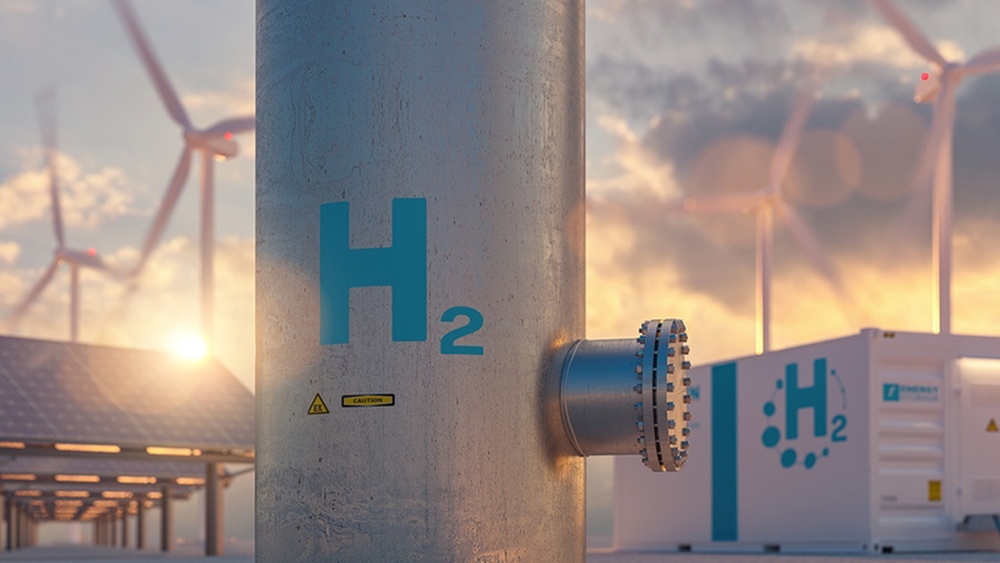
Hydrogen fuel cells are emerging as a game-changing technology in aviation and public transport, offering zero-emission alternatives to fossil fuels. From regional flights to city buses, this clean energy solution promises longer ranges, faster refueling, and reduced environmental impact.
Key Takeaways
- Zero Emissions Operation: Hydrogen fuel cells produce only water and heat as byproducts, making them ideal for decarbonizing transport sectors.
- Longer Range and Faster Refueling: Compared to batteries, hydrogen-powered vehicles can travel farther and refuel in minutes, not hours.
- Aviation Breakthroughs: Airlines and manufacturers are testing hydrogen-powered aircraft for short-haul and regional flights.
- Public Transport Adoption: Cities worldwide are deploying hydrogen buses and trains to cut urban pollution.
- Infrastructure Challenges Remain: Widespread use depends on building hydrogen production, storage, and refueling networks.
- Government and Industry Collaboration: Supportive policies and partnerships are accelerating real-world deployment.
- Future Outlook: With advancing technology, hydrogen could dominate sustainable transport by 2040.
📑 Table of Contents
- Introduction: The Clean Energy Shift in Transportation
- How Hydrogen Fuel Cells Work: A Simple Explanation
- Hydrogen in Aviation: Taking Flight with Clean Energy
- Hydrogen in Public Transport: Buses, Trains, and More
- Building the Hydrogen Infrastructure
- Environmental and Economic Benefits
- Challenges and the Road Ahead
- Conclusion: A Hydrogen-Powered Future is Within Reach
Introduction: The Clean Energy Shift in Transportation
The world is in the middle of a transportation revolution. As climate change accelerates and air quality becomes a growing concern, industries are racing to find cleaner, greener ways to move people and goods. Among the most promising solutions is hydrogen fuel cell technology—a quiet, efficient, and emission-free power source that’s gaining serious momentum in both aviation and public transport.
Unlike traditional engines that burn fossil fuels and release harmful gases, hydrogen fuel cells generate electricity through a chemical reaction between hydrogen and oxygen. The only byproducts? Water vapor and a little heat. This makes them a perfect fit for sectors that need high energy output without the environmental cost. And while electric batteries have made great strides, they still struggle with weight, charging time, and range—especially in heavy-duty applications like planes and buses. That’s where hydrogen steps in.
How Hydrogen Fuel Cells Work: A Simple Explanation
Before diving into how hydrogen is changing aviation and public transit, it helps to understand the basics. A hydrogen fuel cell is like a battery that never runs out—as long as you keep feeding it hydrogen. Inside the cell, hydrogen gas is split into protons and electrons. The protons pass through a special membrane, while the electrons are forced to travel through an external circuit, creating an electric current. When they reunite with oxygen from the air, they form water. No combustion, no pollution.
Visual guide about Hydrogen Fuel Cells in Aviation and Public Transport
Image source: img.fuelcellsworks.com
The Core Components of a Fuel Cell
Every hydrogen fuel cell has a few key parts: the anode (where hydrogen enters), the cathode (where oxygen enters), and the electrolyte membrane (which allows protons to pass but blocks electrons). The reaction happens at relatively low temperatures—usually under 100°C—making fuel cells safer and more efficient than combustion engines. Plus, they can be stacked together to increase power output, which is why they’re suitable for everything from small drones to large aircraft.
Types of Hydrogen Fuel Cells
Not all fuel cells are the same. The most common type used in transportation is the Proton Exchange Membrane Fuel Cell (PEMFC). It’s lightweight, starts quickly, and works well at low temperatures—perfect for vehicles. Other types, like Solid Oxide Fuel Cells (SOFC), operate at higher temperatures and are better suited for stationary power, but research is ongoing to adapt them for mobility.
Green vs. Gray Hydrogen: The Source Matters
Here’s a crucial point: not all hydrogen is created equal. “Gray” hydrogen is made from natural gas and releases CO₂—defeating the purpose of clean energy. “Blue” hydrogen captures and stores that CO₂, reducing emissions. But the real star is “green” hydrogen, produced using renewable energy (like wind or solar) to split water into hydrogen and oxygen. Only green hydrogen offers true sustainability. As renewable energy becomes cheaper and more widespread, green hydrogen production is scaling up fast.
Hydrogen in Aviation: Taking Flight with Clean Energy
Aviation is one of the hardest sectors to decarbonize. Planes need a lot of energy, and batteries are too heavy for long flights. That’s why hydrogen is being hailed as the future of flight. Major airlines and aircraft manufacturers are investing heavily in hydrogen-powered aircraft, with prototypes already in testing.
Why Hydrogen for Planes?
Hydrogen has a much higher energy density by weight than jet fuel or batteries. This means planes can carry more energy without adding excessive weight. Liquid hydrogen, when cooled to -253°C, takes up less space, allowing it to be stored in aircraft wings or fuselage tanks. And because fuel cells produce electricity quietly and efficiently, hydrogen planes could also reduce noise pollution around airports.
Current Projects and Prototypes
Several exciting projects are underway. Airbus, for example, has unveiled its “ZEROe” concept, targeting hydrogen-powered commercial flights by 2035. The designs include turbofan, turboprop, and blended-wing body aircraft, all running on liquid hydrogen. Meanwhile, startup ZeroAvia has successfully tested a hydrogen-electric plane on short flights in the UK and the U.S., with plans to launch a 19-seater regional aircraft by 2026.
Smaller aircraft are leading the charge. In 2023, a hydrogen-powered plane completed a 15-minute flight over England, carrying two passengers. These early successes prove the technology works—now it’s about scaling up.
Challenges in Aviation
Despite the promise, hydrogen aviation faces hurdles. Storing liquid hydrogen requires cryogenic tanks, which add complexity and cost. Airports need new infrastructure to produce, store, and refuel hydrogen safely. And regulations are still catching up. But with global pressure to cut aviation emissions—which account for about 2.5% of CO₂—governments and industry leaders are working together to overcome these barriers.
Hydrogen in Public Transport: Buses, Trains, and More
While aviation grabs headlines, public transport is where hydrogen is already making a real difference. Cities around the world are replacing diesel buses and trains with hydrogen-powered versions, cutting emissions and improving air quality in urban areas.
Hydrogen Buses: Clean Rides for City Streets
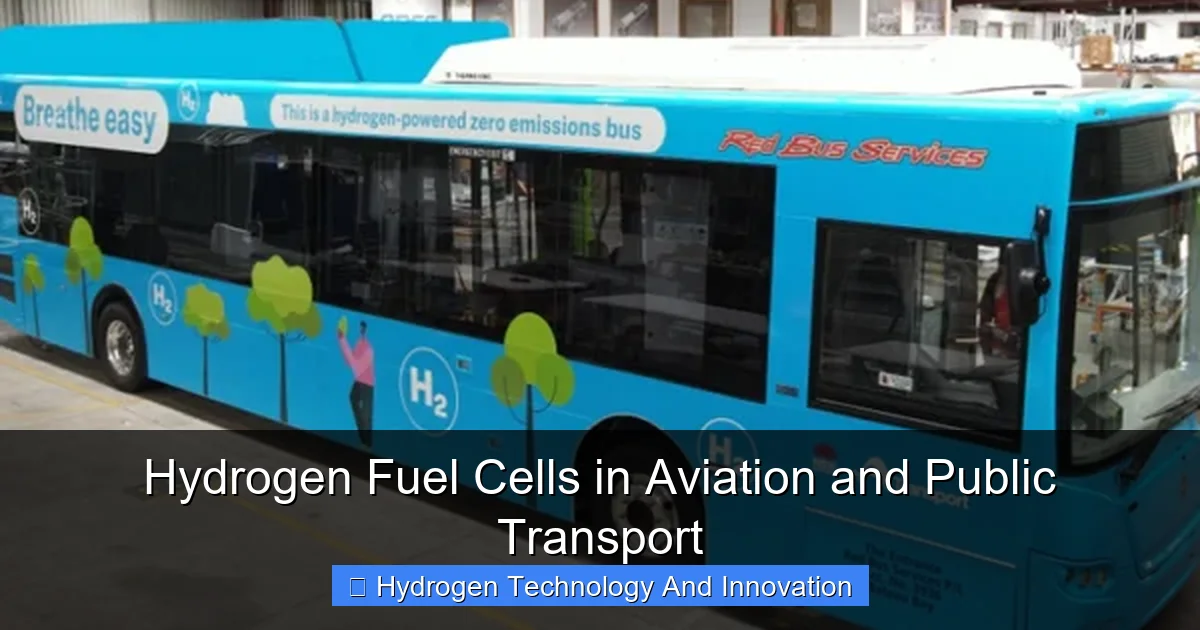
Hydrogen buses are quiet, smooth, and emit nothing but water. They’re ideal for city routes where stop-and-go traffic drains batteries quickly. Unlike electric buses that need hours to recharge, hydrogen buses can refuel in 10–15 minutes and travel 300–500 miles on a single tank.
Cities like London, Tokyo, and Cologne have deployed hydrogen bus fleets. In the U.S., California leads the way with over 50 hydrogen buses in operation. These buses not only reduce pollution but also serve as mobile showcases for clean technology, educating the public and building support for wider adoption.
Hydrogen Trains: The Future of Rail
Trains are another natural fit for hydrogen. In Germany, the Coradia iLint—a hydrogen-powered train built by Alstom—has been running passenger services since 2018. It emits no pollutants and is quieter than diesel trains. The UK, France, and Italy are also testing hydrogen trains on non-electrified rail lines, where overhead wires are impractical.
Hydrogen trains use fuel cells to generate electricity, which powers electric motors. Excess energy can be stored in batteries for acceleration, making them highly efficient. With rail networks expanding globally, hydrogen offers a scalable solution for green transit.
Other Public Transport Applications
Beyond buses and trains, hydrogen is being used in ferries, airport shuttles, and even garbage trucks. In Norway, hydrogen ferries are transporting passengers across fjords without polluting the pristine waters. In Japan, hydrogen-powered forklifts and delivery vehicles are common in warehouses and ports. The versatility of fuel cells makes them adaptable to almost any transport need.
Building the Hydrogen Infrastructure
For hydrogen to go mainstream, we need more than just vehicles—we need infrastructure. That means hydrogen production plants, storage facilities, pipelines, and refueling stations. Right now, that network is still in its infancy, but it’s growing fast.
Hydrogen Production and Distribution
Most hydrogen today is produced near where it’s used, often at refueling stations. Electrolyzers powered by solar or wind energy split water into hydrogen and oxygen on-site. This avoids the need for long-distance transport, which is expensive and energy-intensive.
For larger-scale use, hydrogen can be transported via pipelines (like natural gas) or in liquid form by truck. Countries like Germany and the Netherlands are expanding their hydrogen pipeline networks, while Australia and Saudi Arabia are investing in large-scale green hydrogen export projects.
Refueling Stations: The Final Mile
Just like gas stations, hydrogen refueling stations need to be convenient and safe. Modern stations use high-pressure pumps to fill tanks in minutes. Safety systems monitor for leaks and shut down automatically if needed. In California, over 60 hydrogen stations serve the growing fleet of fuel cell vehicles. Japan and South Korea have even more, with plans to reach 1,000 stations by 2030.
One challenge is cost. Building a hydrogen station can cost $1–3 million, compared to $100,000 for a fast-charging EV station. But as demand grows and technology improves, prices are expected to drop.
Government Support and Incentives
Governments are playing a key role in building hydrogen infrastructure. The U.S. Inflation Reduction Act offers tax credits for green hydrogen production. The European Union’s “Fit for 55” plan includes funding for hydrogen refueling networks. China is investing billions in hydrogen technology as part of its carbon neutrality goals.
Public-private partnerships are also crucial. Companies like Toyota, Hyundai, and Shell are working with cities and utilities to co-fund hydrogen projects. These collaborations help share risk and accelerate deployment.
Environmental and Economic Benefits
Switching to hydrogen isn’t just good for the planet—it’s good for the economy. Clean transport creates jobs, reduces healthcare costs from air pollution, and enhances energy security by reducing reliance on imported oil.
Reducing Carbon Emissions
Transportation accounts for nearly a quarter of global CO₂ emissions. Hydrogen fuel cells can cut that dramatically. A single hydrogen bus can prevent over 100 tons of CO₂ emissions per year compared to a diesel bus. Over a fleet of thousands, the impact is enormous.
And because hydrogen can be produced from renewable sources, the entire lifecycle—from production to use—can be nearly carbon-free. This makes hydrogen a cornerstone of net-zero strategies.
Improving Air Quality and Public Health
Diesel engines emit nitrogen oxides (NOx) and particulate matter, which cause respiratory diseases and premature deaths. Hydrogen vehicles produce zero tailpipe emissions, leading to cleaner air in cities. Studies show that replacing diesel buses with hydrogen ones can reduce local pollution by up to 90%.
Economic Opportunities
The hydrogen economy is creating new industries and jobs. From manufacturing fuel cells to operating refueling stations, the sector is expected to support millions of jobs globally by 2050. Countries that invest early—like Germany, Japan, and Australia—are positioning themselves as leaders in this emerging market.
Challenges and the Road Ahead
Despite the progress, hydrogen still faces significant challenges. Cost, infrastructure, and public perception are the biggest hurdles. But with continued innovation and investment, these barriers are being overcome.
Cost Competitiveness
Right now, hydrogen vehicles are more expensive than diesel or electric ones. Fuel cells, tanks, and storage systems drive up the price. But as production scales up and technology improves, costs are falling. Experts predict hydrogen buses and trucks could reach price parity with diesel by 2030.
Public Awareness and Acceptance
Many people still associate hydrogen with the Hindenburg disaster. But modern hydrogen systems are far safer, with rigorous safety standards and fail-safes. Education and real-world demonstrations—like hydrogen buses in cities—are helping to build public trust.
The Path to 2040
By 2040, hydrogen could power a significant share of global transport. Short-haul flights, regional trains, city buses, and freight trucks are all likely candidates. Long-haul aviation and shipping may follow as technology advances. The key is sustained investment, supportive policies, and global cooperation.
Conclusion: A Hydrogen-Powered Future is Within Reach
Hydrogen fuel cells are no longer a futuristic dream—they’re a practical, scalable solution for clean transportation. From the skies to city streets, this technology is proving its worth. While challenges remain, the momentum is undeniable. With the right support, hydrogen could transform how we move, making transport faster, cleaner, and more sustainable for generations to come.
Frequently Asked Questions
What is a hydrogen fuel cell?
A hydrogen fuel cell is a device that converts hydrogen and oxygen into electricity, water, and heat through an electrochemical reaction. It works like a battery but doesn’t need recharging—it runs as long as hydrogen is supplied.
Are hydrogen fuel cells safe?
Yes, modern hydrogen fuel cells are designed with multiple safety features, including leak detection, pressure relief valves, and fire-resistant materials. Hydrogen disperses quickly in air, reducing explosion risk compared to gasoline.
How far can a hydrogen-powered vehicle travel?
Hydrogen vehicles typically have a range of 300–500 miles on a single tank, similar to gasoline cars. This is much longer than most battery-electric vehicles, especially for heavy-duty applications like buses and trucks.
Is hydrogen production environmentally friendly?
It depends on the source. Green hydrogen, made using renewable energy, is completely clean. Gray hydrogen, produced from natural gas, emits CO₂. The shift to green hydrogen is essential for true sustainability.
Can existing vehicles be converted to hydrogen?
Some vehicles can be retrofitted, but it’s complex and expensive. Most hydrogen vehicles are built from the ground up to optimize performance, safety, and efficiency.
Which countries are leading in hydrogen transport?
Japan, Germany, South Korea, and the U.S. are leaders in hydrogen technology. China is rapidly expanding its hydrogen infrastructure, while Australia and Saudi Arabia are investing in large-scale green hydrogen production.