Hydrogen fuel cells and batteries are leading the charge in clean transportation, but they work very differently. While batteries store electricity to power electric motors, hydrogen fuel cells generate electricity on demand using hydrogen gas. Each has unique advantages—batteries dominate today’s market, but hydrogen offers fast refueling and long range, making it a strong contender for the future of electric mobility.
Key Takeaways
- Batteries are more energy-efficient: Electric vehicles (EVs) with lithium-ion batteries convert about 77% of grid energy to power at the wheels, while hydrogen fuel cell vehicles (FCEVs) achieve only around 30–35% due to energy losses in production and conversion.
- Refueling speed favors hydrogen: FCEVs can be refueled in 3–5 minutes, similar to gasoline cars, while even the fastest EV chargers take 20–30 minutes for an 80% charge.
- Battery EVs have better infrastructure: Charging stations are widespread and growing rapidly, while hydrogen refueling networks are limited and concentrated in select regions like California and parts of Europe.
- Hydrogen excels in heavy-duty transport: Due to high energy density and quick refueling, hydrogen is better suited for trucks, buses, and long-haul freight than current battery technology.
- Environmental impact depends on energy source: Both technologies are clean at the tailpipe, but their overall footprint hinges on how the electricity or hydrogen is produced—renewables make both greener.
- Cost remains a barrier for hydrogen: FCEVs are more expensive to produce due to platinum catalysts and complex storage systems, while battery prices continue to fall.
- The future may include both: Rather than replacing one another, batteries and hydrogen could complement each other, serving different vehicle types and use cases in a decarbonized transport system.
📑 Table of Contents
- Introduction: The Race to Clean Mobility
- How Battery Electric Vehicles Work
- How Hydrogen Fuel Cell Vehicles Work
- Comparing Range, Refueling, and Performance
- Environmental and Economic Considerations
- Applications: Where Each Technology Shines
- The Road Ahead: Coexistence, Not Competition
- Conclusion: Choosing the Right Tool for the Job
Introduction: The Race to Clean Mobility
The shift away from fossil fuels is accelerating, and electric vehicles (EVs) are at the heart of this transformation. But not all EVs are created equal. While most people think of battery-powered cars like Teslas or Nissan Leafs when they hear “electric car,” another technology is quietly gaining traction: hydrogen fuel cells. These two approaches—batteries and hydrogen—represent different paths to the same goal: zero-emission transportation.
So, which one is better? The answer isn’t black and white. It depends on how you drive, where you live, what kind of vehicle you need, and even how the energy that powers it is produced. Batteries have won the early battle in passenger cars, thanks to falling costs, better infrastructure, and strong consumer adoption. But hydrogen fuel cells offer unique benefits—especially for long-distance travel and heavy vehicles—that batteries still struggle to match.
How Battery Electric Vehicles Work
Visual guide about Hydrogen Fuel Cells Vs Batteries in Electric Cars
Image source: i.pinimg.com
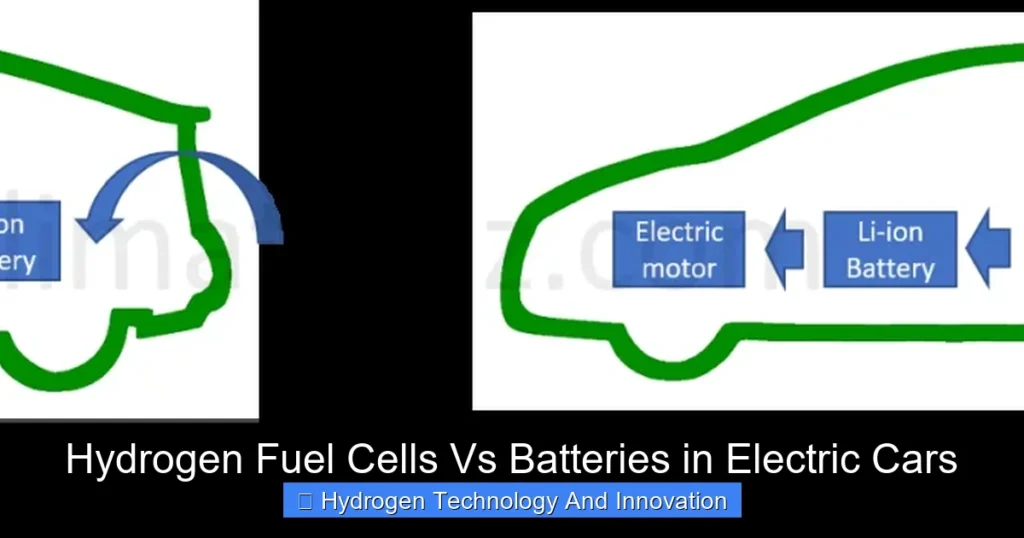
Battery electric vehicles (BEVs) are the most common type of EV on the road today. They store electrical energy in large lithium-ion battery packs, which power an electric motor to turn the wheels. When you plug in your car, electricity from the grid charges the battery. When you drive, the battery discharges that stored energy to run the motor.
Energy Storage and Efficiency
One of the biggest advantages of BEVs is their high energy efficiency. According to the U.S. Department of Energy, BEVs convert about 77% of the electrical energy from the grid to power at the wheels. That’s because electric motors are incredibly efficient—far more so than internal combustion engines, which waste most of their energy as heat.
For example, a Tesla Model 3 can travel over 4 miles per kWh of electricity. That means a full charge (around 75 kWh) can take you over 300 miles. And because the motor has fewer moving parts, maintenance is simpler and less frequent.
Charging Infrastructure and Convenience
Charging a BEV is as easy as plugging in your phone—just find a charging station or use a home charger. Level 2 chargers (240V) can fully charge most EVs overnight, while DC fast chargers can add 200+ miles of range in 30 minutes. Networks like Tesla Superchargers, Electrify America, and ChargePoint are expanding rapidly, making long trips increasingly feasible.
Home charging is a major perk. Most BEV owners charge overnight in their garage or driveway, waking up to a “full tank” every morning. This convenience is hard to beat—no more trips to the gas station.
Environmental Impact of Batteries
BEVs produce zero tailpipe emissions, but their environmental footprint depends on how the electricity is generated. If your grid runs on coal, the benefits are smaller. But in regions with clean energy—like California, Norway, or Iceland—BEVs are nearly carbon-free over their lifetime.
Battery production does have an environmental cost, especially mining for lithium, cobalt, and nickel. However, recycling programs and advances in battery chemistry (like lithium iron phosphate) are reducing these impacts. Plus, as grids get greener, the lifetime emissions of BEVs keep improving.
How Hydrogen Fuel Cell Vehicles Work
Hydrogen fuel cell electric vehicles (FCEVs) also run on electricity, but they generate it on board using hydrogen gas. Instead of storing electricity in a battery, FCEVs use a fuel cell stack to combine hydrogen with oxygen from the air, producing electricity, water, and heat. That electricity then powers the motor—just like in a BEV.
The Science Behind the Fuel Cell
A fuel cell works like a mini power plant inside your car. Hydrogen gas is fed into the anode side of the fuel cell, where a catalyst—usually platinum—splits the hydrogen into protons and electrons. The protons pass through a membrane to the cathode, while the electrons are forced through an external circuit, creating an electric current. At the cathode, the protons, electrons, and oxygen from the air combine to form water—the only emission.
This process is clean, quiet, and efficient—but only if the hydrogen is produced cleanly. Most hydrogen today is made from natural gas (called “grey hydrogen”), which releases CO₂. “Green hydrogen,” made using renewable electricity to split water, is the ideal but still limited.
Refueling: Speed and Simplicity
One of the biggest selling points of FCEVs is refueling speed. A hydrogen pump can fill a tank in 3 to 5 minutes—just like gasoline. Compare that to even the fastest EV chargers, which take 20–30 minutes for a partial charge. For long road trips or commercial fleets, this is a game-changer.
For example, the Toyota Mirai can go over 400 miles on a single tank and refuels in under 5 minutes. That’s a huge advantage over most BEVs, which still require longer stops on long journeys.
Hydrogen Production and Infrastructure Challenges
Despite the promise, hydrogen faces major hurdles. First, producing green hydrogen is expensive and energy-intensive. Electrolysis—the process of splitting water into hydrogen and oxygen—requires a lot of electricity. If that power comes from fossil fuels, the environmental benefit shrinks.
Second, hydrogen infrastructure is sparse. As of 2024, there are fewer than 100 public hydrogen stations in the U.S., mostly in California. Building a nationwide network would require massive investment in production, transport, and storage. Hydrogen is also harder to store than gasoline or batteries—it’s a lightweight gas that needs high-pressure tanks or cryogenic cooling.
Comparing Range, Refueling, and Performance
When choosing between a battery EV and a hydrogen FCEV, real-world performance matters. Let’s break it down.
Range: Who Goes Farther?
Both technologies can offer long range, but FCEVs currently have an edge. The Hyundai NEXO, for example, boasts a range of over 400 miles—more than most BEVs. The Tesla Model S Long Range gets around 405 miles, but that’s at the top end. Most BEVs range from 200 to 300 miles.
However, real-world range can vary. Cold weather reduces battery efficiency, and hydrogen systems also lose some performance in extreme temperatures. But overall, FCEVs maintain more consistent range in varied conditions.
Refueling Time: A Clear Winner
This is where hydrogen shines. Filling up with hydrogen takes minutes. Charging a BEV, even at a fast charger, takes significantly longer. For commercial operators—like delivery trucks or taxis—downtime is money lost. Fast refueling makes hydrogen more practical for high-use vehicles.
But for daily commuters, overnight charging is often sufficient. Most people drive less than 40 miles a day, so a nightly top-up covers their needs. Fast charging is only needed occasionally.
Performance and Driving Experience
Both BEVs and FCEVs deliver instant torque and smooth acceleration. The driving experience is quiet and responsive. However, BEVs tend to be lighter because batteries are more compact than hydrogen tanks and fuel cell systems. This can improve handling and efficiency.
FCEVs often have a slight weight penalty due to the high-pressure hydrogen tanks and complex fuel cell stack. But advances in materials are helping reduce this gap.
Environmental and Economic Considerations
The sustainability of any vehicle depends on more than just what comes out of the tailpipe. We need to look at the full lifecycle—from production to disposal.
Carbon Footprint: It’s All About the Energy Source
Both BEVs and FCEVs emit only water vapor when driving. But their overall carbon footprint depends on how the electricity or hydrogen is made.
– BEVs: Cleaner in regions with renewable energy. In coal-heavy grids, benefits are reduced but still better than gasoline cars over time.
– FCEVs: Only truly green if using green hydrogen. Grey hydrogen (from natural gas) can be worse than gasoline in terms of lifecycle emissions.
The International Energy Agency (IEA) estimates that green hydrogen could reduce transport emissions by up to 80% compared to fossil fuels—but only if scaled with renewables.
Cost of Ownership: Upfront vs. Long-Term
BEVs are getting cheaper. The average price of lithium-ion batteries has dropped over 90% in the last decade. Many new BEVs now cost under $40,000, and used models are even more affordable.
FCEVs, on the other hand, remain expensive. The Toyota Mirai starts around $50,000, and the Hyundai NEXO is similar. High costs come from rare materials (like platinum), complex manufacturing, and low production volumes.
However, hydrogen fuel can be cheaper per mile in some areas. In California, hydrogen costs about $16 per kilogram, and a Mirai gets about 67 miles per kg—roughly $0.24 per mile. Electricity for a BEV costs about $0.04–$0.08 per mile, depending on local rates. So while fueling a BEV is cheaper, the upfront cost of an FCEV is higher.
Maintenance is another factor. BEVs have fewer moving parts and no oil changes, so they’re cheaper to maintain. FCEVs are also low-maintenance, but fuel cell stacks may need replacement after 100,000–150,000 miles, which can be costly.
Applications: Where Each Technology Shines
Not all vehicles are the same. The best technology depends on the use case.
Passenger Cars: Batteries Lead the Way
For most drivers, BEVs are the clear choice. They’re efficient, affordable, and supported by a growing charging network. Models like the Chevrolet Bolt, Ford Mustang Mach-E, and Volkswagen ID.4 offer great range and features at competitive prices.
Hydrogen cars like the Mirai and NEXO are niche products. They’re great for early adopters and those in areas with hydrogen stations, but limited availability and high cost keep them from mass adoption—for now.
Heavy-Duty and Commercial Vehicles: Hydrogen’s Sweet Spot
This is where hydrogen could really shine. Long-haul trucks, buses, and delivery vans need high energy density and fast refueling. Batteries are heavy and take too long to charge for these applications.
Companies like Nikola, Hyundai, and Toyota are developing hydrogen-powered trucks. The Hyundai XCIENT Fuel Cell truck is already operating in Switzerland and California, hauling goods with zero emissions. These trucks can refuel in 15–20 minutes and travel over 500 miles—something batteries can’t match yet.
Similarly, hydrogen buses are being tested in cities like London, Berlin, and Tokyo. They offer the range and reliability needed for public transit without the downtime of charging.
Aviation and Maritime: The Future Frontier
Beyond roads, hydrogen is being explored for planes and ships. Airbus aims to launch a hydrogen-powered passenger aircraft by 2035. Shipping companies are testing hydrogen and ammonia fuels for cargo vessels.
Batteries are too heavy and low-energy for these uses. Hydrogen, especially in liquid form or as ammonia, offers a path to decarbonizing sectors that are hard to electrify.
The Road Ahead: Coexistence, Not Competition
It’s tempting to frame this as a battle: batteries vs. hydrogen. But the future is likely one of coexistence. Each technology has strengths that suit different needs.
Batteries will dominate personal vehicles, urban transport, and short-haul logistics. They’re efficient, improving fast, and supported by massive investment. Governments and automakers are pouring billions into battery tech and charging networks.
Hydrogen will find its place in heavy transport, aviation, and regions with abundant renewable energy. As green hydrogen production scales up and costs fall, FCEVs could become more viable. Countries like Japan, South Korea, and Germany are betting big on hydrogen as part of their clean energy strategy.
Innovation on Both Fronts
The race isn’t over. Solid-state batteries promise higher energy density, faster charging, and lower costs. Companies like QuantumScape and Toyota are working to bring them to market by the late 2020s.
On the hydrogen side, researchers are developing cheaper catalysts (to replace platinum), better storage methods (like metal hydrides), and more efficient electrolyzers. Green hydrogen costs are expected to fall by 60% by 2030, according to the IEA.
Policy and Investment Matter
Government support will shape the outcome. Incentives for EV purchases, charging infrastructure, and renewable energy help batteries. But policies promoting hydrogen production, refueling stations, and R&D are essential for FCEVs to grow.
The U.S. Inflation Reduction Act includes tax credits for clean hydrogen production. The European Union has a Hydrogen Strategy aiming for 40 GW of electrolyzer capacity by 2030. These efforts could tip the scales.
Conclusion: Choosing the Right Tool for the Job
So, which is better—hydrogen fuel cells or batteries in electric cars? The honest answer is: it depends.
For most drivers, battery electric vehicles are the smart, practical choice today. They’re efficient, increasingly affordable, and supported by a growing network of chargers. If you drive a sedan, SUV, or compact car and charge at home, a BEV is hard to beat.
But hydrogen fuel cells aren’t going away. They offer unmatched refueling speed and range, making them ideal for trucks, buses, and long-distance travel. As green hydrogen production scales and infrastructure improves, FCEVs could play a vital role in a clean transport future.
Rather than picking a winner, we should think of batteries and hydrogen as complementary technologies. Just as we use different tools for different jobs, we’ll likely use different energy sources for different vehicles. The goal isn’t to declare a champion—it’s to build a transportation system that’s clean, efficient, and accessible for everyone.
The road to zero emissions is long, but with innovation, investment, and smart policy, both batteries and hydrogen can help us get there.
Frequently Asked Questions
Are hydrogen fuel cell cars really zero emission?
Yes, hydrogen fuel cell vehicles emit only water vapor from the tailpipe. However, the overall environmental impact depends on how the hydrogen is produced. If it’s made using renewable energy (green hydrogen), the lifecycle emissions are very low. But if it’s produced from natural gas (grey hydrogen), emissions can be significant.
Can I charge a hydrogen car at home?
No, you cannot refuel a hydrogen car at home like you can with a battery EV. Hydrogen requires high-pressure storage and specialized pumps, which are only available at public refueling stations. Home hydrogen production is not currently practical or safe for consumers.
Why aren’t there more hydrogen cars on the road?
The main reasons are limited refueling infrastructure, high vehicle costs, and the current dominance of battery EVs. There are fewer than 100 public hydrogen stations in the U.S., and FCEVs are more expensive due to complex technology and low production volumes.
Which is more efficient: batteries or hydrogen?
Battery electric vehicles are far more energy-efficient. BEVs convert about 77% of grid energy to power at the wheels, while hydrogen fuel cell vehicles achieve only 30–35% due to energy losses in hydrogen production, compression, and conversion in the fuel cell.
Will hydrogen ever be cheaper than batteries?
Hydrogen may become more cost-competitive in specific applications like heavy transport, but for passenger cars, batteries are likely to remain cheaper due to falling battery prices and established supply chains. Green hydrogen costs are expected to drop, but not enough to overtake batteries in most light-duty uses.
Can hydrogen and batteries work together?
Yes, they can complement each other. Batteries are ideal for short-range, light-duty vehicles, while hydrogen excels in long-haul, heavy-duty applications. A balanced clean transport system could use both technologies where they perform best, maximizing efficiency and reducing emissions across all sectors.