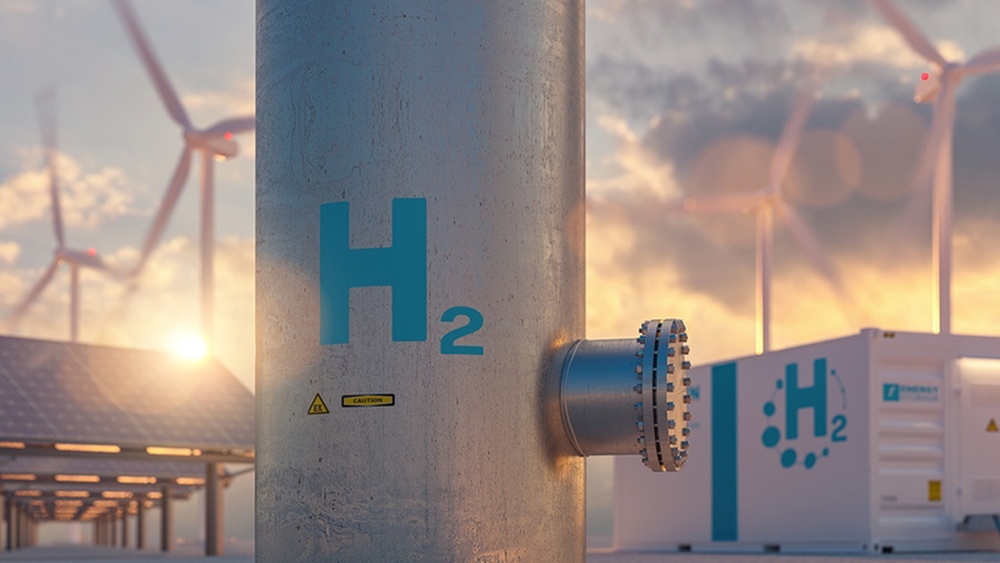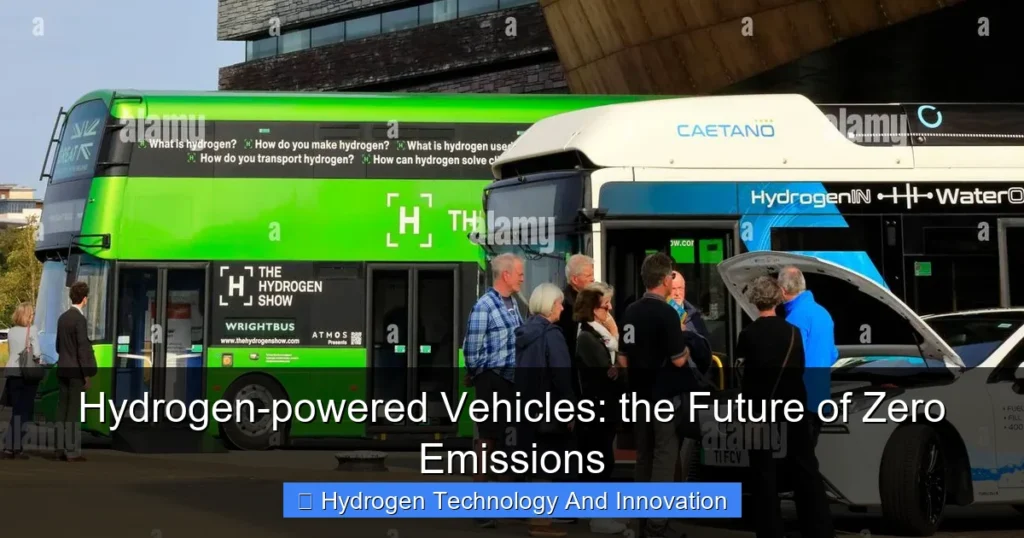
Hydrogen-powered vehicles are emerging as a game-changing solution for zero-emission transportation. By converting hydrogen into electricity through fuel cells, these vehicles emit only water vapor, making them a clean alternative to fossil fuels. With growing infrastructure and innovation, hydrogen cars, trucks, and buses are paving the way for a greener future.
Key Takeaways
- Zero tailpipe emissions: Hydrogen vehicles produce only water vapor, eliminating harmful pollutants like CO₂ and NOx.
- Fast refueling and long range: Unlike many electric vehicles, hydrogen cars can refuel in minutes and travel 300–400 miles per tank.
- Versatile applications: Hydrogen technology powers not just cars, but also trucks, buses, trains, ships, and even industrial machinery.
- Renewable hydrogen production: Green hydrogen, made using solar or wind energy, offers a fully sustainable fuel source.
- Growing infrastructure: Countries like Japan, Germany, and South Korea are rapidly expanding hydrogen refueling networks.
- Government and industry support: Major automakers and governments are investing billions to scale hydrogen technology and reduce costs.
- Complement to battery EVs: Hydrogen vehicles fill gaps where battery EVs face limitations, such as heavy transport and long-haul travel.
📑 Table of Contents
- The Rise of Hydrogen: A Clean Revolution on Wheels
- How Hydrogen Vehicles Work: The Science Behind the Silence
- Types of Hydrogen Vehicles: From Cars to Cargo Ships
- Green Hydrogen: The Key to True Sustainability
- Infrastructure and Adoption: Building the Hydrogen Highway
- The Road Ahead: Challenges and Opportunities
- Conclusion: Driving Toward a Cleaner Tomorrow
The Rise of Hydrogen: A Clean Revolution on Wheels
Imagine driving a car that runs on pure hydrogen, refuels in under five minutes, and leaves behind nothing but a trail of clean water vapor. No smog, no carbon emissions, no noise pollution—just smooth, silent, and sustainable mobility. This isn’t science fiction. It’s the reality of hydrogen-powered vehicles, a technology that’s quietly gaining momentum as a cornerstone of the global shift toward zero emissions.
For decades, the transportation sector has been a major contributor to greenhouse gas emissions, with cars, trucks, and buses burning fossil fuels and releasing carbon dioxide, nitrogen oxides, and particulate matter into the atmosphere. While battery electric vehicles (EVs) have made significant strides in reducing emissions, they aren’t the only solution—nor are they perfect for every use case. Enter hydrogen-powered vehicles: a clean, efficient, and versatile alternative that’s proving especially valuable in sectors where battery EVs struggle, such as long-haul trucking, aviation, and heavy industry.
Hydrogen vehicles operate using fuel cell technology. Instead of burning fuel, they convert hydrogen gas into electricity through a chemical reaction inside a fuel cell stack. This electricity then powers an electric motor, just like in a battery EV, but with one key difference: the only byproduct is water. No combustion, no exhaust, no pollution. It’s a closed-loop system that aligns perfectly with the goals of a carbon-neutral future.
How Hydrogen Vehicles Work: The Science Behind the Silence
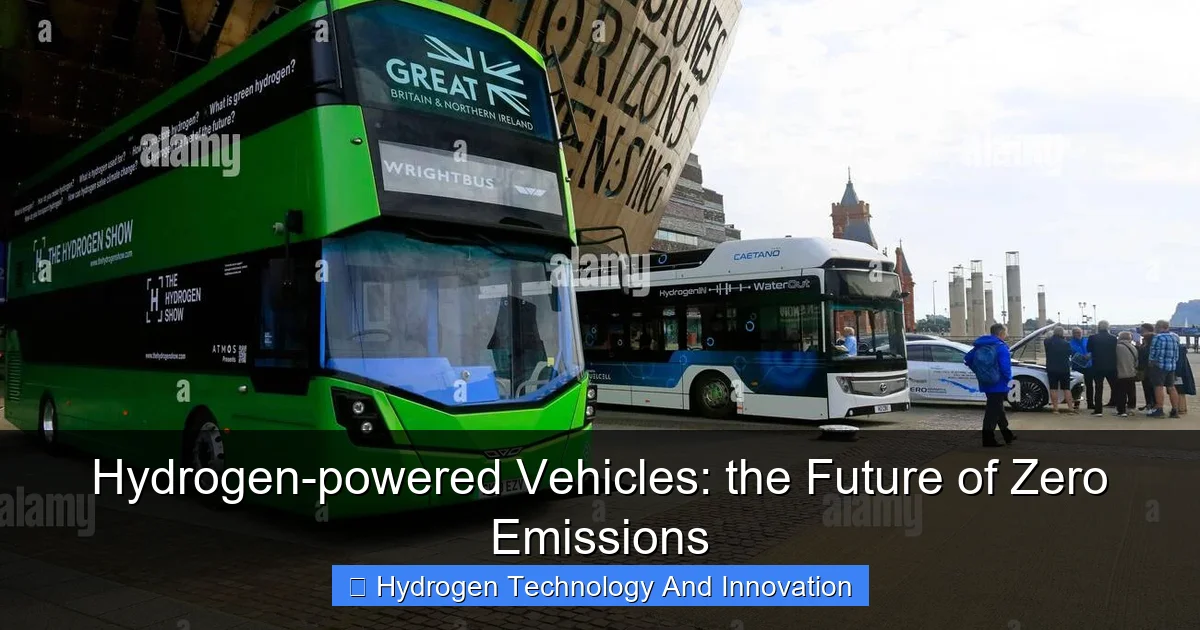
Visual guide about Hydrogen-powered Vehicles: the Future of Zero Emissions
Image source: c8.alamy.com
To understand why hydrogen vehicles are so promising, it helps to know how they actually work. At the heart of every hydrogen-powered vehicle is a fuel cell—a device that combines hydrogen and oxygen to produce electricity, heat, and water. This process, known as electrochemical conversion, is clean, efficient, and silent.
The Fuel Cell: Power Without Combustion
A fuel cell consists of two electrodes—an anode and a cathode—sandwiched around an electrolyte. When hydrogen gas is fed into the anode, a catalyst (usually platinum) splits the hydrogen molecules into protons and electrons. The protons pass through the electrolyte to the cathode, while the electrons are forced through an external circuit, creating an electric current. At the cathode, the protons, electrons, and oxygen from the air combine to form water—H₂O.
This entire process happens without any combustion, which means no harmful emissions are released. The electricity generated powers the vehicle’s motor, and the only thing that comes out of the tailpipe is a few drops of water. It’s a remarkably elegant solution to the problem of clean energy.
Hydrogen Storage: Safe and Efficient
One of the biggest challenges with hydrogen is storing it safely and efficiently. Hydrogen is the lightest element in the universe, which makes it tricky to contain. In hydrogen vehicles, the gas is stored in high-pressure tanks—typically at 700 bar (over 10,000 psi)—made from advanced composite materials like carbon fiber. These tanks are designed to withstand extreme conditions and are rigorously tested for safety.
Modern hydrogen tanks are incredibly durable. They’re built to resist punctures, fires, and impacts, and they include multiple safety features such as pressure relief devices and leak detectors. In fact, studies have shown that hydrogen tanks are often safer than gasoline tanks in collisions, thanks to their robust construction and the fact that hydrogen disperses quickly into the atmosphere if released.
Refueling: Quick and Convenient
One of the biggest advantages of hydrogen vehicles over battery EVs is refueling time. While charging an electric car can take anywhere from 30 minutes (with fast chargers) to several hours, refueling a hydrogen vehicle takes just 3 to 5 minutes—about the same as filling up a gas tank. This makes hydrogen particularly appealing for commercial fleets, taxis, and long-distance travelers who can’t afford long downtimes.
Refueling stations work much like gas stations. Drivers pull up, connect a nozzle to the vehicle’s fuel port, and fill the tank with compressed hydrogen. The process is automated and safe, with built-in sensors to prevent overfilling or leaks. As the infrastructure expands, refueling will become as routine as stopping for gas.
Types of Hydrogen Vehicles: From Cars to Cargo Ships
Hydrogen technology isn’t limited to passenger cars. Its versatility makes it suitable for a wide range of transportation modes, each with unique benefits and applications.
Passenger Cars: The Road Ahead
Hydrogen-powered passenger vehicles are already on the road in several countries. Models like the Toyota Mirai, Hyundai NEXO, and Honda Clarity Fuel Cell offer sleek designs, smooth performance, and zero emissions. These cars typically have a range of 300 to 400 miles on a single tank and can be refueled in minutes.
While they’re still a niche market compared to battery EVs, hydrogen cars are ideal for drivers who need long range and quick refueling—especially in regions with limited charging infrastructure. They’re also a great option for those who want to reduce their carbon footprint without sacrificing convenience.
Commercial Trucks and Buses: Heavy-Duty Zero Emissions
One of the most promising applications for hydrogen is in heavy-duty transportation. Trucks, buses, and delivery vans often travel long distances and carry heavy loads, which can drain battery EVs quickly. Hydrogen fuel cells, on the other hand, offer high energy density and fast refueling, making them a natural fit for these vehicles.
Companies like Nikola, Hyundai, and Toyota are already developing hydrogen-powered trucks for freight and logistics. In cities like London and Tokyo, hydrogen buses are transporting passengers with zero emissions. These vehicles not only reduce pollution but also help cities meet air quality standards and climate goals.
Trains, Ships, and Planes: Beyond the Road
Hydrogen isn’t just for roads—it’s also making waves in rail, maritime, and aviation. In Germany, hydrogen-powered trains called Coradia iLint are already running on non-electrified rail lines, replacing diesel locomotives. These trains emit only steam and condensed water, offering a clean alternative for regional transit.
In the shipping industry, companies like Maersk and Shell are exploring hydrogen and hydrogen-derived fuels (like ammonia) to decarbonize cargo ships. Similarly, aerospace firms such as Airbus are developing hydrogen-powered aircraft, with plans for zero-emission commercial flights by 2035.
Even industrial equipment—like forklifts and construction machinery—is going hydrogen. In warehouses and ports, hydrogen fuel cells are powering equipment that needs to run all day without frequent recharging.
Green Hydrogen: The Key to True Sustainability
Not all hydrogen is created equal. While hydrogen itself is clean when used in a fuel cell, the way it’s produced can have a big environmental impact. That’s why the source of hydrogen matters.
Grey, Blue, and Green Hydrogen: What’s the Difference?
Currently, most hydrogen is produced from natural gas through a process called steam methane reforming (SMR). This method, known as “grey hydrogen,” releases significant amounts of CO₂ and is not sustainable. “Blue hydrogen” improves on this by capturing and storing the CO₂ emissions, but it still relies on fossil fuels.
The real game-changer is “green hydrogen,” which is produced using renewable energy sources like wind, solar, or hydropower. Through a process called electrolysis, water (H₂O) is split into hydrogen and oxygen using electricity. When that electricity comes from renewables, the entire process is carbon-free.
Green hydrogen is the holy grail of clean energy. It turns excess renewable power—like solar energy generated during the day or wind power at night—into a storable, transportable fuel. This not only supports the growth of renewables but also creates a circular energy system where clean power fuels clean transportation.
The Cost Challenge: Making Green Hydrogen Affordable
One of the biggest barriers to widespread adoption is cost. Currently, green hydrogen is more expensive to produce than grey or blue hydrogen, mainly due to the high cost of electrolyzers and renewable electricity. However, prices are falling rapidly. According to the International Energy Agency (IEA), the cost of green hydrogen could drop by 60% by 2030 as technology improves and production scales up.
Governments and private companies are investing heavily in green hydrogen projects. The European Union, for example, has launched the European Hydrogen Strategy, aiming to install 40 gigawatts of electrolyzer capacity by 2030. Australia, Chile, and Saudi Arabia are also developing massive green hydrogen hubs, leveraging their abundant solar and wind resources.
As production scales and technology advances, green hydrogen is expected to become cost-competitive with fossil fuels—especially when carbon pricing and environmental regulations are factored in.
Infrastructure and Adoption: Building the Hydrogen Highway
For hydrogen vehicles to succeed, they need more than just great technology—they need a reliable network of refueling stations, production facilities, and distribution systems.
Refueling Stations: The Missing Link
One of the biggest challenges facing hydrogen vehicles is the lack of refueling infrastructure. As of 2024, there are fewer than 1,000 hydrogen stations worldwide, with the majority concentrated in California, Japan, Germany, and South Korea. This limited availability makes it difficult for consumers to adopt hydrogen cars, especially outside urban centers.
However, the situation is improving. Governments are offering incentives and grants to build new stations, and private companies are stepping up. For example, Shell and Toyota are partnering to expand hydrogen networks in California and Europe. In Japan, the government aims to have 1,000 stations by 2030.
Mobile refueling units and hydrogen pipelines are also being explored to serve remote areas and industrial sites. As demand grows, the infrastructure will follow.
Government Policies and Incentives
Support from governments is crucial for the growth of hydrogen technology. Many countries are introducing policies to promote hydrogen adoption, including tax credits, subsidies, and emissions regulations.
In the U.S., the Inflation Reduction Act includes tax credits for clean hydrogen production, making green hydrogen more affordable. The European Union’s Green Deal includes funding for hydrogen projects, and countries like Germany and France are investing billions in national hydrogen strategies.
These policies not only reduce costs but also signal long-term commitment, encouraging private investment and innovation.
Industry Collaboration: A Team Effort
The transition to hydrogen isn’t happening in isolation. Automakers, energy companies, and tech firms are forming partnerships to accelerate development. For example, Hyundai and Cummins are working together on hydrogen-powered trucks, while Airbus and Airbus are collaborating with airlines and airports to prepare for hydrogen flights.
These collaborations help share risks, pool resources, and speed up progress. They also ensure that vehicles, infrastructure, and fuel production are developed in sync.
The Road Ahead: Challenges and Opportunities
Despite its promise, hydrogen technology still faces several challenges. Cost, infrastructure, public awareness, and energy efficiency are all hurdles that need to be overcome.
Energy Efficiency: A Trade-Off
One common criticism of hydrogen vehicles is that they are less energy-efficient than battery EVs. When you account for the entire chain—from electricity generation to hydrogen production, compression, transport, and conversion back to electricity—hydrogen vehicles use about 25–35% of the original energy, compared to 70–90% for battery EVs.
However, this efficiency gap narrows when considering specific use cases. For long-haul transport, aviation, or industrial applications, hydrogen’s high energy density and fast refueling often outweigh the efficiency loss. It’s not about replacing battery EVs—it’s about choosing the right tool for the job.
Public Perception and Safety
Hydrogen has a reputation for being dangerous, thanks to historical events like the Hindenburg disaster. But modern hydrogen systems are far safer. Hydrogen is lighter than air and disperses quickly, reducing the risk of explosion. Safety standards are strict, and vehicles undergo rigorous testing.
Education and transparency are key to building public trust. As more people experience hydrogen vehicles firsthand, misconceptions will fade.
The Bigger Picture: A Multi-Solution Future
The future of transportation isn’t about choosing one technology over another. It’s about using the right solution for the right application. Battery EVs are ideal for short-range, urban driving. Hydrogen vehicles excel in long-distance, heavy-duty, and high-utilization scenarios.
Together, they form a powerful combination for achieving zero emissions. As renewable energy grows and technology improves, both will play vital roles in decarbonizing the planet.
Conclusion: Driving Toward a Cleaner Tomorrow
Hydrogen-powered vehicles are more than just a futuristic concept—they’re a practical, scalable solution for reducing emissions and building a sustainable transportation system. With zero tailpipe emissions, fast refueling, and versatile applications, they offer a compelling alternative to fossil fuels.
While challenges remain, the momentum is undeniable. Governments, industries, and innovators are investing in hydrogen technology, expanding infrastructure, and driving down costs. Green hydrogen, powered by renewable energy, is paving the way for a truly clean fuel cycle.
As we look ahead, hydrogen vehicles won’t replace battery EVs—they’ll complement them. Together, they’ll help us move beyond oil, reduce pollution, and create a healthier planet for future generations. The road to zero emissions is long, but with hydrogen on board, we’re driving in the right direction.
Frequently Asked Questions
Are hydrogen-powered vehicles really zero emission?
Yes, hydrogen vehicles produce zero tailpipe emissions. The only byproduct of the fuel cell reaction is water vapor, making them completely clean during operation.
How long does it take to refuel a hydrogen car?
Refueling a hydrogen vehicle takes just 3 to 5 minutes, similar to filling up a gasoline car. This is much faster than charging most electric vehicles.
Is hydrogen safe to use in vehicles?
Yes, hydrogen is safe when handled properly. Modern hydrogen tanks are made from strong composite materials and include multiple safety features. Hydrogen also disperses quickly if leaked, reducing fire risks.
Where can I refuel a hydrogen vehicle?
Hydrogen refueling stations are currently available in select regions, including California, Japan, Germany, and South Korea. The network is growing, with more stations planned worldwide.
What is green hydrogen, and why is it important?
Green hydrogen is produced using renewable energy to split water into hydrogen and oxygen. It’s important because it’s the only truly sustainable form of hydrogen, with no carbon emissions.
Can hydrogen vehicles compete with electric cars?
Hydrogen vehicles complement electric cars rather than compete with them. They’re better suited for long-range, heavy-duty applications where battery EVs face limitations.