Hydrogen is emerging as a powerful player in the electric vehicle (EV) revolution, offering fast refueling, long-range capabilities, and zero emissions. While battery-electric vehicles dominate today’s roads, hydrogen fuel cell technology is gaining traction—especially for heavy-duty transport and commercial fleets—paving the way for a cleaner, more versatile transportation future.
The electric vehicle (EV) revolution is in full swing. From sleek sedans to compact city cars, battery-powered vehicles are reshaping how we think about transportation. Governments are setting ambitious targets to phase out internal combustion engines, and automakers are investing billions in electrification. But as the world races toward a zero-emission future, one question keeps coming up: Is battery-electric the only path forward?
Enter hydrogen—a clean, versatile energy carrier that’s quietly gaining momentum in the EV evolution. While lithium-ion batteries power most of today’s EVs, hydrogen fuel cell technology offers a compelling alternative, especially for applications where batteries struggle. Think long-haul trucking, public transit, and industrial machinery. Hydrogen doesn’t just complement the EV movement—it expands its possibilities.
So, what exactly is hydrogen’s role in the future of electric mobility? It’s not about replacing batteries. It’s about creating a more balanced, flexible, and sustainable transportation ecosystem. Hydrogen-powered vehicles, known as fuel cell electric vehicles (FCEVs), generate electricity on board using hydrogen and oxygen, producing only water as a byproduct. This makes them truly zero-emission at the tailpipe—just like battery EVs. But unlike their battery-powered cousins, FCEVs can be refueled in minutes and travel hundreds of miles on a single tank.
Key Takeaways
- Hydrogen enables zero-emission driving: When produced using renewable energy, hydrogen fuel cells emit only water vapor, making them a clean alternative to fossil fuels.
- Faster refueling than batteries: Hydrogen vehicles can be refueled in minutes, similar to gasoline cars, offering a major advantage over slower EV charging.
- Ideal for heavy-duty and long-haul transport: Trucks, buses, and trains benefit from hydrogen’s high energy density and long range, where batteries may fall short.
- Complements battery-electric vehicles: Hydrogen doesn’t replace batteries but fills gaps in the EV ecosystem, especially in sectors needing rapid turnaround and extended range.
- Infrastructure is growing but still limited: While hydrogen refueling stations are expanding, especially in Europe, Japan, and California, widespread adoption depends on further investment.
- Green hydrogen is key to sustainability: The environmental benefits of hydrogen depend on how it’s produced—green hydrogen from renewable sources is the most sustainable option.
- Government and industry support is accelerating innovation: Policies, subsidies, and partnerships are driving R&D and deployment of hydrogen-powered vehicles worldwide.
📑 Table of Contents
Understanding Hydrogen Fuel Cell Technology
At the heart of hydrogen-powered vehicles lies the fuel cell—a device that converts chemical energy into electrical energy through an electrochemical reaction. Unlike batteries, which store energy, fuel cells generate it continuously as long as hydrogen and oxygen are supplied.
How Fuel Cells Work
A fuel cell consists of two electrodes—an anode and a cathode—sandwiched around an electrolyte. Hydrogen gas is fed into the anode, where a catalyst (usually platinum) splits it into protons and electrons. The protons move through the electrolyte to the cathode, while the electrons travel through an external circuit, creating an electric current that powers the vehicle’s motor. At the cathode, oxygen from the air combines with the protons and electrons to form water—the only emission.
This process is highly efficient, converting up to 60% of the hydrogen’s energy into electricity, compared to around 20–30% for internal combustion engines. And because there’s no combustion, there’s no noise, vibration, or harmful pollutants.
Types of Fuel Cells Used in Vehicles
Not all fuel cells are created equal. For automotive use, the most common type is the Proton Exchange Membrane Fuel Cell (PEMFC). It operates at relatively low temperatures (around 80°C), starts quickly, and is compact—ideal for cars, buses, and trucks.
Other types, like Solid Oxide Fuel Cells (SOFC), operate at much higher temperatures and are better suited for stationary power generation or large ships. But PEMFCs dominate the transportation sector due to their efficiency, durability, and responsiveness.
Real-World Examples of FCEVs
Several automakers are already putting hydrogen vehicles on the road. Toyota’s Mirai, launched in 2014, was one of the first mass-produced FCEVs and has sold thousands of units, primarily in California, Japan, and Europe. Hyundai’s NEXO offers a range of over 400 miles and features advanced driver assistance systems. Honda also introduced the Clarity Fuel Cell, though it has since paused production to focus on battery EVs and hybrids.
Beyond passenger cars, hydrogen is making waves in commercial transport. Companies like Nikola and Hyzon are developing hydrogen-powered trucks for freight and logistics. In Europe, cities like Hamburg and London are testing hydrogen buses to reduce urban air pollution. Even trains are getting in on the action—Germany’s Coradia iLint, the world’s first hydrogen-powered passenger train, has been running successfully since 2018.
Hydrogen vs. Battery-Electric: Strengths and Trade-Offs
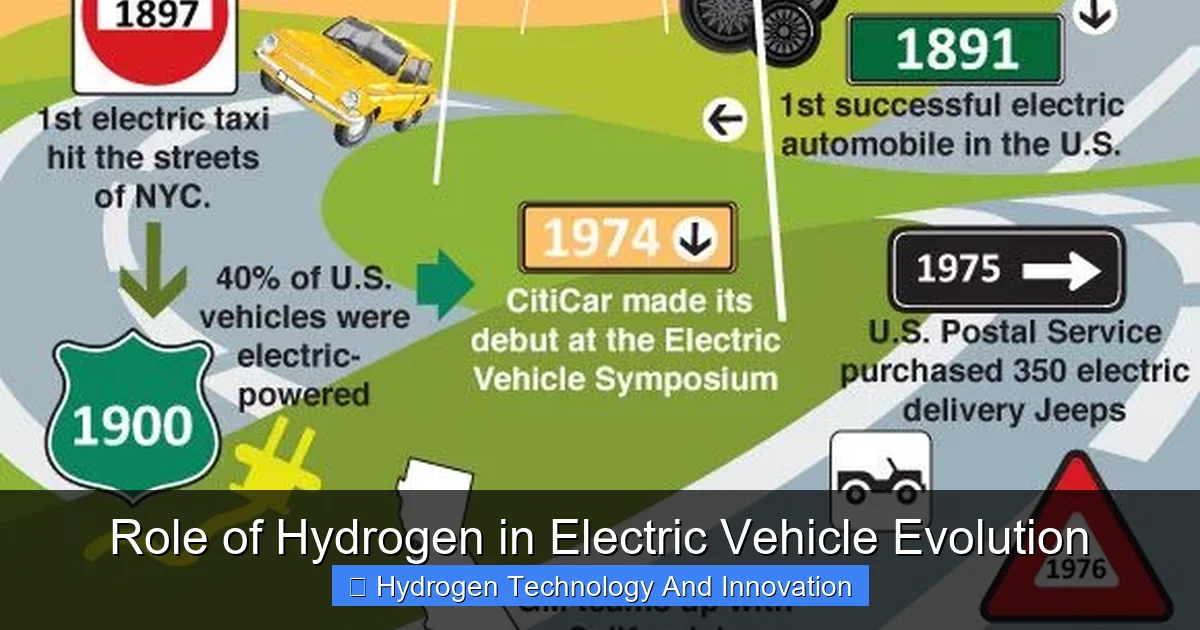
Visual guide about Role of Hydrogen in Electric Vehicle Evolution
Image source: i.pinimg.com
The debate between hydrogen and battery-electric vehicles often feels like a rivalry, but it’s more accurate to see them as complementary technologies. Each has strengths that make it better suited for different applications.
Refueling Time and Convenience
One of hydrogen’s biggest advantages is refueling speed. A hydrogen car can be filled up in 3 to 5 minutes—just like a gasoline vehicle. Compare that to even the fastest EV chargers, which take 20 to 40 minutes to reach 80% capacity. For fleet operators, delivery drivers, or long-distance travelers, this time savings is huge.
Imagine a delivery truck making multiple stops across a city. With a battery EV, it might need to recharge during the day, cutting into productivity. With hydrogen, it can refuel during a short break and keep going. That’s why companies like Amazon and UPS are exploring hydrogen for their logistics fleets.
Range and Energy Density
Hydrogen has a much higher energy density by weight than batteries. This means hydrogen vehicles can travel farther on less weight—a critical factor for heavy-duty applications. A long-haul truck carrying thousands of pounds of cargo can’t afford to lose payload space to heavy battery packs. Hydrogen tanks are lighter and take up less room, preserving cargo capacity.
For example, a hydrogen-powered truck can achieve a range of 500 to 700 miles on a single fill, comparable to diesel trucks. Most battery-electric trucks today max out around 300 miles, and adding more batteries increases weight and cost.
Weight and Space Considerations
Batteries are heavy. A typical EV battery pack can weigh over 1,000 pounds. In passenger cars, that’s manageable. But in buses, trucks, or aircraft, the added weight reduces efficiency and payload. Hydrogen systems, while not weightless, are significantly lighter for the same energy output.
This makes hydrogen particularly attractive for aviation and maritime industries, where every pound counts. Airbus, for instance, is developing hydrogen-powered aircraft aimed at zero-emission flight by 2035.
Charging Infrastructure vs. Refueling Stations
Here’s where battery EVs currently have the upper hand. Charging stations are everywhere—at homes, offices, shopping centers, and along highways. Hydrogen refueling infrastructure, by contrast, is still in its infancy. As of 2024, there are fewer than 200 hydrogen stations in the U.S., mostly in California. Europe and Japan are further ahead, but global coverage remains sparse.
Building a hydrogen network requires massive investment. Stations need compressors, storage tanks, and safety systems. And unlike electricity, hydrogen can’t be delivered through existing grids—it must be produced and transported separately.
Still, progress is being made. California plans to have 200 hydrogen stations by 2025. Germany aims for 100 by 2025, with expansion across the EU. Private companies like Shell and Air Liquide are investing in hydrogen corridors—networks of refueling stations along major transport routes.
Green Hydrogen: The Key to Sustainability
Not all hydrogen is created equal. The environmental benefits of hydrogen vehicles depend entirely on how the hydrogen is produced.
How Hydrogen Is Made
Hydrogen is the most abundant element in the universe, but it doesn’t exist freely on Earth. It must be extracted from compounds like water (H₂O) or natural gas (CH₄). The method used determines the hydrogen’s “color”—a shorthand for its environmental impact.
– Grey hydrogen: Produced from natural gas via steam methane reforming. This is the most common method today, but it releases CO₂—about 10 kg of CO₂ per kg of hydrogen.
– Blue hydrogen: Also made from natural gas, but the CO₂ is captured and stored (carbon capture and storage, or CCS). It’s cleaner than grey but still relies on fossil fuels.
– Green hydrogen: Produced by splitting water into hydrogen and oxygen using renewable electricity (solar, wind, hydro). This method emits no CO₂ and is the only truly sustainable option.
The Importance of Green Hydrogen
For hydrogen to play a meaningful role in decarbonizing transport, it must be green. Otherwise, we’re just shifting emissions from the tailpipe to the power plant. Green hydrogen ensures that the entire lifecycle—from production to use—is clean.
The good news? Green hydrogen is becoming more viable. The cost of renewable electricity has plummeted, and electrolyzer technology (the equipment used to split water) is improving rapidly. Countries like Australia, Chile, and Saudi Arabia are investing heavily in green hydrogen production, aiming to export it globally.
Challenges in Scaling Green Hydrogen
Despite the promise, green hydrogen faces hurdles. Electrolyzers are still expensive, and large-scale production requires vast amounts of renewable energy. Storing and transporting hydrogen is also tricky—it’s a lightweight, low-density gas that can leak easily and embrittle metals.
But innovation is addressing these challenges. Liquid organic hydrogen carriers (LOHCs) and ammonia are being explored as safer, more efficient transport methods. Advances in materials science are improving tank durability and reducing leakage.
Hydrogen in Heavy-Duty and Commercial Transport
While passenger cars dominate the EV conversation, hydrogen’s real potential lies in heavy-duty and commercial applications.
Trucking and Logistics
The freight industry is under pressure to reduce emissions. Trucks account for a significant share of transportation-related CO₂, especially in regions like the U.S. and Europe. Battery-electric trucks are emerging, but their limited range and long charging times make them less practical for long-haul routes.
Hydrogen offers a solution. Companies like Nikola, Hyzon, and Toyota are developing hydrogen-powered semi-trucks capable of 500+ mile ranges. These trucks can refuel in under 20 minutes and operate around the clock—critical for logistics companies.
In 2023, Toyota began testing its hydrogen-powered Class 8 truck on routes between the ports of Los Angeles and Long Beach. The results were promising: zero emissions, smooth operation, and fast refueling. Similar pilots are underway in Europe and Asia.
Public Transit and Buses
Cities are turning to hydrogen buses to improve air quality and meet climate goals. Unlike diesel buses, hydrogen buses produce no NOx, particulate matter, or CO₂. And unlike battery buses, they don’t require lengthy charging breaks.
London, for example, operates a fleet of hydrogen double-decker buses on key routes. The buses refuel at a dedicated station and run all day without interruption. In China, cities like Foshan and Zhangjiakou have deployed hundreds of hydrogen buses, supported by government subsidies.
Rail and Maritime Applications
Hydrogen is also transforming rail and shipping. Diesel trains emit large amounts of pollution, especially in non-electrified regions. Hydrogen trains, like Germany’s Coradia iLint, offer a clean alternative. They’re quiet, efficient, and can run on existing rail lines without costly electrification.
In maritime transport, hydrogen and hydrogen-derived fuels (like ammonia and methanol) are being tested for cargo ships. The International Maritime Organization (IMO) has set targets to cut shipping emissions by 50% by 2050, and hydrogen is seen as a key enabler.
Government Policies and Industry Support
The growth of hydrogen in transportation isn’t happening by accident. It’s being driven by strong government policies and industry collaboration.
National Hydrogen Strategies
Over 30 countries have published national hydrogen strategies, outlining plans to develop production, infrastructure, and end-use applications. The European Union’s Hydrogen Strategy aims to install 40 GW of electrolyzers by 2030 and deploy thousands of hydrogen vehicles. Japan’s Basic Hydrogen Strategy targets 800,000 FCEVs by 2030.
In the U.S., the Inflation Reduction Act includes tax credits for clean hydrogen production, making green hydrogen more competitive. California’s Zero-Emission Vehicle (ZEV) mandate encourages automakers to sell FCEVs alongside battery EVs.
Public-Private Partnerships
Collaboration is key. Automakers, energy companies, and governments are forming alliances to accelerate hydrogen adoption. The Hydrogen Council, a global CEO-led initiative, includes members like Toyota, Hyundai, Shell, and Air Liquide. They advocate for policy support and share best practices.
Infrastructure projects are also gaining momentum. The HyDeal Ambition initiative in Europe aims to produce green hydrogen at scale for under €1.50/kg by 2030. In the U.S., the Department of Energy’s H₂@Scale program supports research into hydrogen production, storage, and use across sectors.
Investment and Innovation
Venture capital and corporate investment in hydrogen startups are surging. Companies like Plug Power, Bloom Energy, and Ballard Power Systems are developing next-generation fuel cells and electrolyzers. Startups are exploring novel applications, from hydrogen-powered drones to portable power units.
Innovation is also improving efficiency and reducing costs. New catalysts are reducing or eliminating the need for platinum, a major cost driver. Solid-state hydrogen storage and advanced compression techniques are making refueling safer and more efficient.
The Road Ahead: Challenges and Opportunities
Hydrogen’s role in the EV evolution is promising, but not without challenges.
Cost Barriers
FCEVs are still expensive. The Toyota Mirai starts around $50,000, and hydrogen fuel costs $12–$16 per kg—equivalent to $4–$6 per gallon of gasoline. While prices are expected to fall with scale and innovation, affordability remains a hurdle.
Infrastructure Gaps
Building a hydrogen refueling network requires billions in investment. Stations cost $1–$3 million each, and hydrogen production and transport add complexity. Without widespread infrastructure, consumer adoption will lag.
Public Awareness and Acceptance
Many people still associate hydrogen with the Hindenburg disaster. While modern hydrogen systems are safe—tanks are rigorously tested and designed to vent safely in a crash—public education is needed to build trust.
Opportunities for Growth
Despite the challenges, the opportunities are vast. As renewable energy becomes cheaper and electrolyzer technology improves, green hydrogen will become more accessible. Heavy-duty transport, industrial applications, and energy storage offer huge markets.
And hydrogen doesn’t have to compete with batteries—it can work alongside them. A future with battery EVs for city driving and hydrogen FCEVs for long-haul and commercial use is not only possible but likely.
Conclusion
Hydrogen is not a replacement for battery-electric vehicles—it’s a vital part of a diversified, sustainable transportation future. While batteries excel in passenger cars and short-range applications, hydrogen shines in heavy-duty, long-range, and high-utilization sectors. With fast refueling, long range, and zero emissions, hydrogen fuel cell technology fills critical gaps in the EV ecosystem.
The path forward requires investment, innovation, and collaboration. Governments must support infrastructure and incentivize green hydrogen production. Automakers must continue developing affordable, reliable FCEVs. And consumers must embrace new technologies as part of the broader shift toward clean mobility.
As the world moves toward net-zero emissions, hydrogen will play an increasingly important role. It’s not the only answer, but it’s a powerful one. The evolution of electric vehicles isn’t just about batteries—it’s about building a smarter, cleaner, and more resilient transportation system. And hydrogen is helping to drive that change.
Frequently Asked Questions
What is a hydrogen fuel cell vehicle?
A hydrogen fuel cell vehicle (FCEV) generates electricity on board using hydrogen and oxygen, powering an electric motor. It emits only water vapor and heat, making it a zero-emission vehicle.
How does hydrogen compare to battery-electric vehicles in terms of range?
Hydrogen vehicles typically offer longer ranges—400 to 700 miles—compared to most battery EVs, which average 200 to 300 miles. This makes hydrogen better suited for long-haul and heavy-duty transport.
Is hydrogen safe for use in vehicles?
Yes, hydrogen is safe when handled properly. Modern hydrogen tanks are designed to withstand crashes and high pressures, and hydrogen disperses quickly in the air, reducing fire risk.
Where can I refuel a hydrogen vehicle?
Hydrogen refueling stations are currently limited, with most located in California, parts of Europe, and Japan. Expansion is underway, but infrastructure remains a barrier to widespread adoption.
What is green hydrogen, and why is it important?
Green hydrogen is produced using renewable energy to split water into hydrogen and oxygen. It’s important because it’s the only truly sustainable form of hydrogen, with no CO₂ emissions during production.
Will hydrogen replace battery-electric vehicles?
No, hydrogen is unlikely to replace battery EVs. Instead, it will complement them, especially in sectors where batteries are less practical, such as trucking, buses, and aviation.