Hydrogen cars are emerging as a game-changer in the clean transportation revolution, offering zero-emission travel without relying on fossil fuels. As adoption grows, these vehicles could significantly reduce global oil demand, especially in heavy transport and long-haul sectors.
Key Takeaways
- Hydrogen cars produce zero tailpipe emissions, making them a clean alternative to gasoline and diesel vehicles.
- They could reduce oil demand in freight and aviation, where battery-electric solutions face limitations.
- Refueling is fast—similar to gasoline, offering convenience over long charging times for electric vehicles.
- Infrastructure remains a major hurdle, with limited hydrogen stations and high production costs slowing adoption.
- Green hydrogen, made using renewable energy, is key to maximizing environmental benefits.
- Government policies and investments are accelerating hydrogen technology development worldwide.
- Oil companies are adapting, investing in hydrogen to stay relevant in a low-carbon future.
📑 Table of Contents
- Introduction: A New Era of Clean Transportation
- How Hydrogen Cars Work: The Science Behind the Hype
- The Oil Demand Equation: Why Hydrogen Matters
- Challenges to Widespread Adoption
- Government Policies and Global Momentum
- The Role of Oil Companies in the Hydrogen Transition
- The Future Outlook: A Gradual but Growing Impact
- Conclusion: A Piece of the Puzzle
Introduction: A New Era of Clean Transportation
Imagine a world where cars don’t emit harmful gases, where refueling takes just a few minutes, and where the only thing coming out of the tailpipe is water. That’s not science fiction—it’s the promise of hydrogen-powered vehicles. As climate change accelerates and governments push for greener policies, the transportation sector is under pressure to cut emissions. While electric vehicles (EVs) have dominated the conversation, hydrogen cars are quietly emerging as a powerful alternative, especially for applications where batteries fall short.
Hydrogen fuel cell vehicles (FCEVs) use hydrogen gas to generate electricity onboard, powering an electric motor. Unlike battery EVs, which rely on heavy lithium-ion packs, hydrogen cars can travel longer distances and refuel quickly—similar to traditional gasoline vehicles. This makes them ideal for trucks, buses, and even airplanes. But beyond their technical advantages, hydrogen cars could play a crucial role in reshaping global energy markets, particularly in reducing our dependence on oil.
How Hydrogen Cars Work: The Science Behind the Hype
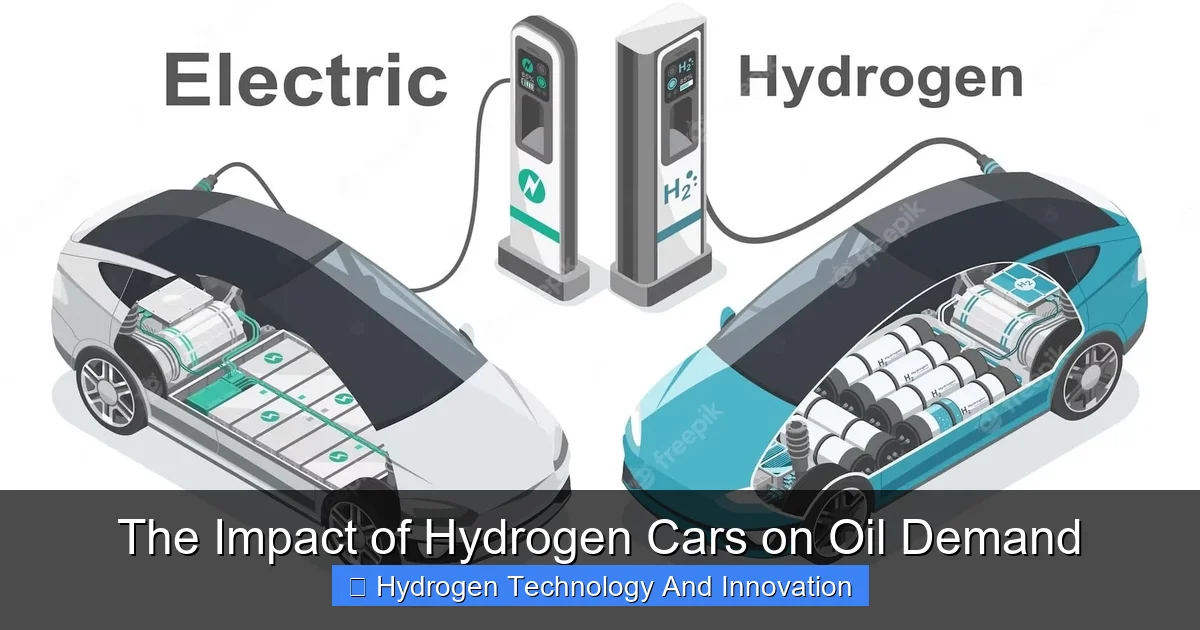
Visual guide about The Impact of Hydrogen Cars on Oil Demand
Image source: convercon.com
To understand the impact of hydrogen cars on oil demand, it’s important to first grasp how they function. At the heart of every hydrogen car is a fuel cell stack. This device combines hydrogen from the vehicle’s tank with oxygen from the air to produce electricity, water, and heat. The electricity powers the car’s motor, while the only emission is pure water vapor—no carbon dioxide, no nitrogen oxides, no particulate matter.
The Fuel Cell Process
The fuel cell operates through an electrochemical reaction. Hydrogen molecules (H₂) are split into protons and electrons at the anode. The protons pass through a membrane to the cathode, while the electrons travel through an external circuit, creating an electric current. At the cathode, the protons, electrons, and oxygen combine to form water (H₂O). This process is silent, efficient, and clean.
One of the biggest advantages of this system is its energy density. Hydrogen contains nearly three times more energy per unit of mass than gasoline. That means a small amount of hydrogen can power a vehicle for hundreds of miles. For example, the Toyota Mirai can travel up to 400 miles on a single tank—comparable to many gasoline sedans.
Refueling: Fast and Familiar
Unlike battery EVs, which can take 30 minutes to several hours to recharge, hydrogen cars refuel in just 3 to 5 minutes. You pull up to a hydrogen pump, connect the nozzle, and fill the tank—just like at a gas station. This speed is a major selling point for commercial fleets, delivery trucks, and long-haul drivers who can’t afford long downtimes.
For instance, companies like Hyundai and Nikola are developing hydrogen-powered trucks for freight transport. These vehicles can cover long distances without frequent stops, making them ideal for cross-country shipping. In Japan and California, hydrogen buses are already in service, offering quiet, emissions-free public transit.
The Oil Demand Equation: Why Hydrogen Matters
Transportation accounts for nearly 60% of global oil consumption, according to the International Energy Agency (IEA). Cars, trucks, ships, and planes all rely on petroleum-based fuels. Reducing this demand is essential for meeting climate goals and enhancing energy security. While battery EVs are making inroads in passenger vehicles, they face challenges in heavy-duty transport due to battery weight, charging time, and range limitations.
Where Hydrogen Shines: Heavy Transport and Industry
Hydrogen cars—especially in the form of fuel cell trucks, trains, and ships—could displace significant amounts of diesel fuel. For example, a single long-haul truck can burn over 10,000 gallons of diesel per year. Replacing just 10% of the U.S. truck fleet with hydrogen models could save billions of gallons of oil annually.
In aviation, companies like Airbus are exploring hydrogen-powered aircraft. While still in early stages, hydrogen could power regional flights by the 2030s, reducing jet fuel use. Similarly, hydrogen is being tested in shipping, where vessels could switch from heavy fuel oil to clean hydrogen or ammonia (a hydrogen carrier).
Impact on Global Oil Markets
If hydrogen adoption scales up, it could lead to a structural decline in oil demand. The IEA projects that oil use in road transport could peak by 2030, partly due to electrification and alternative fuels like hydrogen. In a scenario where hydrogen captures 15% of the heavy transport market by 2040, global oil demand could fall by 5–7 million barrels per day—equivalent to the entire output of a major oil-producing nation.
This shift would have ripple effects across the energy sector. Oil companies might see reduced revenues from transportation fuels, prompting them to diversify into hydrogen production. Countries dependent on oil exports could face economic challenges unless they adapt.
Challenges to Widespread Adoption
Despite their promise, hydrogen cars face several barriers that must be overcome before they can significantly impact oil demand.
Limited Infrastructure
One of the biggest hurdles is the lack of hydrogen refueling stations. As of 2024, there are fewer than 200 public hydrogen stations in the U.S., mostly in California. In contrast, there are over 150,000 gas stations and more than 150,000 EV charging ports. Building a nationwide hydrogen network requires massive investment—estimated at tens of billions of dollars.
Countries like Germany, Japan, and South Korea are leading the way. Germany has over 100 hydrogen stations, supported by government funding. Japan aims to have 1,000 stations by 2030. But in most regions, the infrastructure gap remains wide.
High Production Costs
Hydrogen is not naturally abundant—it must be extracted from other compounds. Today, about 95% of hydrogen is produced from natural gas through a process called steam methane reforming (SMR), which emits carbon dioxide. This “gray hydrogen” undermines the environmental benefits of hydrogen cars.
The solution is “green hydrogen,” produced by splitting water using renewable electricity (electrolysis). While cleaner, green hydrogen is currently 2–3 times more expensive than gray hydrogen. Scaling up renewable energy and electrolyzer production is key to lowering costs.
Energy Efficiency Concerns
Hydrogen is less energy-efficient than batteries. Producing, compressing, transporting, and converting hydrogen to electricity loses about 60–70% of the original energy. In contrast, battery EVs use about 77% of the grid energy to power the wheels. This inefficiency means more renewable energy is needed to support hydrogen cars.
However, in applications where batteries are impractical—like aviation or shipping—hydrogen’s higher energy density may justify the losses. It’s not about replacing all EVs with hydrogen cars, but finding the right use cases.
Government Policies and Global Momentum
Governments around the world are stepping up to support hydrogen technology, recognizing its potential to reduce oil dependence and cut emissions.
National Hydrogen Strategies
Over 30 countries have published national hydrogen strategies. The European Union’s Hydrogen Strategy aims to install 40 gigawatts of electrolyzers by 2030 and produce up to 10 million tons of renewable hydrogen annually. The U.S. has allocated $8 billion through the Bipartisan Infrastructure Law to build hydrogen hubs—regional centers for production, storage, and use.
Japan and South Korea are also leaders. Japan’s Basic Hydrogen Strategy targets 800,000 hydrogen vehicles by 2030. South Korea plans to deploy 30,000 hydrogen buses and trucks by the same year.
Incentives for Consumers and Industry
To encourage adoption, many governments offer subsidies for hydrogen vehicles and infrastructure. In California, buyers of hydrogen cars can receive up to $15,000 in rebates. Germany offers grants for hydrogen refueling stations and tax breaks for FCEV owners.
Industry partnerships are also growing. Toyota, Hyundai, and Honda are investing billions in fuel cell development. Oil giants like Shell, BP, and TotalEnergies are building hydrogen refueling networks and investing in green hydrogen projects.
The Role of Oil Companies in the Hydrogen Transition
Interestingly, oil companies aren’t sitting on the sidelines. Many are pivoting toward hydrogen as part of their decarbonization strategies.
From Oil to Hydrogen: A Strategic Shift
Shell operates hydrogen refueling stations in Europe and the U.S. and is developing large-scale green hydrogen projects in the Netherlands and Australia. BP plans to produce low-carbon hydrogen at its refineries and supply it to industrial customers and transport.
These moves reflect a broader trend: oil companies see hydrogen as a way to stay relevant in a low-carbon world. By leveraging their expertise in energy infrastructure, they can help scale hydrogen production and distribution.
Challenges for Traditional Oil Business
Despite these efforts, the rise of hydrogen cars threatens the core of the oil industry. If hydrogen replaces diesel in trucks and ships, demand for middle distillates—a major profit driver for refineries—could decline. This could lead to stranded assets and economic disruption in oil-dependent regions.
However, oil companies are also exploring ways to profit from the transition. Some are investing in blue hydrogen—hydrogen produced from natural gas with carbon capture—which could serve as a bridge to green hydrogen.
The Future Outlook: A Gradual but Growing Impact
Hydrogen cars are unlikely to replace gasoline vehicles overnight. But their impact on oil demand will grow steadily, especially in sectors where electrification is difficult.
Projected Growth and Market Penetration
According to BloombergNEF, hydrogen vehicles could make up 3% of global passenger car sales by 2030, rising to 10% by 2040. In heavy transport, the share could be much higher—up to 30% for trucks and buses in some regions.
This growth will be driven by falling costs, better infrastructure, and stronger policies. As green hydrogen becomes cheaper, the business case for hydrogen cars will strengthen.
Synergies with Renewable Energy
Hydrogen can also support the broader energy transition. Excess renewable electricity—from solar and wind—can be used to produce hydrogen during off-peak hours, storing energy for later use. This “power-to-gas” approach helps balance the grid and reduces curtailment of renewables.
In this way, hydrogen cars don’t just reduce oil demand—they help integrate more clean energy into the system.
Conclusion: A Piece of the Puzzle
Hydrogen cars are not a silver bullet, but they are a vital piece of the clean transportation puzzle. While battery EVs will dominate passenger vehicles, hydrogen offers a practical solution for heavy-duty transport, aviation, and shipping—sectors that are hard to decarbonize. By reducing reliance on diesel and jet fuel, hydrogen cars can significantly lower global oil demand over the coming decades.
The road ahead is challenging. Infrastructure, cost, and efficiency must improve. But with strong government support, industry innovation, and growing public awareness, hydrogen technology is gaining momentum. As the world moves toward a low-carbon future, hydrogen cars will play an increasingly important role in shaping a cleaner, more sustainable energy system.
Frequently Asked Questions
How do hydrogen cars compare to electric vehicles in terms of environmental impact?
Hydrogen cars produce zero tailpipe emissions, just like battery EVs. However, the environmental benefit depends on how the hydrogen is produced. Green hydrogen, made with renewable energy, is clean, while gray hydrogen from natural gas emits CO₂.
Are hydrogen cars safe to drive?
Yes, hydrogen cars are designed with multiple safety features, including reinforced tanks and leak detection systems. Hydrogen is lighter than air and disperses quickly, reducing fire risk compared to gasoline.
How much does it cost to refuel a hydrogen car?
Currently, hydrogen fuel costs about $12–$16 per kilogram in the U.S. A typical hydrogen car uses about 1 kg per 60–70 miles, making it more expensive than gasoline or electricity per mile—though prices are expected to fall.
Can hydrogen cars help reduce oil imports?
Yes, by replacing diesel and gasoline vehicles, hydrogen cars can reduce dependence on imported oil, enhancing energy security for countries that rely on foreign petroleum.
What countries are leading in hydrogen car adoption?
Japan, South Korea, Germany, and California (U.S.) are the leaders, with government support, growing infrastructure, and active deployment of hydrogen buses, trucks, and passenger vehicles.
Will hydrogen cars replace gasoline cars completely?
Unlikely in the near term. Hydrogen will likely complement battery EVs, especially in heavy transport and long-range applications, while gasoline cars may persist in regions with limited infrastructure.