Hydrogen is emerging as a game-changer in the transition to a circular economy, offering a clean, reusable energy carrier that minimizes waste and maximizes resource efficiency. From industrial processes to transportation and energy storage, hydrogen enables closed-loop systems that support sustainability, resilience, and long-term environmental health.
Key Takeaways
- Hydrogen enables energy storage and reuse: Excess renewable energy can be converted into hydrogen and stored for later use, reducing waste and improving grid stability.
- Green hydrogen supports decarbonization: Produced using renewable electricity, green hydrogen eliminates carbon emissions in hard-to-abate sectors like steel and chemicals.
- Hydrogen promotes industrial symbiosis: Waste heat and byproducts from hydrogen production can be reused in nearby industries, creating circular industrial ecosystems.
- Fuel cells close the loop in transportation: Hydrogen-powered vehicles emit only water, and fuel cells can be recycled, reducing lifecycle environmental impact.
- Hydrogen infrastructure supports resource efficiency: Pipelines and storage systems can be repurposed from existing gas networks, minimizing new material use.
- Policy and innovation drive adoption: Government incentives and technological advances are accelerating hydrogen’s role in circular economic models.
- Hydrogen complements other circular strategies: It works alongside recycling, remanufacturing, and renewable energy to build resilient, low-waste systems.
📑 Table of Contents
- Introduction: Rethinking Energy in a Circular World
- What Is the Circular Economy—and Why Does Hydrogen Matter?
- Green Hydrogen: The Clean Foundation of Circularity
- Hydrogen in Industry: Closing the Loop in Hard-to-Abate Sectors
- Hydrogen in Transportation: Driving Toward Zero Emissions
- Energy Storage and Grid Stability: Hydrogen as a Renewable Battery
- Policy, Innovation, and the Path Forward
- Challenges and Considerations
- Conclusion: Hydrogen as a Catalyst for Change
Introduction: Rethinking Energy in a Circular World
Imagine a world where nothing goes to waste—where energy, materials, and resources are continuously reused, repurposed, and regenerated. This is the promise of a circular economy: a system designed to eliminate waste, keep products and materials in use, and regenerate natural systems. Unlike the traditional linear model of “take, make, dispose,” the circular economy aims to create closed-loop systems that mimic nature’s efficiency.
At the heart of this transformation is energy. How we produce, store, and use energy determines whether we’re building a sustainable future or perpetuating environmental degradation. Fossil fuels have long dominated global energy systems, but their linear nature—extracting, burning, and emitting—has led to pollution, climate change, and resource depletion. To truly embrace circularity, we need energy carriers that are clean, flexible, and capable of integrating with renewable sources.
Enter hydrogen—a versatile, abundant element that’s gaining momentum as a cornerstone of the circular economy. While hydrogen has been used in industry for decades, new technologies and sustainability goals are redefining its role. Today, hydrogen isn’t just a fuel; it’s a tool for closing loops, reducing emissions, and enabling a regenerative energy system.
What Is the Circular Economy—and Why Does Hydrogen Matter?
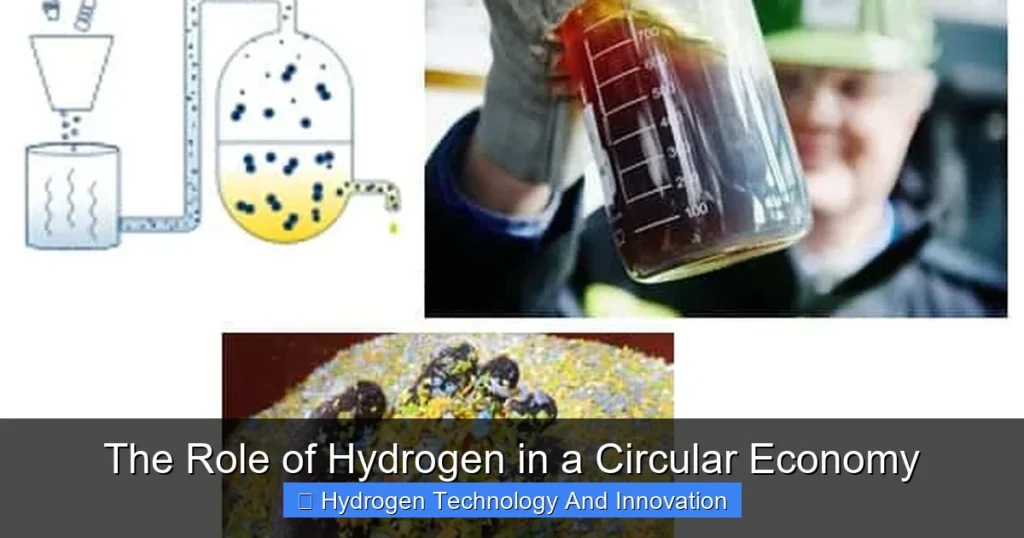
Visual guide about The Role of Hydrogen in a Circular Economy
Image source: polyestertime.com
Before diving into hydrogen’s role, let’s clarify what a circular economy really means. At its core, it’s about designing out waste and pollution, keeping products and materials in use for as long as possible, and regenerating natural systems. Think of it like a forest ecosystem: leaves fall, decompose, and nourish new growth—nothing is wasted.
In contrast, our current economy often follows a “throwaway” model. We extract raw materials, manufacture goods, use them briefly, and discard them. This linear approach strains resources, generates massive waste, and contributes to climate change. The circular economy flips this script by emphasizing reuse, repair, remanufacturing, and recycling.
So where does hydrogen fit in? Hydrogen is unique because it can act as both an energy carrier and a chemical feedstock. Unlike electricity, which is hard to store at scale, hydrogen can be produced, stored, transported, and used on demand. When produced using renewable energy—known as green hydrogen—it emits no carbon during production or use. This makes it a powerful enabler of circularity.
But hydrogen’s value goes beyond being “clean.” It supports circular principles in several key ways:
– It allows excess renewable energy to be stored and reused, preventing waste.
– It can replace fossil fuels in industries that are hard to electrify.
– It enables industrial symbiosis, where waste from one process becomes input for another.
– It supports closed-loop systems in transportation and energy.
In short, hydrogen isn’t just a replacement for fossil fuels—it’s a catalyst for systemic change.
Green Hydrogen: The Clean Foundation of Circularity
Not all hydrogen is created equal. Depending on how it’s produced, hydrogen can be gray, blue, or green—each with different environmental impacts.
– Gray hydrogen is made from natural gas through steam methane reforming, releasing CO₂ as a byproduct. It’s the most common form today but contradicts circular principles due to its carbon footprint.
– Blue hydrogen uses the same process but captures and stores the CO₂ emissions. While better than gray, it still relies on fossil fuels and isn’t fully circular.
– Green hydrogen is produced by splitting water into hydrogen and oxygen using electrolysis powered by renewable energy like wind or solar. This method emits no greenhouse gases and aligns perfectly with circular economy goals.
Green hydrogen is the gold standard for sustainability. It turns surplus renewable electricity—often wasted when supply exceeds demand—into a storable, transportable fuel. This solves one of the biggest challenges of renewable energy: intermittency. Solar panels don’t generate power at night, and wind turbines slow when the wind dies down. Without storage, this excess energy is lost.
By converting it into hydrogen, we create a buffer that can be used later—whether to generate electricity, heat buildings, or power industrial processes. This not only reduces waste but also strengthens energy security and grid resilience.
For example, in Germany, the HySupply project is testing green hydrogen production using wind energy from the North Sea. Excess electricity powers electrolyzers, producing hydrogen that’s stored and later used in steel production and transportation. This closed-loop system minimizes waste and maximizes resource efficiency.
Hydrogen in Industry: Closing the Loop in Hard-to-Abate Sectors
Some industries are notoriously difficult to decarbonize because they require high-temperature heat or chemical inputs that can’t be easily electrified. Think steel, cement, chemicals, and refining. These sectors account for a significant portion of global emissions—and they’re prime candidates for hydrogen integration.
Take steel production, for instance. Traditionally, iron ore is reduced using coke (a form of coal) in blast furnaces, releasing large amounts of CO₂. But hydrogen can replace coke as the reducing agent. When hydrogen reacts with iron ore, it produces iron and water—not carbon dioxide. This process, known as direct reduced iron (DRI), is already being piloted by companies like SSAB in Sweden and Salzgitter in Germany.
In the chemical industry, hydrogen is a key feedstock for producing ammonia, methanol, and other essential chemicals. Currently, most of this hydrogen is gray, derived from natural gas. Switching to green hydrogen would drastically cut emissions. For example, Yara, a major fertilizer producer, is building a green hydrogen plant in Norway to produce carbon-free ammonia.
Hydrogen also enables industrial symbiosis—a core principle of the circular economy. In industrial parks, waste heat from hydrogen production or fuel cells can be captured and used by neighboring facilities. Similarly, oxygen produced during electrolysis can be supplied to wastewater treatment plants or medical facilities, turning a byproduct into a valuable resource.
A real-world example is the Port of Rotterdam, where multiple industries are collaborating to create a hydrogen hub. Excess heat from hydrogen production is used by nearby refineries, while CO₂ captured from other processes is used to make synthetic fuels. This interconnected system reduces waste, lowers emissions, and improves efficiency across the board.
Hydrogen in Transportation: Driving Toward Zero Emissions
Transportation is another sector where hydrogen shines in a circular economy. While electric vehicles (EVs) are great for short-range travel, hydrogen fuel cells offer advantages for long-haul trucks, buses, ships, and even aircraft.
Fuel cell electric vehicles (FCEVs) use hydrogen to generate electricity on board, emitting only water vapor. Unlike battery EVs, they can be refueled quickly—similar to gasoline vehicles—and have longer ranges. This makes them ideal for heavy-duty applications where downtime is costly.
But the circular benefits go beyond zero emissions. Fuel cells themselves can be designed for durability and recyclability. Platinum, a key catalyst in fuel cells, is rare and expensive—but it can be recovered and reused at the end of a vehicle’s life. Companies like Toyota and Hyundai are already developing recycling programs for fuel cell components.
Moreover, hydrogen infrastructure can be integrated with existing systems. For example, hydrogen refueling stations can be co-located with renewable energy sources, using solar or wind power to produce hydrogen on-site. This reduces transmission losses and supports local energy loops.
In Japan, the government is promoting a “hydrogen society” with over 160 hydrogen refueling stations and thousands of FCEVs on the road. The country is also exploring hydrogen-powered trains and ships, aiming to create a fully integrated, low-emission transport network.
Even in aviation, hydrogen is gaining traction. Airbus has announced plans to develop hydrogen-powered aircraft by 2035, using liquid hydrogen as fuel. While challenges remain—such as storage and safety—the potential for zero-emission flight is a game-changer for sustainable travel.
Energy Storage and Grid Stability: Hydrogen as a Renewable Battery
One of the biggest hurdles to scaling renewable energy is storage. Solar and wind are intermittent, so we need ways to store excess energy for use when the sun isn’t shining or the wind isn’t blowing. Batteries are great for short-term storage, but they’re expensive and limited in capacity for long-duration needs.
Hydrogen fills this gap. It can be stored for days, weeks, or even months in large quantities—something batteries can’t match. This makes it ideal for seasonal energy storage, especially in regions with long winters or dry seasons.
For example, in Australia, the proposed Hydrogen Utility (H2U) project aims to use solar and wind power to produce hydrogen during the day, store it underground in salt caverns, and convert it back to electricity during peak demand. This creates a reliable, renewable energy supply that supports grid stability.
Hydrogen can also be transported via pipelines or ships, enabling energy sharing across regions. Countries with abundant renewables—like Chile, Saudi Arabia, or Namibia—can produce green hydrogen and export it to energy-hungry regions like Europe or Asia. This global energy trade supports a more balanced, resilient system.
Additionally, repurposing existing gas infrastructure reduces the need for new materials and construction. In the UK, National Grid is testing the use of hydrogen in natural gas pipelines, blending it with methane to reduce emissions. Over time, these pipelines could transition to 100% hydrogen, minimizing waste and maximizing resource use.
Policy, Innovation, and the Path Forward
For hydrogen to reach its full potential in a circular economy, supportive policies and continued innovation are essential. Governments around the world are stepping up with funding, regulations, and strategic plans.
The European Union’s Hydrogen Strategy aims to install 40 gigawatts of electrolyzers by 2030 and produce up to 10 million tons of renewable hydrogen annually. Similarly, the U.S. Department of Energy’s Hydrogen Shot initiative targets reducing the cost of clean hydrogen to $1 per kilogram within a decade.
These efforts are driving down costs and accelerating deployment. Electrolyzer prices have already dropped by over 60% in the past decade, and further advances in materials and manufacturing are expected to make green hydrogen competitive with fossil fuels.
Innovation is also happening at the community level. Small-scale hydrogen projects—like microgrids powered by solar and hydrogen storage—are bringing energy independence to remote areas. In Iceland, the Hellisheiði geothermal plant uses excess heat to produce hydrogen for local buses and fishing vessels, creating a self-sustaining energy loop.
Education and public awareness are equally important. As hydrogen becomes more visible—through buses, heating systems, or industrial plants—people begin to see it as a viable, everyday solution. This cultural shift is crucial for long-term adoption.
Challenges and Considerations
Despite its promise, hydrogen isn’t a silver bullet. Several challenges must be addressed to ensure it supports—not undermines—circular economy principles.
First, efficiency matters. Converting electricity to hydrogen and back to electricity loses energy—typically 30–40%. For applications where direct electrification is possible (like passenger cars or home heating), batteries or heat pumps may be more efficient.
Second, water use is a concern. Electrolysis requires pure water, and in water-scarce regions, this could strain resources. Solutions include using seawater (with advanced desalination) or recycling water from other processes.
Third, safety and regulation are critical. Hydrogen is flammable and requires careful handling. Building public trust and establishing clear safety standards will be essential for widespread adoption.
Finally, we must avoid “greenwashing.” Not all hydrogen projects are truly sustainable. Projects that rely on fossil fuels or fail to consider lifecycle impacts can do more harm than good. Transparency and rigorous certification (like the EU’s Renewable Energy Directive) are key.
Conclusion: Hydrogen as a Catalyst for Change
Hydrogen is more than just a clean fuel—it’s a powerful enabler of the circular economy. By turning waste energy into usable fuel, replacing fossil inputs in industry, powering zero-emission transport, and stabilizing renewable grids, hydrogen helps close loops and reduce waste across multiple sectors.
Its true strength lies in integration. When combined with renewable energy, smart infrastructure, and circular design principles, hydrogen becomes part of a regenerative system that mimics nature’s efficiency. It doesn’t just reduce harm—it actively contributes to a healthier, more resilient planet.
The transition won’t happen overnight. It requires investment, innovation, and collaboration across governments, industries, and communities. But the momentum is building. From pilot projects to national strategies, the world is waking up to hydrogen’s potential.
As we reimagine our energy systems, hydrogen offers a pathway not just to decarbonization, but to true circularity—where nothing is wasted, everything is valued, and the economy works in harmony with nature.
Frequently Asked Questions
What is green hydrogen and how is it different from other types?
Green hydrogen is produced by splitting water into hydrogen and oxygen using electrolysis powered by renewable energy like wind or solar. Unlike gray or blue hydrogen, it emits no carbon during production, making it the most sustainable option and a key enabler of the circular economy.
Can hydrogen really replace fossil fuels in heavy industry?
Yes, hydrogen can replace fossil fuels in industries like steel, chemicals, and cement by providing high-temperature heat or acting as a chemical feedstock. Projects in Sweden and Germany are already demonstrating this shift with hydrogen-based steel production.
How does hydrogen support energy storage in a renewable grid?
Hydrogen can store excess renewable energy for long periods, addressing the intermittency of solar and wind. It can be converted back to electricity when needed, providing grid stability and reducing reliance on fossil fuel backups.
Is hydrogen safe for everyday use in transportation and homes?
Yes, hydrogen is safe when handled properly. It’s lighter than air and disperses quickly if leaked. With proper regulations, safety standards, and public education, hydrogen can be used safely in vehicles, heating systems, and industrial applications.
What role does infrastructure play in hydrogen’s circular economy potential?
Existing gas pipelines and storage facilities can be repurposed for hydrogen, reducing the need for new materials and construction. This supports resource efficiency and accelerates deployment while minimizing environmental impact.
How can individuals support the growth of a hydrogen-based circular economy?
Individuals can advocate for clean energy policies, support companies using green hydrogen, and stay informed about sustainable technologies. Public demand and engagement drive innovation and help shape a more circular future.