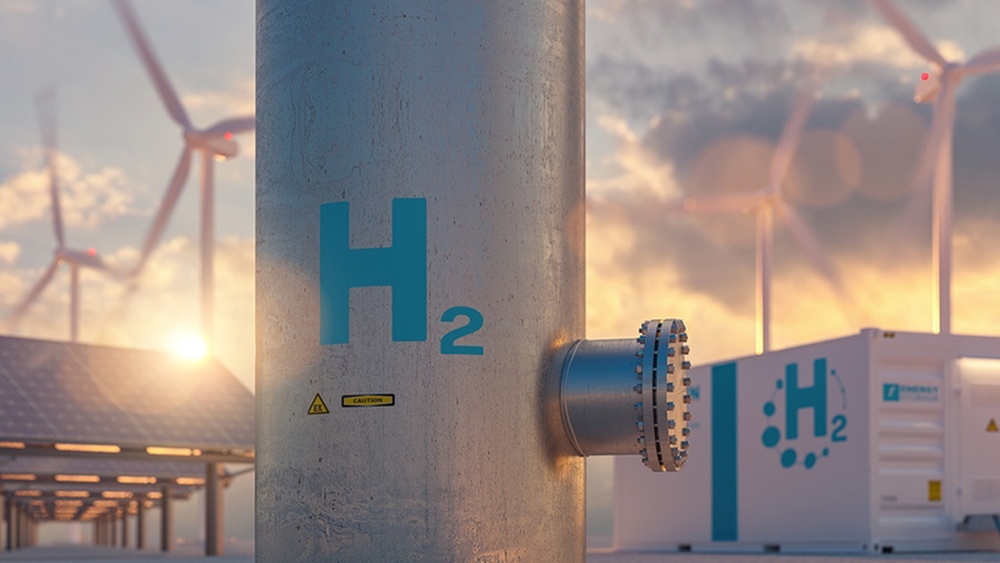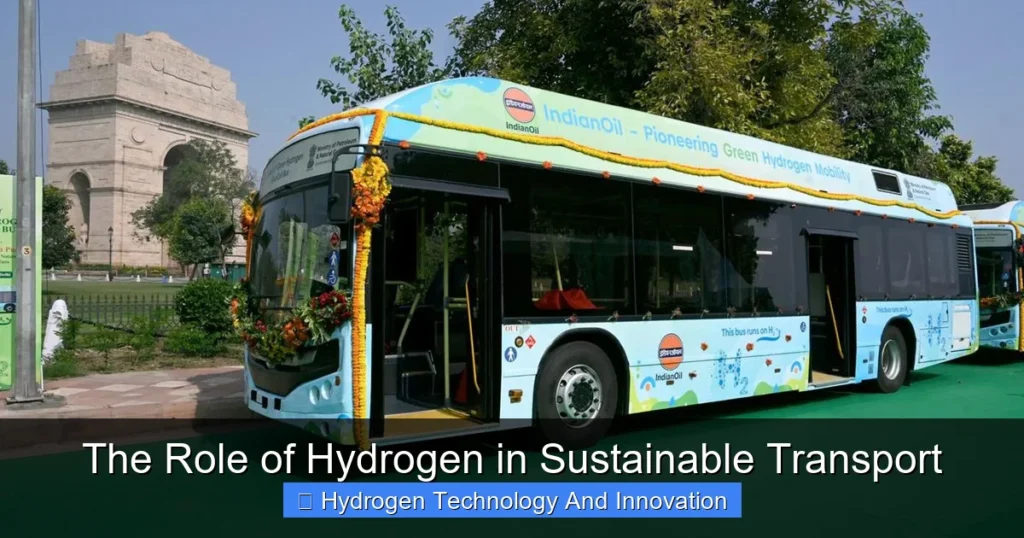
Hydrogen is emerging as a game-changer in the shift toward sustainable transport. From fuel cell electric vehicles to heavy-duty trucks and public transit, hydrogen offers a clean, efficient alternative to fossil fuels—especially where batteries fall short.
Key Takeaways
- Hydrogen enables zero-emission transport: When produced using renewable energy, hydrogen fuel emits only water vapor, making it a clean energy carrier for vehicles.
- Ideal for heavy-duty and long-range applications: Hydrogen excels in sectors like freight, shipping, and aviation, where battery weight and charging time are limiting factors.
- Green hydrogen is key to sustainability: Only hydrogen produced via electrolysis powered by renewables (green hydrogen) ensures true environmental benefits.
- Infrastructure is growing but still limited: Refueling stations and production facilities are expanding, but widespread adoption depends on continued investment and policy support.
- Fuel cell technology is maturing: Advances in fuel cell efficiency, durability, and cost are making hydrogen vehicles more viable for consumers and fleets.
- Public transit leads the way: Cities worldwide are adopting hydrogen buses, proving the technology’s reliability and performance in real-world conditions.
- Policy and partnerships drive progress: Government incentives, international collaborations, and private-sector innovation are accelerating hydrogen’s role in clean transport.
📑 Table of Contents
- Introduction: A Clean Fuel for a Cleaner Future
- What Is Hydrogen and How Does It Power Vehicles?
- Hydrogen vs. Batteries: When Does Hydrogen Win?
- Real-World Applications: Where Hydrogen Is Making a Difference
- The Challenge: Building the Hydrogen Ecosystem
- The Road Ahead: Policies, Partnerships, and Public Perception
- Conclusion: Hydrogen as a Pillar of Sustainable Transport
Introduction: A Clean Fuel for a Cleaner Future
Imagine a world where your car, bus, or delivery truck runs without spewing carbon dioxide into the air. Where long-haul trucks can travel hundreds of miles without stopping to recharge for hours. Where ships and planes can go farther on clean energy. This isn’t science fiction—it’s the promise of hydrogen in sustainable transport.
As the world races to cut greenhouse gas emissions and combat climate change, transportation remains one of the toughest sectors to decarbonize. Cars, trucks, ships, and planes account for nearly a quarter of global CO₂ emissions. While electric vehicles (EVs) powered by batteries have made impressive strides, they’re not the perfect solution for every use case. Batteries are heavy, take time to charge, and struggle with long distances or heavy loads. That’s where hydrogen steps in.
Hydrogen isn’t new—it’s been used in industry for decades. But recent advances in technology, falling renewable energy costs, and growing climate urgency have put hydrogen at the center of the clean transport revolution. When used in a fuel cell, hydrogen combines with oxygen to produce electricity, powering a vehicle with nothing but water vapor as exhaust. No smog. No CO₂. Just clean, quiet motion.
What Is Hydrogen and How Does It Power Vehicles?
Visual guide about The Role of Hydrogen in Sustainable Transport
Image source: thumbs.dreamstime.com
Hydrogen is the simplest and most abundant element in the universe. On Earth, it doesn’t exist freely—it’s always bonded to other elements, like in water (H₂O) or methane (CH₄). To use hydrogen as a fuel, we must extract it from these compounds. The most common method today is steam methane reforming, which uses natural gas. But this process releases CO₂, making it less sustainable.
The real game-changer is green hydrogen—hydrogen produced by splitting water into hydrogen and oxygen using electricity from renewable sources like wind or solar. This method, called electrolysis, emits no greenhouse gases. When green hydrogen powers a vehicle, the entire lifecycle is nearly emissions-free.
So how does hydrogen actually move a car or truck? Enter the fuel cell. A fuel cell is like a battery that never runs out—as long as hydrogen and oxygen are supplied, it generates electricity. Inside the fuel cell, hydrogen atoms are split into protons and electrons. The protons pass through a membrane, while the electrons create an electric current that powers the vehicle’s motor. When they reunite with oxygen, the only byproduct is water.
This process is highly efficient—fuel cells convert 60% or more of the energy in hydrogen into motion, compared to about 20–30% for internal combustion engines. And unlike batteries, hydrogen tanks can be refilled in minutes, just like gasoline.
Hydrogen vs. Batteries: When Does Hydrogen Win?
It’s easy to assume that all clean transport means electric vehicles with big batteries. But the truth is, no single technology fits every need. Batteries are great for short-range, light-duty vehicles like city cars and delivery vans. They’re quiet, simple, and getting cheaper every year. But they have limitations.
One major issue is weight. Batteries are heavy. A long-range EV might carry a battery pack weighing over 1,000 pounds. For trucks, buses, or ships, that weight adds up fast, reducing cargo capacity and efficiency. Hydrogen, by contrast, is extremely light. A hydrogen fuel cell system can deliver the same range with far less weight.
Another challenge is charging time. Even with fast chargers, a large EV battery can take 30 minutes to an hour to recharge. For a delivery truck making multiple stops or a long-haul freight vehicle, that downtime is costly. Hydrogen refueling takes just 3 to 5 minutes—similar to filling up with diesel.
Then there’s range. Most battery EVs today offer 200–300 miles on a charge. While that’s fine for daily commutes, it’s not enough for cross-country trucking or regional air travel. Hydrogen vehicles can travel 300–400 miles or more on a single tank, with the potential for even greater range as technology improves.
Finally, consider temperature performance. Batteries lose efficiency in cold weather, reducing range and power. Hydrogen fuel cells perform well in a wide range of temperatures, making them ideal for cold climates or winter operations.
So while batteries are perfect for many applications, hydrogen shines where weight, speed, range, and reliability matter most.
Real-World Applications: Where Hydrogen Is Making a Difference
Hydrogen isn’t just a lab experiment—it’s already on the road, on the rails, and even in the skies. Let’s look at some real-world examples where hydrogen is proving its value.
Hydrogen Buses: Leading the Charge in Public Transit
Cities around the world are turning to hydrogen buses to clean up their air and reduce noise. These buses look and feel like regular city buses, but they run on fuel cells. They emit zero pollutants, making them ideal for dense urban areas.
In London , over 20 hydrogen double-decker buses operate on key routes, carrying thousands of passengers daily. The city plans to expand its fleet as part of its goal to become carbon-neutral by 2030. Similarly, Copenhagen has deployed hydrogen buses that run on green hydrogen produced from wind power.
One major advantage? Refueling takes just 10–15 minutes, and the buses can travel over 300 miles on a single tank—perfect for all-day service without mid-route charging.
Hydrogen Trucks: Powering the Freight Industry
The trucking industry is under pressure to go green. Heavy-duty trucks are responsible for a large share of transport emissions, and they’re hard to electrify with batteries alone. That’s why companies like Nikola, Hyundai, and Volvo are developing hydrogen-powered trucks.
Hyundai’s XCIENT Fuel Cell truck is already in use in Switzerland, where a fleet of over 40 trucks hauls goods across the Alps. Each truck can travel up to 250 miles on a single fill and refuels in under 15 minutes. In the U.S., companies like Amazon and Walmart are testing hydrogen trucks for regional deliveries.
These trucks are especially valuable for ports and logistics hubs, where vehicles make frequent short trips but need quick turnaround times. Hydrogen allows them to operate around the clock without long charging breaks.
Hydrogen Trains: Quiet Rides on Clean Tracks
In regions where rail lines aren’t electrified, diesel trains are still common. Hydrogen trains offer a clean alternative. Germany has been a pioneer, with Alstom’s Coradia iLint—the world’s first hydrogen-powered passenger train—running on routes in Lower Saxony since 2018.
These trains use fuel cells to generate electricity, powering electric motors. They’re quiet, emit only water, and can travel up to 600 miles on a single tank. The UK, France, and Italy are now testing similar models, aiming to replace diesel trains on non-electrified lines.
Hydrogen in Shipping and Aviation: The Next Frontier
Maritime shipping accounts for nearly 3% of global CO₂ emissions. While batteries can power short ferry routes, long ocean voyages need more energy-dense fuels. Hydrogen—and its derivatives like ammonia and methanol—are being explored as clean marine fuels.
Companies like Maersk and CMA CGM are investing in hydrogen-based shipping solutions. Pilot projects are testing hydrogen-powered ferries in Norway and the U.S. Pacific Northwest.
In aviation, hydrogen is seen as one of the few viable paths to zero-emission flight. Airbus aims to launch a hydrogen-powered commercial aircraft by 2035. While challenges remain—like storing hydrogen safely at low temperatures—early prototypes are already flying.
The Challenge: Building the Hydrogen Ecosystem
For hydrogen to transform transport, we need more than just vehicles. We need a whole ecosystem: production, storage, distribution, and refueling infrastructure. Right now, that ecosystem is still in its infancy.
Production: Scaling Up Green Hydrogen
Today, over 95% of hydrogen is produced from fossil fuels—mostly natural gas. This “gray hydrogen” reduces emissions compared to gasoline, but it’s not truly sustainable. To make a real impact, we need to scale up green hydrogen production.
That means building more electrolyzers—machines that split water using renewable electricity. Countries like Germany, Australia, and Chile are investing billions in green hydrogen projects. Australia’s Asian Renewable Energy Hub aims to produce hydrogen using 26 gigawatts of wind and solar power—enough to supply multiple countries.
But scaling up requires more than money. We need skilled workers, supply chains for materials like platinum (used in fuel cells), and policies that support clean energy.
Storage and Transport: Keeping Hydrogen Safe and Efficient
Hydrogen is tricky to store and move. It’s the smallest molecule, so it can leak easily. It’s also less energy-dense than gasoline by volume, so it must be compressed or liquefied.
Most hydrogen vehicles use compressed hydrogen gas stored in high-strength tanks at 700 bar (over 10,000 psi). These tanks are safe and tested, but they add cost and weight.
Liquid hydrogen offers higher energy density but requires cooling to -253°C (-423°F), which is energy-intensive and complex. For long-distance transport, hydrogen can be converted into ammonia or liquid organic carriers, which are easier to handle.
Pipelines are another option. Europe is exploring repurposing natural gas pipelines for hydrogen. But new materials and safety standards are needed to prevent leaks and embrittlement.
Refueling Infrastructure: The Missing Link
One of the biggest barriers to hydrogen vehicles is the lack of refueling stations. As of 2023, there are fewer than 1,000 hydrogen stations worldwide—most in California, Japan, and Germany.
Building a station costs $1–2 million, and demand is still low. But as more fleets adopt hydrogen, the economics improve. California plans to have 200 stations by 2025. Germany aims for 100 by 2025 and 1,000 by 2030.
Mobile refuelers and on-site production (like solar-powered electrolyzers at bus depots) can help bridge the gap. Partnerships between automakers, energy companies, and governments are key to accelerating deployment.
The Road Ahead: Policies, Partnerships, and Public Perception
Hydrogen won’t succeed without strong support from governments, businesses, and the public.
Government Policies: Driving Investment and Innovation
Countries are rolling out hydrogen strategies to guide development. The European Union’s Hydrogen Strategy aims to install 40 gigawatts of electrolyzers by 2030. The U.S. Inflation Reduction Act offers tax credits for clean hydrogen production—up to $3 per kilogram for green hydrogen.
These incentives lower costs and attract private investment. Japan and South Korea have long supported hydrogen, with national roadmaps and subsidies for vehicles and infrastructure.
Industry Collaboration: Strength in Numbers
No single company can build the hydrogen economy alone. That’s why partnerships are forming across sectors.
The Hydrogen Council, a global CEO-led initiative, brings together automakers, energy firms, and industrial giants to accelerate adoption. Projects like the Hyundai Hydrogen Mobility joint venture in Switzerland combine vehicle supply, fueling, and fleet operations.
Automakers are also collaborating. Toyota, Honda, and Hyundai have been early leaders in fuel cell vehicles. Now, traditional manufacturers like Ford, GM, and BMW are exploring hydrogen for trucks and performance cars.
Public Awareness: Overcoming Misconceptions
Many people still associate hydrogen with the Hindenburg disaster. But modern hydrogen systems are far safer. Tanks are rigorously tested, and sensors detect leaks instantly. In fact, hydrogen disperses quickly into the air, reducing fire risk compared to gasoline.
Education is key. Cities that deploy hydrogen buses often run public outreach campaigns to explain the technology and its benefits. Transparency about safety, costs, and environmental impact builds trust.
Conclusion: Hydrogen as a Pillar of Sustainable Transport
Hydrogen isn’t a silver bullet—but it’s a vital piece of the puzzle. For sectors where batteries fall short, hydrogen offers a clean, efficient, and scalable solution. From city buses to freight trucks, from regional trains to future aircraft, hydrogen is proving its worth in real-world applications.
The path forward requires investment, innovation, and collaboration. We need more green hydrogen production, smarter infrastructure, supportive policies, and public engagement. But the momentum is building.
As renewable energy gets cheaper and climate goals get stricter, hydrogen’s role in sustainable transport will only grow. It’s not about replacing batteries—it’s about complementing them. Together, hydrogen and electricity can power a cleaner, quieter, and more resilient transport system for generations to come.
The future of transport isn’t just electric. It’s electric—and hydrogen-powered.
Frequently Asked Questions
Is hydrogen safe for use in vehicles?
Yes, hydrogen is safe when handled properly. Modern hydrogen vehicles use high-strength tanks and multiple safety systems, including leak detectors and automatic shut-offs. Hydrogen disperses quickly into the air, reducing fire risk compared to gasoline.
How is green hydrogen different from other types of hydrogen?
Green hydrogen is produced using renewable energy to power electrolysis, splitting water into hydrogen and oxygen with no CO₂ emissions. In contrast, gray hydrogen comes from natural gas and releases carbon, while blue hydrogen captures some of those emissions.
Can hydrogen vehicles compete with battery electric vehicles?
Hydrogen and battery EVs serve different needs. Batteries are ideal for short-range, light-duty vehicles, while hydrogen excels in heavy-duty, long-range, and fast-refueling applications like trucks, buses, and trains.
How long does it take to refuel a hydrogen vehicle?
Refueling a hydrogen vehicle takes 3 to 5 minutes—similar to filling a gasoline car. This is much faster than charging a large battery EV, which can take 30 minutes or more even with fast chargers.
Are there enough hydrogen refueling stations?
Currently, hydrogen stations are limited—mostly in California, Japan, and parts of Europe. But governments and companies are investing heavily to expand infrastructure, especially for fleet operations like buses and trucks.
What are the main challenges to hydrogen adoption?
The biggest challenges are cost, infrastructure, and scaling green hydrogen production. Electrolyzers and fuel cells are still expensive, and building a widespread refueling network requires significant investment and coordination.