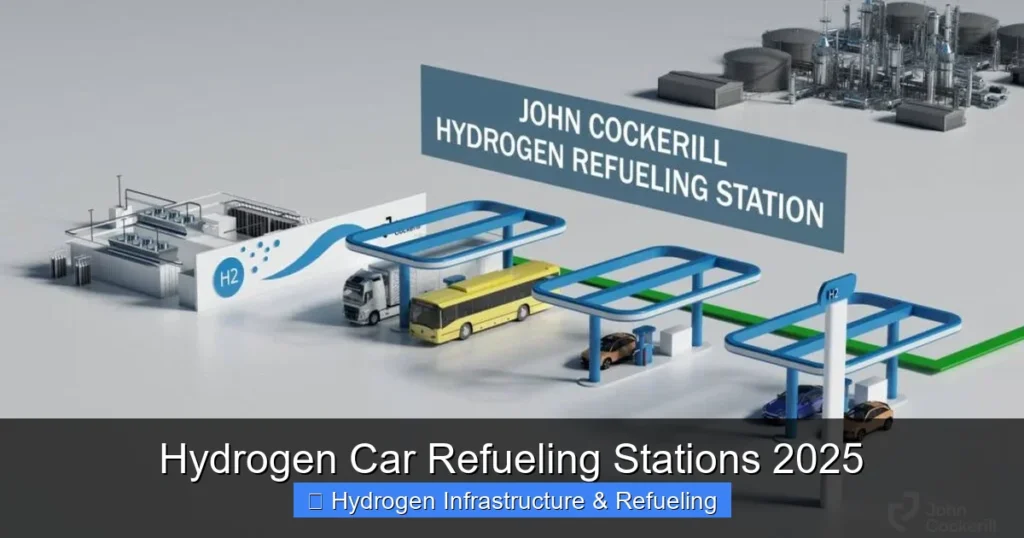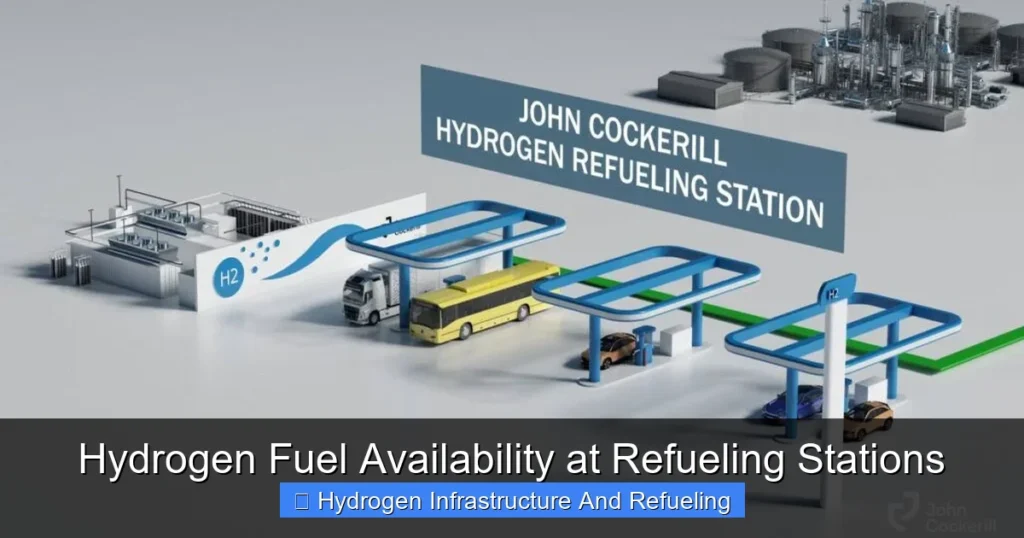
Hydrogen fuel availability at refueling stations is expanding, but remains limited compared to gasoline and electric charging networks. While early adopters in California, Japan, and parts of Europe enjoy growing access, most regions still face infrastructure gaps and high costs.
Key Takeaways
- Limited but growing network: As of 2024, there are over 1,000 hydrogen refueling stations globally, with the majority concentrated in California, Japan, South Korea, and Germany.
- High upfront costs: Building a hydrogen station can cost between $1.5 million and $3 million, making expansion slow and expensive.
- Government support is critical: Subsidies and policy incentives in countries like Japan and Germany are driving station deployment.
- Hydrogen vehicles are niche but rising: Models like the Toyota Mirai and Hyundai NEXO are increasing demand, pushing automakers to support infrastructure.
- Challenges include storage and delivery: Transporting hydrogen safely and efficiently remains a major hurdle due to its low density and high flammability.
- Green hydrogen is the future goal: Most current stations use gray hydrogen, but the shift toward renewable-powered production is essential for sustainability.
- Consumer awareness is low: Many drivers don’t know hydrogen vehicles exist, let alone where to refuel them—education is key to adoption.
[FEATURED_IMAGE_PLACEHOLDER]
Hydrogen Fuel Availability at Refueling Stations
Imagine pulling up to a fuel pump, not for gasoline or electricity, but for hydrogen. You connect a nozzle, wait a few minutes, and drive off with zero emissions—just water vapor from the tailpipe. This isn’t science fiction. It’s happening today, albeit in limited areas. Hydrogen fuel cell vehicles (FCVs) are real, and they’re slowly making their way onto roads around the world. But here’s the catch: finding a place to refuel them isn’t as easy as pulling into your local gas station.
Hydrogen fuel availability at refueling stations is improving, but it’s still far from widespread. While electric vehicles (EVs) benefit from a rapidly expanding charging network, hydrogen-powered cars face a steeper climb. The infrastructure is young, expensive, and highly concentrated in a few key regions. That said, momentum is building. Governments, automakers, and energy companies are investing in hydrogen as a clean alternative for transportation, especially for heavy-duty vehicles like trucks and buses that are harder to electrify with batteries.
So what does the current landscape look like? How easy—or hard—is it to find hydrogen fuel today? And what does the future hold for drivers who want to go green without plugging in? Let’s dive into the state of hydrogen refueling, the challenges holding it back, and the progress being made to make hydrogen fuel more accessible than ever.
Global Overview of Hydrogen Refueling Infrastructure
As of 2024, there are approximately 1,000 hydrogen refueling stations operating worldwide. That might sound like a lot, but compare it to the millions of gasoline stations or the hundreds of thousands of public EV chargers, and the scale becomes clear: hydrogen infrastructure is still in its infancy.
The distribution of these stations is highly uneven. Over half are located in just three countries: Japan, South Korea, and the United States—primarily in California. Germany and China are also making significant strides, with national strategies to expand hydrogen networks. In contrast, most countries have only a handful of stations, if any at all.
Japan leads the way with over 160 stations, thanks to strong government backing and partnerships between automakers like Toyota and energy firms. South Korea follows closely, aiming for 1,200 stations by 2040 as part of its Hydrogen Economy Roadmap. California, meanwhile, has around 70 operational stations, making it the only U.S. state where hydrogen refueling is somewhat practical for daily drivers.
This geographic concentration creates a “chicken-and-egg” problem. Automakers are hesitant to sell hydrogen vehicles where there’s no fuel, and energy companies won’t build stations without enough vehicles on the road. It’s a cycle that’s slowly being broken by targeted investments and policy support.
Regional Breakdown of Station Availability
Let’s take a closer look at where hydrogen fuel is most accessible.
In California, the California Fuel Cell Partnership (CaFCP) has been instrumental in coordinating efforts between government, industry, and utilities. The state offers generous rebates for hydrogen vehicle purchases and funds station construction through programs like the Clean Transportation Program. As a result, drivers in cities like Los Angeles, San Francisco, and San Diego can find multiple stations within reasonable driving distance.
Japan treats hydrogen as a national energy priority. The government’s Basic Hydrogen Strategy aims to create a “hydrogen society” where hydrogen powers homes, vehicles, and industries. Stations are often co-located with convenience stores or gas stations, making them easy to find. Toyota’s Mirai, the world’s best-selling hydrogen car, is a common sight in Tokyo and other urban centers.
Germany is Europe’s hydrogen leader, with over 100 stations operated by H2 Mobility, a consortium including Air Liquide, Linde, and Shell. The country plans to expand to 1,000 stations by 2030, focusing on major highways and industrial corridors. This network supports not just passenger cars but also fuel cell buses and trucks.
South Korea is investing heavily in hydrogen as part of its Green New Deal. Hyundai’s NEXO is widely available, and the government subsidizes both vehicles and stations. Stations are being built in cities like Seoul, Busan, and Incheon, with plans to cover the entire country.
In contrast, countries like Canada, Australia, and most of South America have only a few experimental stations. Even in large nations like India and Brazil, hydrogen refueling remains a distant prospect for most drivers.
Challenges Limiting Hydrogen Fuel Availability
Despite progress, several major challenges are slowing the growth of hydrogen refueling infrastructure. These aren’t just technical hurdles—they’re economic, logistical, and even perceptual.
High Capital Costs
Building a hydrogen refueling station is expensive. Costs typically range from $1.5 million to $3 million per station, depending on size and technology. That’s significantly more than a fast-charging EV station, which can cost under $100,000. The high price tag comes from the need for specialized equipment: compressors, storage tanks, dispensers, and safety systems designed to handle high-pressure hydrogen gas.
These costs deter private investment, especially when demand is low. Without a steady stream of customers, stations struggle to break even. This creates a Catch-22: no stations mean no customers, and no customers mean no stations.
Hydrogen Production and Delivery
Another big issue is getting hydrogen to the station. Unlike gasoline or electricity, hydrogen isn’t readily available in most places. It must be produced, compressed, transported, and stored—all of which add complexity and cost.
Currently, about 95% of hydrogen is produced from natural gas through a process called steam methane reforming (SMR). This “gray hydrogen” emits carbon dioxide, undermining the environmental benefits of fuel cell vehicles. While “blue hydrogen” (with carbon capture) and “green hydrogen” (from renewable energy) are growing, they’re still a small fraction of total production.
Transporting hydrogen is also tricky. It’s the lightest element, which means it takes up a lot of space unless compressed or liquefied. Compressing it to 700 bar (over 10,000 psi) requires energy and robust infrastructure. Liquefying it cools hydrogen to -253°C, which is energy-intensive and expensive. Most stations receive hydrogen via tube trailers from centralized production plants, limiting how far they can be from supply sources.
Safety Concerns and Public Perception
Hydrogen has a reputation for being dangerous—partly due to the infamous Hindenburg disaster. While modern hydrogen systems are designed with multiple safety features, public fear persists. Leaks, fires, and explosions are rare but highly publicized when they occur.
Regulations also play a role. Hydrogen stations must meet strict safety codes, which can delay permitting and increase costs. In some areas, zoning laws restrict where stations can be built, especially near residential neighborhoods.
Limited Vehicle Adoption
There simply aren’t enough hydrogen vehicles on the road to justify widespread station deployment. As of 2024, global FCV sales are in the tens of thousands per year—tiny compared to millions of EVs sold annually. Without a critical mass of drivers, stations operate below capacity, making them financially unsustainable.
Automakers are also cautious. Only a few models are available: the Toyota Mirai, Hyundai NEXO, and the Honda Clarity (discontinued in 2023). Limited model choice and high vehicle prices (often over $60,000) deter mainstream buyers.
How Hydrogen Refueling Works
Understanding how hydrogen fuel is delivered can help explain why availability is still limited—and what’s being done to improve it.
On-Site vs. Delivered Hydrogen
Hydrogen stations typically use one of two supply methods: delivered hydrogen or on-site production.
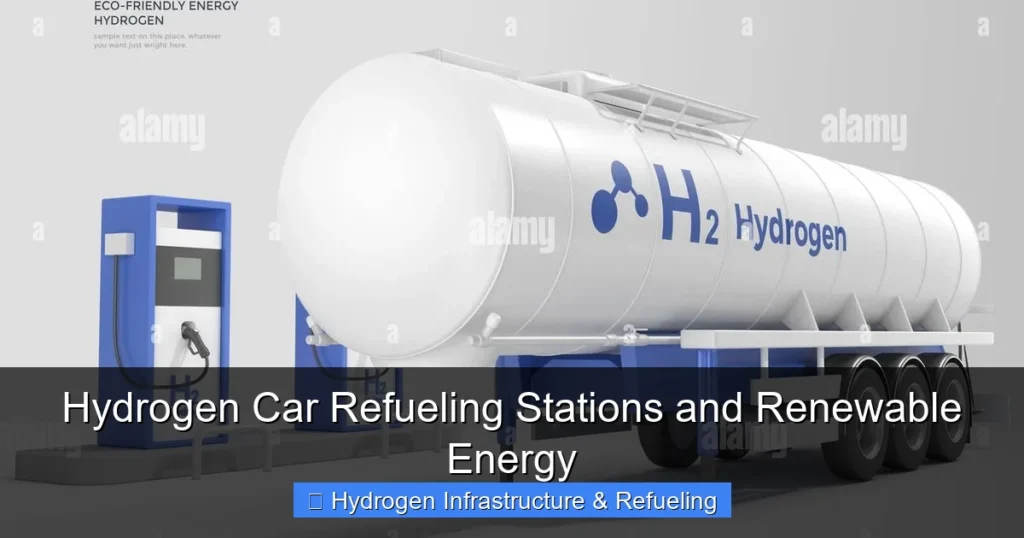
Most stations today rely on delivered hydrogen. A tube trailer transports compressed hydrogen from a central plant to the station, where it’s stored in high-pressure tanks. When a vehicle arrives, the hydrogen is dispensed directly into the tank at 700 bar (for passenger cars) or 350 bar (for buses and trucks). This method is flexible but depends on reliable delivery logistics.
On-site production is less common but growing. Some stations use electrolysis to split water into hydrogen and oxygen using electricity. If the power comes from renewables, this produces green hydrogen with zero emissions. However, electrolyzers are expensive and require a steady power supply, making them more suitable for areas with abundant renewable energy.
A few stations also use steam methane reforming on-site, but this is rare due to space and emissions concerns.
Refueling Process for Drivers
Refueling a hydrogen vehicle is surprisingly similar to pumping gas. The driver parks at the dispenser, opens the fuel door, and connects a nozzle to the vehicle’s receptacle. The system automatically checks for leaks and equalizes pressure before filling begins.
A full tank takes about 3 to 5 minutes—much faster than charging an EV. Most passenger FCVs hold 5 to 6 kg of hydrogen, giving them a range of 300 to 400 miles. After refueling, the driver simply disconnects and drives off.
Safety is built into every step. The nozzle has a double seal to prevent leaks, and the vehicle’s tank is made of carbon fiber to withstand high pressure. If a leak is detected, the system shuts off automatically.
Payment and Access
Paying for hydrogen is straightforward. Most stations accept credit cards or mobile apps. In California, many stations offer free fuel for the first few years as an incentive for early adopters. Prices vary by region but typically range from $12 to $16 per kilogram. That means a full tank costs around $60 to $90—comparable to a gasoline fill-up for a mid-size car.
Access is usually unrestricted, though some stations may require registration or an account. Unlike EV chargers, there’s no need to wait hours for a charge, making hydrogen appealing for long-distance travel.
Progress and Innovations in Hydrogen Infrastructure
Despite the challenges, innovation is accelerating. New technologies, business models, and partnerships are helping to expand hydrogen fuel availability.
Modular and Mobile Stations
One promising development is modular hydrogen stations. These prefabricated units can be installed quickly and scaled as demand grows. Companies like Hyzon and Nel Hydrogen offer containerized stations that plug into existing infrastructure, reducing construction time and cost.
Mobile refuelers are another innovation. These truck-mounted units can deliver hydrogen directly to fleets or remote locations, bypassing the need for permanent stations. They’re especially useful for testing hydrogen in new markets or supporting emergency response vehicles.
Co-Location with Existing Infrastructure
To reduce costs and increase visibility, many new stations are being co-located with gas stations, truck stops, or EV charging hubs. Shell, for example, has added hydrogen pumps to select fueling sites in California and Germany. This leverages existing real estate, customer traffic, and maintenance networks.
In Japan, convenience store chains like Lawson and FamilyMart are partnering with energy companies to install hydrogen dispensers. Drivers can refuel while grabbing a snack or coffee—making hydrogen part of everyday life.
Green Hydrogen and Renewable Integration
The shift toward green hydrogen is gaining momentum. Projects like the HyDeal Ambition initiative in Europe aim to produce solar-powered hydrogen at scale by 2030. In Australia, the Asian Renewable Energy Hub plans to use wind and solar to generate hydrogen for export and domestic use.
Some stations are already powered by renewables. The Linde station in Foshan, China, uses solar panels to run its electrolyzer. In Iceland, hydrogen is produced entirely from geothermal energy.
Government and Industry Collaboration
Public-private partnerships are driving progress. In the U.S., the Department of Energy’s H2@Scale initiative supports research and demonstration projects. The European Union’s Hydrogen Strategy allocates €10 billion to build a hydrogen economy.
Automakers are also stepping up. Toyota and Hyundai are investing in hydrogen production and distribution. In 2023, Hyundai announced a $100 million fund to support hydrogen infrastructure in the U.S.
The Future of Hydrogen Fuel Availability
What does the future hold for hydrogen refueling? Experts predict slow but steady growth, with key milestones on the horizon.
By 2030, global hydrogen station numbers could exceed 5,000, according to the International Energy Agency (IEA). California aims for 300 stations, Germany for 1,000, and Japan for 320. China plans to have over 1,000 stations supporting its growing fleet of hydrogen buses and trucks.
Long-haul trucking is seen as a major growth area. Companies like Nikola, Hyliion, and Daimler are developing fuel cell trucks that can travel 500+ miles on a single fill. These vehicles need reliable refueling along major highways—creating demand for corridor-based networks.
Ports and airports are also emerging as early adopters. Hydrogen-powered forklifts, cargo handlers, and ground support equipment are already in use at facilities in Los Angeles, Rotterdam, and Tokyo.
However, widespread passenger vehicle adoption will take longer. EVs currently dominate the zero-emission market, and battery technology continues to improve. Hydrogen will likely remain a niche option for specific use cases—like fleets, heavy transport, and regions with abundant renewable energy.
Tips for Hydrogen Vehicle Owners and Prospective Buyers
If you’re considering a hydrogen fuel cell vehicle, here are some practical tips to help you navigate the current landscape.
- Check station availability in your area: Use apps like H2stations.org or the CaFCP station map to find nearby refueling options. Plan your routes around station locations, especially for long trips.
- Take advantage of incentives: Many regions offer rebates, tax credits, or free fuel for early adopters. In California, the Clean Vehicle Rebate Project (CVRP) provides up to $5,000 for FCV purchases.
- Join a hydrogen vehicle community: Online forums and local clubs can provide tips, updates, and support. Owners often share real-time info about station status and maintenance.
- Consider total cost of ownership: While hydrogen fuel is expensive, maintenance is low—FCVs have fewer moving parts than gasoline cars. Factor in fuel, insurance, and potential incentives.
- Stay informed about infrastructure updates: New stations are opening regularly. Sign up for newsletters from organizations like the Fuel Cell and Hydrogen Energy Association (FCHEA) to stay in the loop.
Conclusion
Hydrogen fuel availability at refueling stations is no longer a distant dream—it’s a growing reality, albeit one still in its early stages. While the network remains sparse and concentrated in a few regions, progress is being made through innovation, investment, and collaboration. For drivers in California, Japan, or Germany, hydrogen refueling is already a viable option. For others, it may be a few years away.
The road ahead isn’t without obstacles. High costs, production challenges, and limited vehicle adoption will continue to slow expansion. But as green hydrogen production scales up and fuel cell technology improves, hydrogen could play a vital role in decarbonizing transportation—especially for applications where batteries fall short.
For now, hydrogen remains a promising but niche solution. But for those willing to embrace it, the experience is clean, fast, and futuristic. As infrastructure grows and awareness increases, hydrogen fuel could one day become as common as gasoline or electricity. Until then, it’s a glimpse into a cleaner, hydrogen-powered future.
FAQs
How many hydrogen refueling stations are there in the U.S.?
As of 2024, there are approximately 70 operational hydrogen refueling stations in the United States, with nearly all located in California. A few additional stations are in development in states like Hawaii and Connecticut.
Can I refuel a hydrogen car at home?
Currently, home hydrogen refueling is not practical or widely available. The technology exists—such as small electrolyzers—but it’s expensive, slow, and requires significant space and safety measures. Most drivers rely on public stations.
Is hydrogen fuel safe?
Yes, hydrogen is safe when handled properly. Modern fuel cell vehicles and stations include multiple safety features, such as leak detection, automatic shutoffs, and reinforced tanks. Hydrogen disperses quickly in air, reducing fire risk compared to gasoline.
How much does it cost to refuel a hydrogen car?
The cost typically ranges from $12 to $16 per kilogram of hydrogen. A full tank (5–6 kg) costs about $60 to $90 and provides a range of 300–400 miles, similar to a gasoline vehicle.
What happens if I run out of hydrogen?
Running out of hydrogen is rare, but if it happens, the vehicle will stop running. Most FCVs have a low-fuel warning and reserve range. You’ll need to call roadside assistance for a tow to the nearest station—there’s no equivalent to a gas can for hydrogen.
Will hydrogen stations become as common as gas stations?
It’s unlikely in the near term. Hydrogen will probably remain a specialized fuel for specific regions and vehicle types, such as fleets and heavy transport. However, with continued investment, station numbers could grow significantly by 2030 and beyond.
This is a comprehensive guide about Hydrogen fuel availability at refueling stations.
Key Takeaways
- Understanding Hydrogen fuel availability at refueling stations: Provides essential knowledge
Frequently Asked Questions
What is Hydrogen fuel availability at refueling stations?
Hydrogen fuel availability at refueling stations is an important topic with many practical applications.