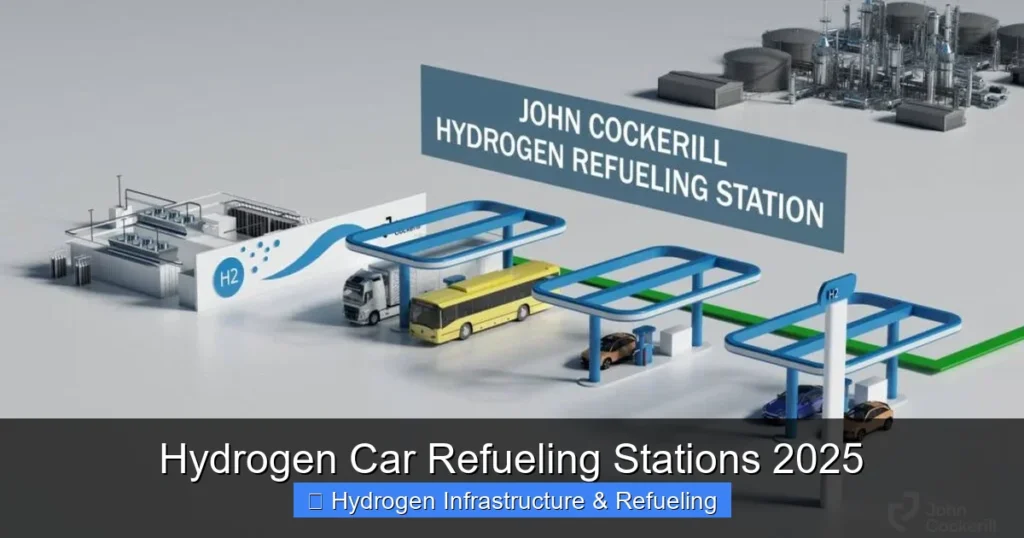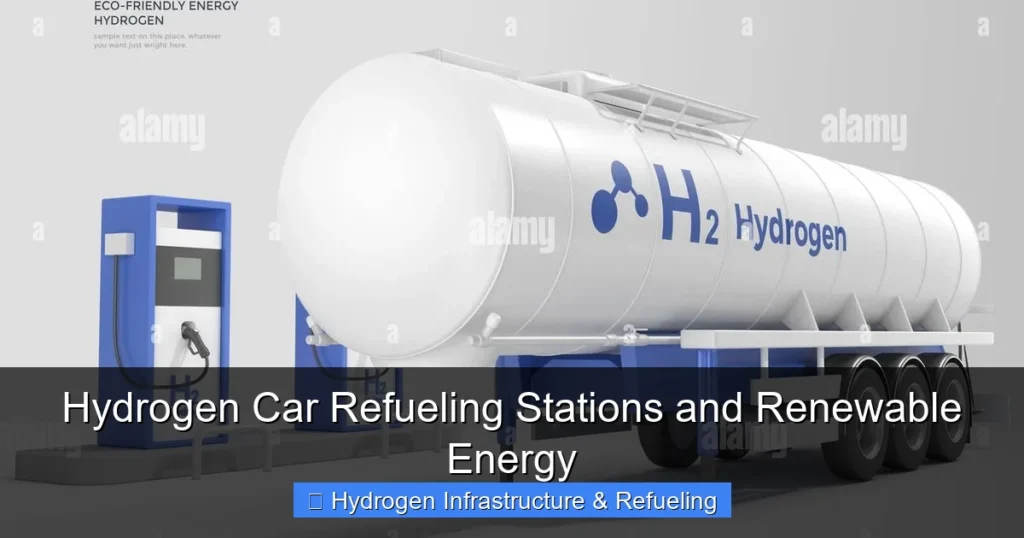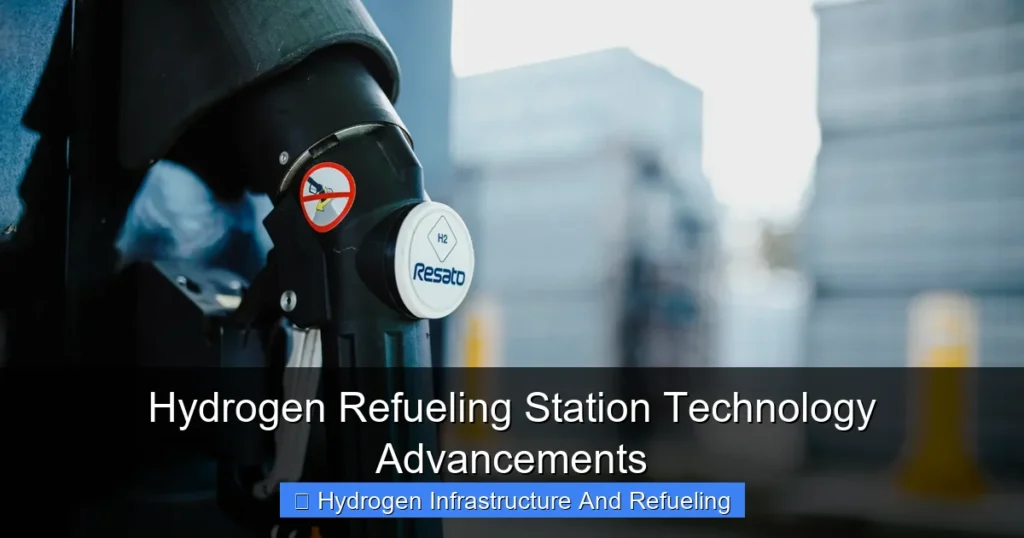
Hydrogen refueling station technology is advancing rapidly, enabling faster fill times, improved safety, and lower costs. These innovations are critical for scaling hydrogen-powered transportation and supporting a clean energy future.
The world is on the brink of a transportation revolution—one powered not by gasoline or diesel, but by clean, zero-emission hydrogen. As climate change accelerates and governments push for net-zero emissions, hydrogen fuel cell vehicles (FCEVs) are emerging as a powerful alternative to battery-electric vehicles, especially for heavy-duty transport like trucks, buses, and trains. But for hydrogen to truly take off, one critical piece of the puzzle must be solved: the refueling infrastructure. That’s where hydrogen refueling station technology advancements come into play.
Imagine pulling up to a station, connecting a nozzle, and filling your hydrogen tank in less time than it takes to grab a coffee. That’s no longer science fiction. Thanks to breakthroughs in compression, storage, and dispensing systems, modern hydrogen refueling stations are becoming faster, safer, and more efficient than ever before. These advancements aren’t just technical upgrades—they’re game-changers that could unlock the full potential of hydrogen as a mainstream fuel. From urban centers to remote highways, the next generation of refueling stations is being designed to meet the needs of a growing fleet of FCEVs.
But it’s not just about speed. The real magic lies in how these stations are being reimagined from the ground up. Engineers and innovators are tackling long-standing challenges like high costs, energy inefficiency, and safety concerns. By integrating renewable energy, smart software, and modular construction, today’s hydrogen refueling stations are paving the way for a sustainable, scalable, and user-friendly hydrogen economy.
Key Takeaways
- Faster refueling times: New compressors and cooling systems allow hydrogen vehicles to refuel in under 5 minutes, matching gasoline convenience.
- Improved safety protocols: Advanced sensors, leak detection, and automated shutdown systems reduce risks and enhance public trust.
- Modular and scalable designs: Prefabricated stations can be deployed quickly and expanded as demand grows, ideal for urban and rural areas.
- On-site hydrogen production: Electrolysis-powered stations generate hydrogen locally using renewable energy, cutting transport emissions.
- Smart monitoring and AI integration: Real-time data analytics optimize performance, predict maintenance, and improve uptime.
- Cost reductions through innovation: Advances in materials and manufacturing are lowering capital and operational expenses.
- Global expansion and standardization: Countries are investing in hydrogen corridors and harmonizing refueling standards for seamless travel.
📑 Table of Contents
The Evolution of Hydrogen Refueling Stations
Hydrogen refueling hasn’t always been smooth sailing. In the early 2000s, the first generation of hydrogen stations were expensive, unreliable, and often located in research labs rather than public spaces. They used bulky equipment, required frequent maintenance, and could take up to 30 minutes to refuel a single vehicle. For most consumers, that was a dealbreaker.
But over the past decade, a wave of innovation has transformed the landscape. The shift began with lessons learned from natural gas refueling and early hydrogen pilot programs. Engineers realized that hydrogen’s unique properties—like its low density and high flammability—required specialized handling. This led to the development of high-pressure compressors capable of delivering hydrogen at 350 bar (for buses and trucks) and 700 bar (for passenger cars), the standard pressures used in modern FCEVs.
One of the biggest breakthroughs came with the adoption of cryogenic and pre-cooled hydrogen dispensing. By cooling hydrogen to around -40°C before it enters the vehicle tank, stations can prevent overheating and allow for faster, safer fills. This technology, known as “cool dispensing,” has cut refueling times from 15–30 minutes down to just 3–5 minutes—on par with gasoline.
Another major advancement has been the move toward standardization. Organizations like the International Organization for Standardization (ISO) and the Society of Automotive Engineers (SAE) have developed global protocols for hydrogen refueling, ensuring compatibility across vehicle brands and regions. This interoperability is crucial for building consumer confidence and enabling cross-border travel.
Cutting-Edge Technologies Powering Modern Stations
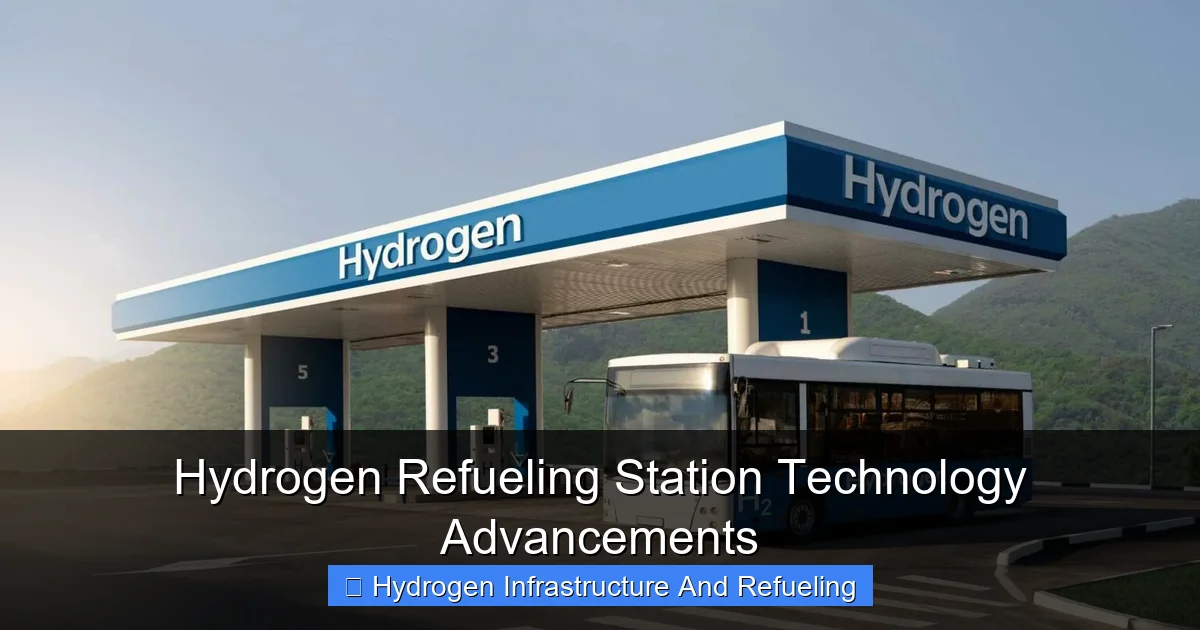
Visual guide about Hydrogen Refueling Station Technology Advancements
Image source: energynews.biz
Today’s hydrogen refueling stations are powered by a suite of advanced technologies that work together to deliver a seamless experience. At the heart of every station is the compressor—the engine that pressurizes hydrogen gas for storage and dispensing. Traditional oil-lubricated compressors are being phased out in favor of oil-free, diaphragm-based systems that reduce contamination and improve reliability.
These new compressors are not only cleaner but also more energy-efficient. Some models use variable-speed drives that adjust output based on demand, cutting energy use by up to 30%. For example, the Linde HYMOTION™ stations use advanced compression technology to deliver high-flow refueling with minimal power consumption.
Storage is another area where innovation is making a big impact. Instead of relying solely on large, stationary tanks, many stations now use modular high-pressure vessels that can be stacked or relocated as needed. These “tube trailers” or “cascades” allow for flexible storage capacity and easier maintenance. Some stations even use underground storage to save space and improve safety.
But perhaps the most exciting development is the integration of on-site hydrogen production. Rather than transporting hydrogen from distant plants—a process that can be energy-intensive and costly—many new stations generate hydrogen right where it’s needed. This is done through electrolysis, a process that splits water into hydrogen and oxygen using electricity.
When powered by solar, wind, or other renewable sources, electrolysis produces “green hydrogen” with virtually no carbon emissions. Companies like Nel Hydrogen and ITM Power are deploying compact electrolyzers that can be installed directly at refueling stations. For instance, the HyDeploy project in the UK is testing grid-connected electrolyzers that use excess renewable energy to produce hydrogen during off-peak hours.
Safety Innovations: Building Trust in Hydrogen
Safety is a top concern when it comes to hydrogen, and for good reason. Hydrogen is highly flammable, invisible, and can leak easily due to its small molecule size. But thanks to rigorous engineering and smart design, modern refueling stations are safer than ever.
One of the key safety features is the use of multiple layers of detection and prevention. Stations are equipped with hydrogen sensors that monitor for leaks in real time. If a leak is detected, the system can automatically shut off flow, activate ventilation, and alert operators. Some systems even use infrared cameras to visually detect hydrogen plumes, which are otherwise invisible to the human eye.
Another critical innovation is the development of fail-safe dispensing nozzles. These nozzles are designed to prevent accidental disconnection during refueling and include built-in pressure relief devices. They also feature thermal sensors that monitor temperature changes in the vehicle tank, ensuring that the fill process stays within safe limits.
Materials science is also playing a role. New composite materials are being used to build storage tanks and pipelines that are more resistant to hydrogen embrittlement—a phenomenon where metals become brittle when exposed to hydrogen. These materials extend the lifespan of equipment and reduce the risk of failure.
Perhaps most importantly, safety protocols are being standardized and enforced globally. The ISO/TS 19887 standard, for example, provides guidelines for the safe design, operation, and maintenance of hydrogen refueling stations. Training programs for station operators are also becoming more widespread, ensuring that staff are prepared to handle emergencies.
Modular and Scalable Station Designs
One of the biggest barriers to hydrogen infrastructure has been the high cost and long lead times associated with building refueling stations. Traditional stations require extensive site preparation, custom engineering, and lengthy permitting processes. But a new wave of modular designs is changing that.
Modular hydrogen stations are pre-fabricated in factories and shipped to sites as complete units. These “plug-and-play” systems can be installed in a matter of weeks, compared to months or even years for conventional builds. They’re also highly scalable—operators can start with a single dispenser and add more as demand grows.
For example, the H2Station® by Nel Hydrogen is a modular refueling solution that can be configured for different capacities and locations. It includes everything from compressors and storage to dispensers and safety systems, all housed in a compact, weatherproof enclosure. This design is ideal for urban areas where space is limited, as well as for remote locations like mining sites or ports.
Another advantage of modular stations is their flexibility. They can be powered by grid electricity, on-site renewables, or even hydrogen delivered by tube trailers. Some models are even mobile, allowing them to be relocated as needed. This is particularly useful for supporting temporary events, disaster relief, or pilot programs.
In addition to physical modularity, software is enabling greater scalability. Cloud-based monitoring platforms allow operators to manage multiple stations from a single dashboard. They can track performance, schedule maintenance, and even adjust pricing based on demand. This level of control makes it easier to expand networks efficiently.
Integration with Renewable Energy and the Grid
As the world transitions to clean energy, hydrogen refueling stations are becoming key players in the renewable ecosystem. By integrating with solar, wind, and other green power sources, these stations can produce and dispense hydrogen with minimal environmental impact.
One of the most promising models is the “power-to-hydrogen” station, which uses excess renewable energy to power electrolysis. During periods of low electricity demand—like sunny afternoons or windy nights—solar farms and wind turbines often generate more power than the grid can absorb. Instead of curtailment, this surplus energy can be used to produce hydrogen, which is then stored and dispensed when needed.
This approach not only reduces waste but also stabilizes the grid. Hydrogen acts as a form of long-duration energy storage, helping to balance supply and demand. In Germany, the H2FUTURE project is testing a 6 MW electrolyzer at a steel plant, using renewable electricity to produce green hydrogen for industrial use and refueling.
Some stations are also exploring bidirectional energy flow. Known as “vehicle-to-grid” (V2G) integration, this technology allows FCEVs to feed electricity back into the grid when they’re not in use. While still in early stages, V2G could turn hydrogen vehicles into mobile energy storage units, further enhancing the value of hydrogen infrastructure.
Another innovation is the use of hydrogen in microgrids. In remote or off-grid locations, hydrogen refueling stations can serve dual purposes—providing fuel for vehicles and backup power for communities. For example, a station in Hawaii powers both hydrogen buses and local homes using solar-generated hydrogen.
Global Deployment and Future Outlook
The global push for hydrogen infrastructure is gaining momentum. Countries like Japan, South Korea, Germany, and the United States are investing billions in hydrogen refueling networks. Japan’s “Hydrogen Society” vision aims to have 900 stations by 2030, while Germany’s H2 Mobility initiative is building a nationwide network of over 100 stations.
In the U.S., the Department of Energy’s H2@Scale program is supporting the development of hydrogen hubs—regional clusters where production, distribution, and use are integrated. California leads the way with over 50 operational stations, primarily serving fuel cell electric vehicles (FCEVs) like the Toyota Mirai and Hyundai NEXO.
But challenges remain. High capital costs, limited vehicle availability, and regulatory hurdles are slowing adoption in some regions. To overcome these barriers, governments and private companies are partnering on incentive programs, subsidies, and public-private partnerships.
Looking ahead, the future of hydrogen refueling stations is bright. Advances in solid-state hydrogen storage, ammonia cracking, and liquid organic hydrogen carriers (LOHCs) could further simplify distribution and reduce costs. Meanwhile, AI and machine learning are being used to optimize station performance, predict maintenance needs, and improve user experience.
As technology continues to evolve, hydrogen refueling stations will become more accessible, affordable, and efficient. They’ll play a central role in decarbonizing transportation, supporting renewable energy, and building a sustainable future.
Conclusion
Hydrogen refueling station technology advancements are transforming the way we think about clean transportation. From faster fill times and enhanced safety to modular designs and renewable integration, these innovations are making hydrogen a viable and attractive fuel option. While challenges remain, the progress made in recent years is undeniable. With continued investment, collaboration, and innovation, hydrogen refueling stations will soon become as common as gas stations—ushering in a new era of zero-emission mobility.
Frequently Asked Questions
How long does it take to refuel a hydrogen vehicle?
Modern hydrogen refueling stations can fill a vehicle’s tank in 3 to 5 minutes, similar to gasoline. This is made possible by advanced cooling and high-pressure dispensing systems.
Are hydrogen refueling stations safe?
Yes, hydrogen stations are designed with multiple safety features, including leak detection, automatic shutdown, and fire-resistant materials. They undergo rigorous testing and comply with international safety standards.
Can hydrogen stations be powered by renewable energy?
Absolutely. Many new stations use on-site electrolysis powered by solar or wind energy to produce green hydrogen, reducing carbon emissions and reliance on fossil fuels.
How much does it cost to build a hydrogen refueling station?
Costs vary, but a typical station ranges from $1 million to $3 million. Modular designs and government incentives are helping to lower these expenses over time.
Are hydrogen refueling stations compatible with all fuel cell vehicles?
Most stations follow international standards (like SAE J2601), ensuring compatibility with major FCEV models from Toyota, Hyundai, and others. Always check your vehicle’s specifications.
Where are hydrogen refueling stations located?
Stations are currently concentrated in regions like California, Japan, Germany, and South Korea, with expanding networks in the U.S., Europe, and China. Mobile and temporary stations are also being deployed for events and testing.