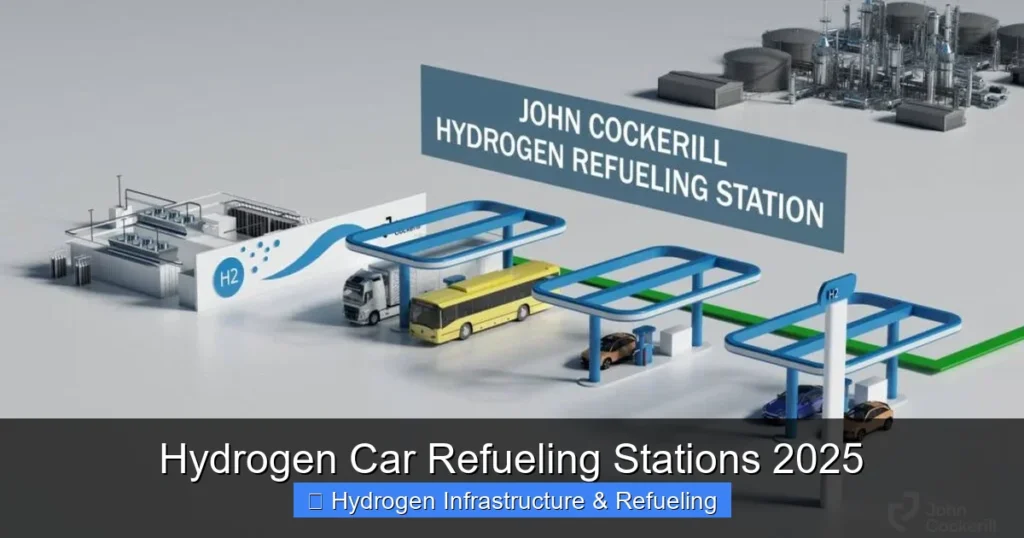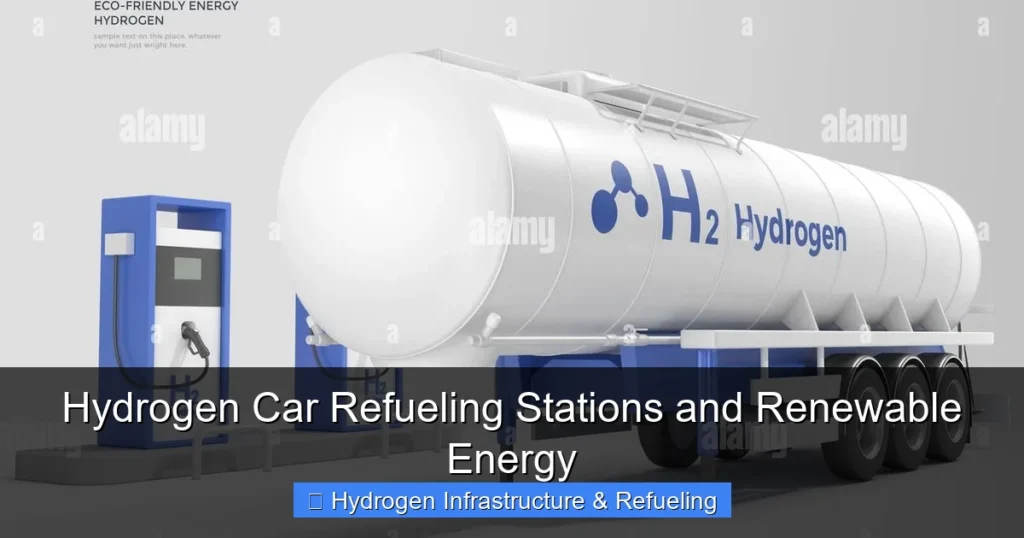
Hydrogen refueling stations are emerging as a key enabler of sustainable transport, offering zero-emission mobility for cars, trucks, and buses. With growing investment and technological advances, hydrogen is becoming a practical alternative to fossil fuels—especially for heavy-duty and long-range vehicles.
Key Takeaways
- Hydrogen fuel cell vehicles produce zero tailpipe emissions: The only byproduct is water vapor, making them ideal for reducing urban air pollution.
- Refueling is fast—comparable to gasoline: A hydrogen car can be refueled in 3–5 minutes, offering a major advantage over battery-electric vehicles.
- Hydrogen excels in heavy-duty transport: Trucks, buses, and trains benefit from hydrogen’s high energy density and quick refueling.
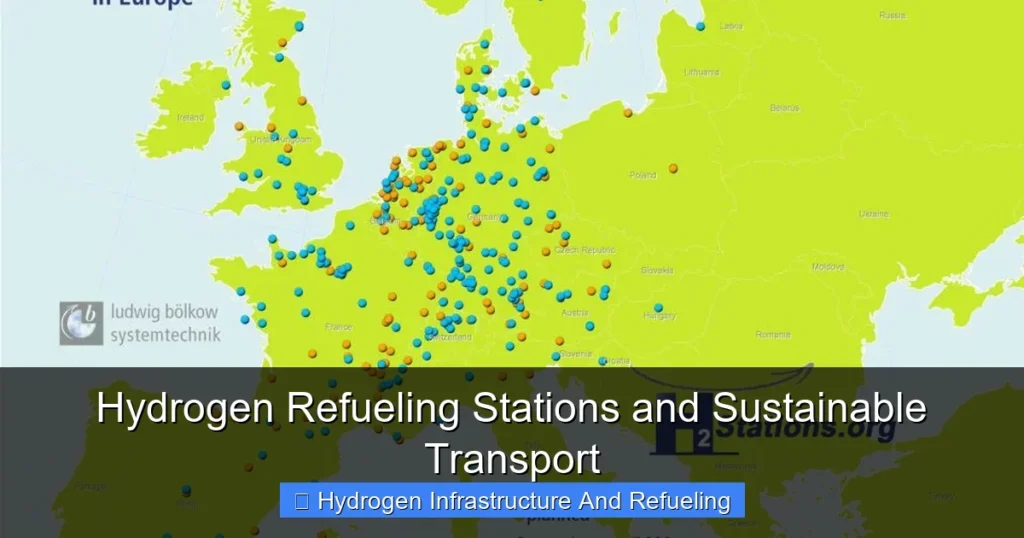
- Infrastructure is expanding globally: Countries like Japan, Germany, and the U.S. are investing heavily in hydrogen refueling networks.
- Green hydrogen is key to sustainability: When produced using renewable energy, hydrogen becomes a truly clean fuel source.
- Government policies drive adoption: Subsidies, mandates, and public-private partnerships are accelerating station deployment.
- Challenges remain—cost and storage: Lowering production costs and improving storage safety are critical for widespread use.
📑 Table of Contents
- Introduction: The Road to Cleaner Mobility
- What Are Hydrogen Refueling Stations?
- The Role of Hydrogen in Sustainable Transport
- Global Growth of Hydrogen Refueling Infrastructure
- Green Hydrogen: The Key to True Sustainability
- Overcoming Barriers to Adoption
- The Future of Hydrogen Refueling Stations
- Conclusion: A Cleaner Road Ahead
Introduction: The Road to Cleaner Mobility
The world is on the move—literally. Every day, millions of vehicles hit the roads, contributing to air pollution, greenhouse gas emissions, and climate change. As cities grow and environmental concerns mount, the need for sustainable transport has never been more urgent. While electric vehicles (EVs) powered by batteries have gained significant traction, they aren’t the only solution. Enter hydrogen—a clean, versatile fuel that’s quietly reshaping the future of transportation.
Hydrogen fuel cell vehicles (FCVs) are gaining attention as a powerful alternative, especially for applications where battery-electric options fall short. Unlike traditional gasoline cars, FCVs emit only water vapor. Unlike many EVs, they can be refueled in minutes and travel long distances without frequent stops. But for hydrogen-powered transport to truly take off, one critical piece is missing: a reliable network of hydrogen refueling stations. Without accessible infrastructure, even the most advanced hydrogen cars can’t reach their full potential.
What Are Hydrogen Refueling Stations?
Hydrogen refueling stations are specialized facilities designed to store, compress, and dispense hydrogen gas to fuel cell vehicles. Think of them as the gas stations of the future—but instead of pumping gasoline, they deliver clean hydrogen to power your car’s fuel cell. These stations are essential for enabling the widespread adoption of hydrogen-powered transport, from passenger cars to commercial fleets.
Visual guide about Hydrogen Refueling Stations and Sustainable Transport
Image source: sustainabletruckvan.com
How Do They Work?
At its core, a hydrogen refueling station operates similarly to a traditional gas station, but with advanced technology to handle high-pressure gas safely. Here’s a simplified breakdown:
- Hydrogen storage: Stations store hydrogen in high-pressure tanks, often at 5,000 to 10,000 psi (pounds per square inch).
- Compression and dispensing: The gas is compressed further and delivered to the vehicle’s tank through a secure nozzle.
- Safety systems: Advanced sensors, ventilation, and emergency shutdown systems ensure safe operation.
Most stations use either gaseous hydrogen (GH₂) delivered by tube trailers or on-site production via electrolysis—splitting water into hydrogen and oxygen using electricity. Some stations even integrate solar or wind power to produce “green hydrogen,” making the entire process carbon-free.
Types of Hydrogen Refueling Stations
Not all hydrogen stations are created equal. They vary based on size, location, and production method:
- Retail stations: Located along highways or in urban centers, these serve the general public. Examples include stations in California, Japan, and Germany.
- Fleet stations: Built for specific users like bus depots or delivery trucks, often located behind the scenes.
- Mobile refuelers: Portable units that can deliver hydrogen to remote locations or events—ideal for temporary needs.
- On-site production stations: Generate hydrogen directly at the location using electrolyzers, reducing transportation costs and emissions.
Each type plays a role in building a comprehensive hydrogen ecosystem. For instance, fleet stations help kickstart demand, while retail stations build consumer confidence.
The Role of Hydrogen in Sustainable Transport
Sustainable transport isn’t just about reducing emissions—it’s about creating a system that’s efficient, scalable, and accessible. Hydrogen fits into this vision in several powerful ways. While battery-electric vehicles are excellent for short-range urban driving, hydrogen shines in scenarios where weight, range, and refueling time matter most.
Zero Emissions at the Tailpipe
The most obvious benefit of hydrogen vehicles is their environmental impact—or lack thereof. When a fuel cell vehicle runs, it combines hydrogen with oxygen from the air to produce electricity, which powers the motor. The only byproduct? Water vapor. No carbon dioxide, no nitrogen oxides, no particulate matter. This makes hydrogen vehicles especially valuable in cities struggling with air quality.
For example, in Los Angeles—a city known for smog—hydrogen buses and taxis are helping cut pollution. The Hydrogen Bus Program in California has already displaced thousands of gallons of diesel fuel, proving that real-world impact is possible.
Fast Refueling and Long Range
One of the biggest pain points for EV drivers is charging time. Even with fast chargers, a full charge can take 30 minutes or more. Hydrogen refueling, by contrast, takes just 3 to 5 minutes—on par with filling up a gas tank. This makes hydrogen ideal for drivers who need to get back on the road quickly, such as taxi drivers, delivery services, or long-haul truckers.
Range is another advantage. Most hydrogen cars can travel 300 to 400 miles on a single tank—comparable to gasoline vehicles and far beyond what many EVs offer. The Toyota Mirai, for instance, boasts a range of over 400 miles, making it practical for road trips and daily commutes alike.
Perfect for Heavy-Duty Applications
While passenger cars get the most attention, hydrogen’s real potential lies in heavy-duty transport. Buses, trucks, trains, and even ships are difficult to electrify with batteries due to weight and energy demands. A battery big enough to power a long-haul truck would be enormous, heavy, and expensive.
Hydrogen, with its high energy density, offers a better solution. Companies like Hyundai and Nikola are already testing hydrogen-powered trucks that can carry heavy loads over long distances. In Europe, hydrogen trains are replacing diesel locomotives on non-electrified rail lines. These applications reduce emissions where they matter most—on highways and industrial corridors.
Global Growth of Hydrogen Refueling Infrastructure
The expansion of hydrogen refueling stations is a global effort, driven by government policies, private investment, and environmental goals. While still in its early stages, the network is growing rapidly—especially in regions committed to decarbonization.
Leading Countries in Hydrogen Infrastructure
Several nations are paving the way:
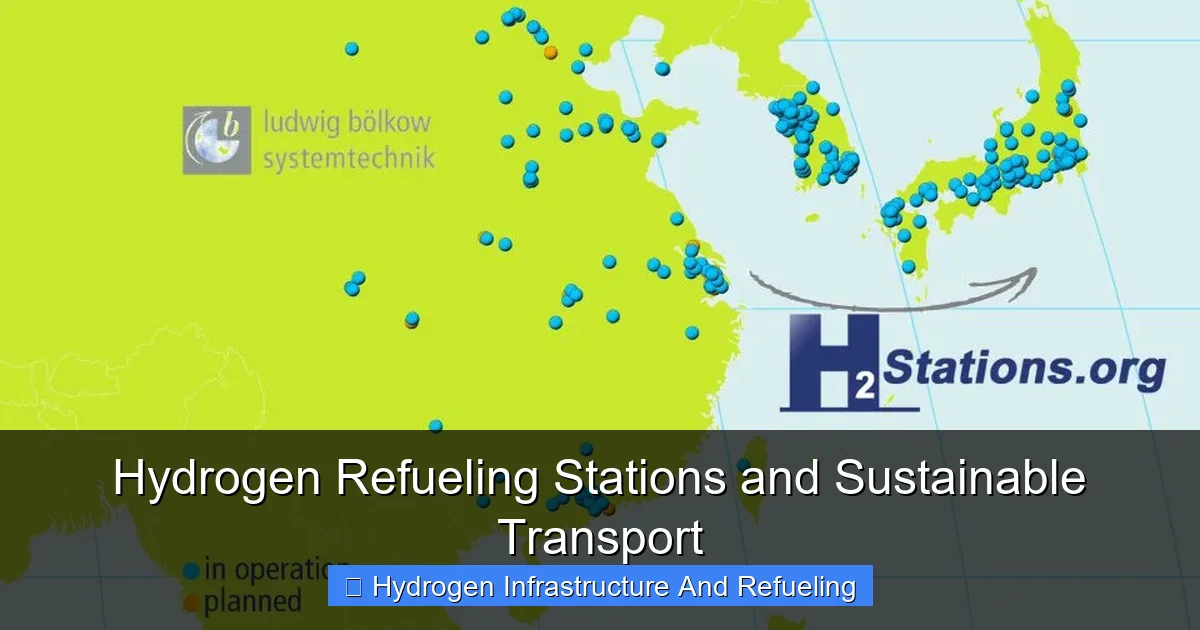
- Japan: A global leader, Japan has over 160 hydrogen stations and aims for 900 by 2030. The government supports FCVs through subsidies and partnerships with automakers like Toyota and Honda.
- Germany: Home to the H2 Mobility initiative, Germany plans to build 1,000 stations by 2030. The country is also investing in hydrogen trains and industrial use.
- United States: California leads the U.S. with over 60 operational stations, mostly in the Bay Area and Los Angeles. The state’s Zero-Emission Vehicle (ZEV) mandate encourages hydrogen adoption.
- South Korea: With strong support from Hyundai, South Korea is expanding its network to support both passenger and commercial vehicles.
- China: Rapidly scaling up, China is building stations to support its growing fleet of hydrogen buses and trucks, especially in industrial zones.
These efforts show that hydrogen is not a niche technology—it’s a strategic part of the clean energy transition.
Public and Private Investment
Building hydrogen infrastructure requires significant investment. Stations can cost between $1 million and $3 million each, depending on size and technology. To overcome this barrier, governments and companies are partnering up.
For example, the European Union’s Hydrogen Strategy allocates billions to support infrastructure. In the U.S., the Bipartisan Infrastructure Law includes $8 billion for hydrogen hubs—regional networks of production, storage, and refueling. Private players like Shell, Air Liquide, and Toyota are also investing heavily, recognizing the long-term potential.
Challenges in Expansion
Despite progress, hurdles remain. The high cost of stations, limited vehicle availability, and public awareness are slowing adoption. Additionally, hydrogen must be transported from production sites to refueling stations, which adds complexity and cost.
However, innovations like on-site electrolysis and modular station designs are helping reduce costs. As demand grows and technology improves, these challenges are expected to ease.
Green Hydrogen: The Key to True Sustainability
Not all hydrogen is created equal. The color-coded system helps distinguish between types based on production method:
- Grey hydrogen: Made from natural gas—currently the most common but emits CO₂.
- Blue hydrogen: Also from natural gas, but with carbon capture to reduce emissions.
- Green hydrogen: Produced using renewable energy (solar, wind) to split water—zero emissions.
For hydrogen to be truly sustainable, the focus must shift to green hydrogen. This is where renewable energy and electrolysis come together to create a clean fuel cycle.
How Green Hydrogen Is Made
Green hydrogen is produced through electrolysis—a process that uses electricity to split water (H₂O) into hydrogen (H₂) and oxygen (O₂). When the electricity comes from solar panels or wind turbines, the entire process is emissions-free.
Countries with abundant renewable resources, like Australia and Iceland, are positioning themselves as green hydrogen exporters. Australia’s Asian Renewable Energy Hub aims to produce hydrogen for export to Asia, powering ships and vehicles across the region.
Benefits Beyond Transport
Green hydrogen isn’t just for cars. It can decarbonize industries like steel, cement, and chemicals, which are hard to electrify. It can also store excess renewable energy, helping balance the grid. By integrating hydrogen into multiple sectors, we create a more resilient and sustainable energy system.
Overcoming Barriers to Adoption
For hydrogen refueling stations to become as common as gas stations, several barriers must be addressed. These include cost, safety concerns, and public perception.
Reducing Costs Through Scale and Innovation
The high cost of hydrogen production and infrastructure is a major obstacle. However, economies of scale are beginning to kick in. As more stations are built and demand increases, prices are expected to fall. Innovations in electrolyzer technology and station design are also driving down costs.
For example, new modular stations can be deployed quickly and scaled as needed. Some companies are even exploring underground hydrogen storage to save space and improve safety.
Ensuring Safety and Public Trust
Hydrogen has a reputation for being dangerous—thanks in part to the Hindenburg disaster. But modern hydrogen systems are designed with multiple safety layers. Hydrogen is lighter than air, so it disperses quickly if leaked. Stations include flame detectors, pressure relief devices, and automated shutdowns.
Education is key. Public outreach programs, like those in California, help demystify hydrogen and build confidence. When people understand the safety measures, they’re more likely to embrace the technology.
Policy and Incentives
Government support is crucial. Policies like tax credits, grants, and low-emission zones encourage both station deployment and vehicle adoption. In California, the Clean Transportation Program funds hydrogen infrastructure and offers rebates for FCV buyers.
International cooperation also helps. The International Partnership for Hydrogen and Fuel Cells in the Economy (IPHE) brings countries together to share knowledge and set standards.
The Future of Hydrogen Refueling Stations
The future looks bright for hydrogen refueling stations. As technology improves and costs decline, we can expect a rapid expansion of infrastructure. Experts predict that by 2030, thousands of stations will be operational worldwide, supporting millions of hydrogen vehicles.
Integration with Renewable Energy
The next frontier is integrating hydrogen stations with renewable energy sources. Imagine a solar-powered station that generates hydrogen during the day and dispenses it at night. This creates a closed-loop system that’s both clean and efficient.
Pilot projects are already underway. In Germany, the H2FUTURE project uses wind power to produce hydrogen for industrial use. Similar models could be adapted for refueling stations.
Smart Stations and Digital Integration
Future stations will be smarter. They’ll use IoT sensors to monitor performance, predict maintenance needs, and optimize hydrogen delivery. Drivers might use apps to locate stations, check availability, and pay seamlessly—just like with EV charging networks.
Some stations could even offer additional services, like battery charging or vehicle maintenance, creating multi-energy hubs.
A Global Network
Ultimately, hydrogen refueling stations will form part of a global clean transport network. From urban centers to remote highways, they’ll enable zero-emission travel for all types of vehicles. This network won’t replace battery-electric vehicles—it will complement them, offering choice and flexibility.
Conclusion: A Cleaner Road Ahead
Hydrogen refueling stations are more than just fuel pumps—they’re gateways to a sustainable transport future. By enabling fast, long-range, zero-emission travel, they address key limitations of current technologies. While challenges remain, the momentum is undeniable. With continued investment, innovation, and public support, hydrogen can play a central role in decarbonizing our roads.
The journey won’t be overnight. But every station built, every vehicle fueled, and every ton of CO₂ avoided brings us closer to cleaner air, healthier cities, and a more resilient planet. The road ahead is long—but with hydrogen, it’s also full of promise.
Frequently Asked Questions
How long does it take to refuel a hydrogen car?
Refueling a hydrogen car takes just 3 to 5 minutes—about the same as filling up a gasoline vehicle. This is much faster than charging most electric cars, making hydrogen ideal for drivers who need quick turnarounds.
Are hydrogen refueling stations safe?
Yes, hydrogen stations are designed with multiple safety features, including leak detection, ventilation, and automatic shutdown systems. Hydrogen disperses quickly in air, reducing fire risk, and modern stations meet strict international safety standards.
Where can I find a hydrogen refueling station?
Hydrogen stations are currently concentrated in regions like California, Japan, Germany, and South Korea. You can use apps like H2.Live or PlugShare to locate the nearest station and check real-time availability.
Is hydrogen fuel expensive?
Currently, hydrogen fuel costs more than gasoline or electricity per mile, but prices are expected to fall as production scales up and green hydrogen becomes more common. Government incentives can also help offset costs for consumers.
Can hydrogen be used in all types of vehicles?
Hydrogen is best suited for fuel cell vehicles, including cars, buses, trucks, and trains. It’s less practical for small vehicles like scooters due to storage challenges, but it excels in heavy-duty and long-range applications.
What is green hydrogen, and why does it matter?
Green hydrogen is produced using renewable energy to split water into hydrogen and oxygen. It’s the only truly sustainable form of hydrogen, as it emits no greenhouse gases during production, making it essential for long-term environmental goals.