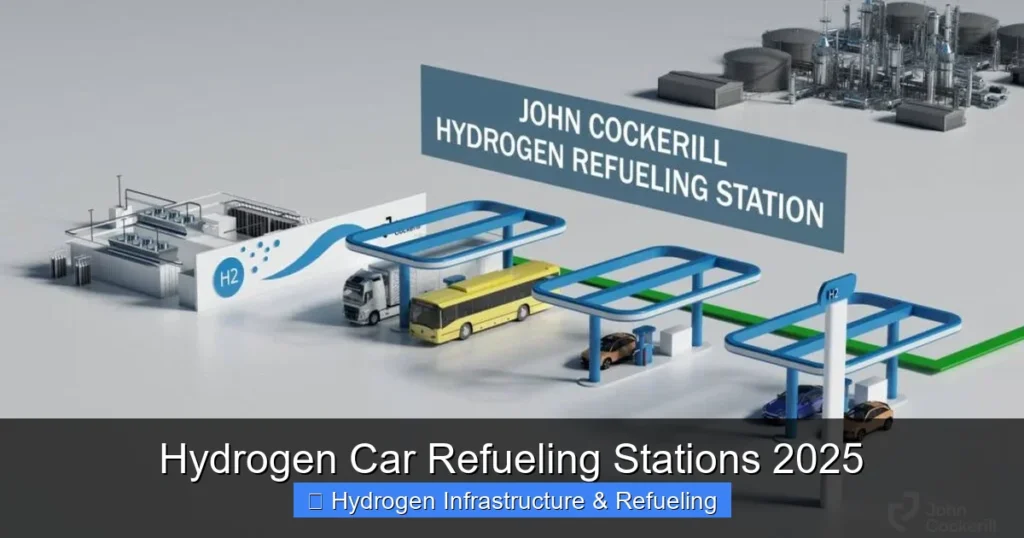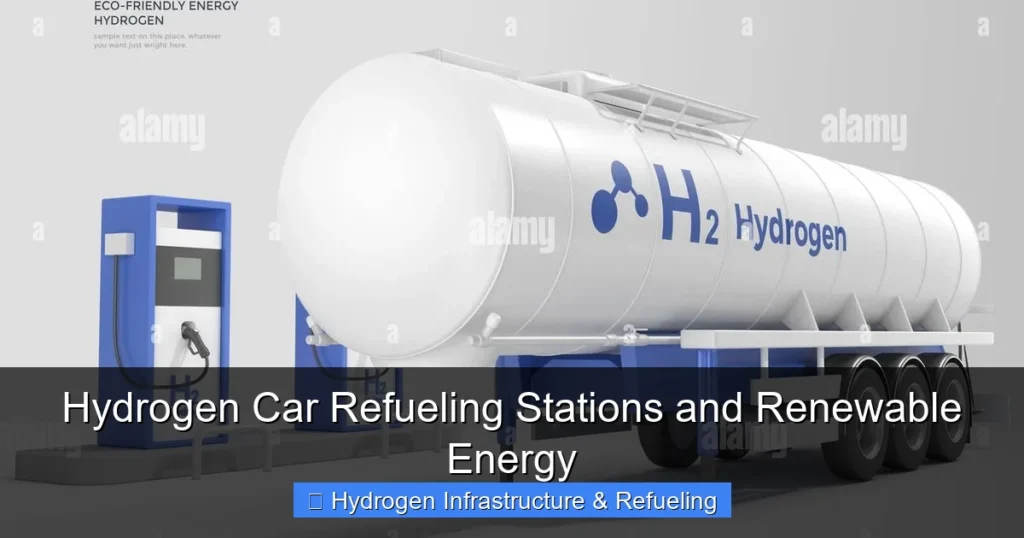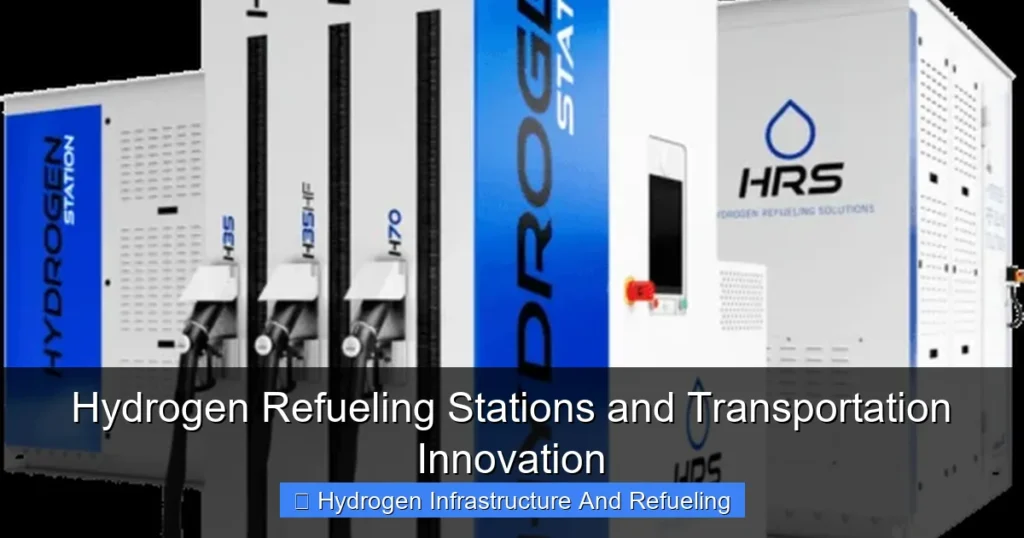
Hydrogen refueling stations are emerging as a game-changer in clean transportation, powering fuel cell vehicles with zero emissions. As infrastructure expands globally, hydrogen is paving the way for long-range, fast-fueling alternatives to battery-electric vehicles, especially in heavy-duty and commercial sectors.
Key Takeaways
- Hydrogen refueling stations enable zero-emission travel: They support fuel cell electric vehicles (FCEVs) that emit only water vapor, making them ideal for reducing transportation-related carbon emissions.
- Fast refueling and long range make hydrogen competitive: Unlike battery-electric vehicles, hydrogen vehicles can refuel in minutes and travel 300–400 miles on a single tank—perfect for trucks, buses, and fleet operations.
- Global infrastructure is rapidly expanding: Countries like Japan, Germany, and the U.S. are investing heavily in hydrogen networks, with hundreds of stations already operational and more planned.
- Green hydrogen is key to sustainability: When produced using renewable energy, hydrogen becomes a truly clean fuel, minimizing environmental impact across its lifecycle.
- Heavy-duty transport benefits most: Hydrogen excels in applications where batteries are impractical, such as long-haul trucking, shipping, and aviation.
- Public-private partnerships drive progress: Collaboration between governments, automakers, and energy companies accelerates station deployment and technology adoption.
- Challenges remain—but solutions are emerging: High costs, storage logistics, and energy efficiency are being addressed through innovation and scale.
📑 Table of Contents
- The Rise of Hydrogen in Transportation
- How Hydrogen Refueling Stations Work
- Global Expansion of Hydrogen Infrastructure
- Hydrogen vs. Batteries: Complementary, Not Competitive
- Overcoming Challenges: Cost, Efficiency, and Public Awareness
- The Road Ahead: Innovation and Integration
- Conclusion: A Cleaner, More Flexible Future
The Rise of Hydrogen in Transportation
Imagine pulling up to a fueling station, connecting a nozzle, and being back on the road in under five minutes—just like filling up with gasoline. But instead of harmful emissions, your vehicle releases nothing but clean water vapor. This isn’t science fiction. It’s the reality of hydrogen-powered transportation, and it’s happening right now.
Hydrogen refueling stations are at the heart of this quiet revolution. Unlike electric vehicles that rely on large, heavy batteries, hydrogen fuel cell vehicles (FCEVs) generate electricity on board using hydrogen gas and oxygen from the air. The only byproduct? Pure H₂O. This makes hydrogen an incredibly attractive option for decarbonizing transportation, especially in sectors where battery weight, charging time, and range are major limitations.
While electric vehicles (EVs) have dominated the clean transport conversation in recent years, hydrogen is carving out its own vital niche. It’s not about replacing EVs—it’s about complementing them. For long-haul trucking, public transit, and industrial machinery, hydrogen offers a practical, scalable solution. And as the technology matures and infrastructure grows, hydrogen is poised to play a central role in the future of sustainable mobility.
How Hydrogen Refueling Stations Work
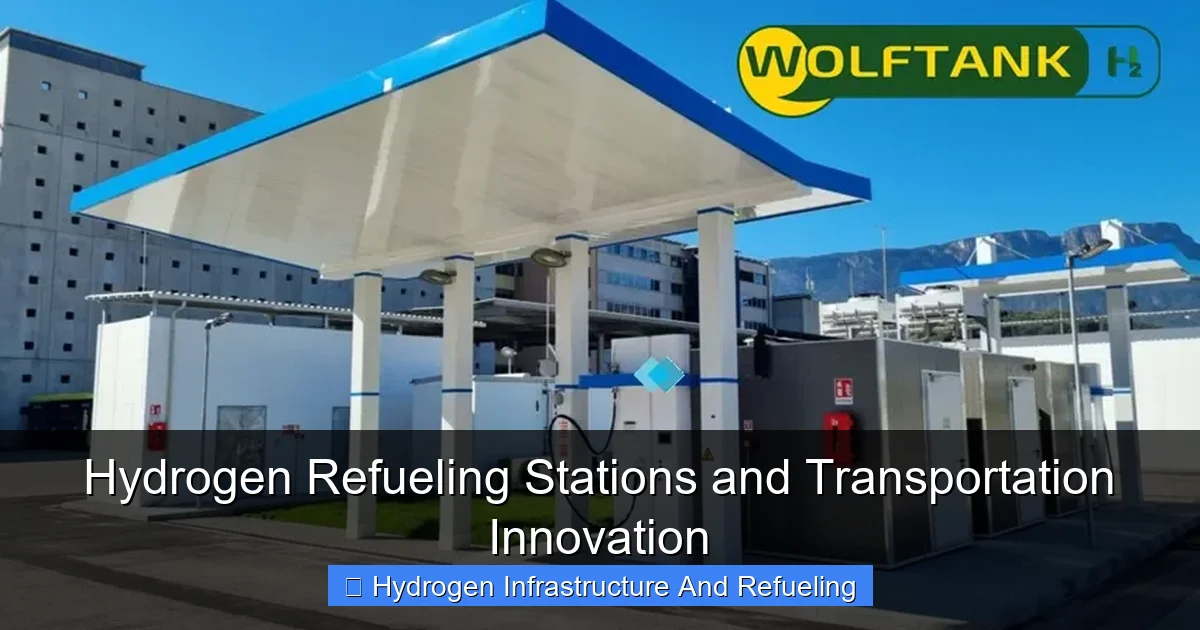
Visual guide about Hydrogen Refueling Stations and Transportation Innovation
Image source: img.fuelcellsworks.com
At first glance, hydrogen refueling might seem similar to pumping gas or charging an EV. But under the hood—or rather, under the station—there’s a sophisticated process that ensures safety, efficiency, and reliability.
From Production to Pump
The journey of hydrogen begins long before it reaches the nozzle. Most hydrogen today is produced through a process called steam methane reforming (SMR), which uses natural gas. While effective, this method still emits carbon dioxide. That’s why the focus is shifting toward green hydrogen—hydrogen produced using renewable energy sources like wind, solar, or hydroelectric power to split water molecules via electrolysis. This method emits no greenhouse gases and is key to making hydrogen truly sustainable.
Once produced, hydrogen is compressed and stored at high pressures—typically 350 or 700 bar—depending on the vehicle type. It’s then transported to refueling stations via tube trailers or pipelines. Some stations even produce hydrogen on-site using electrolyzers, reducing transportation needs and increasing resilience.
The Refueling Process
When a driver pulls up to a hydrogen refueling station, the process is surprisingly simple. The vehicle’s fuel port connects to a dispenser, much like a gasoline nozzle. The system automatically checks for leaks and ensures compatibility before releasing hydrogen into the vehicle’s high-pressure tanks.
Refueling takes just 3 to 5 minutes—comparable to gasoline and far faster than most EV charging. This speed is a major advantage for commercial fleets and long-distance travelers who can’t afford long downtimes. Plus, hydrogen vehicles offer ranges of 300 to 400 miles or more, rivaling traditional internal combustion engines.
Safety is a top priority. Hydrogen is lighter than air and disperses quickly if leaked, reducing fire risk. Stations are equipped with advanced sensors, ventilation systems, and emergency shut-offs to prevent accidents. In fact, hydrogen has been used safely in industrial applications for decades, and modern stations meet rigorous international safety standards.
Global Expansion of Hydrogen Infrastructure
The growth of hydrogen refueling stations isn’t happening in isolation—it’s part of a coordinated global effort to build a clean energy future. Countries around the world are investing billions in hydrogen infrastructure, recognizing its potential to reduce emissions and enhance energy security.
Leading the Charge: Japan and South Korea
Japan has long been a pioneer in hydrogen technology. With over 160 hydrogen refueling stations as of 2023, the country is building a “hydrogen society” where clean energy powers homes, businesses, and transportation. Toyota, a Japanese automaker, has been a major driver with its Mirai fuel cell vehicle, and the government supports station deployment through subsidies and public-private partnerships.
South Korea is close behind, with plans to deploy 1,200 hydrogen refueling stations by 2040. The government has set ambitious targets for FCEV adoption, aiming for 2.6 million hydrogen vehicles on the road by the same year. Hyundai’s NEXO SUV is a flagship model, showcasing the country’s commitment to hydrogen innovation.
Europe’s Hydrogen Highway
Europe is rapidly expanding its hydrogen network, particularly in Germany, France, and the Netherlands. Germany alone has over 100 operational hydrogen refueling stations, with more under construction. The country’s National Hydrogen Strategy aims to make green hydrogen a cornerstone of its energy transition.
The European Union’s “Hydrogen Backbone” initiative envisions a continent-wide pipeline network to transport hydrogen from production sites to demand centers. This infrastructure will support not just transportation but also industry and power generation. Countries like Norway and Sweden are also investing in hydrogen for heavy transport, including trucks and ferries.
North America’s Growing Network
In the United States, California leads the way with more than 60 hydrogen refueling stations—the most of any state. The California Fuel Cell Partnership, a collaboration between government agencies, automakers, and energy companies, has been instrumental in driving adoption. Major cities like Los Angeles, San Francisco, and Sacramento are hubs for hydrogen vehicle activity.
The U.S. Department of Energy’s H₂@Scale initiative supports research and infrastructure development, while the Bipartisan Infrastructure Law allocates $8 billion for hydrogen hubs—regional networks that produce, process, and use clean hydrogen. Similar efforts are underway in Canada, particularly in British Columbia and Quebec, where hydrogen is being explored for public transit and freight.
Hydrogen vs. Batteries: Complementary, Not Competitive
A common question is whether hydrogen or batteries will “win” the clean transportation race. The answer? They’re not rivals—they’re partners.
Where Batteries Excel
Battery-electric vehicles (BEVs) are ideal for short- to medium-range travel, especially in urban environments. They’re highly efficient, quiet, and increasingly affordable. Charging infrastructure is also expanding rapidly, with millions of public and private chargers now available worldwide.
For passenger cars, city buses, and delivery vans, BEVs are often the best choice. They’re simple, reliable, and well-suited to daily commutes and stop-and-go traffic.
Where Hydrogen Shines
Hydrogen, on the other hand, excels in applications where batteries fall short. Consider a long-haul truck that needs to travel 800 miles without stopping. A battery powerful enough for that range would be extremely heavy, expensive, and take hours to recharge. Hydrogen, by contrast, offers fast refueling and high energy density, making it ideal for heavy-duty transport.
The same logic applies to buses, trains, ships, and even airplanes. For example, the Port of Rotterdam is testing hydrogen-powered tugboats, and Airbus is developing hydrogen-fueled aircraft for commercial use by 2035.
A Balanced Future
The future of transportation won’t be one-size-fits-all. Instead, we’ll see a mix of technologies tailored to specific needs. Urban commuters may drive BEVs, while freight companies use hydrogen trucks. Public transit could combine electric buses for city routes and hydrogen buses for longer intercity trips.
This balanced approach maximizes efficiency, reduces emissions, and ensures resilience. It also allows regions to leverage their strengths—whether that’s abundant solar power for green hydrogen or existing EV charging networks.
Overcoming Challenges: Cost, Efficiency, and Public Awareness
Despite its promise, hydrogen transportation faces several hurdles. But with innovation and investment, these challenges are being addressed head-on.
High Costs and Infrastructure Gaps
One of the biggest barriers is cost. Hydrogen production, storage, and distribution are currently more expensive than gasoline or electricity. Refueling stations can cost $1–2 million each to build, and hydrogen fuel can cost $12–16 per kilogram—roughly equivalent to $5–6 per gallon of gasoline in terms of energy content.
However, costs are falling rapidly. As production scales up and technology improves, green hydrogen is expected to reach cost parity with fossil fuels by 2030, according to the International Energy Agency (IEA). Government incentives, such as tax credits and grants, are also helping to close the gap.
Energy Efficiency Concerns
Hydrogen is less energy-efficient than batteries. Producing, compressing, transporting, and converting hydrogen to electricity in a fuel cell loses about 60–70% of the original energy. In contrast, battery-electric vehicles use about 77% of the energy from the grid to power the wheels.
But efficiency isn’t the only metric. For heavy-duty applications, the trade-off in efficiency is often worth it for the gains in speed, range, and payload capacity. And as renewable energy becomes cheaper, the overall environmental impact of hydrogen improves.
Public Perception and Education
Many people still associate hydrogen with the Hindenburg disaster, but modern hydrogen systems are far safer. Public education is crucial to building trust and encouraging adoption. Automakers, governments, and environmental groups are working together to highlight the benefits of hydrogen and dispel myths.
Test drives, public demonstrations, and pilot programs—like hydrogen-powered city buses—help people experience the technology firsthand. As more drivers and fleet operators try FCEVs, confidence grows.
The Road Ahead: Innovation and Integration
The future of hydrogen refueling stations is bright, driven by technological breakthroughs and strategic integration into broader energy systems.
On-Site Production and Microgrids
One exciting trend is the rise of on-site hydrogen production. Using solar or wind power, stations can generate hydrogen locally, reducing transportation costs and increasing energy independence. Some are even integrating hydrogen into microgrids, storing excess renewable energy as hydrogen for later use in vehicles or buildings.
Hydrogen Hubs and Corridors
Regions are developing “hydrogen hubs”—clusters of production, storage, and refueling infrastructure that serve multiple sectors. The U.S. Gulf Coast, for example, is emerging as a hydrogen hub due to its existing industrial infrastructure and access to natural gas and carbon capture.
Similarly, “hydrogen corridors” are being established along major highways, enabling long-distance travel. Europe’s H2ME project has deployed hydrogen refueling stations across France, Germany, and the UK, creating a cross-continent network.
Policy and Investment
Government policy is a major catalyst. Countries with strong hydrogen strategies—like Japan, Germany, and Canada—are seeing faster adoption. The U.S. Inflation Reduction Act includes tax credits for clean hydrogen production, while the European Green Deal supports hydrogen infrastructure.
Private investment is also surging. Companies like Shell, Air Liquide, and Plug Power are building stations and expanding supply chains. Automakers such as Toyota, Hyundai, and BMW are investing in FCEV development and infrastructure partnerships.
The Role of Startups and Innovation
Startups are driving innovation in hydrogen storage, compression, and refueling technology. Companies like HyPoint are developing lightweight fuel cells for aviation, while others are working on liquid organic hydrogen carriers (LOHCs) to simplify transport.
Research into alternative production methods—such as photoelectrochemical water splitting and biomass gasification—could further reduce costs and environmental impact.
Conclusion: A Cleaner, More Flexible Future
Hydrogen refueling stations are more than just fuel pumps—they’re symbols of a transportation revolution. By enabling fast, long-range, zero-emission travel, they offer a practical solution to some of the toughest challenges in decarbonizing mobility.
While batteries will continue to dominate passenger vehicles, hydrogen is proving indispensable for heavy-duty and commercial applications. With global infrastructure expanding, costs falling, and innovation accelerating, the hydrogen economy is no longer a distant dream—it’s a growing reality.
The path forward requires collaboration: between governments, industries, and communities. But the payoff is immense: cleaner air, energy security, and a transportation system that works for people and the planet. As hydrogen refueling stations multiply across highways, cities, and ports, they’re not just fueling vehicles—they’re fueling change.
Frequently Asked Questions
How long does it take to refuel a hydrogen vehicle?
Refueling a hydrogen vehicle takes just 3 to 5 minutes, similar to gasoline. This makes it much faster than most EV charging, especially for long trips or fleet operations.
Are hydrogen refueling stations safe?
Yes, hydrogen refueling stations are designed with multiple safety features, including leak detection, ventilation, and automatic shut-offs. Hydrogen disperses quickly if released, reducing fire risk.
Can hydrogen vehicles travel as far as gasoline cars?
Yes, most hydrogen fuel cell vehicles have a range of 300 to 400 miles on a single tank, comparable to traditional gasoline vehicles and often exceeding that of many EVs.
Is hydrogen fuel expensive?
Currently, hydrogen fuel costs more than gasoline or electricity, but prices are dropping as production scales up and green hydrogen becomes more common. Government incentives also help reduce costs.
Where are hydrogen refueling stations located?
Hydrogen stations are concentrated in regions like California, Japan, Germany, and South Korea, with growing networks in France, the Netherlands, and parts of Canada. Expansion is ongoing worldwide.
What vehicles use hydrogen refueling stations?
Hydrogen refueling stations serve fuel cell electric vehicles (FCEVs), including passenger cars like the Toyota Mirai and Hyundai NEXO, as well as buses, trucks, and industrial equipment.