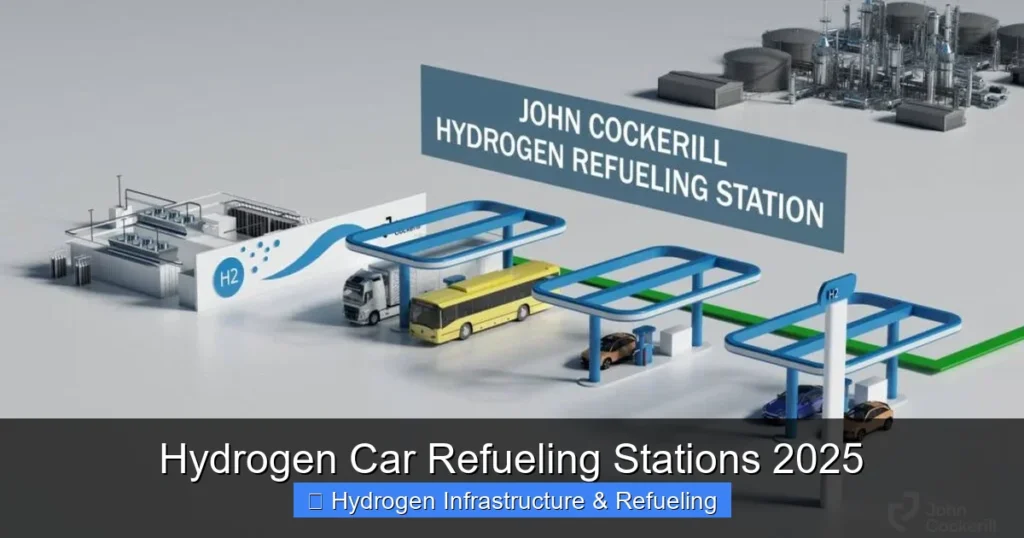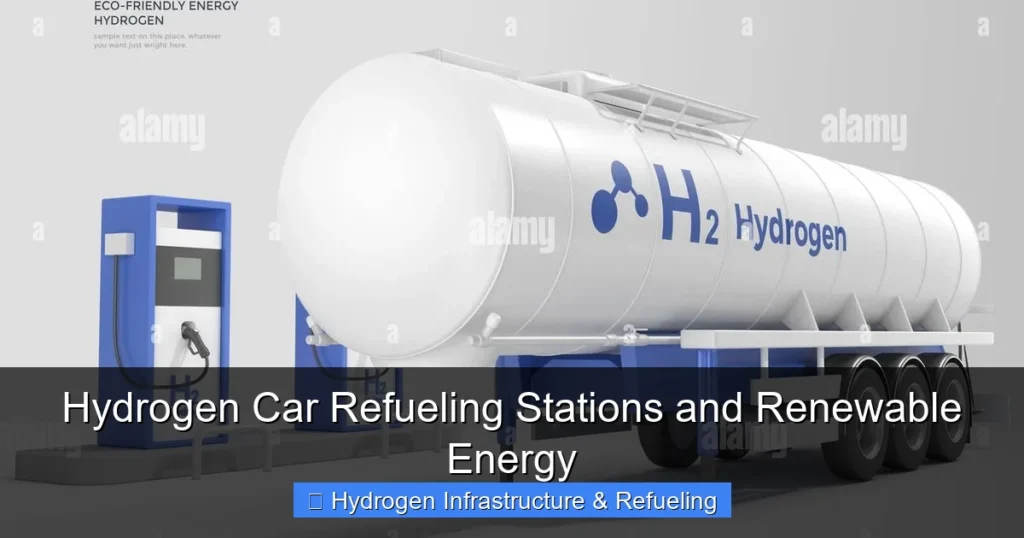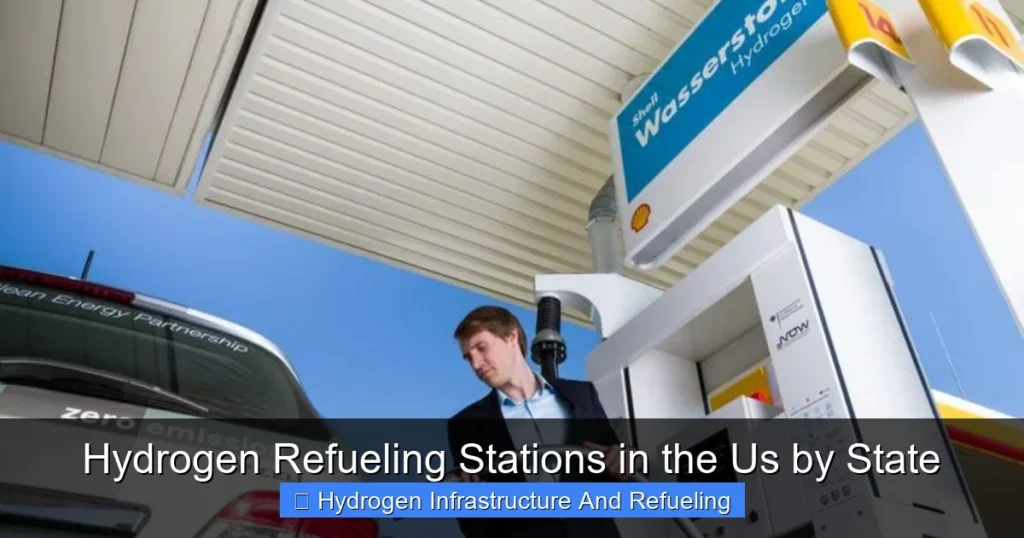
Hydrogen refueling stations in the US by state are expanding rapidly, especially in California, which leads the nation in infrastructure. As zero-emission transportation gains momentum, understanding where hydrogen fuel is available helps drivers, fleet operators, and policymakers plan for a cleaner future.
Key Takeaways
- California dominates hydrogen infrastructure: Over 90% of operational hydrogen refueling stations in the US are located in California, making it the epicenter of the country’s hydrogen fuel network.
- Growth is accelerating in select states: States like Hawaii, New York, and Connecticut are investing in hydrogen stations to support fuel cell electric vehicles (FCEVs) and reduce emissions.
- Hydrogen stations serve multiple sectors: Beyond passenger cars, stations support buses, trucks, forklifts, and industrial applications, especially in logistics and warehousing.
- Public and private partnerships drive expansion: Government incentives and collaborations with automakers and energy companies are key to building new stations.
- Challenges remain in cost and accessibility: High construction costs, limited vehicle availability, and sparse coverage outside California hinder widespread adoption.
- Future outlook is promising: Federal funding and state climate goals are expected to boost hydrogen infrastructure across more states in the coming decade.
📑 Table of Contents
- Introduction: The Rise of Hydrogen Fuel in America
- California: The Undisputed Leader in Hydrogen Infrastructure
- Emerging Markets: States Expanding Hydrogen Access
- How Hydrogen Refueling Stations Work
- Who Uses Hydrogen Vehicles?
- Challenges Facing Hydrogen Infrastructure
- The Future of Hydrogen Refueling in the US
- Conclusion: A Roadmap to a Hydrogen Future
Introduction: The Rise of Hydrogen Fuel in America
Imagine pulling up to a fueling station, connecting a nozzle, and filling your car with clean, odorless hydrogen gas—no emissions, just water vapor coming out of the tailpipe. This isn’t science fiction. It’s happening right now, thanks to hydrogen refueling stations in the US by state. While electric vehicles (EVs) dominate the headlines, hydrogen-powered vehicles are quietly gaining ground, especially in regions focused on decarbonizing transportation.
Hydrogen fuel cell electric vehicles (FCEVs) offer a compelling alternative to battery EVs. They refuel in minutes, similar to gasoline vehicles, and offer longer driving ranges—ideal for long-haul trucks, delivery fleets, and drivers who can’t afford long charging stops. But for hydrogen to succeed, drivers need reliable access to refueling stations. That’s where infrastructure becomes critical.
Currently, the landscape of hydrogen refueling stations in the US by state is uneven. A handful of states are leading the charge, while most have little to no infrastructure. This article breaks down where hydrogen stations exist, how they’re being used, and what the future holds for this promising clean energy technology.
California: The Undisputed Leader in Hydrogen Infrastructure
When it comes to hydrogen refueling stations in the US by state, California is in a league of its own. As of 2024, the Golden State boasts over 50 operational public hydrogen stations—more than 90% of the national total. This dominance isn’t accidental. It’s the result of decades of strategic planning, strong environmental policies, and significant public investment.
Why California Leads the Way
California’s leadership in hydrogen infrastructure stems from its aggressive climate goals. The state aims to achieve carbon neutrality by 2045, and transportation accounts for nearly 40% of its greenhouse gas emissions. To tackle this, California has prioritized zero-emission vehicles (ZEVs), including both battery EVs and FCEVs.
The California Air Resources Board (CARB) has played a pivotal role. Through its Low Carbon Fuel Standard (LCFS) and ZEV mandate, CARB has created financial incentives for automakers to produce hydrogen vehicles and for energy companies to build refueling stations. Additionally, the state has invested over $100 million in hydrogen infrastructure through programs like the Clean Transportation Program.
Major Hydrogen Station Networks in California
Several key players operate hydrogen stations across California. The largest network is run by Air Liquide and Shell, which have partnered to build stations in high-traffic areas like Los Angeles, San Francisco, and San Diego. These stations are often co-located with traditional gas stations, making them convenient for drivers.
Another major contributor is FirstElement Fuel, a California-based company that has developed a statewide network called True Zero. With stations from Sacramento to San Diego, True Zero supports popular FCEVs like the Toyota Mirai, Honda Clarity, and Hyundai NEXO.
For example, the True Zero station in Newport Beach serves both daily commuters and ride-share drivers. It’s equipped with high-flow dispensers that can refuel a vehicle in under five minutes—faster than most EV fast chargers. This speed is a major advantage for fleet operators and drivers on tight schedules.
Challenges in California’s Hydrogen Network
Despite its success, California’s hydrogen infrastructure faces hurdles. One major issue is station reliability. Some stations experience downtime due to equipment maintenance or hydrogen supply disruptions. This can frustrate drivers who rely on consistent access.
Another challenge is cost. Building a hydrogen station can cost between $1 million and $3 million, depending on size and technology. While state grants help offset these costs, the high price tag slows expansion. Additionally, hydrogen production is still largely dependent on natural gas, which undermines its environmental benefits unless renewable hydrogen (green hydrogen) becomes more widespread.
Emerging Markets: States Expanding Hydrogen Access
While California leads, other states are beginning to invest in hydrogen refueling stations. These emerging markets are laying the groundwork for future growth, often focusing on specific applications like public transit, freight, or industrial use.
Hawaii: A Renewable Hydrogen Pioneer
Hawaii is one of the most promising states for hydrogen beyond California. With abundant solar and wind resources, the state is ideal for producing green hydrogen—hydrogen made using renewable electricity to split water molecules. Hawaii has several operational hydrogen stations, including one at the Honolulu International Airport that supports fuel cell buses and ground support equipment.
The state’s goal is to achieve 100% renewable energy by 2045, and hydrogen plays a key role. Projects like the Hawaii Hydrogen Initiative are exploring how hydrogen can store excess solar power and fuel transportation. For instance, the Natural Energy Laboratory of Hawaii Authority (NELHA) is testing hydrogen production from seawater, which could revolutionize the industry.
New York and Connecticut: Northeast Momentum
In the Northeast, New York and Connecticut are making strategic moves. New York has opened hydrogen stations in Newburgh and White Plains, primarily to support fuel cell buses and delivery vehicles. The state’s Clean Transportation Roadmap includes funding for hydrogen infrastructure, especially in urban areas with high air pollution.
Connecticut is following suit. The state has partnered with Plug PowerTexas and Florida: Industrial and Port Applications
Texas and Florida are leveraging hydrogen for industrial and port operations. In Texas, companies like Air Products are building hydrogen stations to support fuel cell trucks moving goods between ports and warehouses. The Houston Ship Channel, one of the busiest industrial zones in the world, is a prime location for hydrogen adoption. Florida is focusing on ports and airports. The Port of Miami has tested hydrogen-powered cargo handlers, and Orlando International Airport has explored hydrogen buses for passenger transport. While public stations are limited, these pilot projects demonstrate hydrogen’s potential in high-use environments. To understand the growth of hydrogen refueling stations in the US by state, it helps to know how they operate. Unlike gasoline pumps, hydrogen stations use high-pressure systems to deliver compressed hydrogen gas directly into a vehicle’s fuel tank. When you pull up to a hydrogen station, the process is surprisingly similar to filling up with gas. You park, connect the dispenser nozzle to your vehicle’s fuel port, and initiate the refueling sequence. The station compresses hydrogen to 700 bar (10,000 psi) and transfers it into your tank in about 3 to 5 minutes. Safety is a top priority. Hydrogen is highly flammable, but modern stations are equipped with multiple safeguards. Sensors detect leaks, automatic shut-off valves prevent overfilling, and the dispensers are designed to disconnect safely if the vehicle moves. There are two main types of hydrogen refueling stations: on-site production and delivered hydrogen. On-site production stations generate hydrogen using electrolysis, where electricity splits water into hydrogen and oxygen. These stations are ideal for locations with access to renewable energy, like solar farms or wind turbines. They reduce transportation costs and emissions but require significant space and upfront investment. Delivered hydrogen stations receive hydrogen via tube trailers from centralized production facilities. This is the most common model in the US today. While convenient, it relies on fossil fuel-based hydrogen unless the supplier uses renewable sources. As of 2024, the average cost of hydrogen in California is around $16 per kilogram. A typical FCEV like the Toyota Mirai holds about 5 kg of hydrogen and can travel 400 miles, making the cost per mile comparable to gasoline vehicles—but with zero emissions. Some states offer rebates or discounts. California’s Clean Fuel Reward program provides up to $1,500 off the purchase of a new FCEV, and some stations offer free fuel during promotional periods. These incentives help offset the higher upfront cost of hydrogen vehicles. Hydrogen refueling stations in the US by state serve a diverse range of users—from individual drivers to large fleets. Understanding who benefits most from this technology helps explain where stations are being built. The most visible users are drivers of hydrogen-powered cars. The Toyota Mirai is the most popular FCEV in the US, followed by the Hyundai NEXO and the discontinued Honda Clarity. These vehicles are primarily sold in California due to station availability. For example, a Mirai owner in Los Angeles can refuel at over 30 stations across the region. They might use the car for daily commuting, weekend trips, or even ride-sharing through services like Uber. While the vehicle cost is higher than a gasoline car, many buyers appreciate the quick refueling and long range. Fleets are a major driver of hydrogen adoption. Delivery companies, public transit agencies, and logistics firms are investing in hydrogen buses, trucks, and forklifts. These vehicles often operate on fixed routes, making it easier to plan refueling. In California, the Alameda-Contra Costa Transit District (AC Transit) runs a fleet of hydrogen fuel cell buses. These buses emit only water and can travel up to 300 miles on a single fill. Similarly, companies like Amazon and Walmart are testing hydrogen forklifts in their warehouses, where they outperform battery-powered models in cold environments. Beyond transportation, hydrogen is used in industrial settings. Refineries, chemical plants, and data centers use hydrogen for backup power or as a feedstock. Some hydrogen stations are built specifically to serve these industries, even if they’re not open to the public. For instance, a hydrogen station in Delaware supports fuel cell generators at a data center, ensuring uninterrupted power during outages. These applications highlight hydrogen’s versatility beyond passenger vehicles. Despite progress, hydrogen refueling stations in the US by state face significant challenges. Overcoming these barriers is essential for broader adoption. Building a hydrogen station is expensive—up to three times the cost of a fast EV charger. This high cost discourages private investment, especially in states without strong incentives. Additionally, low vehicle numbers mean stations operate below capacity, making it hard to achieve economies of scale. Most hydrogen in the US is produced from natural gas through a process called steam methane reforming. This method emits carbon dioxide, undermining hydrogen’s environmental benefits. To be truly clean, hydrogen must be produced using renewable energy—known as green hydrogen. While green hydrogen is growing, it currently makes up less than 1% of US production. Expanding renewable hydrogen requires investment in electrolyzers, renewable power, and storage infrastructure. Many consumers don’t know hydrogen vehicles exist, let alone where to refuel them. Unlike EVs, which benefit from widespread charging networks and marketing, hydrogen remains a niche technology. Public education campaigns and better signage at stations could help. Permitting a hydrogen station can take months due to safety regulations and zoning laws. Fire codes, setback requirements, and environmental reviews add complexity. Streamlining these processes would accelerate deployment. The future of hydrogen refueling stations in the US by state looks promising, thanks to federal and state support. The Biden administration’s Bipartisan Infrastructure Law includes $8 billion for hydrogen hubs—regional networks that produce, process, and use clean hydrogen. Seven hubs have been selected, spanning states like California, Texas, and Pennsylvania. These hubs will drive innovation and scale. For example, the HyDeal project in California aims to produce green hydrogen at $1.50 per kilogram by 2030—making it competitive with gasoline. If successful, it could revolutionize the market. States are also setting ambitious goals. California plans to have 200 hydrogen stations by 2025 and 1,000 by 2030. New York aims for 30 stations by 2030. As more automakers commit to hydrogen—like Hyundai’s plan to sell 100,000 FCEVs annually by 2030—demand will grow. Hydrogen refueling stations in the US by state are still in their early stages, but the momentum is undeniable. California leads with a robust network, while other states are laying the foundation for expansion. From passenger cars to freight trucks, hydrogen offers a fast, clean alternative to fossil fuels. The path forward requires continued investment, innovation, and collaboration. Governments, automakers, and energy companies must work together to reduce costs, improve reliability, and scale production. With the right support, hydrogen could become a cornerstone of America’s clean transportation future. For now, if you’re considering a hydrogen vehicle, your best bet is California. But keep an eye on emerging markets—hydrogen is coming to a state near you. As of 2024, there are approximately 60 operational public hydrogen refueling stations in the US, with over 50 located in California. The number is growing as states invest in clean transportation infrastructure. California has the most hydrogen refueling stations by far, with more than 90% of the nation’s total. It is the only state with a comprehensive public hydrogen network. It’s possible, but challenging. Outside California, hydrogen stations are limited to a few locations in Hawaii, New York, Connecticut, Texas, and Florida. Long-distance travel requires careful route planning. The average cost is around $16 per kilogram of hydrogen. A full tank (about 5 kg) costs roughly $80 and provides a range of 300–400 miles, depending on the vehicle. Yes, hydrogen cars are designed with multiple safety features, including leak detectors, pressure relief devices, and fire-resistant materials. They undergo rigorous testing and meet strict safety standards. Hydrogen is clean when used—emitting only water vapor. However, most hydrogen is currently produced from natural gas, which emits CO₂. Green hydrogen, made with renewable energy, is the most sustainable option.How Hydrogen Refueling Stations Work
The Refueling Process
Types of Hydrogen Stations
Cost of Hydrogen Fuel
Who Uses Hydrogen Vehicles?
Passenger Vehicles
Fleet and Commercial Vehicles
Industrial and Specialty Applications
Challenges Facing Hydrogen Infrastructure
High Costs and Limited Scale
Hydrogen Production and Sustainability
Lack of Public Awareness
Regulatory and Permitting Hurdles
The Future of Hydrogen Refueling in the US
Conclusion: A Roadmap to a Hydrogen Future
Frequently Asked Questions
How many hydrogen refueling stations are there in the US?
Which state has the most hydrogen stations?
Can I drive a hydrogen car outside California?
How much does it cost to refuel a hydrogen car?
Are hydrogen cars safe?
Is hydrogen fuel environmentally friendly?