Hydrogen refueling stations and electric charging stations represent two competing paths toward clean transportation. While EVs dominate today’s market with widespread charging networks, hydrogen offers fast refueling and long-range potential—but faces infrastructure and cost hurdles.
Key Takeaways
- Refueling Speed: Hydrogen stations can refuel a vehicle in 3–5 minutes, similar to gasoline, while fast EV charging takes 20–40 minutes for an 80% charge.
- Infrastructure Availability: Electric charging stations are far more common globally, with over 2 million public chargers, compared to fewer than 1,000 hydrogen stations worldwide.
- Energy Efficiency: EVs are 3–4 times more energy-efficient than hydrogen fuel cell vehicles due to fewer energy conversion steps.
- Environmental Impact: Both technologies can be green, but only if powered by renewable energy—most hydrogen today comes from natural gas.
- Vehicle Range: Hydrogen vehicles typically offer longer ranges (300–400 miles) than most EVs, making them appealing for long-haul transport.
- Upfront Costs: Hydrogen vehicles and stations are significantly more expensive to build and buy than EVs and chargers.
- Future Outlook: EVs are leading in passenger cars, but hydrogen may play a key role in heavy-duty transport like trucks, buses, and shipping.
📑 Table of Contents
- Hydrogen Refueling Stations Vs Electric Charging Stations: Which Powers the Future?
- How Hydrogen Refueling Stations Work
- How Electric Charging Stations Work
- Comparing Refueling Speed and Convenience
- Infrastructure and Availability: A Tale of Two Networks
- Environmental Impact and Sustainability
- Cost Comparison: Vehicles and Fuel
- The Future: Which Technology Wins?
- Conclusion: Choosing the Right Path Forward
Hydrogen Refueling Stations Vs Electric Charging Stations: Which Powers the Future?
Imagine pulling up to a fueling station, stepping out of your car, and in just a few minutes, you’re back on the road with a full tank—no waiting, no range anxiety. That’s the promise of hydrogen refueling. But then again, so is plugging in your electric vehicle (EV) at home overnight and waking up to a fully charged battery, ready for the day. The race to decarbonize transportation has sparked a heated debate: should we bet on hydrogen refueling stations or double down on electric charging stations?
Both technologies aim to reduce our reliance on fossil fuels and cut greenhouse gas emissions. Yet they take very different paths to get there. Electric vehicles (EVs) run on batteries charged from the grid, while hydrogen fuel cell vehicles (FCEVs) generate electricity onboard using hydrogen gas. Each approach comes with its own set of benefits, challenges, and real-world implications.
As governments, automakers, and consumers weigh their options, understanding the differences between hydrogen refueling and electric charging becomes essential. This article dives deep into how each system works, where they stand today, and what the future might hold. Whether you’re a curious driver, a fleet manager, or just someone who cares about clean energy, this comparison will help you see beyond the hype and make sense of the road ahead.
How Hydrogen Refueling Stations Work
Visual guide about Hydrogen Refueling Stations Vs Electric Charging Stations
Image source: thumbs.dreamstime.com
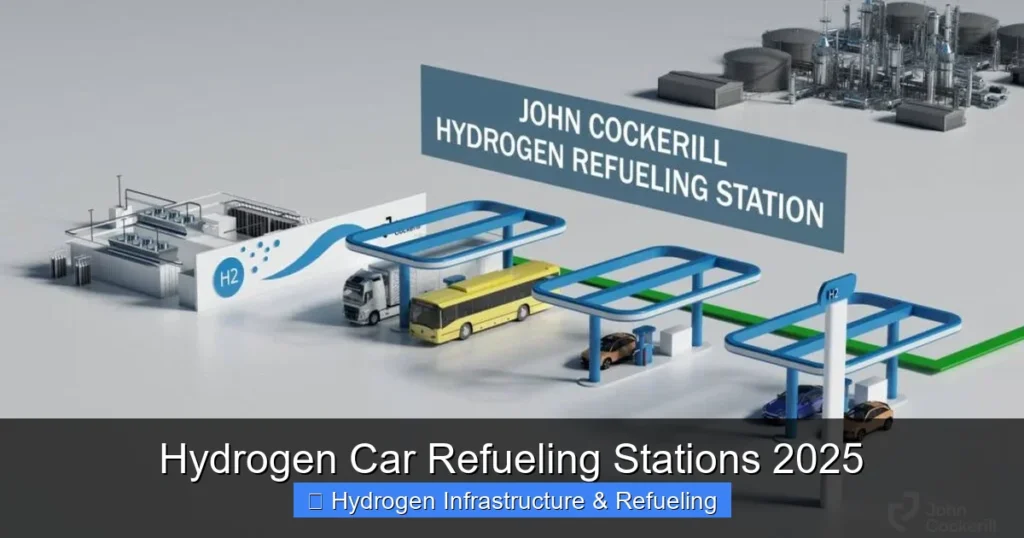
Hydrogen refueling stations might sound like science fiction, but they’re already here—just not in large numbers. These stations store compressed hydrogen gas and dispense it into a vehicle’s tank, much like pumping gasoline. Once inside the car, the hydrogen travels to a fuel cell, where it reacts with oxygen from the air to produce electricity. That electricity powers the motor, and the only byproduct is water vapor—hence the term “zero-emission vehicle.”
The Refueling Process
Refueling a hydrogen vehicle is surprisingly quick. Most FCEVs can be filled in 3 to 5 minutes, matching the convenience of traditional gas stations. This speed is a major advantage over EVs, which—even with fast chargers—can take 20 to 40 minutes to reach 80% charge. For drivers on long road trips or commercial fleets that can’t afford downtime, this difference is huge.
Hydrogen stations use high-pressure dispensers (typically 700 bar) to fill tanks safely and efficiently. Safety systems monitor pressure, temperature, and leaks in real time. The process is automated and user-friendly: you swipe a card, connect the nozzle, and let the station do the rest.
Where Hydrogen Stations Are Located
As of 2024, there are fewer than 1,000 hydrogen refueling stations worldwide. The vast majority are in California, Japan, South Korea, and parts of Europe—especially Germany and Scandinavia. California leads the U.S. with over 60 stations, mostly serving Toyota Mirai, Hyundai Nexo, and Honda Clarity models.
This limited availability is a major barrier. Unlike EV chargers, which can be installed almost anywhere—homes, offices, shopping centers—hydrogen stations require specialized infrastructure, high-pressure storage, and strict safety regulations. Building one can cost between $1 million and $3 million, compared to $50,000 to $150,000 for a fast EV charger.
Types of Hydrogen Production
Not all hydrogen is created equal. The environmental benefit depends heavily on how it’s made. Currently, about 95% of hydrogen is produced from natural gas through a process called steam methane reforming (SMR). This method emits carbon dioxide, undermining the “green” claim.
However, “green hydrogen”—produced using renewable electricity to split water into hydrogen and oxygen via electrolysis—is gaining traction. Countries like Australia, Canada, and the Netherlands are investing in green hydrogen projects. If scaled up, this could make hydrogen truly sustainable.
How Electric Charging Stations Work
Electric charging stations are the backbone of today’s EV revolution. They come in three main levels, each offering different speeds and use cases.
Level 1 and Level 2 Charging
Level 1 chargers use a standard 120-volt household outlet. They’re slow—adding about 4–5 miles of range per hour—but perfect for overnight home charging. Most EV owners rely on Level 1 for daily commutes.
Level 2 chargers run on 240 volts (like a dryer outlet) and deliver 10–60 miles of range per hour. These are common at homes with upgraded electrical systems, workplaces, and public parking lots. A full charge typically takes 4–8 hours, depending on the battery size.
DC Fast Charging (Level 3)
For long-distance travel, DC fast chargers (also called Level 3) are essential. These stations bypass the car’s onboard charger and deliver direct current (DC) power straight to the battery. They can recharge an EV to 80% in 20–40 minutes.
Networks like Tesla Superchargers, Electrify America, and EVgo have thousands of fast chargers across North America and Europe. In 2023, the U.S. alone had over 160,000 public charging ports, with fast chargers making up about 15% of that total.
Charging at Home vs. Public Stations
One of the biggest advantages of EVs is the ability to charge at home. Most drivers plug in overnight, waking up to a full battery—no trips to a fueling station needed. This convenience has driven EV adoption, especially in suburban and rural areas.
Public charging fills the gap for longer trips or drivers without home access. Apps like PlugShare, ChargePoint, and A Better Routeplanner help users locate nearby stations, check availability, and even reserve a spot.
Comparing Refueling Speed and Convenience
When it comes to speed, hydrogen has a clear edge—on paper. Refueling a hydrogen car takes about the same time as filling a gas tank: 3 to 5 minutes. That’s a game-changer for drivers who value time, especially in commercial applications like taxis, delivery vans, or long-haul trucks.
In contrast, even the fastest EV chargers take 20 minutes or more to reach 80% charge. While that’s acceptable for many, it’s a hurdle for high-mileage drivers or those in a rush. Tesla’s V4 Superchargers claim to cut this time down, but real-world results vary based on battery temperature, state of charge, and vehicle model.
Real-World Examples
Consider a delivery driver making 10 stops a day. With an EV, they might need to charge during lunch or between shifts. With a hydrogen vehicle, they could refuel in minutes during a break—no change to their routine.
But convenience isn’t just about speed. It’s also about availability. Right now, finding a hydrogen station is like searching for a needle in a haystack. In California, you might have a few options, but in most U.S. states, there are none. EVs, on the other hand, can charge almost anywhere with a plug.
User Experience
Both systems are designed to be user-friendly. Hydrogen nozzles are similar to gas pumps, and many stations offer contactless payment. EV chargers often require an app or RFID card, though newer models support plug-and-charge technology (like Tesla’s).
One downside for hydrogen: cold weather can affect fuel cell performance, though modern FCEVs are built to handle it. EVs also lose some range in winter, but preconditioning the battery while plugged in helps.
Infrastructure and Availability: A Tale of Two Networks
The biggest difference between hydrogen and electric refueling isn’t technology—it’s infrastructure.
Global Charging Networks
Electric charging stations are everywhere. As of 2024, there are over 2 million public chargers worldwide, with China leading the pack (over 1.8 million), followed by Europe and North America. Governments and private companies are investing billions to expand networks. The U.S. Bipartisan Infrastructure Law includes $7.5 billion for EV charging, aiming for 500,000 public chargers by 2030.
This growth is accelerating. In 2023, over 1.5 million new public chargers were installed globally—more than double the number added in 2020.
Hydrogen Station Growth
Hydrogen infrastructure lags far behind. Japan has around 160 stations, Germany about 100, and California just over 60. China is building rapidly, with plans for 1,000 stations by 2030, but progress is slow due to high costs and technical challenges.
Each hydrogen station requires significant space, safety systems, and specialized equipment. They also need a reliable supply of hydrogen, which often means trucking it in from centralized production facilities—adding cost and emissions.
Cost of Building Stations
Building a hydrogen station can cost $1–3 million, depending on size and location. In contrast, a Level 2 EV charger costs $2,000–$7,000, and a DC fast charger runs $50,000–$150,000. This cost gap makes it hard for hydrogen to scale quickly.
Governments are stepping in with subsidies. The U.S. Department of Energy offers grants for hydrogen infrastructure, and the EU has launched the Hydrogen Accelerator program. But without mass adoption, private investment remains cautious.
Environmental Impact and Sustainability
Both hydrogen and electric vehicles produce zero tailpipe emissions. But their overall environmental footprint depends on how the energy is generated.
Lifecycle Emissions
EVs are generally cleaner over their lifetime. Even when charged with electricity from coal-heavy grids, they emit less CO₂ than gasoline cars. As grids get greener—thanks to wind, solar, and nuclear—EV emissions keep dropping.
Hydrogen’s impact varies widely. Gray hydrogen (from natural gas) can have higher lifecycle emissions than gasoline. Blue hydrogen (with carbon capture) is better, and green hydrogen (from renewables) is the gold standard—but it’s still expensive and energy-intensive to produce.
Energy Efficiency
Here’s a key point: EVs are far more efficient. Converting electricity to motion in a battery-powered car is about 77% efficient. For hydrogen, the path is longer: electricity → hydrogen production → compression → transport → fuel cell → motion. This chain is only about 25–35% efficient.
That means it takes 3–4 times more renewable energy to power a hydrogen car the same distance as an EV. For a world trying to maximize clean energy, this inefficiency is a major drawback.
Recycling and End-of-Life
EV batteries can be recycled to recover lithium, cobalt, and nickel. New technologies are improving recovery rates, and companies like Redwood Materials are building large-scale recycling plants.
Hydrogen fuel cells contain platinum, a rare and expensive metal. Recycling is possible but not yet widespread. As FCEV adoption grows, developing a circular economy for fuel cells will be crucial.
Cost Comparison: Vehicles and Fuel
Let’s talk money—because it matters.
Vehicle Prices
Hydrogen vehicles are expensive. The Toyota Mirai starts around $50,000, and the Hyundai Nexo is similar. In contrast, many EVs are now priced under $40,000, with models like the Chevrolet Bolt and Nissan Leaf offering great value.
Tax incentives can help. In the U.S., the Inflation Reduction Act offers up to $7,500 for new EVs and $40,000 for commercial FCEVs. But hydrogen vehicles often qualify for fewer rebates.
Fuel Costs
Hydrogen is pricey. In California, it costs about $16 per kilogram—enough to drive around 60–70 miles. That’s roughly $0.23–$0.27 per mile. Electricity, on the other hand, averages $0.04–$0.10 per mile, depending on local rates.
Home charging is even cheaper. Many utilities offer off-peak rates as low as $0.08 per kWh, making EV ownership very affordable over time.
Maintenance and Longevity
Both EVs and FCEVs have fewer moving parts than gasoline cars, so maintenance is simpler. No oil changes, fewer brake replacements (thanks to regenerative braking), and no exhaust systems.
However, hydrogen fuel cells may degrade faster over time, and replacement costs are high. EV batteries last 10–15 years or more, with warranties often covering 8 years or 100,000 miles.
The Future: Which Technology Wins?
So, who wins the race—hydrogen or electric?
The answer isn’t black and white. EVs are winning the passenger car market, thanks to lower costs, better efficiency, and rapidly expanding charging networks. In 2023, over 14 million EVs were sold globally—more than double the number from 2021.
But hydrogen has a role to play—especially in sectors where batteries fall short.
Heavy-Duty Transport
Long-haul trucks, buses, and ships need high energy density and quick refueling. Batteries are heavy and take too long to charge for these uses. Hydrogen, with its high energy per kilogram, is a better fit.
Companies like Nikola, Hyundai, and Toyota are developing hydrogen-powered trucks. The Port of Los Angeles is testing hydrogen drayage trucks to reduce emissions. In Europe, hydrogen trains are already running on non-electrified rail lines.
Industrial and Backup Power
Hydrogen can also power factories, data centers, and remote locations. It can be stored for long periods, unlike batteries, which lose charge over time. This makes it useful for grid balancing and emergency power.
A Complementary Future
Rather than choosing one over the other, the future may involve both. EVs for daily driving, hydrogen for heavy transport and industrial use. Some experts even envision “hydrogen highways” along major freight corridors, with stations every 50–100 miles.
Governments are supporting both paths. The U.S. National Clean Hydrogen Strategy aims to produce 10 million tons of clean hydrogen annually by 2030. At the same time, the EV charging network is expanding rapidly.
The key is smart investment—building the right infrastructure for the right use cases.
Conclusion: Choosing the Right Path Forward
Hydrogen refueling stations and electric charging stations represent two visions of a cleaner transportation future. EVs are winning today, with widespread adoption, lower costs, and a growing network of chargers. They’re ideal for most drivers, especially those who can charge at home.
Hydrogen, while promising, faces steep challenges: high costs, limited infrastructure, and energy inefficiency. But it shines in areas where batteries struggle—long-range, heavy-duty, and time-sensitive applications.
The best outcome isn’t a winner-takes-all scenario. It’s a diversified energy ecosystem where both technologies complement each other. As renewable energy grows and innovation continues, we may see hydrogen play a vital role in sectors beyond passenger cars.
For now, if you’re buying a vehicle, an EV is likely the smarter, more practical choice. But keep an eye on hydrogen—it might just power the trucks, ships, and buses of tomorrow.
The road to zero emissions is long, but with the right mix of technologies, we can get there—cleaner, faster, and smarter.
Frequently Asked Questions
Are hydrogen refueling stations safe?
Yes, hydrogen refueling stations are designed with multiple safety systems to monitor pressure, temperature, and leaks. Hydrogen is lighter than air and disperses quickly, reducing fire risk. Strict regulations and automated processes ensure safe operation.
Can I charge an EV at home without a garage?
Yes, many EV owners charge using outdoor outlets or portable Level 2 chargers. Some apartments and condos offer shared charging stations. Public charging networks also provide convenient options for urban drivers.
How long does it take to charge an EV at a fast charger?
Most DC fast chargers can recharge an EV to 80% in 20–40 minutes, depending on the vehicle and battery size. Charging slows down after 80% to protect the battery, so a full 100% charge takes longer.
Is hydrogen fuel more expensive than electricity?
Yes, hydrogen fuel currently costs about $16 per kilogram, which translates to $0.23–$0.27 per mile. Electricity for EVs averages $0.04–$0.10 per mile, making EVs significantly cheaper to operate.
Will hydrogen stations become as common as gas stations?
It’s unlikely in the near term due to high costs and limited vehicle adoption. However, hydrogen stations may become common along freight corridors and in industrial areas where heavy-duty vehicles operate.
Can hydrogen be produced using renewable energy?
Yes, green hydrogen is made by using renewable electricity (like wind or solar) to split water into hydrogen and oxygen. This process produces no emissions and is key to making hydrogen truly sustainable.