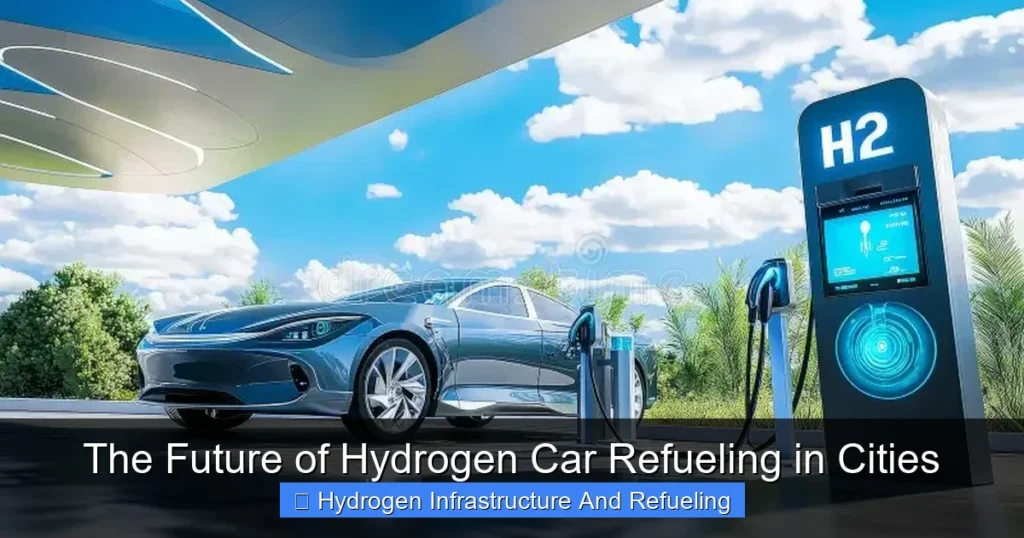
The future of hydrogen car refueling in cities is bright, driven by clean energy goals and technological advances. With faster fill-ups and zero emissions, hydrogen vehicles are gaining traction—especially in urban areas where air quality and congestion are top concerns.
Imagine pulling up to a fuel station in the heart of a bustling city. You step out, swipe your card, and within minutes, your car is refueled—no plugging in, no waiting hours for a charge. The only thing coming out of the tailpipe? A gentle stream of water. This isn’t science fiction. It’s the future of hydrogen car refueling in cities, and it’s closer than you think.
As urban centers grapple with air pollution, traffic congestion, and the urgent need to cut carbon emissions, hydrogen-powered vehicles are emerging as a compelling solution. Unlike electric vehicles (EVs) that rely on lengthy charging times and strained power grids, hydrogen fuel cell vehicles (FCEVs) offer rapid refueling and long-range capabilities—perfect for city dwellers who need efficiency and reliability. While battery-electric cars have dominated the green vehicle conversation, hydrogen is quietly building momentum, especially in dense metropolitan areas where infrastructure can be strategically deployed.
The shift isn’t just about cleaner cars—it’s about reimagining how we power transportation in cities. From public transit to ride-sharing fleets, hydrogen is proving its value as a versatile, scalable energy source. And with governments, automakers, and energy companies investing billions into hydrogen infrastructure, the dream of a hydrogen-powered urban future is becoming a reality.
Key Takeaways
- Hydrogen refueling is faster than battery charging: Refill in under 5 minutes, similar to gasoline, making it ideal for city drivers with tight schedules.
- Zero tailpipe emissions: Hydrogen cars only emit water vapor, helping cities meet air quality and climate targets.
- Urban hydrogen stations are expanding: Major cities like Los Angeles, Tokyo, and Berlin are investing in refueling networks to support growing fleets.
- Green hydrogen is key to sustainability: When produced using renewable energy, hydrogen becomes a truly clean fuel source.
- Government policies are accelerating adoption: Subsidies, tax incentives, and infrastructure grants are making hydrogen more accessible.
- Fleet vehicles lead the way: Taxis, buses, and delivery trucks are early adopters due to high usage and centralized refueling needs.
- Challenges remain—but are being solved: High production costs and storage logistics are improving with innovation and scale.
📑 Table of Contents
The Rise of Hydrogen in Urban Mobility
Cities are at the forefront of the clean transportation revolution. With over 55% of the world’s population living in urban areas—and that number expected to rise—cities are under pressure to reduce emissions and improve air quality. Transportation accounts for nearly a quarter of global CO₂ emissions, and in cities, that number can be even higher due to traffic congestion and high vehicle density.
Enter hydrogen. Unlike fossil fuels, hydrogen combustion produces no carbon dioxide. When used in a fuel cell, hydrogen combines with oxygen to generate electricity, powering the vehicle and emitting only water vapor. This makes hydrogen cars a zero-emission option, ideal for cities aiming to meet climate goals like those set by the Paris Agreement.
But hydrogen isn’t just clean—it’s practical. One of the biggest hurdles for electric vehicles in cities is charging time. Even with fast chargers, EVs can take 30 minutes to an hour to recharge. For delivery drivers, taxi operators, or commuters with tight schedules, that’s a major inconvenience. Hydrogen refueling, by contrast, takes just 3 to 5 minutes—comparable to filling up a gasoline car. This speed makes hydrogen especially attractive for high-usage vehicles that can’t afford downtime.
Why Cities Are Ideal for Hydrogen Refueling
Urban environments offer unique advantages for hydrogen infrastructure. First, cities have centralized populations and transportation hubs, making it easier to build and maintain refueling stations. A single hydrogen station can serve hundreds of vehicles daily, especially if located near bus depots, taxi stands, or delivery centers.
Second, cities often have existing natural gas pipelines that can be repurposed or adapted for hydrogen transport. This reduces the need for entirely new infrastructure and lowers deployment costs. For example, in the UK, projects like HyDeploy are testing hydrogen blending in natural gas grids, paving the way for future hydrogen distribution.
Third, city governments have the authority and incentive to lead the transition. Many municipalities are setting ambitious zero-emission targets and offering incentives for clean vehicles. Los Angeles, for instance, aims to have 100% zero-emission public transit by 2030, with hydrogen buses playing a key role.
Real-World Examples of Urban Hydrogen Adoption
Several cities are already demonstrating the potential of hydrogen refueling. In Tokyo, the government has supported the installation of over 40 hydrogen stations, with plans to reach 90 by 2025. These stations serve not only passenger cars but also fuel cell buses and delivery trucks. The city hosted hydrogen-powered vehicles during the 2020 Olympics, showcasing the technology on a global stage.
In California, the world’s largest hydrogen refueling network is taking shape. As of 2024, the state has over 60 operational hydrogen stations, primarily in the Los Angeles and San Francisco Bay areas. Companies like Toyota, Honda, and Hyundai offer FCEVs like the Mirai, NEXO, and Clarity, and drivers can refuel at stations operated by Shell, FirstElement Fuel, and others.
Europe is also making strides. Berlin has launched a hydrogen bus fleet, and Hamburg is developing a hydrogen refueling corridor along major transport routes. In Scandinavia, cities like Copenhagen and Oslo are integrating hydrogen into their public transit systems, with plans to expand to passenger vehicles.
How Hydrogen Refueling Works in Cities
Visual guide about The Future of Hydrogen Car Refueling in Cities
Image source: c8.alamy.com
Understanding how hydrogen refueling operates in urban settings helps clarify why it’s a viable alternative to both gasoline and battery-electric systems. The process is straightforward, safe, and designed for high-frequency use.
The Refueling Process: Simple and Fast
Refueling a hydrogen car is similar to filling up a gas tank. The driver pulls into a hydrogen station, connects a dispenser nozzle to the vehicle’s fuel port, and initiates the fill. The hydrogen is stored in high-pressure tanks (typically at 700 bar) onboard the vehicle. The entire process takes 3 to 5 minutes, and the car can travel 300 to 400 miles on a single tank—comparable to many gasoline vehicles.
Safety is a top priority. Hydrogen is lighter than air and disperses quickly if leaked, reducing the risk of fire. Modern FCEVs are equipped with multiple safety systems, including leak detectors, pressure relief devices, and automatic shut-off valves. Stations are also built with safety protocols, such as ventilation systems and remote monitoring.
Types of Hydrogen Stations
There are two main types of hydrogen refueling stations: on-site production and delivered hydrogen.
On-site production stations generate hydrogen directly at the station using electrolysis—splitting water into hydrogen and oxygen using electricity. If the electricity comes from renewable sources like solar or wind, this is known as “green hydrogen,” the most sustainable option. These stations are ideal for cities with access to clean energy and space for equipment.
Delivered hydrogen stations receive hydrogen via truck or pipeline from centralized production facilities. While this method requires transportation, it allows for larger-scale production and can be more cost-effective in the short term. Many early urban stations use this approach, especially in regions with established hydrogen supply chains.
Integration with Urban Infrastructure
Hydrogen stations don’t need to be standalone facilities. They can be co-located with existing gas stations, reducing land use and leveraging familiar retail models. In fact, some gas stations in California and Germany now offer hydrogen pumps alongside gasoline and EV chargers, giving drivers more choices.
Smart city planning is also enabling better integration. Urban planners are identifying high-traffic zones, transit corridors, and fleet depots as ideal locations for hydrogen stations. Digital platforms can guide drivers to the nearest station, check availability, and even reserve a refueling slot—just like booking a parking spot.
The Role of Green Hydrogen in Sustainable Cities
Not all hydrogen is created equal. The environmental benefits of hydrogen cars depend heavily on how the hydrogen is produced. Currently, most hydrogen is made from natural gas through a process called steam methane reforming (SMR), which emits CO₂. This “gray hydrogen” undermines the clean credentials of FCEVs.
The future of hydrogen refueling in cities hinges on green hydrogen—hydrogen produced using renewable energy. When wind, solar, or hydropower drives the electrolysis of water, the result is a truly zero-carbon fuel. Green hydrogen is the key to making hydrogen cars a sustainable solution for urban mobility.
The Green Hydrogen Revolution
The cost of producing green hydrogen has dropped significantly in recent years, thanks to cheaper renewable energy and improved electrolyzer technology. According to the International Energy Agency (IEA), green hydrogen could become cost-competitive with gray hydrogen by 2030 in many regions, especially where solar and wind resources are abundant.
Cities are playing a crucial role in this transition. By sourcing hydrogen from local renewable projects, urban areas can reduce dependence on fossil fuels and support regional clean energy economies. For example, the city of Adelaide in Australia is powering its hydrogen bus fleet with solar-generated hydrogen, creating a closed-loop sustainable system.
Policy Support for Green Hydrogen
Governments are stepping up to support green hydrogen development. The European Union’s Hydrogen Strategy aims to install 40 gigawatts of electrolyzers by 2030. The U.S. Inflation Reduction Act includes tax credits for clean hydrogen production, making green hydrogen more economically viable. Japan and South Korea have also launched national hydrogen roadmaps, with strong urban components.
These policies are not just about reducing emissions—they’re about creating jobs, boosting energy security, and positioning cities as leaders in the clean energy transition. Urban hydrogen projects often involve partnerships between municipalities, utilities, automakers, and tech companies, fostering innovation and collaboration.
Challenges and Solutions for Urban Hydrogen Refueling
Despite its promise, hydrogen refueling in cities faces several challenges. High production costs, limited infrastructure, and public awareness are among the biggest hurdles. But with smart strategies and continued investment, these obstacles are being overcome.
High Costs and Economies of Scale
Currently, hydrogen production and distribution are expensive. Green hydrogen can cost two to three times more than gray hydrogen, and refueling stations require significant upfront investment. However, as demand grows and technology improves, costs are expected to fall.
Economies of scale will play a major role. As more hydrogen stations are built and more FCEVs hit the road, the per-unit cost of hydrogen will decrease. Automakers are also working to reduce the cost of fuel cells and storage tanks. Toyota, for example, has cut the cost of its fuel cell system by 80% since 2015.
Limited Refueling Network
One of the biggest barriers to adoption is the lack of refueling stations. In most cities, hydrogen stations are still sparse, making it difficult for drivers to rely on FCEVs for daily use. This “chicken-and-egg” problem—where consumers won’t buy hydrogen cars without stations, and companies won’t build stations without demand—requires coordinated action.
Solutions include targeted infrastructure investments, public-private partnerships, and incentives for early adopters. California’s Clean Transportation Program has funded dozens of hydrogen stations, helping to build a critical mass of infrastructure. Similar programs exist in Japan, Germany, and Canada.
Public Awareness and Education
Many people still don’t understand how hydrogen cars work or believe they are unsafe. Misconceptions about hydrogen—such as fears of explosions—persist, even though hydrogen is used safely in industries like aerospace and chemicals.
Education campaigns can help. Cities can host public demonstrations, offer test drives, and partner with schools and community groups to spread accurate information. Transparency about safety records and environmental benefits can build public trust.
Energy Efficiency Considerations
It’s important to acknowledge that hydrogen is less energy-efficient than batteries. Producing, compressing, transporting, and converting hydrogen to electricity in a fuel cell loses more energy than charging and discharging a battery. However, for certain applications—like heavy-duty transport or vehicles that need rapid refueling—hydrogen’s advantages outweigh this inefficiency.
In cities, hydrogen is best suited for high-usage vehicles where downtime is costly. For personal cars with lower mileage, battery-electric vehicles may still be more efficient. A balanced approach that includes both technologies is likely the most practical path forward.
The Future Outlook: What’s Next for Urban Hydrogen Refueling?
The future of hydrogen car refueling in cities is poised for significant growth. With technological advances, policy support, and increasing environmental awareness, hydrogen is moving from niche to mainstream.
Expansion of Refueling Networks
By 2030, major cities around the world are expected to have robust hydrogen refueling networks. The Global Hydrogen Council projects that over 10,000 hydrogen stations will be operational by then, with a strong concentration in urban areas. China, Europe, and North America are leading the charge, but emerging markets are also investing in hydrogen infrastructure.
Smart city initiatives will integrate hydrogen refueling with other mobility services. Imagine a future where your hydrogen car connects to a city app that finds the nearest station, reserves a slot, and pays automatically—all while optimizing traffic flow and energy use.
Innovation in Storage and Distribution
New technologies are making hydrogen easier to store and transport. Liquid organic hydrogen carriers (LOHCs) and metal hydrides are being tested as safer, more efficient alternatives to high-pressure tanks. Pipelines dedicated to hydrogen are being developed, reducing the need for truck transport.
Modular and mobile refueling units could also play a role, especially in areas with limited space. These compact stations can be deployed quickly and relocated as needed, supporting temporary events or underserved neighborhoods.
Hydrogen in the Broader Energy System
Hydrogen isn’t just for cars. It’s becoming a key part of the urban energy ecosystem. Excess renewable energy can be used to produce hydrogen during off-peak hours, which can then be stored and used to generate electricity when demand is high. This “power-to-gas” approach helps balance the grid and reduces waste.
In cities, hydrogen could power not only vehicles but also buildings, backup generators, and industrial processes. This integrated approach maximizes the value of clean energy and supports resilience.
Conclusion
The future of hydrogen car refueling in cities is not just possible—it’s already unfolding. From fast refueling times to zero emissions, hydrogen offers a compelling solution for urban transportation challenges. While hurdles remain, the combination of innovation, investment, and policy support is driving rapid progress.
As cities continue to grow and evolve, hydrogen will play an increasingly important role in creating cleaner, quieter, and more sustainable urban environments. Whether you’re a commuter, a fleet operator, or a city planner, now is the time to pay attention to hydrogen. The fuel of the future is here—and it’s ready to power the cities of tomorrow.
Frequently Asked Questions
How long does it take to refuel a hydrogen car?
It takes about 3 to 5 minutes to refuel a hydrogen car, similar to filling up a gasoline vehicle. This makes it much faster than charging an electric car, especially in busy urban settings.
Are hydrogen cars safe in cities?
Yes, hydrogen cars are designed with multiple safety features, including leak detection and pressure relief systems. Hydrogen disperses quickly in the air, reducing fire risk, and stations follow strict safety protocols.
Where can I find hydrogen refueling stations in cities?
Hydrogen stations are currently concentrated in cities like Los Angeles, Tokyo, Berlin, and Copenhagen. You can use apps like H2.Live or PlugShare to locate nearby stations and check availability.
Is hydrogen fuel expensive compared to gasoline or electricity?
Currently, hydrogen fuel is more expensive than gasoline or electricity per mile, but costs are decreasing. Government incentives and falling production expenses are making it more competitive.
Can hydrogen be produced sustainably?
Yes, when hydrogen is made using renewable energy (green hydrogen), it produces no carbon emissions. This sustainable method is key to making hydrogen a truly clean fuel.
Will hydrogen cars replace electric cars in cities?
Not necessarily. Hydrogen and battery-electric vehicles serve different needs. Hydrogen is ideal for fast refueling and long-range use, while EVs excel in efficiency and home charging. Both will likely coexist in future urban mobility.