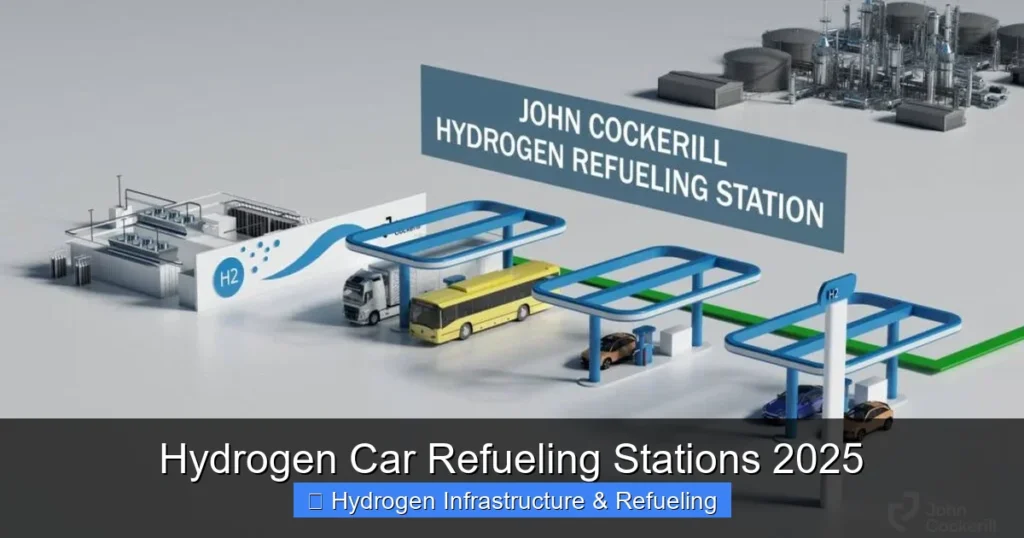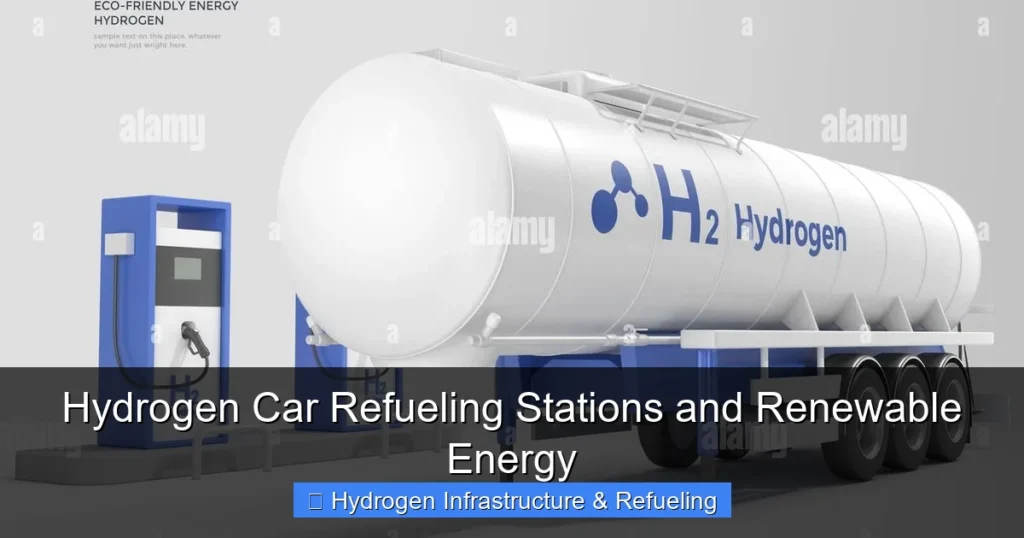
Expanding hydrogen refueling infrastructure is essential for accelerating the adoption of hydrogen-powered vehicles and achieving global climate goals. Without a reliable network of stations, even the most advanced fuel cell technology cannot reach its full potential.
Key Takeaways
- Enables Zero-Emission Transportation: A robust hydrogen refueling network supports fuel cell electric vehicles (FCEVs), offering a clean alternative to fossil fuels with only water as a byproduct.
- Reduces Range Anxiety: More stations mean drivers can travel longer distances without worrying about running out of fuel, increasing consumer confidence in hydrogen vehicles.
- Supports Heavy-Duty and Long-Haul Transport: Hydrogen is especially effective for trucks, buses, and ships where battery weight and charging times are limiting factors.
- Drives Economic Growth and Job Creation: Building and maintaining refueling stations creates skilled jobs in engineering, construction, and operations across urban and rural areas.
- Strengthens Energy Security: Diversifying fuel sources with domestically produced hydrogen reduces reliance on imported oil and enhances national energy independence.
- Encourages Private and Public Investment: Government incentives and private sector partnerships are more likely when infrastructure is visible and scalable.
- Integrates with Renewable Energy Systems: Excess solar and wind power can be used to produce green hydrogen, creating a sustainable energy loop.
📑 Table of Contents
- Why Hydrogen Refueling Infrastructure Matters for a Cleaner Future
- Overcoming the Chicken-and-Egg Problem
- Hydrogen’s Role in Decarbonizing Heavy Transport
- Building a Network That Works for Everyone
- Economic and Environmental Benefits of a Hydrogen Network
- Global Progress and Lessons Learned
- The Road Ahead: What Needs to Happen Next
- Conclusion
Why Hydrogen Refueling Infrastructure Matters for a Cleaner Future
Imagine driving a car that emits nothing but water vapor—no smog, no carbon dioxide, no harmful particulates. That’s the promise of hydrogen fuel cell vehicles (FCEVs). They’re quiet, efficient, and refuel in just a few minutes, much like a gasoline car. But here’s the catch: right now, there aren’t enough places to fill them up. That’s why expanding hydrogen refueling infrastructure isn’t just a good idea—it’s a necessity.
We’re at a critical moment in the transition to clean transportation. While electric vehicles (EVs) have made huge strides, especially in passenger cars, they’re not the perfect solution for every use case. Batteries are heavy, charging takes time, and long-haul transport or heavy machinery still struggles with current EV technology. That’s where hydrogen shines. It’s lightweight, energy-dense, and refuels quickly—making it ideal for trucks, buses, trains, and even ships.
But without a widespread network of hydrogen refueling stations, these vehicles can’t go far. It’s like having a smartphone with no cell towers. The technology exists, but it’s useless without the supporting infrastructure. That’s why governments, automakers, and energy companies around the world are investing in building more hydrogen stations. From California to Japan, from Germany to Australia, the race is on to create a reliable, accessible network that supports the growth of hydrogen-powered transport.
Overcoming the Chicken-and-Egg Problem
Visual guide about The Importance of Expanding Hydrogen Refueling Infrastructure
Image source: nhcleancities.org
One of the biggest challenges in expanding hydrogen refueling infrastructure is what experts call the “chicken-and-egg” problem. Consumers won’t buy hydrogen cars if there are no places to refuel them. But companies won’t build refueling stations if there aren’t enough cars on the road to make it profitable. It’s a classic catch-22.
So how do we break the cycle? The answer lies in strategic, coordinated investment. Governments can play a key role by offering subsidies, tax breaks, and grants to jumpstart station construction. For example, California’s Clean Transportation Program has funded over 100 hydrogen stations, making it the most developed network in the U.S. Similarly, Japan’s government has supported the installation of hundreds of stations as part of its “Hydrogen Society” vision.
Private companies are also stepping up. Automakers like Toyota, Hyundai, and Honda are not only producing FCEVs but also investing in refueling networks. Energy giants such as Shell, Air Liquide, and Linde are building and operating hydrogen stations across Europe and North America. These partnerships between public and private sectors are essential for scaling up infrastructure quickly.
Another way to overcome the chicken-and-egg dilemma is to focus on high-demand areas first. Transit hubs, freight corridors, and industrial zones are ideal starting points. For instance, hydrogen buses in cities like London and Tokyo operate on fixed routes with centralized refueling. This allows for efficient use of a single station and builds public awareness. Once people see hydrogen vehicles in action, demand grows—and so does the business case for more stations.
Hydrogen’s Role in Decarbonizing Heavy Transport
While battery electric vehicles are great for short-range driving, they face real limitations when it comes to heavy-duty applications. A fully loaded truck can weigh 80,000 pounds or more. Carrying enough batteries to power that kind of vehicle would be impractical—both in terms of weight and charging time. That’s where hydrogen has a clear advantage.
Hydrogen fuel cells provide high energy density without the bulk. A hydrogen-powered truck can travel 400 to 700 miles on a single tank and refuel in under 15 minutes. Compare that to an electric truck, which might need several hours to recharge and could lose valuable driving time. For logistics companies, time is money—so fast refueling is a game-changer.
Several companies are already testing hydrogen trucks on real-world routes. In the U.S., companies like Nikola and Hyzon are delivering hydrogen-powered semis to fleets in California and the Midwest. In Europe, Daimler Truck and Volvo are collaborating on hydrogen fuel cell systems for long-haul freight. Even ports are getting in on the action—hydrogen-powered cranes and forklifts are being used in places like the Port of Los Angeles to reduce emissions in high-traffic areas.
Buses are another success story. Cities like Aberdeen, Scotland, and Cologne, Germany, have deployed hydrogen buses that run on fixed routes with dedicated refueling. These vehicles not only reduce air pollution but also serve as mobile advertisements for clean technology. When passengers ride a quiet, zero-emission bus, they start to see hydrogen as a viable alternative.
And it’s not just road transport. Hydrogen is being explored for aviation, shipping, and rail. Airbus is developing hydrogen-powered aircraft, while companies like ZeroAvia are testing hydrogen-electric planes for regional flights. In maritime transport, hydrogen fuel cells could power ferries and short-sea cargo ships, cutting emissions in coastal cities.
Building a Network That Works for Everyone
Expanding hydrogen refueling infrastructure isn’t just about installing pumps—it’s about creating a system that’s accessible, reliable, and scalable. That means thinking about location, technology, and user experience.
Strategic Placement of Stations
Stations should be placed where they’re needed most. Highways, freight corridors, and urban centers are top priorities. But rural areas shouldn’t be left behind. A well-distributed network ensures that hydrogen vehicles can travel across regions, not just within cities. For example, Germany’s H2 Mobility initiative aims to have a hydrogen station every 50 miles along major highways by 2030.
Standardization and Compatibility
One challenge is ensuring that all hydrogen vehicles can use all stations. Different manufacturers may use slightly different connectors or pressure levels. Standardizing equipment—like the SAE J2601 protocol for light-duty vehicles—helps avoid confusion and ensures compatibility. This is similar to how EV charging networks use CCS or CHAdeMO standards.
Integration with Renewable Energy
The best hydrogen is “green hydrogen”—produced using renewable electricity to split water into hydrogen and oxygen. When refueling stations are connected to solar or wind farms, the entire chain becomes carbon-free. Some stations even have on-site electrolyzers, allowing them to produce hydrogen locally. This reduces transportation costs and increases energy resilience.
User-Friendly Design
Refueling should be as easy as pumping gas. Stations need clear signage, intuitive interfaces, and safe, well-lit environments. Mobile apps that show real-time station availability and pricing can help drivers plan their routes. Some companies are even offering subscription models or fleet cards to simplify payments.
Scalability and Future-Proofing
Stations should be designed to grow. A small station today might expand to serve more vehicles tomorrow. Modular designs allow for easy upgrades, whether it’s adding more dispensers or increasing storage capacity. Planning for future demand—like the rise of hydrogen trucks or drones—ensures long-term viability.
Economic and Environmental Benefits of a Hydrogen Network
Investing in hydrogen refueling infrastructure isn’t just good for the planet—it’s good for the economy. Every station built creates jobs in construction, engineering, maintenance, and operations. These are often high-skilled, well-paying jobs that can’t be outsourced.
In regions with abundant renewable energy, hydrogen production can become a major industry. Countries like Australia and Chile are positioning themselves as global hydrogen exporters, using their vast solar and wind resources to produce green hydrogen for export to Asia and Europe. This creates new trade opportunities and strengthens energy security.
From an environmental standpoint, hydrogen offers a path to deep decarbonization. When produced from renewables, it emits no greenhouse gases. Even when made from natural gas (“blue hydrogen”), carbon capture technology can reduce emissions by up to 90%. As the grid gets cleaner, so does the hydrogen.
And let’s not forget air quality. In cities choked by traffic pollution, hydrogen vehicles can make a real difference. Replacing diesel buses and trucks with hydrogen models reduces nitrogen oxides (NOx) and particulate matter—leading to healthier communities and lower healthcare costs.
Global Progress and Lessons Learned
Around the world, countries are making strides in building hydrogen infrastructure. Japan leads with over 160 stations, supported by strong government policy and public-private partnerships. South Korea is close behind, with plans to have 1,200 stations by 2040. In Europe, Germany’s H2 Mobility network is expanding rapidly, with support from the EU’s Green Deal.
California remains the U.S. leader, with more than 60 operational stations and dozens more in development. The state’s Zero Emission Vehicle (ZEV) mandate encourages automakers to sell FCEVs, creating demand that drives infrastructure growth.
But progress isn’t uniform. Many regions still lack even a single hydrogen station. Rural areas, in particular, face challenges due to lower population density and higher installation costs. That’s why targeted policies—like grants for rural stations or incentives for fleet operators—are so important.
One lesson from early adopters is the importance of collaboration. No single company or government can build a national network alone. Success comes from partnerships between automakers, energy firms, utilities, and local governments. Sharing data, costs, and risks makes the whole system stronger.
Another lesson is the need for public education. Many people still don’t understand how hydrogen works or why it’s safe. Outreach programs, test drives, and community events can help build trust and awareness.
The Road Ahead: What Needs to Happen Next
To truly expand hydrogen refueling infrastructure, we need a coordinated, long-term strategy. Here’s what that looks like:
First, governments must continue to fund and incentivize station deployment. Policies like tax credits, low-interest loans, and streamlined permitting can lower barriers to entry. The U.S. Inflation Reduction Act, for example, includes tax credits for clean hydrogen production and infrastructure.
Second, the private sector must scale up investment. Automakers should commit to selling more FCEVs, while energy companies should expand their hydrogen portfolios. Joint ventures—like the partnership between Hyundai and Ineos—can accelerate progress.
Third, we need innovation in technology and business models. Mobile refueling units, hydrogen trailers, and peer-to-peer sharing platforms could help fill gaps in underserved areas. Digital tools like AI-powered demand forecasting can optimize station placement and operations.
Finally, international cooperation is key. Sharing best practices, harmonizing standards, and supporting developing nations can ensure that the benefits of hydrogen are global, not just regional.
Conclusion
Expanding hydrogen refueling infrastructure is not just about building pumps—it’s about building a cleaner, more resilient transportation system. It’s about giving people real choices, reducing pollution, and creating jobs. It’s about preparing for a future where heavy transport, long-distance travel, and industrial operations can run on clean energy.
The technology is ready. The vehicles are here. What’s missing is the network to support them. With smart policies, strong partnerships, and public support, we can make hydrogen refueling as common as gasoline. And when that happens, we’ll be one step closer to a zero-emission world.
The road ahead is long, but every station built is a step forward. Let’s make sure no driver is left stranded.
Frequently Asked Questions
Why do we need hydrogen refueling stations if we already have electric charging networks?
While electric vehicles are great for short-range driving, hydrogen is better suited for heavy-duty and long-haul transport due to its high energy density and fast refueling. A diverse clean energy mix includes both batteries and hydrogen to meet different transportation needs.
Is hydrogen safe to use in vehicles and refueling stations?
Yes, hydrogen is safe when handled properly. It’s lighter than air and disperses quickly if leaked. Modern hydrogen systems include multiple safety features, and decades of industrial use have proven their reliability.
How much does it cost to build a hydrogen refueling station?
Costs vary, but a typical station can range from $1 million to $3 million, depending on size and technology. Government grants and private investment are helping to reduce these costs over time.
Can hydrogen be produced without fossil fuels?
Absolutely. Green hydrogen is made using renewable electricity to split water, producing zero emissions. This method is becoming more affordable as solar and wind power costs decline.
Are there enough hydrogen vehicles on the road to justify building more stations?
While numbers are still growing, demand is increasing—especially in fleets and public transit. Strategic station placement in high-use areas helps build momentum and encourages more vehicle adoption.
What role do governments play in expanding hydrogen infrastructure?
Governments provide funding, set regulations, and create incentives that reduce risk for private investors. Policies like tax credits and ZEV mandates are crucial for kickstarting the hydrogen economy.