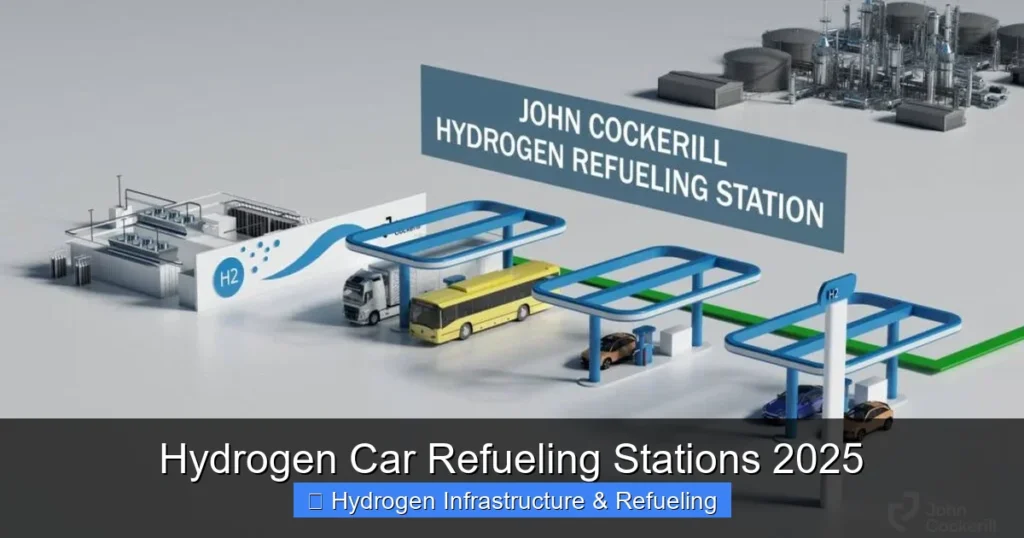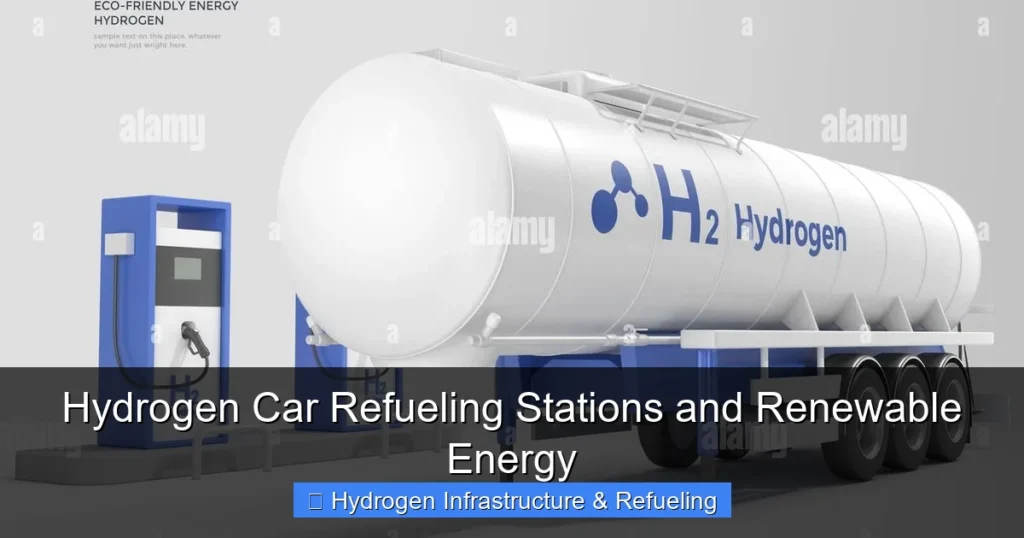
Hydrogen refueling stations are emerging as a critical pillar in the global shift toward clean energy, especially for heavy-duty transport and industrial applications. By enabling the widespread adoption of fuel cell electric vehicles (FCEVs), these stations support decarbonization goals and complement battery-electric solutions in the sustainable mobility ecosystem.
As the world races to meet ambitious climate targets, the energy transition has moved from a distant goal to an urgent necessity. From phasing out fossil fuels to embracing renewable energy, every sector is being reimagined—and transportation is no exception. While electric vehicles (EVs) powered by batteries have dominated headlines, another clean technology is quietly gaining momentum: hydrogen fuel cells. At the heart of this emerging ecosystem are hydrogen refueling stations, the invisible backbone that makes hydrogen-powered transportation possible.
Imagine a future where long-haul trucks, city buses, and even delivery vans run silently and emit nothing but water vapor. That future is closer than you think, thanks to hydrogen refueling infrastructure. These stations don’t just fill up tanks—they represent a shift in how we think about energy storage, distribution, and sustainability. Unlike gasoline or diesel pumps, hydrogen refueling stations deliver a clean, high-energy fuel that can be produced from renewable sources. They’re not just fueling vehicles; they’re fueling a transformation.
But why hydrogen? And why now? The answer lies in the limitations of current technologies. Battery-electric vehicles are excellent for passenger cars and short-range transport, but they struggle with weight, charging time, and range when scaled to heavy-duty applications. Hydrogen, on the other hand, offers fast refueling—often under 10 minutes—and longer range, making it ideal for trucks, ships, and industrial machinery. Hydrogen refueling stations are the critical link that turns this potential into reality.
Key Takeaways
- Hydrogen refueling stations enable zero-emission transportation: They provide clean fuel for fuel cell electric vehicles, emitting only water vapor during operation.
- They complement battery-electric vehicles: Hydrogen is better suited for long-haul trucks, buses, and industrial equipment where battery weight and charging time are limiting factors.
- Strategic placement is crucial: Stations must be located along major transport corridors and near industrial hubs to maximize usage and efficiency.
- Green hydrogen is the goal: For maximum environmental benefit, hydrogen must be produced using renewable energy sources like wind or solar.
- Government and private sector collaboration drives growth: Public incentives, infrastructure grants, and private investment are accelerating station deployment worldwide.
- Technological advancements are reducing costs: Innovations in compression, storage, and dispensing are making hydrogen refueling more affordable and reliable.
- Public awareness and education are essential: Building consumer and fleet operator confidence in hydrogen safety and performance is key to adoption.
📑 Table of Contents
- The Growing Need for Clean Transportation Solutions
- How Hydrogen Refueling Stations Work
- Types of Hydrogen Refueling Stations
- The Role of Green Hydrogen in Sustainability
- Global Deployment and Success Stories
- Challenges and Barriers to Adoption
- The Future of Hydrogen Refueling Infrastructure
- Conclusion
The Growing Need for Clean Transportation Solutions
Transportation accounts for nearly a quarter of global CO₂ emissions, making it one of the biggest contributors to climate change. While personal vehicles are a significant part of the problem, the real challenge lies in heavy-duty transport. Trucks, buses, trains, and ships are essential to global commerce and public transit, but they’re also among the hardest to decarbonize. Battery-electric solutions face practical hurdles: large batteries are heavy, take hours to charge, and require massive amounts of raw materials.
This is where hydrogen shines. Fuel cell electric vehicles (FCEVs) use hydrogen to generate electricity onboard, producing only water as a byproduct. They offer the range and refueling speed of conventional vehicles without the emissions. But for FCEVs to succeed, they need a reliable network of hydrogen refueling stations—just like gasoline cars need gas stations.
The demand for such infrastructure is growing rapidly. In Europe, countries like Germany and the Netherlands are investing heavily in hydrogen corridors along major highways. In the U.S., California leads the way with over 50 operational hydrogen stations, primarily serving fuel cell cars and buses. Japan and South Korea have also made hydrogen a national priority, integrating it into their long-term energy strategies.
How Hydrogen Refueling Stations Work
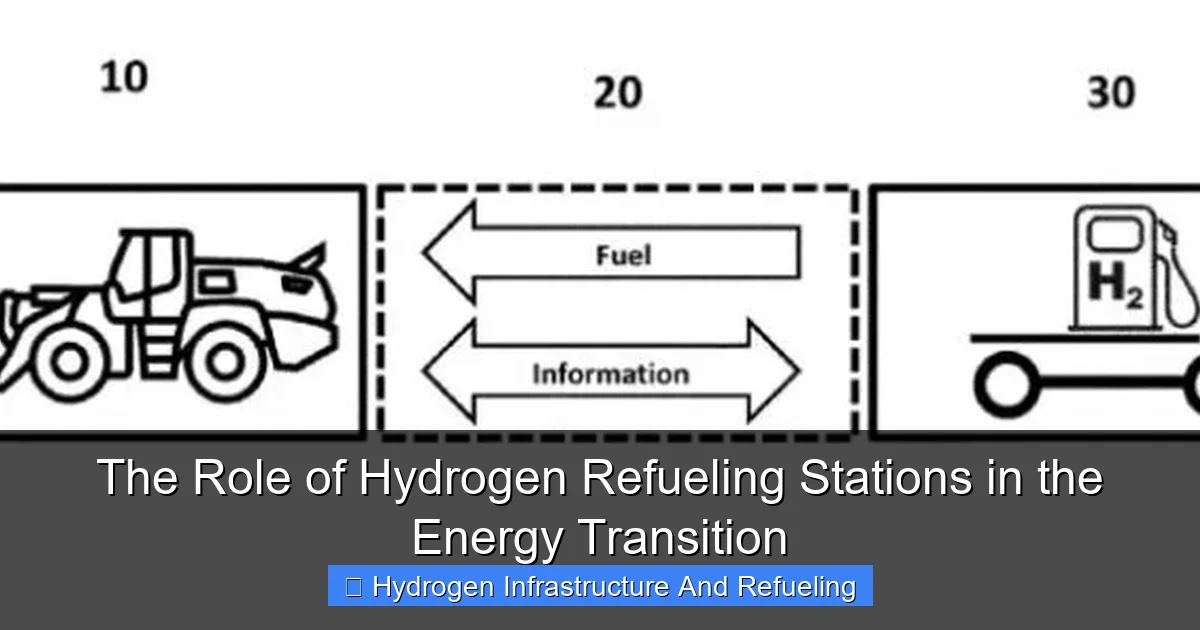
Visual guide about The Role of Hydrogen Refueling Stations in the Energy Transition
Image source: energynews.biz
At first glance, a hydrogen refueling station might look similar to a traditional gas pump—but under the surface, it’s a marvel of engineering. These stations are designed to safely store, compress, and dispense hydrogen gas at high pressure, typically 350 or 700 bar, depending on the vehicle type.
Hydrogen Production and Delivery
The journey begins with hydrogen production. This can happen in two main ways: on-site generation or delivery from a central plant. On-site production often uses electrolysis, where electricity splits water into hydrogen and oxygen. If the electricity comes from renewable sources like wind or solar, the resulting hydrogen is called “green hydrogen”—the gold standard for sustainability.
Alternatively, hydrogen can be produced at large industrial facilities and transported to refueling stations via tube trailers or pipelines. This method is common in regions with existing hydrogen infrastructure, such as the Gulf Coast in the U.S. or the Ruhr area in Germany.
Storage and Compression
Once on site, hydrogen is stored in high-pressure tanks. Because hydrogen is the lightest element, it takes up a lot of space unless compressed. Stations use compressors to increase the gas pressure, allowing more hydrogen to be stored in a smaller volume. This ensures that vehicles can be refueled quickly and efficiently.
Safety is a top priority. Hydrogen is flammable, but it’s also lighter than air, so it disperses quickly if leaked. Stations are equipped with multiple safety systems, including leak detectors, ventilation, and automatic shut-off valves. Regular maintenance and strict protocols ensure safe operation.
Dispensing and Vehicle Compatibility
When a vehicle arrives, the driver connects a specialized nozzle to the fuel port. The station communicates with the vehicle to ensure compatibility and safety before dispensing begins. The process is similar to pumping gasoline—just faster. Most FCEVs can be refueled in 3 to 10 minutes, comparable to a diesel fill-up.
Different vehicles require different pressures. Light-duty cars like the Toyota Mirai or Hyundai NEXO use 700 bar systems, while buses and trucks may use 350 bar. Stations are often equipped with multiple dispensers to serve various vehicle types.
Types of Hydrogen Refueling Stations
Not all hydrogen refueling stations are created equal. They vary in size, capacity, and technology, depending on their location and intended use.
Retail Stations
These are the most visible type—similar to gas stations, located in urban areas or along highways. They serve individual consumers and small fleets. Retail stations are often smaller, with limited storage capacity, and may rely on delivered hydrogen. Examples include the stations operated by Shell and FirstElement Fuel in California.
Fleet and Depot Stations
Designed for commercial use, these stations are typically located at bus depots, trucking terminals, or logistics centers. They serve large fleets and often have on-site hydrogen production. For example, the Port of Los Angeles has a hydrogen refueling station to support zero-emission drayage trucks.
Mobile and Temporary Stations
For remote locations or special events, mobile hydrogen refueling units can be deployed. These trailer-mounted systems provide temporary fueling capability and are useful during the early stages of infrastructure development.
High-Capacity Corridor Stations
These large-scale stations are built along major transport routes to support long-haul trucking. They feature high storage capacity and multiple dispensers, enabling continuous operation. The European Hydrogen Backbone initiative aims to create a network of such stations across the continent.
The Role of Green Hydrogen in Sustainability
Not all hydrogen is created equal. The environmental impact of hydrogen refueling stations depends heavily on how the hydrogen is produced.
Grey, Blue, and Green Hydrogen
Most hydrogen today is “grey”—produced from natural gas through steam methane reforming, which releases CO₂. While this method is cheaper, it undermines the climate benefits of hydrogen vehicles.
“Blue” hydrogen improves on this by capturing and storing the CO₂ emissions, but it still relies on fossil fuels.
“Green” hydrogen, produced via electrolysis using renewable electricity, is the only truly sustainable option. It emits no greenhouse gases during production and aligns with global net-zero goals.
The Shift Toward Green Hydrogen
Governments and companies are increasingly prioritizing green hydrogen. The European Union’s Hydrogen Strategy aims to install 40 gigawatts of electrolyzers by 2030. In the U.S., the Inflation Reduction Act offers tax credits for clean hydrogen production, making green hydrogen more competitive.
Hydrogen refueling stations powered by green hydrogen offer a complete zero-emission solution—from production to propulsion. This闭环 approach is essential for meaningful decarbonization.
Global Deployment and Success Stories
Hydrogen refueling infrastructure is expanding rapidly around the world, driven by policy support, technological advances, and growing demand.
Europe: Leading the Charge
Europe is at the forefront of hydrogen infrastructure development. Germany has over 100 hydrogen refueling stations, with plans to reach 1,000 by 2030. The H2 Mobility initiative, a public-private partnership, is building a nationwide network. France and the Netherlands are also investing heavily, with stations along major freight corridors.
North America: California as a Pioneer
California is the epicenter of hydrogen refueling in the U.S. The state has funded over 50 stations through the California Energy Commission and the California Air Resources Board. These stations support a growing fleet of FCEVs, including the Toyota Mirai and Hyundai NEXO, as well as hydrogen buses and trucks.
Asia: Japan and South Korea’s Ambitious Plans
Japan has long championed hydrogen as a key energy carrier. The country aims to have 900 hydrogen refueling stations by 2030. South Korea is even more aggressive, targeting 1,200 stations by the same year. Both countries are integrating hydrogen into their national energy strategies, with strong support for FCEVs and renewable hydrogen production.
Emerging Markets: New Opportunities
Countries like Australia, Chile, and Saudi Arabia are leveraging their abundant renewable resources to produce green hydrogen for export. They’re also building domestic refueling infrastructure to support local transport. Australia’s Hydrogen Highways project aims to connect major cities with hydrogen corridors.
Challenges and Barriers to Adoption
Despite progress, hydrogen refueling stations face several hurdles that must be overcome for widespread adoption.
High Costs
Building a hydrogen refueling station is expensive—often $1–3 million per unit, compared to $100,000–500,000 for a gasoline station. Costs include compression equipment, storage tanks, safety systems, and permitting. However, prices are falling as technology improves and production scales up.
Limited Vehicle Availability
There are still relatively few FCEVs on the road, which limits demand for refueling stations. Automakers are expanding their offerings, but consumer awareness and affordability remain challenges. Fleet operators are often early adopters, but broader adoption depends on consumer uptake.
Infrastructure Gaps
Hydrogen refueling networks are sparse outside of a few key regions. “Range anxiety” is a real concern for drivers, especially in rural areas. Strategic planning is needed to ensure stations are placed where they’re most needed—along highways, in cities, and near industrial zones.
Regulatory and Safety Concerns
Hydrogen is highly flammable, and regulations vary by region. Permitting can be slow and complex. Public perception of hydrogen safety is improving, but education is still needed to build trust.
Energy Efficiency
Hydrogen production, compression, and conversion to electricity are less efficient than direct battery charging. For light-duty vehicles, batteries may still be more efficient. However, for heavy transport, the benefits of fast refueling and long range outweigh the efficiency losses.
The Future of Hydrogen Refueling Infrastructure
The future of hydrogen refueling stations is bright, but it will require continued investment, innovation, and collaboration.
Technological Advancements
New technologies are making hydrogen refueling faster, safer, and cheaper. Solid-state hydrogen storage, advanced compressors, and modular station designs are reducing costs and improving reliability. Research into liquid organic hydrogen carriers (LOHCs) could simplify transport and storage.
Integration with Renewable Energy
The next generation of hydrogen refueling stations will be powered by on-site solar or wind, creating truly self-sustaining systems. Some stations are already experimenting with solar-powered electrolysis, turning sunlight directly into fuel.
Expansion into New Sectors
While transportation is the focus today, hydrogen refueling infrastructure could support other applications. Maritime shipping, aviation, and even backup power for buildings may one day rely on hydrogen. Stations could become multi-use hubs, serving vehicles, ships, and industrial customers.
Policy and Investment Support
Governments must continue to support hydrogen infrastructure through funding, tax incentives, and streamlined regulations. The U.S. Bipartisan Infrastructure Law includes $8 billion for hydrogen hubs, which will accelerate station deployment. Similar programs exist in Europe and Asia.
Public-Private Partnerships
Collaboration between automakers, energy companies, and governments is essential. Joint ventures like H2 Mobility in Germany and the Hydrogen Council globally are driving progress. These partnerships share risks and resources, speeding up deployment.
Conclusion
Hydrogen refueling stations are more than just fuel pumps—they are symbols of a cleaner, more sustainable future. As the world transitions away from fossil fuels, these stations will play a vital role in decarbonizing transportation, especially in sectors where batteries fall short. From long-haul trucks to city buses, hydrogen offers a practical, zero-emission solution.
The journey is not without challenges. High costs, limited vehicle availability, and infrastructure gaps remain. But with continued innovation, investment, and collaboration, these barriers can be overcome. The success stories in California, Germany, and Japan prove that hydrogen refueling networks can work—and they can scale.
The energy transition isn’t about choosing one technology over another. It’s about using the right tool for the job. Batteries are great for cars and short trips. Hydrogen excels in heavy-duty, long-range applications. Together, they form a powerful duo for sustainable mobility.
As we look ahead, hydrogen refueling stations will become as common as gas stations are today. They’ll be found along highways, in cities, and at industrial sites—quietly powering a revolution in clean transportation. The future is hydrogen, and it’s already being built, one station at a time.
Frequently Asked Questions
What is a hydrogen refueling station?
A hydrogen refueling station is a facility that stores and dispenses hydrogen gas to fuel cell electric vehicles (FCEVs). It compresses hydrogen to high pressure and delivers it safely to vehicles, enabling fast refueling—often in under 10 minutes.
How is hydrogen produced for refueling stations?
Hydrogen can be produced on-site using electrolysis, which splits water into hydrogen and oxygen using electricity. If the electricity comes from renewable sources like wind or solar, the hydrogen is considered “green.” Alternatively, hydrogen can be produced at central plants and transported to stations via trailers or pipelines.
Are hydrogen refueling stations safe?
Yes, hydrogen refueling stations are designed with multiple safety features, including leak detectors, ventilation systems, and automatic shut-off valves. Hydrogen is flammable but disperses quickly in air, reducing explosion risk. Strict regulations and regular maintenance ensure safe operation.
How many hydrogen refueling stations are there worldwide?
As of 2024, there are over 1,000 hydrogen refueling stations globally, with the majority in Europe, North America, and Asia. Germany, California, Japan, and South Korea lead in deployment, with hundreds of operational stations and ambitious expansion plans.
Can hydrogen refueling stations support trucks and buses?
Yes, hydrogen is particularly well-suited for heavy-duty vehicles like trucks, buses, and delivery vans. These vehicles benefit from hydrogen’s fast refueling and long range, which are difficult to achieve with battery-electric systems due to weight and charging time.
What is green hydrogen, and why is it important?
Green hydrogen is produced using renewable energy to power electrolysis, resulting in zero greenhouse gas emissions. It’s essential for making hydrogen refueling stations truly sustainable and aligning with global climate goals. Without green hydrogen, the environmental benefits of hydrogen vehicles are significantly reduced.