Hydrogen fuel cell SUVs offer a cleaner alternative to traditional gas-powered vehicles, emitting only water vapor. While production and infrastructure challenges remain, their potential for reducing transportation emissions is significant.
Key Takeaways
- Zero tailpipe emissions: Hydrogen fuel cell SUVs emit only water vapor, making them a clean choice for daily driving.
- Renewable hydrogen potential: When produced using renewable energy, hydrogen can be a truly sustainable fuel source.
- Energy efficiency varies: Fuel cells are more efficient than internal combustion engines, but overall well-to-wheel efficiency depends on production methods.
- Reduced air pollution: These vehicles help lower urban smog and harmful pollutants like nitrogen oxides.
- Infrastructure limitations: Limited refueling stations remain a barrier to widespread adoption, though expansion is growing.
- Lifecycle emissions matter: The environmental benefit depends heavily on how hydrogen is produced—green vs. gray hydrogen makes a big difference.
- Complement to electric vehicles: Hydrogen SUVs can fill gaps where battery-electric vehicles face range or charging challenges.
📑 Table of Contents
- Introduction: The Rise of Cleaner SUVs
- How Hydrogen Fuel Cell SUVs Work
- Environmental Benefits of Hydrogen Fuel Cell SUVs
- Hydrogen Production: The Hidden Environmental Cost
- Infrastructure and Scalability Challenges
- Lifecycle Analysis: Comparing Hydrogen SUVs to Alternatives
- The Future of Hydrogen SUVs: Opportunities and Outlook
- Conclusion: A Cleaner Path Forward
Introduction: The Rise of Cleaner SUVs
SUVs have become a staple of modern transportation—offering space, power, and versatility. But with growing concerns about climate change and air pollution, the environmental footprint of these vehicles has come under scrutiny. Traditional gasoline and diesel SUVs contribute significantly to greenhouse gas emissions, making them a target for environmental reform. As automakers and governments push for cleaner alternatives, hydrogen fuel cell SUVs have emerged as a promising solution.
Unlike battery-electric vehicles that rely on large lithium-ion batteries, hydrogen fuel cell SUVs generate electricity on board using hydrogen gas. This process produces only water vapor as a byproduct, offering a zero-emission driving experience. While still a niche market, models like the Toyota Mirai, Hyundai Nexo, and upcoming hydrogen-powered SUVs from luxury brands are paving the way for a new era of sustainable driving. But how green are they really? The answer depends on more than just what comes out of the tailpipe.
How Hydrogen Fuel Cell SUVs Work
To understand the environmental impact of hydrogen fuel cell SUVs, it helps to know how they operate. At the heart of these vehicles is a fuel cell stack—a series of electrochemical cells that combine hydrogen and oxygen to produce electricity. This electricity powers an electric motor, just like in a battery-electric vehicle, but without the need for constant recharging.
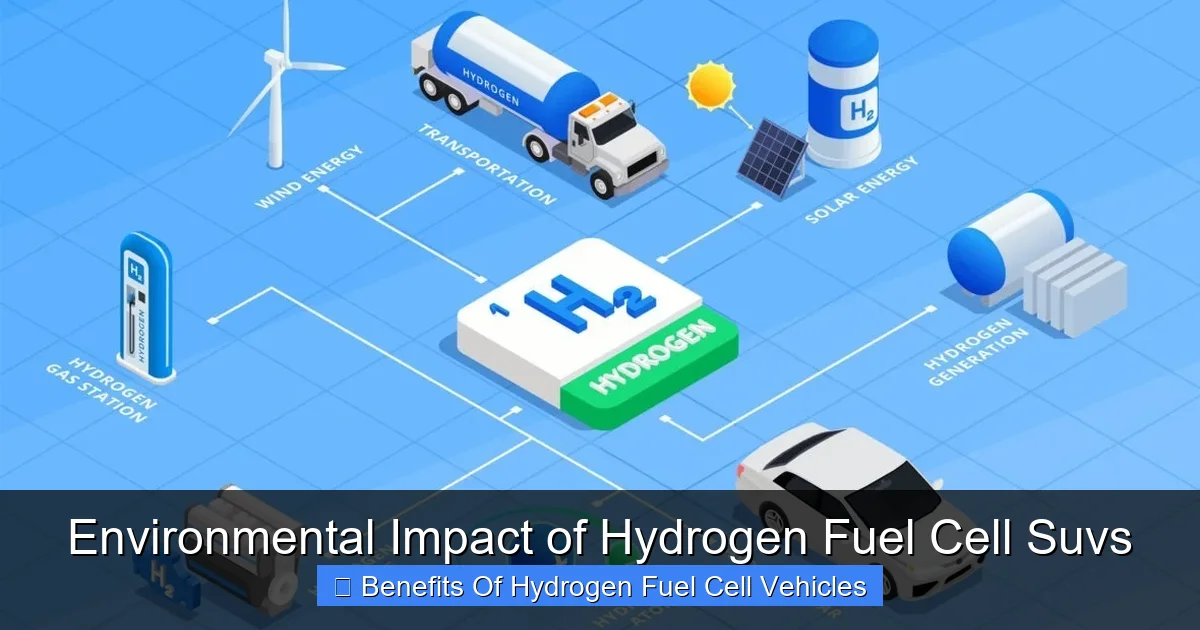
Visual guide about Environmental Impact of Hydrogen Fuel Cell Suvs
Image source: aeologic.com
The Fuel Cell Process
Hydrogen gas is stored in high-pressure tanks within the SUV. When the driver accelerates, hydrogen flows into the fuel cell stack, where it meets oxygen from the air. A catalyst—typically platinum—triggers a reaction that splits hydrogen atoms into protons and electrons. The protons pass through a membrane, while the electrons travel through an external circuit, generating electricity. The end result? Power for the motor, and the only emission: water vapor.
Refueling vs. Recharging
One of the biggest advantages of hydrogen SUVs over battery-electric models is refueling time. While electric SUVs can take 30 minutes to several hours to recharge, hydrogen vehicles can be refueled in under five minutes—similar to filling up a gas tank. This makes them particularly appealing for long-distance travel or commercial use, where downtime is costly. However, the availability of hydrogen stations remains limited, especially outside of California, Japan, and parts of Europe.
Vehicle Performance and Range
Hydrogen fuel cell SUVs offer performance comparable to traditional SUVs. The Hyundai Nexo, for example, has a range of over 380 miles on a single tank and accelerates smoothly thanks to instant torque from the electric motor. They also handle well in cold weather, unlike some battery-electric vehicles that suffer reduced range in low temperatures. This makes them a practical option for diverse climates and driving conditions.
Environmental Benefits of Hydrogen Fuel Cell SUVs
The most obvious environmental benefit of hydrogen fuel cell SUVs is their lack of tailpipe emissions. Unlike gasoline-powered SUVs that spew carbon dioxide, nitrogen oxides, and particulate matter, hydrogen vehicles release only water vapor. This makes them a powerful tool in the fight against urban air pollution and climate change.
Zero Tailpipe Emissions
Every time you drive a hydrogen SUV, you’re not adding harmful gases to the atmosphere. This is especially important in cities, where vehicle emissions contribute to smog, respiratory illnesses, and premature deaths. By replacing just one gas-guzzling SUV with a hydrogen model, a driver can prevent several tons of CO₂ from entering the atmosphere each year.
Reduction in Air Pollutants
Beyond CO₂, traditional vehicles emit pollutants like nitrogen oxides (NOx) and volatile organic compounds (VOCs), which react in the atmosphere to form ground-level ozone—a key component of smog. Hydrogen fuel cell SUVs produce none of these, helping to improve air quality in densely populated areas. For families living near highways or in urban centers, this can mean cleaner air and better health outcomes.
Noise Pollution Reduction
Hydrogen SUVs are also significantly quieter than their internal combustion counterparts. The electric motor operates with minimal noise, reducing noise pollution in cities and residential neighborhoods. This contributes to a more peaceful urban environment and can even lower stress levels for drivers and pedestrians alike.
Support for Renewable Energy Integration
Hydrogen production can be paired with renewable energy sources like wind, solar, and hydroelectric power. When excess electricity is generated during peak production times, it can be used to produce hydrogen through electrolysis—splitting water into hydrogen and oxygen. This “green hydrogen” can then be stored and used to fuel vehicles, creating a closed-loop system that supports grid stability and reduces reliance on fossil fuels.
Hydrogen Production: The Hidden Environmental Cost
While hydrogen fuel cell SUVs are clean at the point of use, the environmental impact of hydrogen production cannot be ignored. Not all hydrogen is created equal. The method used to produce it determines whether it’s truly sustainable or just a cleaner-looking fossil fuel.
Gray, Blue, and Green Hydrogen
Currently, about 95% of hydrogen is produced from natural gas through a process called steam methane reforming (SMR). This “gray hydrogen” emits significant amounts of CO₂—up to 12 kg of CO₂ per kg of hydrogen. While cleaner than gasoline, it’s not a long-term solution for decarbonization.
“Blue hydrogen” improves on this by capturing and storing the CO₂ emissions from SMR. Though better than gray, it still relies on fossil fuels and depends on the effectiveness of carbon capture technology.
The gold standard is “green hydrogen,” produced using renewable electricity to split water via electrolysis. This method emits no greenhouse gases and is the only truly sustainable form of hydrogen. However, it currently makes up less than 1% of global hydrogen production due to high costs and energy requirements.
Energy Intensity of Hydrogen Production
Producing hydrogen—especially green hydrogen—is energy-intensive. Electrolysis requires large amounts of electricity, and if that power comes from coal or natural gas, the environmental benefits are diminished. For hydrogen SUVs to be truly green, the entire supply chain must shift toward renewable energy.
Experts estimate that producing hydrogen via electrolysis is about 60–70% efficient, meaning nearly a third of the energy is lost in conversion. When compared to battery-electric vehicles, which are over 77% efficient from grid to wheel, hydrogen’s overall energy efficiency is lower. This means more renewable energy is needed to power a hydrogen SUV than an electric one.
Water Usage Concerns
Electrolysis requires pure water, and producing 1 kg of hydrogen needs about 9 liters of water. While this may not seem like much, scaling up green hydrogen production could strain water resources in arid regions. However, seawater can be desalinated for this purpose, and closed-loop systems can recycle water, minimizing the impact.
Infrastructure and Scalability Challenges
Even if hydrogen production becomes greener, the lack of infrastructure remains a major hurdle. Refueling stations are scarce, expensive to build, and require significant investment. Without a reliable network, consumers are unlikely to adopt hydrogen SUVs, no matter how clean they are.
Limited Refueling Network
As of 2024, there are fewer than 100 hydrogen refueling stations in the United States, with most concentrated in California. In contrast, there are over 150,000 gas stations and more than 50,000 public EV charging points. This makes long-distance travel in a hydrogen SUV impractical for most drivers.
Building a hydrogen station costs between $1 million and $3 million—far more than a gas station or EV charger. The high cost is due to the need for high-pressure storage, safety systems, and specialized equipment. Governments and private companies are investing in expansion, but progress is slow.
Storage and Transportation Challenges
Hydrogen is the lightest and most diffuse element, making it difficult to store and transport. It must be compressed to high pressures (700 bar) or liquefied at -253°C, both of which require energy and advanced materials. Leakage is also a concern—hydrogen molecules are so small they can escape through metal containers, potentially contributing to indirect warming effects in the atmosphere.
Transporting hydrogen over long distances is inefficient compared to electricity. Pipelines can be used, but they require costly upgrades to handle hydrogen’s corrosive properties. Most hydrogen is currently transported by truck, which adds to emissions and costs.
Scalability and Cost
For hydrogen SUVs to make a meaningful environmental impact, production must scale dramatically. This requires massive investments in electrolyzers, renewable energy, and distribution networks. While costs are falling—green hydrogen prices have dropped by 60% since 2010—they still need to fall further to compete with gasoline and electricity.
Automakers are also working to reduce the cost of fuel cells. Platinum, a key component, is expensive and scarce. Research into alternative catalysts and improved manufacturing is ongoing, but widespread affordability is still years away.
Lifecycle Analysis: Comparing Hydrogen SUVs to Alternatives
To truly assess the environmental impact of hydrogen fuel cell SUVs, we need to look at their entire lifecycle—from raw material extraction to disposal. This includes manufacturing, fuel production, vehicle operation, and end-of-life recycling.
Manufacturing Emissions
Like all vehicles, hydrogen SUVs have a carbon footprint from production. The fuel cell stack, hydrogen tanks, and electric motor require energy-intensive materials like platinum, carbon fiber, and rare earth metals. However, studies show that the manufacturing emissions of hydrogen SUVs are comparable to or slightly higher than battery-electric SUVs, but lower than gasoline SUVs over time.
For example, the Hyundai Nexo has a manufacturing footprint of about 10–12 tons of CO₂, similar to the Tesla Model Y. But because it emits no CO₂ during operation, it breaks even with a gasoline SUV after about 20,000 miles, assuming gray hydrogen. With green hydrogen, the break-even point drops to under 10,000 miles.
Well-to-Wheel Efficiency
When evaluating environmental impact, well-to-wheel efficiency is crucial. This measures the total energy used from fuel production to vehicle movement. Battery-electric SUVs are the most efficient, at around 77%. Hydrogen SUVs using green hydrogen are about 25–35% efficient, while those using gray hydrogen drop to 15–20%.
This means that for the same amount of renewable energy, you could power nearly three electric SUVs for every one hydrogen SUV. However, hydrogen’s advantage lies in its energy density and refueling speed, making it better suited for heavy-duty applications like trucks and buses.
End-of-Life and Recycling
At the end of their life, hydrogen SUVs can be recycled, much like electric vehicles. Fuel cells contain valuable materials like platinum, which can be recovered and reused. Hydrogen tanks made of carbon fiber are more challenging to recycle, but research into sustainable composites is advancing.
Proper recycling infrastructure will be essential to minimize waste and recover resources. Automakers are beginning to design vehicles with disassembly and recycling in mind, supporting a circular economy.
The Future of Hydrogen SUVs: Opportunities and Outlook
Despite the challenges, hydrogen fuel cell SUVs have a role to play in the future of sustainable transportation. They are not a replacement for battery-electric vehicles, but a complement—especially in applications where long range, quick refueling, and heavy payloads are needed.
Government Support and Policy
Governments around the world are investing in hydrogen as part of their climate strategies. The U.S. Department of Energy has launched the Hydrogen Shot initiative, aiming to reduce green hydrogen costs to $1 per kilogram by 2030. The European Union has a comprehensive hydrogen strategy, and countries like Japan and South Korea are building hydrogen economies.
Incentives for consumers—such as tax credits, rebates, and access to carpool lanes—can accelerate adoption. California offers up to $15,000 in rebates for hydrogen vehicle purchases, helping to offset the high upfront cost.
Technological Advancements
Innovation is driving down costs and improving performance. New electrolyzer technologies are increasing the efficiency of green hydrogen production. Solid-state hydrogen storage could make tanks safer and lighter. And advances in fuel cell design are reducing the need for platinum, lowering costs.
Automakers are also exploring hybrid models—vehicles that combine hydrogen fuel cells with small batteries for improved efficiency and performance. These could offer the best of both worlds: zero emissions and flexibility.
Integration with Renewable Energy
As renewable energy becomes cheaper and more abundant, green hydrogen will become more viable. Excess solar and wind power can be used to produce hydrogen during off-peak hours, storing energy for later use. This supports grid stability and reduces curtailment—wasting unused renewable energy.
Hydrogen can also be used in sectors that are hard to electrify, like steel production and shipping. By creating demand across industries, the cost of hydrogen infrastructure can be shared, benefiting transportation as well.
Conclusion: A Cleaner Path Forward
Hydrogen fuel cell SUVs represent a bold step toward cleaner transportation. With zero tailpipe emissions, reduced air pollution, and the potential for renewable-powered operation, they offer a compelling alternative to traditional SUVs. However, their environmental benefits depend heavily on how hydrogen is produced and distributed.
While challenges remain—especially in infrastructure, cost, and energy efficiency—the technology is evolving rapidly. With continued investment, innovation, and policy support, hydrogen SUVs can play a meaningful role in decarbonizing the transportation sector. They won’t replace electric vehicles, but they can fill important gaps, especially for drivers who need long range and quick refueling.
The road to a sustainable future isn’t one-size-fits-all. Hydrogen fuel cell SUVs are part of a broader solution—one that includes electrification, public transit, and smarter urban planning. By embracing diverse technologies and making conscious choices, we can drive toward a cleaner, healthier planet—one mile at a time.
Frequently Asked Questions
Are hydrogen fuel cell SUVs really zero emission?
Hydrogen fuel cell SUVs emit only water vapor from the tailpipe, making them zero-emission vehicles during operation. However, the overall environmental impact depends on how the hydrogen is produced—green hydrogen is truly clean, while gray hydrogen still contributes to emissions.
How does hydrogen production affect the environment?
Hydrogen production can be environmentally harmful if it relies on fossil fuels. Gray hydrogen, made from natural gas, emits CO₂. Green hydrogen, produced using renewable energy, is the only sustainable option and has minimal environmental impact.
Can hydrogen SUVs help reduce air pollution in cities?
Yes. Hydrogen SUVs produce no nitrogen oxides, particulate matter, or other harmful pollutants, helping to improve urban air quality and reduce respiratory health issues linked to vehicle emissions.
Why aren’t hydrogen SUVs more common?
Limited refueling infrastructure, high vehicle costs, and the current reliance on fossil-fuel-based hydrogen production are the main barriers. However, government incentives and technological advances are helping to grow the market.
Are hydrogen SUVs more efficient than electric SUVs?
No. Battery-electric SUVs are more energy-efficient from well to wheel. Hydrogen SUVs lose more energy in production, storage, and conversion, making them less efficient overall, though they offer faster refueling and longer range in some cases.
What is the future of hydrogen fuel cell SUVs?
The future looks promising if green hydrogen production scales up and infrastructure expands. They are likely to complement electric vehicles, especially for long-haul and heavy-duty applications, as part of a diversified clean transportation strategy.