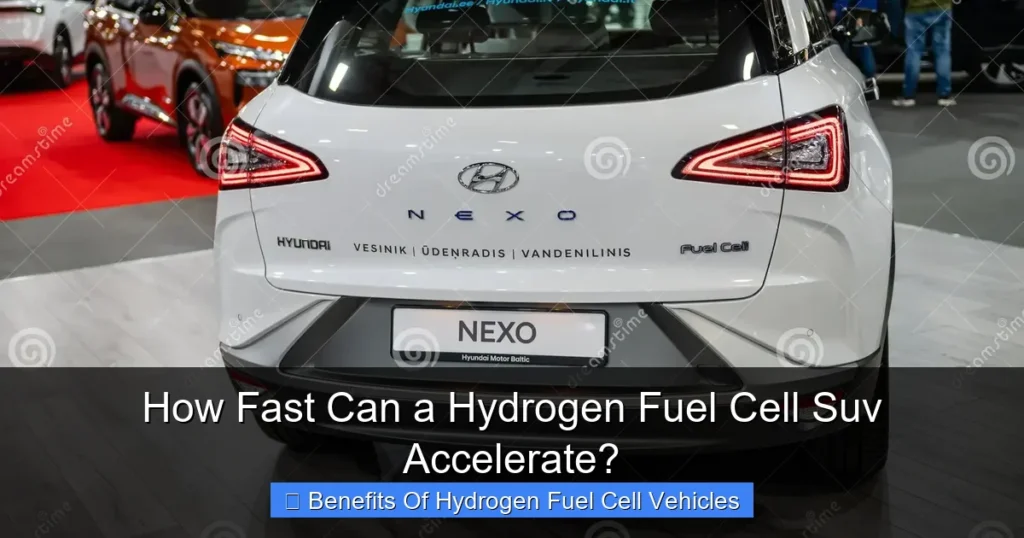
Hydrogen fuel cell SUVs combine zero-emission driving with impressive acceleration, rivaling many gasoline-powered vehicles. With instant torque delivery and advanced engineering, models like the Toyota Mirai and Hyundai NEXO can go from 0 to 60 mph in under 9 seconds, offering a smooth, quiet, and powerful ride.
Key Takeaways
- Instant Torque Delivery: Electric motors in hydrogen SUVs provide maximum torque from a standstill, enabling quick acceleration.
- 0-60 mph Times: Most hydrogen fuel cell SUVs accelerate from 0 to 60 mph in 7 to 9 seconds, comparable to mid-range gasoline SUVs.
- Smooth and Quiet Performance: Without internal combustion engines, these vehicles offer a refined, vibration-free driving experience.
- Refueling Speed Advantage: Hydrogen refueling takes just 3–5 minutes, much faster than battery-electric charging.
- Environmental Benefits: Zero tailpipe emissions make hydrogen SUVs a clean alternative for long-range, high-performance driving.
- Limited Infrastructure: While performance is strong, hydrogen stations are still sparse outside select regions like California and parts of Europe.
- Future Potential: Advances in fuel cell tech and green hydrogen production could make these SUVs even faster and more accessible.
📑 Table of Contents
- How Fast Can a Hydrogen Fuel Cell SUV Accelerate?
- Understanding Hydrogen Fuel Cell Technology
- Acceleration Performance of Leading Hydrogen SUVs
- Comparing Hydrogen SUVs to Gasoline and Electric Rivals
- Real-World Driving Experience and Performance Tips
- Environmental and Economic Benefits of Hydrogen SUVs
- The Future of Hydrogen Fuel Cell SUVs
- Conclusion
How Fast Can a Hydrogen Fuel Cell SUV Accelerate?
Imagine pulling up to a traffic light in a sleek, modern SUV that runs on hydrogen—no gas, no plug, and no emissions. You press the accelerator, and within seconds, you’re smoothly merging onto the highway, leaving traditional vehicles behind. Sounds futuristic? It’s not. Hydrogen fuel cell SUVs are here, and they’re not just eco-friendly—they’re surprisingly quick.
But just how fast can a hydrogen fuel cell SUV accelerate? The answer might surprise you. While hydrogen vehicles are often praised for their environmental benefits, their performance is equally impressive. Thanks to electric motors powered by hydrogen fuel cells, these SUVs deliver instant torque, smooth power delivery, and acceleration times that rival many conventional SUVs. Whether you’re driving a Toyota Mirai, Hyundai NEXO, or a future model from another automaker, you can expect a responsive and enjoyable driving experience.
In this article, we’ll dive deep into the acceleration capabilities of hydrogen fuel cell SUVs. We’ll explore how they work, compare their performance to gasoline and electric SUVs, and examine real-world examples. You’ll also learn about the technology behind the speed, the benefits of hydrogen power, and what the future holds for these innovative vehicles. Whether you’re a tech enthusiast, an eco-conscious driver, or just curious about the next wave of automotive innovation, this guide will give you the full picture.
Understanding Hydrogen Fuel Cell Technology
Visual guide about How Fast Can a Hydrogen Fuel Cell Suv Accelerate?
Image source: thumbs.dreamstime.com
Before we talk about speed, let’s break down how hydrogen fuel cell SUVs actually work. At first glance, they might seem similar to battery-electric vehicles (BEVs), but the power source is completely different.
How Fuel Cells Generate Electricity
Hydrogen fuel cell vehicles (FCEVs) use a chemical reaction to produce electricity. Inside the fuel cell stack, hydrogen from the onboard tanks combines with oxygen from the air. This reaction produces electricity, water vapor, and heat—nothing else. The electricity then powers an electric motor, which drives the wheels. The only byproduct? Clean water, which drips out of the exhaust like morning dew.
This process is incredibly efficient and produces zero harmful emissions. Unlike gasoline engines, which burn fuel and release pollutants, fuel cells generate power through a clean electrochemical process. That means you get the performance of an electric vehicle without the need for long charging times.
Electric Motors and Instant Torque
One of the biggest advantages of hydrogen fuel cell SUVs is their use of electric motors. Just like in battery-electric vehicles, these motors deliver maximum torque the moment you press the accelerator. There’s no delay, no gear shifting, and no engine revving—just smooth, immediate power.
This instant torque is what gives hydrogen SUVs their quick acceleration. Whether you’re merging onto a highway or passing another vehicle, the response is immediate and confident. It’s a driving experience that feels both powerful and refined.
Hydrogen Storage and Refueling
Hydrogen is stored in high-pressure tanks made of lightweight composite materials. These tanks are designed to be safe and durable, even in the event of a collision. Refueling a hydrogen SUV is similar to filling up a gas tank—it takes just 3 to 5 minutes at a hydrogen station. That’s a huge advantage over battery-electric vehicles, which can take 30 minutes to several hours to recharge, depending on the charger type.
While hydrogen stations are still limited, they’re growing in number, especially in California, Japan, and parts of Europe. As infrastructure improves, the convenience of hydrogen refueling will become a major selling point for drivers who want long-range, fast-refueling vehicles.
Acceleration Performance of Leading Hydrogen SUVs
Now let’s get to the fun part—how fast can these vehicles actually go? We’ll look at some of the top hydrogen fuel cell SUVs on the market and compare their acceleration times.
Toyota Mirai: Smooth and Steady
The Toyota Mirai is one of the most well-known hydrogen vehicles. The latest model, the Mirai XLE, accelerates from 0 to 60 mph in about 8.8 seconds. That’s not blistering fast, but it’s more than adequate for everyday driving. The Mirai prioritizes comfort and efficiency, offering a smooth, quiet ride with plenty of power for city and highway driving.
What makes the Mirai stand out is its refined driving dynamics. The electric motor delivers 182 horsepower and 221 lb-ft of torque, providing a balanced mix of performance and efficiency. It’s not a sports car, but it’s more than capable of keeping up with traffic and handling highway merges with ease.
Hyundai NEXO: A Step Ahead
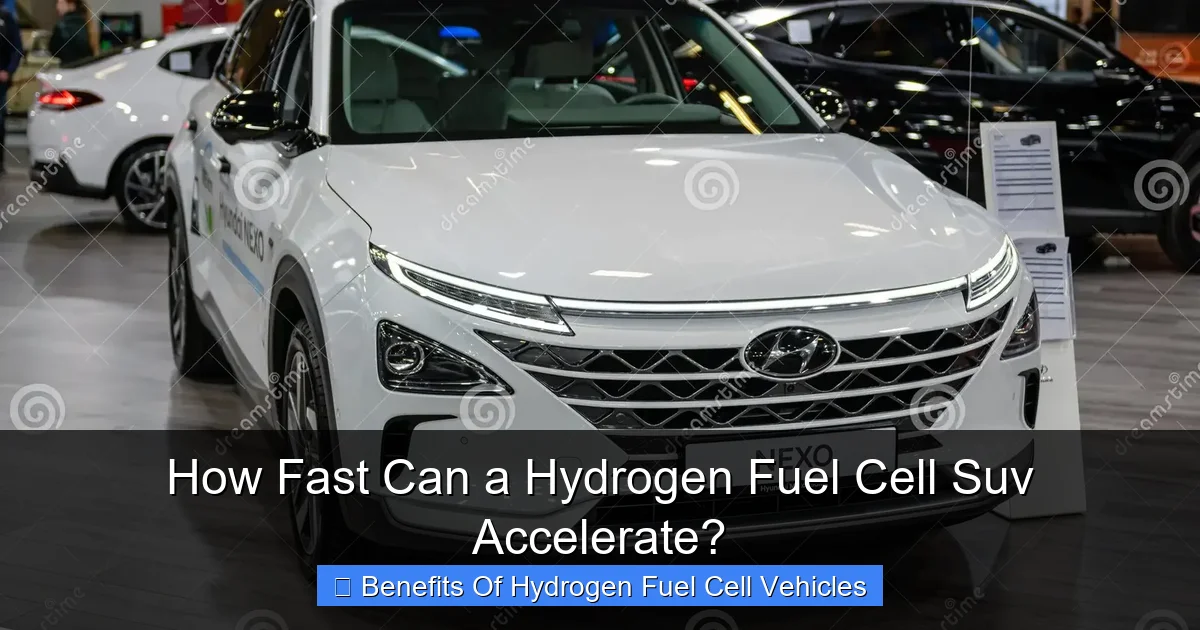
The Hyundai NEXO is another strong contender in the hydrogen SUV space. It accelerates from 0 to 60 mph in approximately 8.3 seconds, slightly quicker than the Mirai. With 161 horsepower and 291 lb-ft of torque, the NEXO offers a peppier feel, especially at lower speeds.
Hyundai has focused on making the NEXO a practical, family-friendly SUV with advanced safety features and a spacious interior. But don’t let its practicality fool you—it’s still a capable performer. The instant torque from the electric motor makes it feel responsive and agile, even in stop-and-go traffic.
Future Models: What’s Coming?
While the Mirai and NEXO are the current leaders, several automakers are developing new hydrogen SUVs with even better performance. For example, BMW is working on a hydrogen version of the X5, expected to offer improved acceleration and range. Similarly, General Motors and Honda are collaborating on next-generation fuel cell systems that could deliver more power and faster refueling.
As technology advances, we can expect hydrogen SUVs to become quicker, more efficient, and more affordable. Some prototypes already suggest 0-60 mph times under 7 seconds, putting them in the same league as sporty gasoline SUVs.
Comparing Hydrogen SUVs to Gasoline and Electric Rivals
So how do hydrogen fuel cell SUVs stack up against their gasoline and battery-electric counterparts? Let’s break it down.
Hydrogen vs. Gasoline SUVs
Traditional gasoline SUVs rely on internal combustion engines, which take time to build power. Even with turbocharging, there’s often a slight delay before peak torque is reached. In contrast, hydrogen SUVs deliver instant torque, giving them an edge in initial acceleration.
For example, a mid-size gasoline SUV like the Ford Explorer might take 7.5 to 8.5 seconds to reach 60 mph. The Hyundai NEXO matches or beats that time, despite having fewer horsepower. That’s because electric motors don’t need to “rev up”—they’re ready to go from the moment you hit the gas.
However, high-performance gasoline SUVs, like the Porsche Cayenne Turbo, can accelerate in under 4 seconds. These vehicles use large engines and advanced aerodynamics to achieve incredible speeds. While hydrogen SUVs aren’t yet in that elite category, they’re catching up.
Hydrogen vs. Battery-Electric SUVs
Battery-electric SUVs, like the Tesla Model Y or Ford Mustang Mach-E, are known for their lightning-fast acceleration. The Tesla Model Y Performance, for instance, can hit 60 mph in just 3.5 seconds. That’s thanks to dual motors and massive battery packs.
So, do hydrogen SUVs stand a chance? In raw speed, not yet. But they offer a different kind of advantage: refueling time. While a Tesla might take 20–30 minutes to recharge at a fast charger, a hydrogen SUV can be refueled in under 5 minutes. For long-distance drivers or those without home charging, that’s a game-changer.
Additionally, hydrogen SUVs don’t suffer from range anxiety in the same way. With a range of 300–400 miles per tank, they’re ideal for road trips and rural driving—areas where charging infrastructure is still limited.
The Sweet Spot: Performance and Practicality
Hydrogen fuel cell SUVs occupy a unique space in the market. They’re not the fastest, but they offer a compelling mix of performance, convenience, and sustainability. For drivers who want a quiet, smooth ride with quick acceleration and fast refueling, hydrogen SUVs are a strong choice.
They’re especially appealing for fleets, ride-sharing services, and commercial vehicles that need to minimize downtime. Imagine a taxi that can refuel in minutes and drive all day without emissions—hydrogen makes that possible.
Real-World Driving Experience and Performance Tips
Performance isn’t just about numbers on a spec sheet—it’s about how a vehicle feels on the road. Let’s explore what it’s really like to drive a hydrogen fuel cell SUV.
Smooth and Quiet Operation
One of the first things you’ll notice when driving a hydrogen SUV is how quiet it is. Without a roaring engine, the cabin is peaceful and serene. Road and wind noise are minimal, making for a relaxing ride—even on long trips.
The electric motor delivers power seamlessly, without jerks or vibrations. Acceleration is linear and predictable, which makes the vehicle easy to control. Whether you’re navigating city streets or cruising on the highway, the experience is smooth and composed.
Handling and Ride Quality
Hydrogen SUVs are designed with comfort in mind. The Mirai and NEXO both feature well-tuned suspensions that absorb bumps and potholes with ease. Steering is responsive but not overly sporty, making these vehicles ideal for daily commuting and family use.
The weight distribution is also well-balanced. Because the fuel cell stack and hydrogen tanks are mounted low in the chassis, the center of gravity is low, which improves stability and reduces body roll during cornering.
Tips for Maximizing Performance
Want to get the most out of your hydrogen SUV’s acceleration? Here are a few tips:
- Use the Sport Mode: Many hydrogen SUVs offer a sport or performance mode that increases throttle response and motor output. This can shave a few tenths off your 0-60 time.
- Keep Tires Inflated: Proper tire pressure ensures optimal traction and reduces rolling resistance, which can improve acceleration and efficiency.
- Avoid Excessive Weight: Extra cargo or passengers can slow down acceleration. Travel light when you need a quick burst of speed.
- Precondition the Battery: Some hydrogen SUVs use a small battery to assist the fuel cell. Preconditioning it (warming it up) can improve performance in cold weather.
Driving in Different Conditions
Hydrogen SUVs perform well in a variety of conditions. In cold weather, the fuel cell may take a few minutes to reach optimal operating temperature, but once it does, performance is consistent. Unlike some battery-electric vehicles, which can lose range in the cold, hydrogen SUVs maintain their range better in winter.
On steep hills or during heavy acceleration, the electric motor draws more power from the fuel cell. This is normal and doesn’t harm the system. The vehicle is designed to handle these demands efficiently.
Environmental and Economic Benefits of Hydrogen SUVs
While performance is important, many drivers choose hydrogen SUVs for their environmental and economic advantages.
Zero Tailpipe Emissions
The biggest benefit of hydrogen fuel cell vehicles is their zero-emission operation. The only thing that comes out of the tailpipe is water vapor. This makes them ideal for reducing air pollution in cities and combating climate change.
Unlike gasoline vehicles, which emit carbon dioxide, nitrogen oxides, and particulate matter, hydrogen SUVs are clean from the moment they start. Even when considering the full lifecycle, including hydrogen production, FCEVs can have a lower carbon footprint than gasoline vehicles—especially when the hydrogen is produced using renewable energy.
Green Hydrogen and Sustainability
The environmental impact of hydrogen vehicles depends on how the hydrogen is made. “Green hydrogen” is produced using renewable energy sources like wind, solar, or hydroelectric power. When green hydrogen is used, the entire lifecycle of the vehicle is nearly carbon-neutral.
Currently, most hydrogen is produced from natural gas, which emits CO2. But as renewable energy becomes more widespread, green hydrogen production is expected to grow. Governments and companies are investing heavily in this technology, aiming to make hydrogen a key part of the clean energy transition.
Lower Operating Costs
Hydrogen SUVs can be cheaper to operate than gasoline vehicles. While hydrogen fuel is currently more expensive per mile than electricity, it’s often cheaper than gasoline—especially in regions with high gas prices.
Maintenance costs are also lower. Hydrogen SUVs have fewer moving parts than gasoline engines, which means less wear and tear. There’s no oil to change, no spark plugs to replace, and no exhaust system to maintain. Over time, these savings can add up.
Incentives and Tax Credits
Many governments offer incentives for hydrogen vehicle owners. In the U.S., buyers of new hydrogen SUVs may qualify for federal tax credits of up to $8,000. Some states, like California, also offer rebates and access to carpool lanes.
These incentives make hydrogen SUVs more affordable and encourage adoption. As more people switch to clean vehicles, the infrastructure and technology will continue to improve.
The Future of Hydrogen Fuel Cell SUVs
The future looks bright for hydrogen fuel cell SUVs. As technology advances and infrastructure expands, these vehicles are poised to become a major player in the automotive market.
Advancements in Fuel Cell Efficiency
Researchers are working to make fuel cells more efficient, durable, and affordable. New materials and designs are increasing power output while reducing size and weight. This means future hydrogen SUVs could be lighter, faster, and more efficient.
Some prototypes already use solid-state fuel cells, which are smaller and more powerful than traditional designs. These could enable even quicker acceleration and longer range.
Expanding Hydrogen Infrastructure
One of the biggest challenges for hydrogen vehicles is the lack of refueling stations. But that’s changing. Countries like Japan, South Korea, and Germany are investing billions in hydrogen infrastructure. In the U.S., California leads the way with over 50 hydrogen stations and plans for many more.
Private companies are also getting involved. Shell, Toyota, and Hyundai are partnering to build new stations and promote hydrogen adoption. As demand grows, the network will expand, making hydrogen SUVs more practical for everyday use.
Integration with Renewable Energy
The future of hydrogen lies in its integration with renewable energy. Excess electricity from wind and solar farms can be used to produce green hydrogen through electrolysis. This hydrogen can then be stored and used to power vehicles, homes, and industries.
This creates a sustainable energy loop: clean electricity powers hydrogen production, which powers clean vehicles, which reduce emissions. It’s a vision of a truly carbon-neutral transportation system.
Potential for High-Performance Models
As fuel cell technology improves, we could see high-performance hydrogen SUVs that rival sports cars. Imagine a hydrogen-powered SUV that accelerates from 0 to 60 mph in under 5 seconds—quietly, cleanly, and with a full tank in minutes.
Automakers are already exploring this possibility. With the right engineering, hydrogen could power the next generation of eco-friendly performance vehicles.
Conclusion
So, how fast can a hydrogen fuel cell SUV accelerate? The answer is: faster than you might think. With 0-60 mph times ranging from 7 to 9 seconds, these vehicles offer performance that’s competitive with many gasoline SUVs—and they do it without a single drop of fossil fuel.
Thanks to instant torque from electric motors, smooth power delivery, and fast refueling, hydrogen SUVs deliver a unique blend of speed, convenience, and sustainability. Models like the Toyota Mirai and Hyundai NEXO prove that clean driving doesn’t have to mean sacrificing performance.
While challenges remain—especially in infrastructure and cost—the future of hydrogen fuel cell SUVs is promising. As technology advances and green hydrogen becomes more available, these vehicles could become a mainstream choice for drivers who want power, range, and peace of mind.
Whether you’re looking for a family SUV, a fleet vehicle, or a clean alternative to gasoline, hydrogen fuel cell SUVs are worth considering. They’re not just the future of transportation—they’re the present. And they’re ready to accelerate into a cleaner, faster, and more sustainable tomorrow.
Frequently Asked Questions
How fast can a hydrogen fuel cell SUV go from 0 to 60 mph?
Most hydrogen fuel cell SUVs, like the Toyota Mirai and Hyundai NEXO, accelerate from 0 to 60 mph in 7 to 9 seconds. This is comparable to many mid-size gasoline SUVs and offers smooth, instant power delivery.
Do hydrogen SUVs have instant torque like electric cars?
Yes, hydrogen fuel cell SUVs use electric motors that deliver maximum torque from a standstill. This gives them quick, responsive acceleration similar to battery-electric vehicles.
Are hydrogen SUVs slower than gasoline SUVs?
Not necessarily. While high-performance gasoline SUVs can be faster, most mainstream hydrogen SUVs match or exceed the acceleration of comparable gasoline models, especially in everyday driving conditions.
Can hydrogen SUVs handle highway driving and merging?
Absolutely. With strong torque and a range of 300–400 miles, hydrogen SUVs are well-suited for highway driving, merging, and long-distance travel.
Is refueling a hydrogen SUV faster than charging an electric SUV?
Yes, hydrogen refueling takes just 3–5 minutes, similar to filling a gas tank. This is much faster than charging a battery-electric SUV, which can take 30 minutes to several hours.
Will hydrogen SUVs become faster in the future?
Yes, as fuel cell technology improves, future hydrogen SUVs are expected to offer quicker acceleration, longer range, and better performance, potentially rivaling high-end electric and gasoline models.