Hydrogen fuel cell SUVs offer lower long-term maintenance costs than gasoline vehicles, thanks to fewer moving parts and no oil changes. While fuel and infrastructure remain challenges, routine upkeep is simple and affordable.
Key Takeaways
- Fewer Moving Parts: Hydrogen fuel cell SUVs have no internal combustion engine, eliminating the need for oil changes, spark plugs, and exhaust system repairs.
- Lower Routine Maintenance: With no engine oil, transmission fluid, or timing belts to replace, maintenance is simpler and less frequent.
- Higher Upfront Fuel Costs: Hydrogen fuel is currently more expensive per mile than gasoline or electricity, which can offset some maintenance savings.
- Limited Service Network: Fewer certified technicians and service centers mean longer wait times and potential travel for repairs.
- Long-Term Durability: Fuel cells can last over 100,000 miles with proper care, and many manufacturers offer extended warranties.
- Battery and Cooling System Care: The auxiliary battery and thermal management system require periodic checks but are generally reliable.
- Resale Value and Incentives: Government incentives and growing demand may help maintain resale value despite limited market penetration.
📑 Table of Contents
- How Much Do Hydrogen Fuel Cell SUVs Cost to Maintain?
- Why Hydrogen Fuel Cell SUVs Have Lower Maintenance Needs
- Routine Maintenance Tasks for Hydrogen Fuel Cell SUVs
- Fuel Costs: The Hidden Factor in Maintenance
- Service Availability and Repair Costs
- Warranty Coverage and Long-Term Reliability
- Comparing Maintenance Costs: Hydrogen vs. Gasoline vs. Electric SUVs
- Tips to Minimize Maintenance Costs
- Conclusion
How Much Do Hydrogen Fuel Cell SUVs Cost to Maintain?
Imagine driving a spacious, powerful SUV that emits nothing but water vapor—no smog, no carbon footprint, just clean, quiet performance. That’s the promise of hydrogen fuel cell SUVs. Vehicles like the Toyota Mirai, Hyundai Nexo, and the upcoming Honda CR-V Fuel Cell are leading the charge in zero-emission driving. But while the environmental benefits are clear, many potential buyers wonder: how much do hydrogen fuel cell SUVs cost to maintain?
The short answer? They’re generally cheaper to maintain than traditional gasoline-powered SUVs—over time. But like any emerging technology, there are nuances. From fuel costs to service availability, understanding the full picture helps you make an informed decision. In this guide, we’ll break down everything you need to know about maintaining a hydrogen fuel cell SUV, from routine checks to long-term ownership costs.
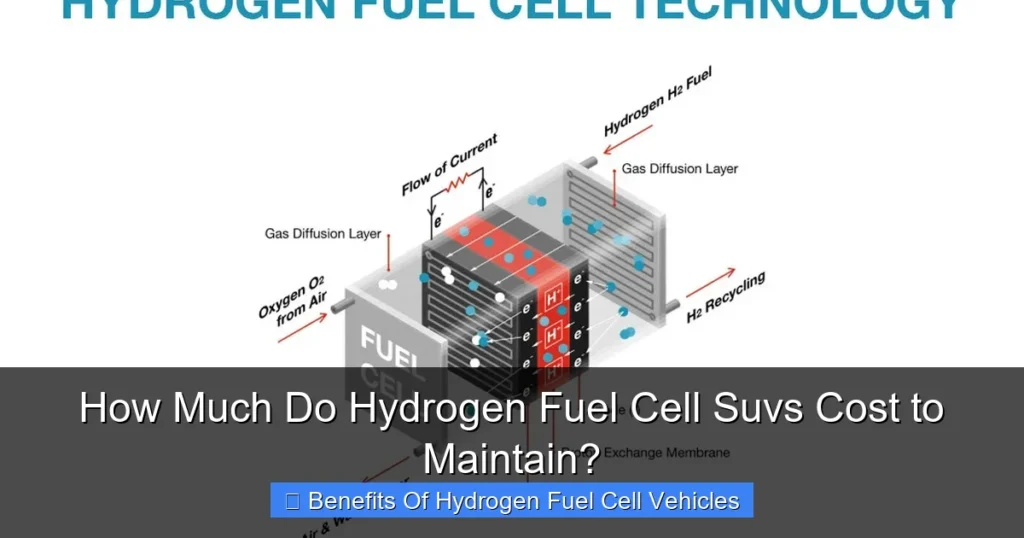
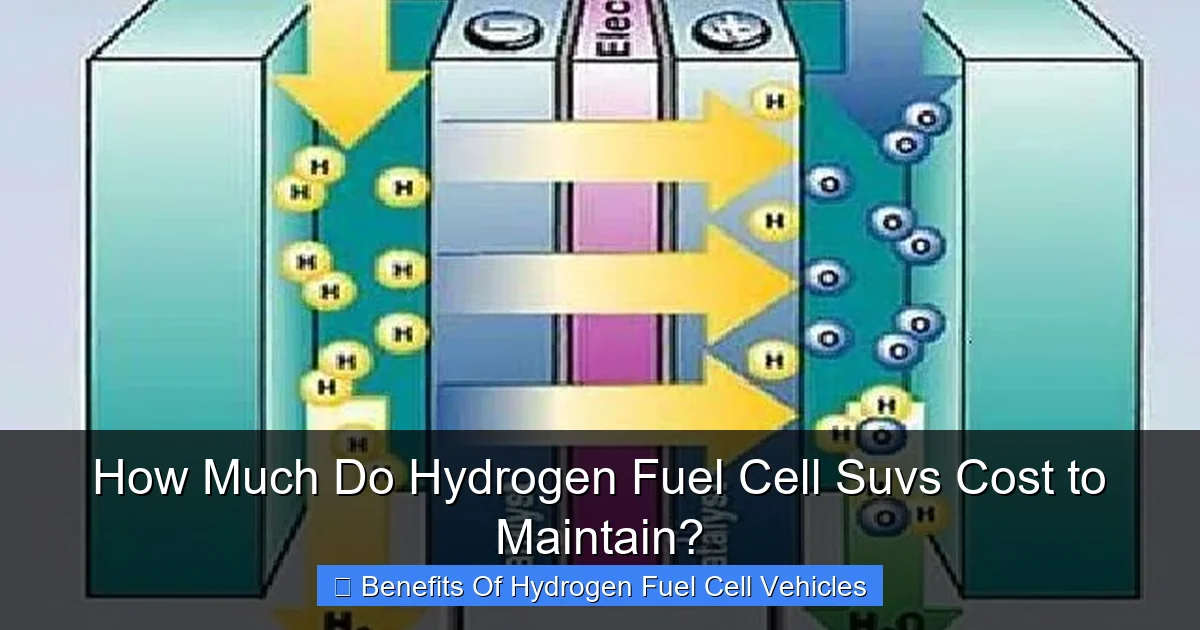
Hydrogen fuel cell vehicles (FCEVs) work by combining hydrogen gas from the tank with oxygen from the air to produce electricity, which powers the motor. The only byproduct? Water. This simple chemistry eliminates many of the mechanical complexities found in gasoline engines. No pistons, no valves, no oil—just a fuel cell stack, an electric motor, and a small battery. That means fewer things can go wrong, and when they do, repairs are often less frequent and less costly.
But it’s not all smooth sailing. Hydrogen fuel is still expensive and hard to find in many areas. Service centers with trained technicians are limited, and the technology is still evolving. So while maintenance costs may be lower, other factors can influence your total cost of ownership. Let’s dive deeper into what you can expect.
Why Hydrogen Fuel Cell SUVs Have Lower Maintenance Needs
Visual guide about How Much Do Hydrogen Fuel Cell Suvs Cost to Maintain?
Image source: i.stack.imgur.com
One of the biggest advantages of hydrogen fuel cell SUVs is their mechanical simplicity. Unlike internal combustion engines (ICE), which have hundreds of moving parts, FCEVs rely on a fuel cell stack and an electric motor—both of which are far more reliable over time.
No Internal Combustion Engine = Fewer Repairs
Gasoline engines require regular oil changes, air filter replacements, spark plug checks, and exhaust system maintenance. Over a 10-year lifespan, these routine services can add up to thousands of dollars. In contrast, hydrogen fuel cell SUVs don’t have engines that burn fuel. There’s no oil to change, no spark plugs to replace, and no catalytic converter to fail.
For example, the Toyota Mirai doesn’t require oil changes at all. Instead, it uses a sealed electric motor and a fuel cell that operates without combustion. This means you skip the $50–$100 oil changes every 5,000 to 7,500 miles. Over 100,000 miles, that’s $1,000–$2,000 saved just on oil.
Regenerative Braking Reduces Wear
Like electric vehicles (EVs), hydrogen fuel cell SUVs use regenerative braking. When you slow down, the electric motor acts as a generator, capturing energy and sending it back to the battery. This reduces the workload on the mechanical brake pads and rotors.
As a result, brake components last much longer. In many FCEVs, brake pads can last 80,000 to 100,000 miles or more—double the lifespan of a typical gasoline SUV. That’s fewer trips to the mechanic and less money spent on brake jobs.
Simplified Drivetrain and Transmission
Most hydrogen SUVs use a single-speed transmission or a direct-drive system, eliminating the complex multi-gear transmissions found in traditional vehicles. There’s no clutch, no gear shifts, and no transmission fluid to replace. This reduces the risk of transmission failure—a common and costly repair in ICE vehicles.
For instance, the Hyundai Nexo uses a compact electric drivetrain with no traditional transmission. This means no $1,500–$3,000 transmission overhauls down the road. Fewer parts also mean less chance of something breaking.
Routine Maintenance Tasks for Hydrogen Fuel Cell SUVs
While hydrogen fuel cell SUVs require less maintenance, they’re not maintenance-free. Regular checks and services are still necessary to keep the vehicle running smoothly and safely.
Tire Rotations and Alignments
Tires are one of the most frequently replaced parts on any vehicle, and hydrogen SUVs are no exception. Due to their weight and electric torque, FCEVs can wear tires faster than average. Regular tire rotations every 5,000 to 7,500 miles help ensure even wear and extend tire life.
Alignment checks are also important, especially if you drive on rough roads or hit potholes. Misaligned wheels can cause uneven tire wear and reduce fuel efficiency—even in a hydrogen-powered vehicle.
Coolant and Thermal Management System
The fuel cell stack generates heat and must be kept at an optimal temperature to function efficiently. That’s where the thermal management system comes in. It uses a special coolant to regulate the temperature of the fuel cell, battery, and electric motor.
Over time, coolant can degrade or leak. Most manufacturers recommend checking the coolant level and condition every 30,000 to 50,000 miles. A full coolant flush may be needed every 100,000 miles, costing around $150–$300.
Air and Cabin Filters
While there’s no engine air filter, hydrogen SUVs still have cabin air filters that clean the air inside the vehicle. These should be replaced every 12,000 to 15,000 miles, or once a year. A clogged cabin filter can reduce HVAC efficiency and affect air quality.
Some models, like the Nexo, also have a hydrogen sensor filter that monitors gas levels. This should be inspected during routine service, though it rarely needs replacement.
Battery Health Checks
Hydrogen fuel cell SUVs use a small lithium-ion battery to store energy from regenerative braking and support startup. This battery is much smaller than in a full EV but still requires monitoring.
Most vehicles have built-in diagnostics that alert you to battery issues. However, it’s wise to have the battery checked during annual service. Replacement is rare but can cost $1,000–$2,000 if needed.
Fuel Costs: The Hidden Factor in Maintenance
When people think of “maintenance,” they often focus on repairs and services. But fuel costs play a major role in the total cost of ownership—and for hydrogen SUVs, this is a double-edged sword.
Hydrogen Fuel Prices Today
As of 2024, hydrogen fuel costs around $12 to $16 per kilogram in the U.S. Most hydrogen SUVs can travel 300 to 400 miles on a full tank, which holds about 5–6 kg of hydrogen. That puts the cost per fill-up at $60–$90.
Compare that to a gasoline SUV that gets 25 mpg and drives 350 miles: you’d need about 14 gallons of gas, costing $50–$60 at $3.50–$4.00 per gallon. So hydrogen is currently 20–50% more expensive per mile.
But here’s the catch: hydrogen prices are expected to drop as production scales up and renewable hydrogen (made from wind or solar) becomes more common. Some states, like California, offer fueling incentives that reduce the effective cost.
Fueling Infrastructure Challenges
Another factor is availability. As of 2024, there are fewer than 100 public hydrogen fueling stations in the U.S., mostly in California. If you live outside these areas, refueling can be difficult or impossible.
This limits the practicality of hydrogen SUVs for many drivers. You might save on maintenance, but if you can’t fill up, the vehicle becomes unusable. Planning routes around fueling stations is essential—and inconvenient.
Long-Term Fuel Cost Projections
Experts predict that hydrogen fuel could drop to $6–$8 per kg by 2030, thanks to improved electrolysis technology and green hydrogen production. If that happens, hydrogen could become competitive with gasoline and even cheaper than electricity per mile in some cases.
Until then, fuel costs remain a significant part of the ownership equation. But when combined with lower maintenance, the total cost of ownership may still favor FCEVs over time.
Service Availability and Repair Costs
One of the biggest challenges for hydrogen fuel cell SUV owners is finding qualified service centers. Unlike gasoline cars, which can be repaired almost anywhere, FCEVs require specialized knowledge and equipment.
Limited Certified Technicians
Hydrogen systems involve high-pressure gas tanks, sensitive fuel cells, and advanced electronics. Not every mechanic is trained to work on them. In fact, only a handful of dealerships and service centers are certified to handle hydrogen vehicles.
For example, Toyota and Hyundai have trained technicians at select dealerships, but coverage is sparse outside major cities. If your fuel cell stack needs inspection or repair, you may need to travel to a service center hundreds of miles away.
Higher Labor Rates for Specialized Repairs
When repairs are needed, labor costs can be higher due to the complexity and safety requirements. A simple diagnostic check might cost $150–$250, compared to $100 for a gasoline vehicle.
Major repairs, like replacing a fuel cell stack, can run $5,000–$15,000. However, these are rare—most manufacturers offer 8–10 year warranties on the fuel cell system. The Toyota Mirai, for instance, comes with an 8-year/100,000-mile fuel cell warranty.
Software Updates and Diagnostics
Like modern EVs, hydrogen SUVs rely heavily on software to manage performance, safety, and efficiency. Regular software updates are released to improve functionality and fix bugs.
These updates are usually done during routine service or via over-the-air (OTA) downloads, similar to Tesla. While convenient, they require a stable internet connection and compatible hardware.
Warranty Coverage and Long-Term Reliability
Warranties play a crucial role in reducing long-term maintenance costs. Fortunately, hydrogen fuel cell SUVs come with some of the most comprehensive warranties in the industry.
Fuel Cell and Battery Warranties
Most manufacturers cover the fuel cell stack and high-voltage battery for 8 years or 100,000 miles. This includes repairs or replacements due to defects or performance degradation.
For example, the Hyundai Nexo offers an 8-year/100,000-mile warranty on the fuel cell system, plus a 10-year/100,000-mile battery warranty. That’s longer than most gasoline powertrain warranties.
Bumper-to-Bumper and Powertrain Coverage
In addition to fuel cell coverage, hydrogen SUVs typically include 3–5 years of bumper-to-bumper warranty and 5–10 years of powertrain protection. This covers everything from suspension to electrical systems.
Toyota’s Mirai, for instance, comes with 3 years/36,000 miles of basic warranty and 5 years/60,000 miles of powertrain coverage. Extended warranties are also available for added peace of mind.
Real-World Reliability Data
Early reliability reports are promising. The Toyota Mirai has shown excellent durability in fleet and consumer use, with fuel cells lasting over 100,000 miles without major issues. Hyundai reports similar results with the Nexo.
That said, long-term data is still limited due to the newness of the technology. As more vehicles hit the road, we’ll get a clearer picture of real-world reliability.
Comparing Maintenance Costs: Hydrogen vs. Gasoline vs. Electric SUVs
To understand the true cost of maintaining a hydrogen fuel cell SUV, it helps to compare it to other types of vehicles.
Hydrogen vs. Gasoline SUVs
Gasoline SUVs require frequent oil changes, transmission services, exhaust repairs, and engine tune-ups. Over 100,000 miles, maintenance can cost $5,000–$8,000.
Hydrogen SUVs skip most of these, saving $2,000–$4,000 in routine maintenance. However, higher fuel costs may offset some of these savings—especially in the short term.
Hydrogen vs. Electric SUVs
Electric SUVs, like the Tesla Model Y or Ford Mustang Mach-E, also have low maintenance needs. No oil changes, fewer brakes, and simple drivetrains.
But EVs require battery health monitoring and occasional software updates. Charging infrastructure is far more widespread than hydrogen, making daily use easier.
In terms of maintenance cost, hydrogen and electric SUVs are similar—both are cheaper than gasoline. But EVs currently have the edge in fuel cost and convenience.
Total Cost of Ownership
When you factor in purchase price, fuel, maintenance, and incentives, hydrogen SUVs are still more expensive overall than gasoline or electric alternatives. But as technology improves and infrastructure expands, this gap is expected to narrow.
For now, hydrogen SUVs make the most sense for drivers in areas with good fueling access and a strong desire for zero emissions without range anxiety.
Tips to Minimize Maintenance Costs
If you’re considering a hydrogen fuel cell SUV, here are some practical tips to keep maintenance costs low:
- Follow the Maintenance Schedule: Stick to the manufacturer’s recommended service intervals. Skipping checks can lead to bigger problems down the road.
- Use Certified Service Centers: Only trust trained technicians with hydrogen systems. Improper repairs can be dangerous and void warranties.
- Monitor Tire Pressure: Properly inflated tires improve efficiency and extend tire life. Check pressure monthly.
- Drive Smoothly: Aggressive acceleration and braking increase wear on brakes and tires. Gentle driving saves money.
- Keep the Vehicle Clean: Dirt and debris can clog sensors and cooling vents. Regular washing helps maintain performance.
- Take Advantage of Incentives: Many states offer tax credits, rebates, or free fuel for hydrogen vehicle owners. Check local programs.
Conclusion
So, how much do hydrogen fuel cell SUVs cost to maintain? The answer is: less than gasoline SUVs, but with some caveats. Thanks to fewer moving parts, no oil changes, and regenerative braking, routine maintenance is simpler and cheaper. Over time, you’ll save hundreds—if not thousands—of dollars on repairs and services.
However, hydrogen fuel is still expensive, and service centers are limited. These factors can increase the total cost of ownership, especially if you live outside major metropolitan areas.
For the right driver—someone with access to hydrogen fueling and a commitment to sustainability—hydrogen fuel cell SUVs offer a compelling blend of performance, efficiency, and low maintenance. As the technology matures and infrastructure expands, these vehicles could become a mainstream choice for eco-conscious families.
In the end, the cost to maintain a hydrogen fuel cell SUV isn’t just about dollars and cents. It’s about investing in a cleaner, quieter, and more sustainable future—one mile at a time.
Frequently Asked Questions
Are hydrogen fuel cell SUVs expensive to maintain?
No, they are generally cheaper to maintain than gasoline SUVs due to fewer moving parts and no need for oil changes. However, fuel and service costs can be higher in some areas.
How often do hydrogen SUVs need service?
Most hydrogen SUVs require service every 12,000 to 15,000 miles, focusing on tires, coolant, and filters. This is less frequent than gasoline vehicles.
Can any mechanic work on a hydrogen fuel cell SUV?
No, only certified technicians with training in hydrogen systems should perform repairs. Regular mechanics may not have the tools or knowledge.
What happens if the fuel cell fails?
Fuel cell failures are rare and usually covered by an 8–10 year warranty. Repairs can be costly but are infrequent with proper maintenance.
Is hydrogen fuel more expensive than gasoline?
Yes, currently hydrogen costs more per mile than gasoline. Prices may drop in the future as production scales up.
Do hydrogen SUVs have good resale value?
Resale value is still developing, but strong warranties and growing interest in clean vehicles may help maintain value over time.