Choosing the best hydrogen fuel cell SUV means balancing range, refueling access, cost, and performance. With limited models available, it’s essential to evaluate infrastructure, incentives, and long-term savings to make a smart, sustainable decision.
[FEATURED_IMAGE_PLACEHADER]
Key Takeaways
- Check hydrogen refueling infrastructure: Availability is limited, so confirm stations near your home and common routes before buying.
- Compare driving range and efficiency: Most hydrogen SUVs offer 300–400 miles per fill-up—similar to gas vehicles—but efficiency varies by model.
- Evaluate total cost of ownership: Higher upfront prices may be offset by tax credits, low maintenance, and free fuel programs in some regions.
- Prioritize safety and reliability: Hydrogen tanks are rigorously tested, but ensure the manufacturer has a strong safety record and warranty.
- Consider cargo space and interior features: Hydrogen systems take up space; verify trunk capacity and tech amenities meet your needs.
- Look for government incentives: Federal and state programs can significantly reduce purchase price or offer rebates.
- Think long-term sustainability: Green hydrogen (made from renewable energy) is the future—choose models aligned with clean production methods.
📑 Table of Contents
- Why Hydrogen Fuel Cell SUVs Are Gaining Momentum
- Understanding How Hydrogen Fuel Cell SUVs Work
- Top Factors to Consider When Choosing a Hydrogen Fuel Cell SUV
- Current Hydrogen Fuel Cell SUV Models to Consider
- Environmental Impact: Is Hydrogen Really Green?
- Future Outlook: What’s Next for Hydrogen SUVs?
- Final Tips for Making the Right Choice
Why Hydrogen Fuel Cell SUVs Are Gaining Momentum
Imagine filling up your SUV in under five minutes, driving 350 miles on a single tank, and emitting nothing but water vapor from the tailpipe. That’s the promise of hydrogen fuel cell vehicles (FCEVs), and it’s no longer science fiction. While electric vehicles (EVs) dominate the zero-emission conversation, hydrogen-powered SUVs are quietly carving out a niche for drivers who want long range, quick refueling, and full-size capability—without the range anxiety or long charging stops.
Hydrogen fuel cell technology uses compressed hydrogen gas stored in high-strength tanks. Inside the fuel cell stack, hydrogen reacts with oxygen from the air to produce electricity, which powers the electric motor. The only byproduct? Pure H₂O. This makes FCEVs a compelling option for eco-conscious drivers who frequently travel long distances, tow heavy loads, or live in areas with limited EV charging infrastructure. And unlike battery-electric SUVs, which can lose efficiency in cold weather, hydrogen vehicles maintain consistent performance year-round.
Understanding How Hydrogen Fuel Cell SUVs Work
Before diving into how to choose the best model, it helps to understand what makes these vehicles tick. At their core, hydrogen fuel cell SUVs are electric vehicles—they run on electricity generated onboard. But instead of pulling power from a large battery pack charged via plug, they generate electricity through a chemical reaction inside the fuel cell.
Visual guide about How to Choose the Best Hydrogen Fuel Cell Suv
Image source: res.cloudinary.com
The Fuel Cell Stack: The Heart of the System
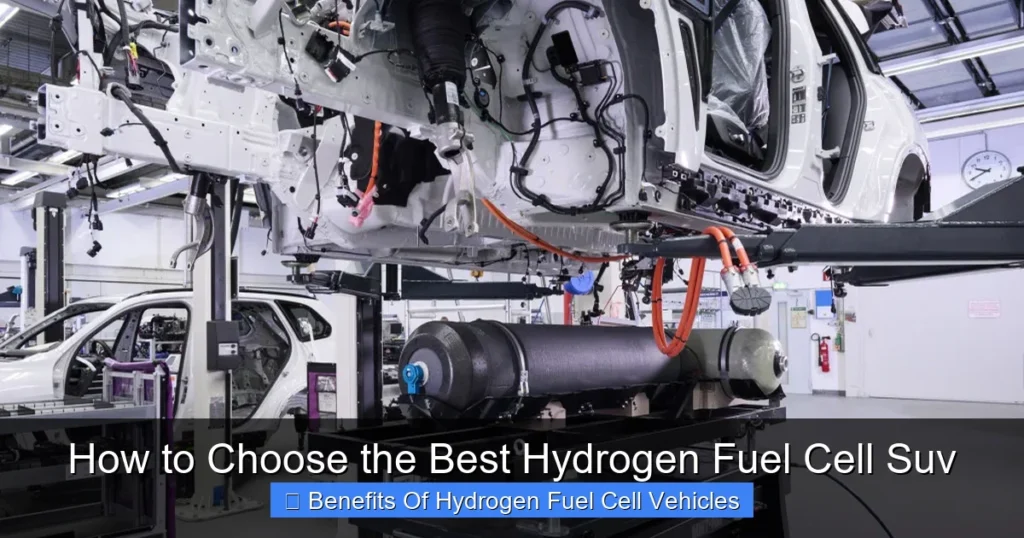
The fuel cell stack is where the magic happens. It contains multiple individual cells layered together, each with an anode, cathode, and electrolyte membrane. When hydrogen gas enters the anode, a catalyst (usually platinum) splits the hydrogen atoms into protons and electrons. The protons pass through the membrane to the cathode, while the electrons are forced through an external circuit, creating an electric current that powers the motor. At the cathode, the protons, electrons, and oxygen combine to form water—clean, simple, and silent.
Hydrogen Storage: Safe and Secure
One common concern about hydrogen vehicles is safety—after all, hydrogen is highly flammable. But modern FCEVs store hydrogen in carbon-fiber-reinforced tanks designed to withstand extreme conditions, including crashes, punctures, and fire. These tanks are rigorously tested and often mounted in protected areas of the vehicle, like under the floor or behind reinforced bumpers. Plus, hydrogen is lighter than air, so any leakage dissipates upward quickly, reducing explosion risk.
Regenerative Braking and Auxiliary Systems
Like many EVs, hydrogen SUVs often include regenerative braking, which captures energy during deceleration and stores it in a small battery buffer. This improves efficiency, especially in city driving. The auxiliary systems—like climate control and infotainment—are powered by the same fuel cell or a supplementary battery, ensuring consistent performance even when the vehicle is idle.
Top Factors to Consider When Choosing a Hydrogen Fuel Cell SUV
With only a handful of hydrogen SUVs currently available, the selection process requires careful thought. Here are the key factors to weigh before making your decision.
1. Refueling Infrastructure and Accessibility
This is arguably the biggest hurdle for hydrogen vehicle adoption. Unlike EVs, which can be charged at home, hydrogen refueling stations are sparse and concentrated in specific regions—primarily California, with limited presence in Hawaii and the Northeast. Before buying, use tools like the U.S. Department of Energy’s Alternative Fueling Station Locator to map out stations along your daily commute and frequent travel routes.
For example, if you live in Los Angeles or San Francisco, you’ll find over 50 stations, making ownership feasible. But if you’re in Texas, Florida, or the Midwest, you may struggle to find a single station within a reasonable distance. Some manufacturers, like Toyota and Hyundai, offer free hydrogen fuel for the first few years as part of their lease programs, which can ease the transition—but only if stations are accessible.
2. Driving Range and Efficiency
Range is a major selling point for hydrogen SUVs. Most models offer between 300 and 400 miles on a full tank, rivaling traditional gasoline SUVs. The 2024 Toyota Mirai, for instance, delivers up to 402 miles of range, while the Hyundai NEXO boasts 380 miles. This makes them ideal for road trips, rural driving, or commercial use where charging stops aren’t practical.
However, efficiency varies. Hydrogen production, compression, and transportation are energy-intensive processes. When measured in miles per gallon equivalent (MPGe), FCEVs typically achieve 60–70 MPGe—better than most gas SUVs but less efficient than battery EVs, which can exceed 100 MPGe. Still, the convenience of quick refueling often outweighs efficiency concerns for many drivers.
3. Purchase Price and Total Cost of Ownership
Hydrogen SUVs come with a premium price tag. The Toyota Mirai starts around $50,000, and the Hyundai NEXO is priced similarly. That’s significantly higher than comparable gasoline or even electric SUVs. But the total cost of ownership can be lower over time due to reduced maintenance and fuel savings.
FCEVs have fewer moving parts than internal combustion engines—no oil changes, no spark plugs, no exhaust systems. Brake wear is also reduced thanks to regenerative braking. Additionally, many states offer incentives. California’s Clean Vehicle Rebate Project (CVRP) provides up to $5,000 for FCEV purchases, and the federal government offers a tax credit of up to $8,000 for qualified vehicles. Some manufacturers also include free hydrogen fuel for three years, which can save thousands.
4. Cargo Space and Interior Practicality
Because hydrogen tanks and fuel cell systems take up space, cargo capacity can be a concern. The Toyota Mirai, for example, has a smaller trunk than the RAV4 due to underfloor tank placement. The Hyundai NEXO offers more cargo room but still lags behind gas-powered SUVs like the Santa Fe.
When evaluating interior space, consider your lifestyle. Do you frequently haul gear, pets, or passengers? Test drive the vehicle and measure trunk dimensions. Also check rear seat legroom and headroom—some hydrogen SUVs prioritize sleek design over practicality. Features like fold-flat seats, roof racks, and underfloor storage can help maximize utility.
5. Technology, Safety, and Warranty
Modern hydrogen SUVs come loaded with advanced tech. The Mirai features a 12.3-inch touchscreen, wireless Apple CarPlay, and Toyota’s Safety Sense 2.5+ suite, including adaptive cruise control and lane-keeping assist. The NEXO offers a curved dual-display dashboard, augmented reality navigation, and Hyundai’s SmartSense safety package.
Safety ratings are strong across the board. Both the Mirai and NEXO have earned top marks from the IIHS and NHTSA. Warranties are also generous—Toyota covers the fuel cell system for 8 years or 100,000 miles, while Hyundai offers a 10-year/100,000-mile warranty on the fuel cell and battery. These protections provide peace of mind, especially given the complexity of the technology.
Current Hydrogen Fuel Cell SUV Models to Consider
As of 2024, the hydrogen SUV market is small but growing. Here are the top contenders.
Toyota Mirai
The Mirai is the most established hydrogen vehicle on the market. Now in its second generation, it’s a sleek, midsize sedan-SUV hybrid with a luxurious interior and smooth ride. With up to 402 miles of range and a 0–60 mph time of 9.2 seconds, it’s not a performance beast—but it’s comfortable, quiet, and refined. Toyota often includes three years of free hydrogen fuel, making it an attractive lease option.
Hyundai NEXO
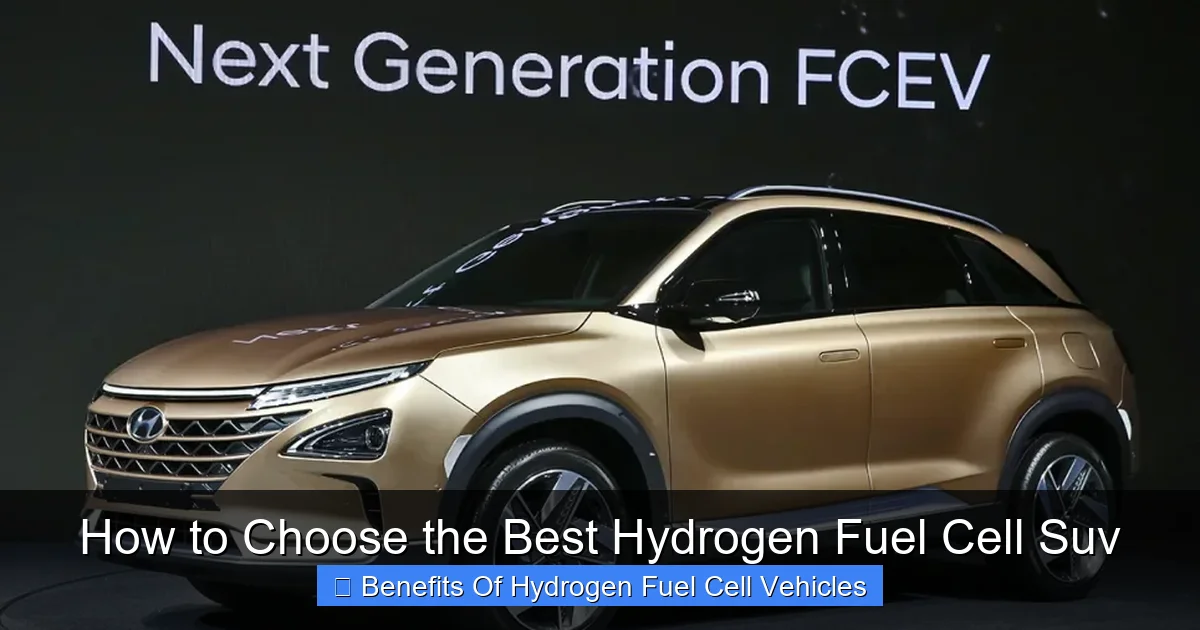
The NEXO is Hyundai’s flagship FCEV and one of the few true SUVs in the segment. It offers a spacious cabin, advanced driver aids, and a futuristic design. With 380 miles of range and a focus on sustainability—its interior uses eco-friendly materials like sugar cane and volcanic stone—it appeals to environmentally conscious buyers. Hyundai also provides three years of complimentary fuel.
Honda CR-V Fuel Cell (Upcoming)
Honda plans to launch a hydrogen-powered version of the popular CR-V in 2025. Expected to combine the CR-V’s practicality with Honda’s fuel cell expertise, this model could be a game-changer. Details are still limited, but it will likely feature a plug-in hybrid system, allowing limited battery-only driving—a first for Honda FCEVs.
Environmental Impact: Is Hydrogen Really Green?
Not all hydrogen is created equal. The environmental benefits of FCEVs depend heavily on how the hydrogen is produced. Currently, over 95% of hydrogen is made from natural gas through a process called steam methane reforming (SMR), which emits CO₂. This “gray hydrogen” undermines the zero-emission promise of FCEVs.
However, “green hydrogen”—produced using renewable energy to split water via electrolysis—is the ideal. It’s clean, sustainable, and truly carbon-free. Some refueling stations in California already use green hydrogen, and governments are investing in clean production methods. When choosing a hydrogen SUV, ask about the source of the fuel at local stations. Over time, as green hydrogen becomes more widespread, FCEVs will offer a truly sustainable alternative to fossil fuels.
Future Outlook: What’s Next for Hydrogen SUVs?
The future of hydrogen fuel cell SUVs looks promising but uncertain. Automakers are investing heavily in the technology, with Toyota, Hyundai, and Honda leading the charge. Governments are expanding infrastructure—California aims to have 200 hydrogen stations by 2025. Meanwhile, advancements in fuel cell efficiency and tank design are reducing costs and improving performance.
Challenges remain. Hydrogen production is still expensive, and distribution networks are underdeveloped. Public awareness is low, and misconceptions about safety persist. But as renewable energy grows and climate goals tighten, hydrogen could play a key role in decarbonizing heavy transport, aviation, and long-haul trucking—and SUVs may be the gateway for mainstream adoption.
Final Tips for Making the Right Choice
Choosing the best hydrogen fuel cell SUV isn’t just about picking a model—it’s about aligning your vehicle with your lifestyle, location, and values. Start by assessing your driving habits. Do you take long road trips? Live in a cold climate? Need to tow or haul? If so, a hydrogen SUV could be a great fit.
Next, research local infrastructure. Use station locators and talk to current owners. Consider leasing first to test the waters without a long-term commitment. And don’t forget incentives—they can make a big difference in affordability.
Finally, think long-term. While hydrogen SUVs are still a niche choice today, they represent a bridge to a cleaner, more flexible transportation future. By choosing wisely now, you’re not just buying a car—you’re investing in innovation.
Frequently Asked Questions
Are hydrogen fuel cell SUVs safe?
Yes, hydrogen fuel cell SUVs are designed with multiple safety features, including reinforced carbon-fiber tanks and automatic leak detection systems. They undergo rigorous crash and fire testing, and hydrogen’s lightness helps it dissipate quickly if released.
How long does it take to refuel a hydrogen SUV?
Refueling a hydrogen SUV takes about 3 to 5 minutes—similar to filling up a gas tank. This is much faster than charging an electric vehicle, making it ideal for long trips or busy schedules.
Can I drive a hydrogen SUV in cold weather?
Absolutely. Unlike some EVs, hydrogen SUVs maintain consistent performance in cold temperatures. The fuel cell system generates its own heat, and there’s no battery degradation in winter conditions.
Where can I find hydrogen refueling stations?
Most stations are in California, with a few in Hawaii and the Northeast. Use the U.S. Department of Energy’s Alternative Fueling Station Locator to find the nearest one to your home or travel routes.
Are there tax incentives for buying a hydrogen SUV?
Yes, federal and state incentives are available. The federal tax credit offers up to $8,000, and California’s CVRP provides rebates up to $5,000. Some manufacturers also include free hydrogen fuel for the first few years.
Will hydrogen SUVs become more common in the future?
While still niche, hydrogen SUVs are expected to grow as infrastructure expands and production costs decrease. Automakers like Toyota, Hyundai, and Honda are investing in the technology, and green hydrogen production is on the rise.