Hydrogen fuel cell SUVs offer a clean, efficient alternative to gas-powered vehicles, but their upfront cost remains higher than traditional models. While prices start around $60,000 and can exceed $80,000, incentives, low operating costs, and zero emissions make them a smart long-term investment for eco-conscious drivers.
Key Takeaways
- Higher upfront cost: Hydrogen fuel cell SUVs typically cost $60,000–$85,000, significantly more than gasoline or hybrid SUVs.
- Lower fuel and maintenance expenses: Hydrogen is cheaper per mile than gasoline, and fuel cells have fewer moving parts, reducing repair needs.
- Government incentives available: Federal and state rebates can reduce the purchase price by $5,000–$15,000, improving affordability.
- Limited refueling infrastructure: Only a few dozen hydrogen stations exist in the U.S., mostly in California, affecting convenience.
- Zero tailpipe emissions: These SUVs emit only water vapor, making them ideal for reducing your carbon footprint.
- Long driving range: Most models offer 300–400 miles per fill-up, comparable to gas SUVs and better than many EVs.
- Resale value uncertainty: As the technology is still emerging, long-term resale values are not yet well established.
📑 Table of Contents
- Introduction to Hydrogen Fuel Cell SUVs
- Understanding the Hydrogen Fuel Cell SUV Cost Breakdown
- Comparing Hydrogen SUVs to Gas and Electric Alternatives
- Environmental and Economic Benefits of Hydrogen SUVs
- Challenges and Limitations of Hydrogen SUVs
- Future Outlook: Will Hydrogen SUVs Become Affordable?
- Conclusion: Is a Hydrogen Fuel Cell SUV Worth the Cost?
Introduction to Hydrogen Fuel Cell SUVs
Imagine driving a spacious, powerful SUV that runs quietly, emits nothing but water vapor, and refuels in under five minutes—no charging cables, no long waits. That’s the promise of hydrogen fuel cell SUVs. These vehicles use hydrogen gas to generate electricity through a chemical reaction in a fuel cell stack, powering an electric motor. Unlike battery-electric vehicles (BEVs), which rely on heavy lithium-ion batteries, hydrogen SUVs store energy in gaseous form, allowing for quicker refueling and longer range.
But with great innovation comes a big question: What’s the real hydrogen fuel cell SUV cost? While these vehicles represent the future of clean transportation, they come with a premium price tag. As of 2024, new hydrogen SUVs start around $60,000 and can climb well above $80,000 depending on the model and features. That’s significantly more than a typical gas-powered SUV like the Toyota RAV4 or Honda CR-V, which often start under $30,000. So why pay more? The answer lies in long-term savings, environmental benefits, and the unique advantages of hydrogen technology.
Understanding the Hydrogen Fuel Cell SUV Cost Breakdown
When evaluating the hydrogen fuel cell SUV cost, it’s important to look beyond the sticker price. While the initial purchase is higher, several factors influence the total cost of ownership. Let’s break it down into key components: the vehicle price, fuel costs, maintenance, incentives, and infrastructure access.
Vehicle Purchase Price
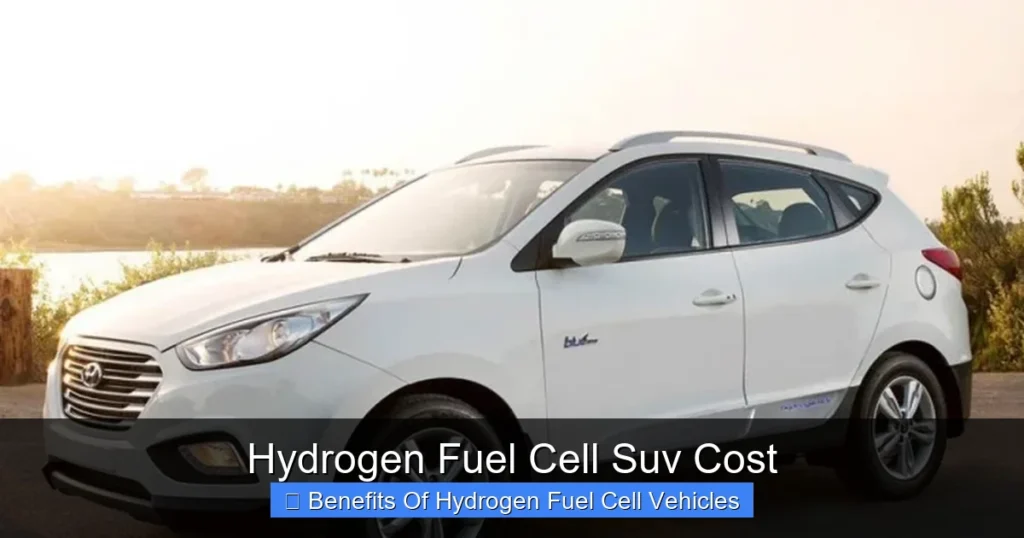
The biggest factor in the hydrogen fuel cell SUV cost is the upfront price. Currently, only a few models are available in the U.S., and they’re positioned as premium vehicles. For example, the 2024 Toyota Mirai XLE starts at around $66,000, while the top-tier Limited trim can exceed $75,000. The Hyundai Nexo, another popular option, is priced similarly, with the Blue trim at approximately $62,000 and the Premium version nearing $70,000.
These prices reflect the advanced technology inside. Fuel cells require expensive materials like platinum catalysts, and hydrogen storage tanks must be lightweight yet strong enough to handle high pressure. Manufacturing at scale is still limited, which keeps production costs high. However, as demand grows and production ramps up, experts predict prices could drop by 20–30% over the next decade.
Fuel Costs: Hydrogen vs. Gasoline
One of the most compelling arguments for hydrogen SUVs is the cost of fuel. While hydrogen isn’t free, it’s often cheaper per mile than gasoline—especially when you consider efficiency. On average, hydrogen costs about $16 per kilogram in California, where most stations are located. A typical hydrogen SUV like the Mirai can travel around 400 miles on 5 kg of hydrogen, meaning a full tank costs roughly $80.
Compare that to a gasoline SUV that gets 25 miles per gallon. To drive 400 miles, you’d need 16 gallons of gas. At $4 per gallon, that’s $64. So, hydrogen is slightly more expensive per mile—about $0.20 per mile vs. $0.16 for gas. However, hydrogen prices are expected to fall as production scales and green hydrogen (made from renewable energy) becomes more common. In some regions with state subsidies, hydrogen can even be cheaper than gas.
Maintenance and Repair Expenses
Here’s where hydrogen SUVs shine: lower maintenance costs. Because they use electric motors and have no internal combustion engine, there’s no need for oil changes, spark plugs, or exhaust systems. The fuel cell stack is durable and designed to last over 100,000 miles with minimal degradation.
Routine maintenance includes tire rotations, brake inspections (regenerative braking reduces wear), and occasional coolant checks. Over a 10-year period, owners can save $3,000–$5,000 compared to gas SUVs, according to industry estimates. That helps offset the higher purchase price over time.
Government Incentives and Rebates
One of the best ways to reduce the hydrogen fuel cell SUV cost is through government incentives. At the federal level, the Inflation Reduction Act offers a clean vehicle tax credit of up to $7,500 for eligible hydrogen fuel cell vehicles. However, not all models qualify—requirements include final assembly in North America and income limits for buyers.
California offers even more generous support. The Clean Vehicle Rebate Project (CVRP) provides up to $5,000 for new hydrogen SUV purchases. Some utilities, like Southern California Gas Company, also offer additional rebates or free hydrogen for the first few years. Combined, these incentives can slash $10,000–$15,000 off the total cost, making hydrogen SUVs much more accessible.
Comparing Hydrogen SUVs to Gas and Electric Alternatives
To truly understand the value of hydrogen fuel cell SUVs, it helps to compare them to traditional gas-powered SUVs and battery-electric SUVs (EVs). Each has pros and cons, and the best choice depends on your driving habits, location, and priorities.
Hydrogen vs. Gasoline SUVs
Gasoline SUVs are the most affordable upfront, with many models starting under $30,000. They also benefit from a vast refueling network—gas stations are everywhere. However, they’re expensive to fuel and maintain over time, and they produce significant greenhouse gas emissions.
Hydrogen SUVs, while pricier initially, offer lower operating costs and zero emissions. They also refuel in 3–5 minutes, just like gas, making them ideal for long trips or busy schedules. The trade-off? Limited hydrogen stations mean you’ll need to live near a refueling network, currently only available in select areas like California.
Hydrogen vs. Electric SUVs
Electric SUVs, such as the Tesla Model Y or Ford Mustang Mach-E, are gaining popularity due to their lower fuel costs and expanding charging infrastructure. They’re also eligible for federal and state incentives. However, charging takes time—even fast chargers need 30–45 minutes for an 80% charge. Long road trips require careful planning around charging stations.
Hydrogen SUVs eliminate range anxiety and charging delays. A 5-minute fill-up gets you 300–400 miles of range, just like a gas car. But again, the lack of hydrogen stations is a major hurdle. As of 2024, there are only about 60 public hydrogen stations in the U.S., all but a few in California. In contrast, there are over 150,000 public EV charging ports nationwide.
Real-World Example: Family Road Trip
Let’s say you’re planning a 1,000-mile family road trip from Los Angeles to Seattle. With a hydrogen SUV, you’d need to refuel 2–3 times, each taking under 10 minutes. If you’re driving an EV, you’d need to stop 4–6 times for 30–60 minutes each, depending on the charger speed. For families with kids or tight schedules, the convenience of hydrogen could outweigh the higher upfront cost.
Environmental and Economic Benefits of Hydrogen SUVs
Beyond cost, hydrogen fuel cell SUVs offer significant environmental and economic advantages. As the world shifts toward sustainable transportation, these vehicles play a key role in reducing emissions and dependence on fossil fuels.
Zero Tailpipe Emissions
The most obvious benefit is clean air. Hydrogen SUVs emit only water vapor and warm air—no carbon dioxide, nitrogen oxides, or particulate matter. This makes them ideal for urban areas struggling with air pollution. In cities like Los Angeles or Denver, driving a hydrogen SUV can significantly reduce your personal carbon footprint.
It’s important to note, however, that not all hydrogen is created equal. “Grey” hydrogen, made from natural gas, still produces CO2 during production. But “green” hydrogen, produced using renewable energy like wind or solar, is truly carbon-neutral. As green hydrogen becomes more widespread, the environmental benefits will grow.
Energy Independence and Security
Hydrogen can be produced domestically from a variety of sources, including water, biomass, and natural gas. This reduces reliance on imported oil and enhances national energy security. Countries like Japan, South Korea, and Germany are investing heavily in hydrogen infrastructure as part of their clean energy strategies.
In the U.S., states like California and Texas are leading the way. California’s Hydrogen Highway Network aims to have 200 hydrogen stations by 2025, supported by state funding and private partnerships. As the network expands, more drivers will have access to clean, local fuel.
Job Creation and Economic Growth
The hydrogen economy is creating new jobs in manufacturing, engineering, and infrastructure development. Companies like Toyota, Hyundai, and Nikola are investing billions in fuel cell technology. According to the Hydrogen Council, the global hydrogen sector could support 30 million jobs and generate $2.5 trillion in revenue by 2050.
For consumers, this means more choices, better technology, and lower prices over time. As production scales and competition increases, the hydrogen fuel cell SUV cost is expected to decline, making these vehicles accessible to a broader audience.
Challenges and Limitations of Hydrogen SUVs
Despite their promise, hydrogen fuel cell SUVs face several challenges that affect their cost and adoption. Understanding these limitations is crucial for making an informed decision.
Limited Refueling Infrastructure
The biggest barrier to widespread adoption is the lack of hydrogen stations. As of 2024, there are only about 60 public stations in the U.S., with over 50 in California. This makes long-distance travel difficult unless you live in or near major cities with hydrogen networks.
Building new stations is expensive—each one costs $1–$2 million to install. Until more stations are built, hydrogen SUVs remain a niche option. However, governments and private companies are working to expand the network. For example, the U.S. Department of Energy’s H2@Scale initiative aims to reduce hydrogen production and distribution costs while increasing station availability.
Hydrogen Production and Storage Challenges
Producing, transporting, and storing hydrogen is complex and energy-intensive. Hydrogen is the lightest element, so it requires high-pressure tanks or cryogenic temperatures to store efficiently. Leakage is also a concern, as hydrogen can embrittle metals and escape through tiny gaps.
Additionally, most hydrogen today is produced from natural gas, which generates CO2. While green hydrogen is growing, it still accounts for less than 1% of global production. Scaling up renewable-powered electrolysis will be key to making hydrogen truly sustainable.
Resale Value and Market Uncertainty
Because hydrogen SUVs are still rare, their resale value is uncertain. Unlike gasoline or electric cars, there’s limited data on how well they hold their value over time. Some experts worry that rapid technological advances could make current models obsolete, similar to early EVs.
However, as the market matures and more models enter the market, resale values are likely to stabilize. Toyota and Hyundai offer strong warranties—up to 8 years or 100,000 miles on the fuel cell system—which can provide peace of mind for buyers.
Future Outlook: Will Hydrogen SUVs Become Affordable?
The future of hydrogen fuel cell SUVs looks promising, but affordability will depend on several factors: technological advances, government support, and market demand.
Technological Advancements
Researchers are working to reduce the cost of fuel cells by replacing platinum with cheaper catalysts, improving efficiency, and increasing durability. New materials like graphene and advanced polymers could make hydrogen tanks lighter and safer.
Battery technology is also evolving. While hydrogen and batteries serve different needs, innovations in energy storage could complement each other. For example, some experts envision hybrid systems that use both hydrogen and batteries for optimal performance.
Policy and Investment Trends
Governments around the world are investing in hydrogen as part of their climate goals. The European Union’s Hydrogen Strategy aims to install 40 GW of electrolyzers by 2030. In the U.S., the Bipartisan Infrastructure Law includes $8 billion for hydrogen hubs—regional networks for production, storage, and distribution.
These investments will drive down costs and expand infrastructure. As more stations open and production scales, the hydrogen fuel cell SUV cost is expected to drop significantly. Some analysts predict prices could fall below $50,000 by 2030, making hydrogen SUVs competitive with luxury gas and electric models.
Consumer Adoption and Market Growth
Consumer interest in clean transportation is growing. A 2023 survey by Deloitte found that 45% of U.S. drivers would consider a hydrogen vehicle if refueling were convenient. As awareness increases and more models become available, demand is likely to rise.
Automakers are responding. Toyota plans to expand its Mirai lineup, and Hyundai is developing new hydrogen SUVs and trucks. Startups like Hyperion and Riversimple are also entering the market with innovative designs.
Conclusion: Is a Hydrogen Fuel Cell SUV Worth the Cost?
So, is the hydrogen fuel cell SUV cost justified? For the right driver, absolutely. If you live in an area with hydrogen stations, prioritize environmental impact, and value quick refueling and long range, a hydrogen SUV could be a smart investment. The higher upfront cost is offset by lower fuel and maintenance expenses, plus generous incentives.
However, for most consumers, the limited infrastructure remains a dealbreaker—for now. As hydrogen networks expand and technology improves, these vehicles will become more practical and affordable. In the meantime, they represent a bold step toward a cleaner, more sustainable future.
Whether you’re an early adopter or waiting for the market to mature, one thing is clear: hydrogen fuel cell SUVs are more than a niche curiosity. They’re a viable, zero-emission alternative with real benefits. And as the world moves toward decarbonization, their role will only grow.
Frequently Asked Questions
How much does a hydrogen fuel cell SUV cost?
Hydrogen fuel cell SUVs typically cost between $60,000 and $85,000, depending on the model and trim. This is significantly higher than gas or hybrid SUVs but can be reduced with government incentives.
Are hydrogen SUVs cheaper to maintain than gas vehicles?
Yes, hydrogen SUVs have lower maintenance costs because they lack engines, transmissions, and exhaust systems. Fewer moving parts mean fewer repairs and no oil changes.
Where can I refuel a hydrogen SUV?
As of 2024, most hydrogen stations are in California, with a few in Hawaii and the Northeast. Check the California Fuel Cell Partnership website for real-time station locations.
Do hydrogen SUVs qualify for tax credits?
Yes, many hydrogen SUVs qualify for federal tax credits up to $7,500 and state rebates like California’s $5,000 CVRP incentive, which can significantly reduce the purchase price.
How far can a hydrogen SUV travel on a full tank?
Most hydrogen SUVs offer a range of 300–400 miles per fill-up, comparable to gas SUVs and better than many electric vehicles.
Is hydrogen fuel safe?
Yes, hydrogen is safe when handled properly. It’s lighter than air and disperses quickly in case of a leak. Modern hydrogen tanks are rigorously tested and designed to withstand crashes and extreme conditions.