Hydrogen fuel cell SUVs offer impressive performance, zero emissions, and fast refueling—making them a compelling alternative to traditional and electric vehicles. This detailed comparison explores real-world driving dynamics, range, efficiency, and practicality across leading models to help you understand how they stack up.
Key Takeaways
- Zero Emissions Driving: Hydrogen fuel cell SUVs emit only water vapor, offering a truly clean driving experience with no harmful tailpipe pollutants.
- Fast Refueling Times: Unlike battery-electric SUVs, hydrogen models can be refueled in under 10 minutes—similar to gasoline vehicles—making long trips more convenient.
- Strong Acceleration and Towing: Electric motors powered by fuel cells deliver instant torque, enabling quick acceleration and competitive towing capacities.
- Real-World Range Over 300 Miles: Most current hydrogen SUVs offer ranges between 300 and 400 miles per fill, rivaling many gas-powered counterparts.
- Limited but Growing Infrastructure: While hydrogen stations are still sparse, key regions like California, Japan, and parts of Europe are rapidly expanding refueling networks.
- Higher Upfront Cost, Lower Operating Expenses: Initial purchase prices remain high, but lower fuel and maintenance costs can offset this over time.
- Quiet and Smooth Ride: With no internal combustion engine, hydrogen SUVs provide a serene, vibration-free driving experience.
📑 Table of Contents
- Introduction: The Rise of Hydrogen-Powered SUVs
- How Hydrogen Fuel Cell SUVs Work
- Top Hydrogen Fuel Cell SUVs on the Market
- Performance Comparison: Acceleration, Range, and Efficiency
- Refueling Infrastructure and Practicality
- Environmental Impact and Sustainability
- Cost Analysis: Purchase Price, Fuel, and Maintenance
- Conclusion: Are Hydrogen Fuel Cell SUVs the Future?
Introduction: The Rise of Hydrogen-Powered SUVs
The automotive world is shifting gears—literally. As concerns about climate change, air pollution, and fossil fuel dependence grow, automakers are racing to deliver cleaner, more sustainable transportation solutions. While battery-electric vehicles (BEVs) have dominated headlines, another quiet revolution is gaining momentum: hydrogen fuel cell vehicles (FCEVs). Among these, hydrogen fuel cell SUVs are emerging as a powerful contender in the green mobility space, combining the practicality of spacious, rugged vehicles with the environmental benefits of zero-emission technology.
Unlike traditional gasoline-powered SUVs that burn fuel and release carbon dioxide, hydrogen fuel cell SUVs generate electricity on board through a chemical reaction between hydrogen and oxygen. The only byproduct? Pure water vapor. This makes them not just eco-friendly, but also incredibly efficient in terms of energy use. And because they don’t rely on heavy battery packs like BEVs, they offer a lighter, more balanced ride—especially important for larger vehicles like SUVs. With major automakers like Toyota, Hyundai, and Honda investing heavily in this technology, hydrogen SUVs are no longer a futuristic concept. They’re here, they’re road-ready, and they’re ready to compete.
How Hydrogen Fuel Cell SUVs Work
To truly appreciate the performance of hydrogen fuel cell SUVs, it helps to understand how they operate. At the heart of every FCEV is the fuel cell stack—a series of individual fuel cells that combine hydrogen from the onboard tank with oxygen from the air. This reaction produces electricity, which powers an electric motor. Think of it like a hybrid system, but instead of a gasoline engine recharging a battery, the fuel cell generates power on demand.
The Core Components
Every hydrogen fuel cell SUV relies on three main components: the hydrogen storage tank, the fuel cell stack, and the electric motor. The hydrogen tank stores compressed hydrogen gas at high pressure—typically around 700 bar—allowing for a compact yet energy-dense fuel source. This hydrogen feeds into the fuel cell stack, where it’s split into protons and electrons. The electrons create an electric current, while the protons move through a membrane to combine with oxygen, forming water. The electricity generated powers the motor, propelling the vehicle forward.
Energy Efficiency and Regenerative Braking
One of the standout features of hydrogen SUVs is their energy efficiency. While no energy conversion is 100% efficient, fuel cell systems are remarkably effective—converting about 60% of the hydrogen’s energy into usable electricity. That’s significantly higher than the 20–30% efficiency of internal combustion engines. Additionally, most hydrogen SUVs incorporate regenerative braking systems. When you slow down or brake, the electric motor acts as a generator, capturing kinetic energy and feeding it back into the system. This not only improves efficiency but also extends range—especially in stop-and-go city driving.
Silent Operation and Instant Torque
Because hydrogen SUVs use electric motors for propulsion, they deliver the same instant torque and smooth acceleration as battery-electric vehicles. There’s no engine noise, no gear shifts, and no lag—just seamless power delivery the moment you press the accelerator. This makes them ideal for both city commutes and highway cruising. And unlike diesel or gasoline engines, there’s no vibration or harshness, resulting in a remarkably quiet and comfortable ride.
Top Hydrogen Fuel Cell SUVs on the Market
While the hydrogen vehicle market is still niche compared to EVs or gas-powered cars, several automakers have stepped up with impressive hydrogen fuel cell SUVs. These models aren’t just prototypes—they’re available for purchase or lease in select markets and offer real-world performance that rivals traditional SUVs. Let’s take a closer look at the top contenders.
2024 Toyota Mirai XLE
The Toyota Mirai has long been a pioneer in hydrogen technology, and the 2024 XLE trim elevates the experience with a sleek redesign and improved performance. Powered by a rear-wheel-drive electric motor generating 182 horsepower and 300 lb-ft of torque, the Mirai delivers smooth, responsive acceleration. It can go from 0 to 60 mph in about 9 seconds—not sports-car quick, but more than adequate for daily driving. With a range of up to 402 miles on a full tank, the Mirai XLE is one of the longest-range hydrogen vehicles available. Its spacious interior, premium materials, and advanced safety features make it a strong choice for families and professionals alike.
2024 Hyundai NEXO
Hyundai’s NEXO is a tech-forward hydrogen SUV that blends efficiency with innovation. Available in two trims—Blue and Limited—the NEXO offers 161 horsepower and 291 lb-ft of torque, with a 0–60 mph time of around 9.5 seconds. What sets it apart is its advanced air purification system, which filters out 99.9% of fine dust and pollutants as it drives—essentially cleaning the air while you travel. The NEXO boasts a range of up to 380 miles, making it ideal for longer trips. Its minimalist interior, large touchscreen, and driver-assist features position it as a modern, eco-conscious SUV for the tech-savvy driver.
2024 Honda CR-V FCEV (Upcoming)
Honda is re-entering the hydrogen market with a hydrogen-powered version of its popular CR-V SUV. Expected to launch in 2024, the CR-V FCEV will combine the practicality of a compact SUV with the clean power of a fuel cell. While official specs are still under wraps, early reports suggest it will offer around 300 miles of range and a dual-motor setup for all-wheel drive capability. Honda’s reputation for reliability and fuel efficiency could make this model a game-changer, especially if it’s priced competitively with hybrid and electric alternatives.
Other Notable Mentions
While Toyota, Hyundai, and Honda lead the charge, other manufacturers are exploring hydrogen SUVs. General Motors has partnered with Honda on fuel cell development, and companies like BMW and Mercedes-Benz have tested hydrogen variants of their luxury SUVs. Though not yet widely available, these models signal growing industry interest and could expand consumer options in the near future.
Performance Comparison: Acceleration, Range, and Efficiency
When evaluating any vehicle, performance is a key factor—and hydrogen fuel cell SUVs hold their own against both gas and electric competitors. Let’s break down how they compare in three critical areas: acceleration, range, and energy efficiency.
Acceleration and Power Delivery
Hydrogen SUVs may not win drag races, but they offer brisk, responsive performance thanks to their electric motors. The Toyota Mirai, for example, feels lively in city traffic, with smooth power delivery and minimal lag. The Hyundai NEXO offers a slightly more relaxed driving experience, prioritizing comfort over sportiness. While they don’t match the neck-snapping acceleration of high-performance EVs like the Tesla Model X, they’re more than capable of merging onto highways, climbing hills, and handling daily driving with ease. The instant torque of electric motors means you get strong pull from a standstill—perfect for quick getaways or navigating busy intersections.
Real-World Range and Refueling
Range anxiety is a common concern for alternative fuel vehicles, but hydrogen SUVs offer a compelling solution. With ranges between 300 and 400 miles, they match or exceed many gasoline SUVs and even some long-range EVs. The Toyota Mirai’s 402-mile range, for instance, is impressive for a zero-emission vehicle. And unlike BEVs, which can take 30 minutes to several hours to recharge—even at fast chargers—hydrogen SUVs can be refueled in under 10 minutes. This makes them ideal for road trips, ride-sharing, or commercial use where downtime is costly. Imagine pulling up to a hydrogen station, filling up in the time it takes to grab a coffee, and hitting the road again—no waiting, no range stress.
Energy Efficiency and Cost per Mile
When it comes to energy efficiency, hydrogen SUVs are a mixed bag. On one hand, fuel cells are highly efficient at converting hydrogen into electricity. On the other, producing, transporting, and compressing hydrogen is energy-intensive. Currently, hydrogen is often made from natural gas, which reduces its environmental benefits. However, green hydrogen—produced using renewable energy—is gaining traction and could make FCEVs even cleaner in the future. In terms of cost, hydrogen fuel is still expensive, typically ranging from $12 to $16 per kilogram. With most SUVs achieving 60–70 miles per kilogram, that translates to about $0.18–$0.25 per mile—more than electricity but comparable to premium gasoline. As production scales up and infrastructure improves, these costs are expected to fall.
Refueling Infrastructure and Practicality
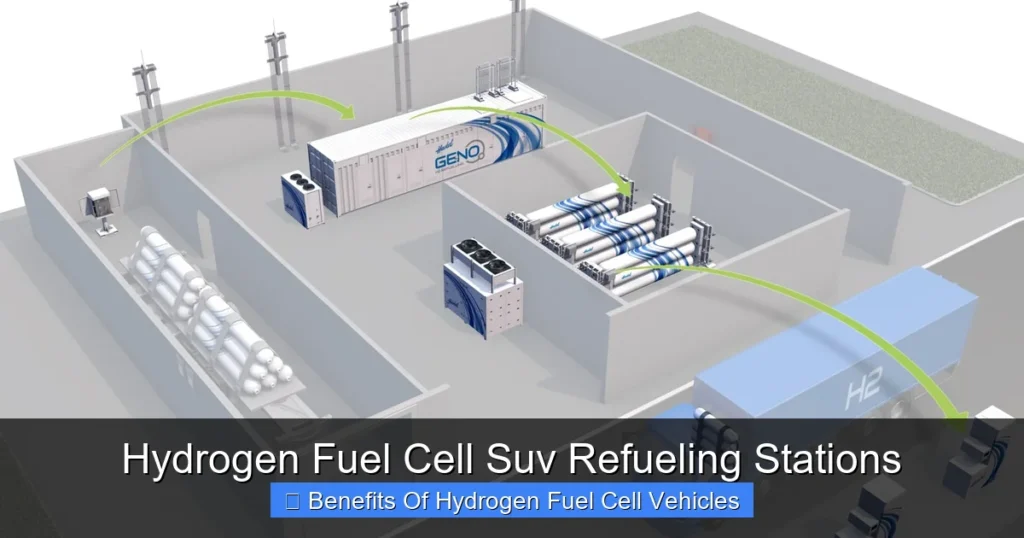
One of the biggest challenges facing hydrogen fuel cell SUVs is infrastructure. Unlike gasoline stations, which are on nearly every corner, hydrogen refueling stations are still rare. As of 2024, there are fewer than 100 public hydrogen stations in the United States, with the majority located in California. This limits where you can drive and refuel, making long-distance travel difficult outside of supported regions.
Where Hydrogen Stations Are Available
California leads the way in hydrogen infrastructure, with over 60 stations across the state—especially in Los Angeles, San Francisco, and San Diego. Japan and South Korea have also invested heavily, with hundreds of stations in urban areas. In Europe, countries like Germany, France, and the UK are expanding their networks, though coverage remains patchy. For drivers in these regions, owning a hydrogen SUV is increasingly practical. But for those in rural areas or outside these hubs, it’s still a challenge.
Home Refueling and Future Developments
Currently, home refueling isn’t widely available for hydrogen vehicles. Unlike EVs, which can be charged overnight at home, hydrogen requires high-pressure storage and specialized equipment. However, companies like Plug Power and Hy2Gen are working on home hydrogen refueling units, which could become viable in the next decade. Additionally, governments and automakers are investing in mobile refueling trucks and temporary stations for events or fleet operations. As demand grows, we can expect infrastructure to expand—especially if hydrogen becomes a key part of the clean energy transition.
Practical Tips for Hydrogen SUV Owners
If you’re considering a hydrogen fuel cell SUV, here are a few tips to maximize practicality:
- Plan your routes: Use apps like Hydrogen Station Finder or PlugShare to locate nearby stations and plan long trips accordingly.
- Lease instead of buy: Many hydrogen SUVs are available through lease programs that include fuel credits and maintenance, reducing upfront costs.
- Stay in supported regions: For now, hydrogen driving is most practical in California, Japan, or parts of Europe.
- Monitor fuel prices: Hydrogen costs can vary by location, so check local rates before filling up.
- Combine with renewable energy: If possible, support green hydrogen production by choosing stations that use renewable sources.
Environmental Impact and Sustainability
One of the biggest selling points of hydrogen fuel cell SUVs is their environmental footprint. With zero tailpipe emissions, they produce no carbon dioxide, nitrogen oxides, or particulate matter—making them a cleaner alternative to gasoline and diesel vehicles. But the full picture depends on how the hydrogen is produced.
Grey, Blue, and Green Hydrogen
Not all hydrogen is created equal. Most hydrogen today is “grey” hydrogen, made from natural gas through a process called steam methane reforming. This method releases CO2, reducing the environmental benefits. “Blue” hydrogen captures and stores some of these emissions, while “green” hydrogen is produced using renewable energy like wind or solar to split water molecules. Green hydrogen is the gold standard—completely clean from production to use. As the world shifts toward renewables, the share of green hydrogen is expected to grow, making FCEVs even more sustainable.
Lifecycle Emissions Comparison
When you consider the entire lifecycle—from manufacturing to disposal—hydrogen SUVs still have a lower carbon footprint than gasoline vehicles, especially if powered by green hydrogen. They also avoid the mining and disposal issues associated with lithium-ion batteries in EVs. While battery production has environmental costs, hydrogen systems use fewer rare earth materials and are easier to recycle. Over time, as production methods improve and infrastructure expands, hydrogen SUVs could become one of the cleanest ways to drive.
Cost Analysis: Purchase Price, Fuel, and Maintenance
Hydrogen fuel cell SUVs come with a higher sticker price than most gas or electric SUVs. The Toyota Mirai starts around $50,000, while the Hyundai NEXO is priced similarly. In comparison, a Tesla Model Y starts around $50,000, and a gas-powered Honda CR-V is under $30,000. However, the total cost of ownership tells a different story.
Fuel and Maintenance Savings
Hydrogen vehicles have fewer moving parts than internal combustion engines, which means less wear and tear. There’s no oil to change, no spark plugs, and no complex transmission. Brake pads last longer due to regenerative braking. Over time, these savings can offset the higher upfront cost. Additionally, many hydrogen programs include free fuel for several years—Hyundai offers up to $15,000 in hydrogen credits with the NEXO, for example. When combined with tax incentives and lower maintenance, the long-term cost can be competitive.
Incentives and Government Support
Governments around the world are offering incentives to encourage hydrogen adoption. In the U.S., buyers may qualify for federal tax credits of up to $8,000, plus state rebates in California and other regions. Japan and South Korea offer significant subsidies for FCEV purchases. These incentives, along with lower operating costs, make hydrogen SUVs more accessible than their price tags suggest.
Conclusion: Are Hydrogen Fuel Cell SUVs the Future?
Hydrogen fuel cell SUVs represent a bold step toward a cleaner, more sustainable transportation future. With zero emissions, fast refueling, and impressive range, they offer a compelling alternative to both gasoline and electric vehicles. While challenges remain—especially in infrastructure and cost—the technology is advancing rapidly. For drivers in supported regions, they provide a practical, eco-friendly way to enjoy the space and versatility of an SUV without the environmental guilt.
As automakers continue to innovate and governments invest in clean energy, hydrogen SUVs are poised to play a bigger role in the automotive landscape. Whether you’re a family looking for a green minivan alternative, a commuter tired of charging anxiety, or an eco-conscious driver ready to embrace the future, hydrogen fuel cell SUVs are worth considering. They may not be mainstream yet, but they’re driving us toward a cleaner tomorrow—one mile at a time.
Frequently Asked Questions
How far can a hydrogen fuel cell SUV go on a full tank?
Most hydrogen fuel cell SUVs offer a range between 300 and 400 miles per fill. The Toyota Mirai, for example, can travel up to 402 miles, while the Hyundai NEXO delivers around 380 miles. This rivals many gasoline SUVs and exceeds the range of some battery-electric models.
How long does it take to refuel a hydrogen SUV?
Refueling a hydrogen SUV takes about 5 to 10 minutes—similar to filling up a gas tank. This is significantly faster than charging an electric vehicle, even at the fastest DC chargers, making hydrogen SUVs ideal for long trips and commercial use.
Are hydrogen fuel cell SUVs safe?
Yes, hydrogen SUVs are designed with multiple safety features, including reinforced hydrogen tanks, leak detection systems, and automatic shut-off valves. Hydrogen is lighter than air and disperses quickly in case of a leak, reducing fire risk. These vehicles undergo rigorous testing and meet strict safety standards.
Can I charge a hydrogen SUV at home?
Currently, home refueling is not widely available for hydrogen vehicles. Unlike EVs, which can be charged with a home outlet, hydrogen requires high-pressure storage and specialized equipment. However, home refueling units are in development and may become viable in the future.
What happens if I run out of hydrogen?
If you run out of hydrogen, the vehicle will stop running, just like a gas car. However, most hydrogen SUVs have low-fuel warnings and navigation systems that direct you to the nearest station. Towing to a refueling station is possible, but it’s best to plan routes carefully to avoid running empty.
Are hydrogen SUVs better for the environment than electric SUVs?
It depends on how the hydrogen is produced. If made from renewable energy (green hydrogen), FCEVs have a lower lifecycle carbon footprint than most EVs. However, if hydrogen comes from natural gas (grey hydrogen), the benefits are reduced. Both technologies are cleaner than gasoline, but green hydrogen offers the cleanest path forward.