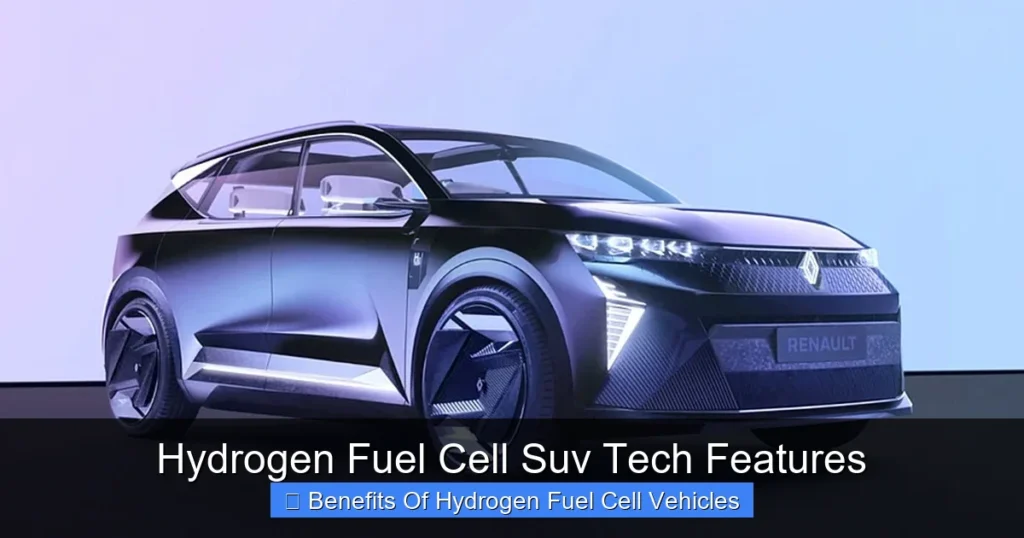
Hydrogen fuel cell SUVs combine eco-friendly performance with advanced technology, offering zero emissions, quick refueling, and impressive range. These vehicles use innovative systems like regenerative braking, intelligent energy management, and high-pressure storage to deliver a smooth, sustainable driving experience.
Imagine driving a powerful, full-sized SUV that doesn’t pollute the air, refuels in minutes, and takes you over 300 miles on a single tank—all while humming quietly down the highway. Sounds like science fiction? It’s not. Welcome to the world of hydrogen fuel cell SUVs, where cutting-edge technology meets environmental responsibility.
These vehicles represent a bold leap forward in sustainable transportation. Unlike traditional gas guzzlers or even battery-electric SUVs, hydrogen fuel cell SUVs generate electricity on board using a chemical reaction between hydrogen and oxygen. The only byproduct? Pure water. No smog, no carbon dioxide, no compromise on performance. And with advancements in fuel cell efficiency, safety, and infrastructure, these SUVs are becoming more practical than ever.
But what makes them tick? What are the real tech features that set hydrogen fuel cell SUVs apart? From intelligent energy systems to high-pressure storage tanks, the technology under the hood is as impressive as the ride itself. In this article, we’ll dive deep into the innovative features that power these eco-warriors, explore how they work, and why they might just be the future of green driving.
Key Takeaways
- Zero Tailpipe Emissions: Hydrogen fuel cell SUVs emit only water vapor, making them a clean alternative to gasoline-powered vehicles.
- Fast Refueling: Unlike electric vehicles, hydrogen SUVs can be refueled in under 10 minutes—similar to traditional gas cars.
- Long Driving Range: Most hydrogen SUVs offer 300–400 miles per fill-up, ideal for long-distance travel.
- Advanced Energy Management: Smart systems optimize hydrogen use, battery charging, and power distribution for maximum efficiency.
- Regenerative Braking: Captures energy during braking to recharge the auxiliary battery and improve overall efficiency.
- High-Pressure Hydrogen Tanks: Lightweight, durable tanks safely store hydrogen at 700 bar, ensuring safety and performance.
- Quiet and Smooth Operation: Electric motors powered by fuel cells deliver a whisper-quiet, vibration-free ride.
📑 Table of Contents
How Hydrogen Fuel Cell SUVs Work
At the heart of every hydrogen fuel cell SUV is a fuel cell stack—a sophisticated system that converts hydrogen into electricity to power the vehicle. This process is clean, quiet, and incredibly efficient. But how does it actually work?
The Fuel Cell Stack: Power from Chemistry
The fuel cell stack is made up of hundreds of individual fuel cells layered together. Each cell contains an anode, a cathode, and an electrolyte membrane. When hydrogen gas (H₂) is fed into the anode, a catalyst—usually platinum—splits the hydrogen atoms into protons and electrons. The protons pass through the electrolyte membrane to the cathode, while the electrons are forced to travel through an external circuit, creating an electric current. This electricity powers the SUV’s electric motor.
At the cathode, the protons, electrons, and oxygen from the air combine to form water (H₂O)—the only emission. This entire process happens silently and without combustion, making it far cleaner than internal combustion engines.
Hydrogen Storage: Safe and Efficient
Storing hydrogen safely is one of the biggest challenges in fuel cell technology. Hydrogen is the lightest element and highly flammable, so it must be contained under high pressure. Most hydrogen SUVs use carbon fiber-reinforced tanks that can withstand pressures up to 700 bar (about 10,000 psi). These tanks are lightweight, durable, and designed to survive extreme conditions, including crashes.
For example, the Toyota Mirai and Hyundai NEXO use Type IV composite tanks that are both strong and corrosion-resistant. These tanks are mounted securely in the vehicle’s underbody, away from impact zones, and include multiple safety valves and sensors to prevent leaks.
Hybrid Power System: Battery Meets Fuel Cell
While the fuel cell generates electricity, it doesn’t directly power the wheels at all times. Instead, most hydrogen SUVs use a hybrid system that includes a small lithium-ion battery. This battery stores excess energy produced by the fuel cell and provides extra power during acceleration or uphill driving.
Think of it like a hybrid electric vehicle, but instead of a gasoline engine, you have a hydrogen fuel cell. The battery also captures energy from regenerative braking, which we’ll explore later. This dual-system approach ensures smooth performance, quick response, and better overall efficiency.
Zero Emissions: The Environmental Advantage
One of the most compelling reasons to choose a hydrogen fuel cell SUV is its environmental impact—or lack thereof. These vehicles produce zero tailpipe emissions, meaning they don’t release harmful pollutants like nitrogen oxides (NOx), particulate matter, or carbon dioxide (CO₂).
Only Water Comes Out the Tailpipe
When you drive a hydrogen SUV, the only thing coming out of the exhaust is water vapor. It’s so clean, you could literally drink it—though we don’t recommend it, since it may contain trace minerals from the air. Still, the fact that a full-sized SUV can operate without polluting the air is a game-changer for urban environments and climate goals.
This makes hydrogen SUVs ideal for cities with strict emissions regulations, such as California, where zero-emission vehicle (ZEV) mandates are pushing automakers to innovate.
Lifecycle Emissions: A Bigger Picture
Of course, it’s not just about what comes out of the tailpipe. We also need to consider how the hydrogen is produced. Currently, most hydrogen is made from natural gas through a process called steam methane reforming, which does release CO₂. However, “green hydrogen”—produced using renewable energy like wind or solar to split water molecules—is gaining traction.
As green hydrogen production scales up, the lifecycle emissions of hydrogen SUVs will drop significantly. In fact, studies show that hydrogen vehicles powered by renewable hydrogen can reduce greenhouse gas emissions by up to 90% compared to gasoline vehicles.
Comparing to Battery Electric SUVs
You might be wondering: how do hydrogen SUVs stack up against battery electric vehicles (BEVs)? Both are zero-emission at the tailpipe, but they differ in energy source and infrastructure.
BEVs rely on large batteries that take hours to recharge, while hydrogen SUVs can be refueled in minutes. However, BEVs are generally more energy-efficient because they don’t lose energy in hydrogen production and conversion. Still, for drivers who need long range and quick refueling—like road trippers or commercial fleets—hydrogen offers a compelling alternative.
Fast Refueling: The Convenience Factor
One of the biggest drawbacks of battery electric vehicles is charging time. Even with fast chargers, it can take 30 minutes to an hour to get an 80% charge. For long trips, that means frequent stops and planning around charging stations.
Hydrogen fuel cell SUVs solve this problem with fast, convenient refueling.
Fill Up in Under 10 Minutes
Refueling a hydrogen SUV is almost identical to filling up a gas car. You pull up to a hydrogen dispenser, connect the nozzle, and in about 5 to 10 minutes, your tank is full. That’s it. No waiting, no range anxiety.
For example, the Hyundai NEXO can go from empty to full in just 5 minutes, giving you a range of over 400 miles. That’s faster than most people spend pumping gas.
Growing Hydrogen Infrastructure
One challenge has been the lack of hydrogen stations. As of 2024, there are around 100 public hydrogen stations in the U.S., mostly in California. But that number is growing. Companies like Shell, Toyota, and Linde are investing in hydrogen refueling networks, and government incentives are helping expand access.
In Europe and Japan, the infrastructure is even more developed. Japan, in particular, has over 160 hydrogen stations and aims to reach 1,000 by 2030. As demand increases, so will the availability of refueling options.
Home Refueling: A Future Possibility
Imagine refueling your SUV at home, just like charging an electric car. While not yet mainstream, home hydrogen refueling systems are being developed. These systems use electrolysis to produce hydrogen from water, powered by solar panels or the grid.
Companies like H2 Energy Now and SunHydro are working on compact, safe home refueling units. While still in early stages, this technology could one day make hydrogen as convenient as plugging in your phone.
Advanced Tech Features for Efficiency and Performance
Hydrogen fuel cell SUVs aren’t just clean—they’re packed with smart technology that enhances efficiency, safety, and driving experience.
Regenerative Braking: Capturing Energy on the Go
Every time you hit the brakes in a hydrogen SUV, energy is captured and stored. This is called regenerative braking. Instead of wasting kinetic energy as heat (like in traditional brakes), the electric motor acts as a generator, converting motion into electricity.
That electricity is sent back to the auxiliary battery, which helps power the vehicle’s systems and reduces the load on the fuel cell. Over time, this can significantly improve efficiency, especially in stop-and-go city driving.
For example, the Toyota Mirai uses a sophisticated regenerative braking system that adjusts based on driving conditions. It can even predict when you’re about to brake using GPS and traffic data, optimizing energy recovery.
Intelligent Energy Management Systems
Modern hydrogen SUVs use advanced software to manage power flow between the fuel cell, battery, and electric motor. These systems constantly monitor driving patterns, terrain, speed, and battery charge to decide when to use the fuel cell, when to draw from the battery, and when to recharge.
This “smart” energy management ensures maximum efficiency and performance. For instance, during highway cruising, the fuel cell might power the motor directly. But during acceleration, the battery kicks in to provide a boost. The system balances everything seamlessly, without any input from the driver.
Thermal Management: Keeping Things Cool
Fuel cells generate heat, and too much heat can reduce efficiency and lifespan. That’s why hydrogen SUVs include advanced thermal management systems. These systems use coolant loops, heat exchangers, and fans to regulate the temperature of the fuel cell stack and battery.
Some models even pre-condition the cabin while plugged in, using waste heat from the fuel cell to warm up the interior in winter. This reduces the need for electric heaters, which can drain the battery and reduce range.
Driver Assistance and Connectivity
Hydrogen SUVs come loaded with the latest in driver assistance and infotainment tech. Features like adaptive cruise control, lane-keeping assist, blind-spot monitoring, and automated parking are standard on most models.
They also include smartphone integration, over-the-air updates, and cloud-based navigation that can locate hydrogen stations in real time. For example, the Hyundai NEXO’s navigation system shows the nearest hydrogen stations, their availability, and even estimated wait times.
Safety and Reliability: Built to Last
Safety is a top priority in hydrogen vehicle design. Despite hydrogen’s flammability, these SUVs are engineered to be as safe—or safer—than conventional vehicles.
Multiple Safety Layers
Hydrogen tanks are surrounded by multiple safety features. They’re made of carbon fiber and aluminum, designed to withstand high pressure and impact. In a crash, pressure relief devices (PRDs) automatically release hydrogen if temperatures rise too high, preventing explosions.
Sensors throughout the vehicle monitor for leaks, pressure changes, and temperature spikes. If a problem is detected, the system can shut down the fuel cell, isolate the tanks, and alert the driver.
Rigorous Testing Standards
Hydrogen SUVs undergo extensive testing to meet international safety standards. They’re subjected to crash tests, fire tests, and pressure tests far beyond normal driving conditions. For example, Toyota’s Mirai tanks have been tested to withstand bullets, extreme heat, and submersion in water—all without failure.
Proven Reliability
Hydrogen fuel cell technology has been in development for decades. It’s been used in spacecraft, buses, and forklifts for years. Automakers have refined the technology to ensure long-term reliability.
The fuel cell stack in a hydrogen SUV is designed to last over 100,000 miles with minimal degradation. And because there are no moving parts in the fuel cell itself, maintenance is minimal—no oil changes, no spark plugs, no exhaust systems to replace.
The Future of Hydrogen SUVs
Hydrogen fuel cell SUVs are still a niche market, but they’re gaining momentum. As technology improves and infrastructure expands, they could become a mainstream choice for eco-conscious drivers.
Expanding Model Lineups
Currently, only a few hydrogen SUVs are available, like the Toyota Mirai, Hyundai NEXO, and the upcoming Honda CR-V Hydrogen. But more are on the way. General Motors, BMW, and Mercedes-Benz are all investing in hydrogen technology, with plans to launch hydrogen-powered SUVs in the next few years.
Cost Reduction and Accessibility
One barrier to adoption is cost. Hydrogen SUVs are currently expensive, with prices starting around $60,000. But as production scales up and technology improves, prices are expected to drop. Government incentives, like tax credits and rebates, can also help offset the cost.
Hydrogen as a Clean Energy Carrier
Beyond vehicles, hydrogen has potential as a clean energy carrier for homes, industries, and power grids. Excess renewable energy can be used to produce hydrogen, which can then be stored and used later. This could help balance the grid and reduce reliance on fossil fuels.
As the world moves toward decarbonization, hydrogen SUVs could play a key role in the transition—not just as vehicles, but as part of a broader clean energy ecosystem.
Hydrogen fuel cell SUVs represent a powerful blend of innovation, sustainability, and performance. With zero emissions, fast refueling, and advanced tech features, they offer a compelling alternative to both gasoline and electric vehicles. While challenges remain—like infrastructure and cost—the technology is advancing rapidly, and the future looks bright.
Whether you’re a tech enthusiast, an environmental advocate, or just someone who loves a smooth, quiet ride, hydrogen SUVs are worth watching. They’re not just the next step in automotive evolution—they’re a leap toward a cleaner, greener world.
Frequently Asked Questions
How does a hydrogen fuel cell SUV produce electricity?
A hydrogen fuel cell SUV generates electricity through a chemical reaction between hydrogen and oxygen inside the fuel cell stack. The process produces only water and heat as byproducts, powering the electric motor without combustion.
Are hydrogen fuel cell SUVs safe?
Yes, hydrogen SUVs are designed with multiple safety features, including high-strength tanks, leak sensors, and automatic shut-off systems. They undergo rigorous testing and meet strict international safety standards.
How long does it take to refuel a hydrogen SUV?
Refueling a hydrogen SUV takes about 5 to 10 minutes, similar to filling up a gasoline vehicle. This is much faster than charging a battery electric vehicle.
What is the driving range of a hydrogen fuel cell SUV?
Most hydrogen SUVs offer a range of 300 to 400 miles on a full tank, making them suitable for long-distance travel without frequent refueling.
Can I refuel a hydrogen SUV at home?
Home refueling is not yet widely available, but experimental systems are being developed. Currently, public hydrogen stations are the primary refueling option, mostly located in California and parts of Europe.
Are hydrogen SUVs better for the environment than electric vehicles?
Both are zero-emission at the tailpipe, but hydrogen SUVs have advantages in refueling speed and range. However, battery EVs are generally more energy-efficient. The environmental impact depends on how the hydrogen is produced—green hydrogen from renewables is the cleanest option.