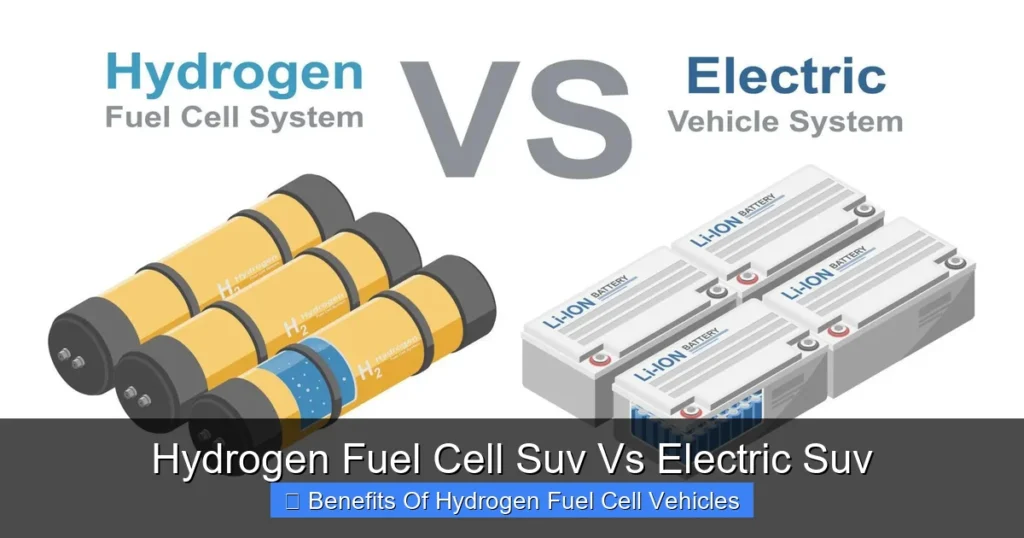
Hydrogen fuel cell SUVs and electric SUVs both aim to reduce emissions, but they work in very different ways. While electric SUVs rely on large batteries and charging stations, hydrogen SUVs generate power onboard using hydrogen gas—offering faster refueling and longer range in some cases. This article breaks down the pros, cons, and real-world performance of both technologies to help you decide which green SUV fits your lifestyle.
Key Takeaways
- Refueling Speed: Hydrogen fuel cell SUVs can refuel in 3–5 minutes, similar to gasoline vehicles, while electric SUVs often require 30+ minutes for fast charging.
- Range Capabilities: Many hydrogen SUVs offer 300–400 miles per fill-up, comparable to or exceeding some electric models, especially in cold weather.
- Infrastructure Availability: Electric charging stations are far more widespread than hydrogen refueling stations, which are currently limited to select regions like California.
- Environmental Impact: Both produce zero tailpipe emissions, but the sustainability depends on how electricity or hydrogen is produced—renewable sources make either option greener.
- Vehicle Cost and Maintenance: Electric SUVs generally have lower upfront and maintenance costs, while hydrogen SUVs remain expensive due to limited production and complex fuel cell systems.
- Technology Maturity: Battery-electric SUVs are more established with a growing market, whereas hydrogen fuel cell technology is still emerging and faces scalability challenges.
- Driving Experience: Both offer quiet, smooth rides, but hydrogen SUVs may feel more like traditional vehicles due to faster refueling and less range anxiety on long trips.
📑 Table of Contents
- Introduction: The Future of Green Driving
- How Hydrogen Fuel Cell SUVs Work
- How Electric SUVs Work
- Performance and Driving Experience
- Environmental Impact and Sustainability
- Cost Analysis: Purchase Price, Fuel, and Maintenance
- Infrastructure and Accessibility
- Real-World Examples and User Experiences
- Conclusion: Which SUV Is Right for You?
Introduction: The Future of Green Driving
As the world shifts toward cleaner transportation, SUV buyers are no longer limited to gas-guzzling models. Two leading alternatives—hydrogen fuel cell SUVs and electric SUVs—are gaining traction as eco-friendly options. But which one is right for you? The answer isn’t as simple as picking the “greenest” vehicle. It depends on your driving habits, access to infrastructure, budget, and environmental priorities.
Electric SUVs, powered by rechargeable lithium-ion batteries, have dominated the green vehicle conversation in recent years. Models like the Tesla Model Y, Ford Mustang Mach-E, and Hyundai Ioniq 5 have made electric driving mainstream. Meanwhile, hydrogen fuel cell SUVs—such as the Toyota Mirai SUV (expected in the near future) and the Hyundai Nexo—represent a different approach: using hydrogen gas to generate electricity onboard, emitting only water vapor. While less common, they offer unique advantages, especially for long-distance travel and quick refueling.
How Hydrogen Fuel Cell SUVs Work
Hydrogen fuel cell SUVs might sound like science fiction, but the technology is real and increasingly viable. At the heart of these vehicles is a fuel cell stack that combines hydrogen from an onboard tank with oxygen from the air. This chemical reaction produces electricity, which powers the motor—and the only byproduct is water.
Visual guide about Hydrogen Fuel Cell Suv Vs Electric Suv
Image source: substackcdn.com
The Science Behind the Fuel Cell
A fuel cell works much like a battery, but it doesn’t store energy. Instead, it generates it continuously as long as hydrogen is supplied. Hydrogen gas is stored in high-pressure tanks (usually around 10,000 psi) within the SUV. When you press the accelerator, hydrogen flows into the fuel cell stack, where it splits into protons and electrons. The electrons create an electric current, while the protons move through a membrane. At the other side, they recombine with oxygen to form water, which exits through the tailpipe as vapor.
Refueling Process and Time
One of the biggest advantages of hydrogen SUVs is refueling speed. Unlike electric SUVs that can take 30 minutes to several hours to recharge, hydrogen vehicles can be refueled in just 3 to 5 minutes—similar to filling up a gas tank. This makes them ideal for drivers who frequently take long trips or don’t have time to wait for a charge. For example, the Hyundai Nexo can go from empty to full in under five minutes and travel up to 380 miles on a single tank.
Energy Efficiency Considerations
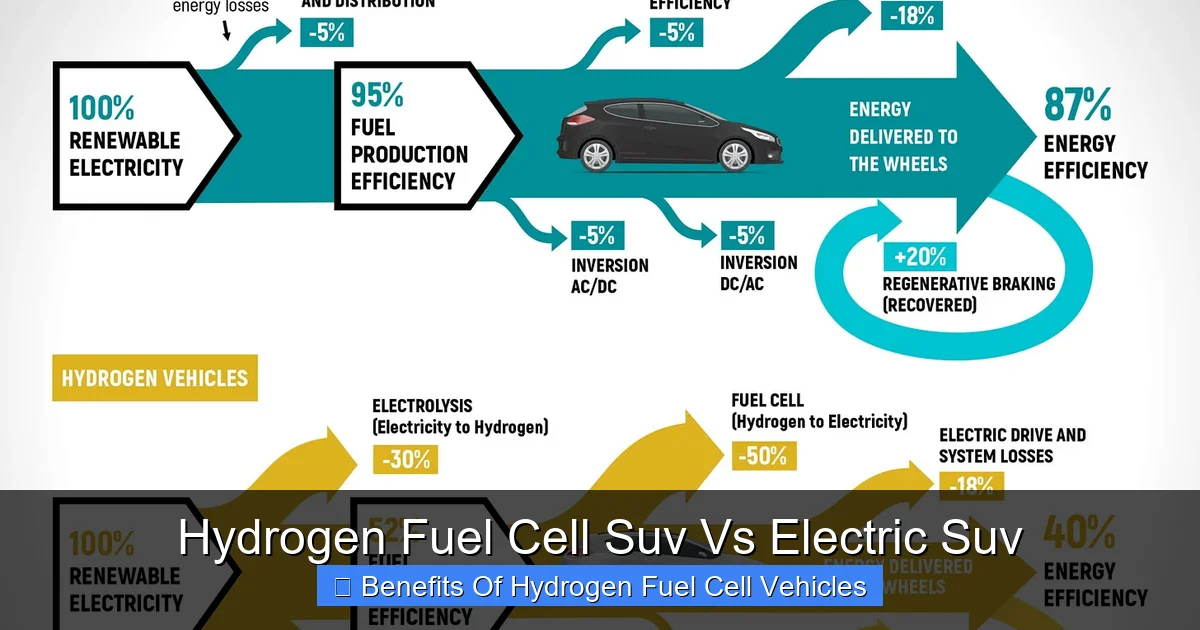
Despite their convenience, hydrogen fuel cell SUVs are less energy-efficient than electric SUVs. The process of producing, compressing, transporting, and converting hydrogen into electricity loses a significant amount of energy—up to 60% in some cases. In contrast, electric SUVs convert about 77% of grid energy into power at the wheels. This means that while hydrogen SUVs refuel quickly, they require more energy overall to operate.
How Electric SUVs Work
Electric SUVs, or battery-electric vehicles (BEVs), store energy in large lithium-ion battery packs. When you plug in, electricity from the grid charges these batteries. When you drive, the stored energy powers an electric motor, delivering instant torque and a smooth, quiet ride.
Battery Technology and Range
Modern electric SUVs come with advanced battery systems that offer impressive range. For instance, the Tesla Model Y Long Range can travel up to 330 miles on a single charge, while the Ford Mustang Mach-E GT achieves around 270 miles. Battery technology continues to improve, with newer models using more energy-dense cells and better thermal management to extend range and lifespan.
Charging Options and Times
Charging an electric SUV depends on the power source. Level 1 charging (using a standard 120V outlet) can take 20+ hours for a full charge—fine for overnight top-ups but impractical for long trips. Level 2 chargers (240V, commonly found at homes and public stations) take 6–10 hours. DC fast chargers, available at many highways and shopping centers, can recharge an electric SUV to 80% in 20–40 minutes. However, frequent fast charging can degrade battery health over time.
Home Charging Convenience
One major benefit of electric SUVs is the ability to charge at home. Installing a Level 2 charger in your garage allows you to wake up every morning with a “full tank.” This eliminates the need for frequent trips to gas stations or public chargers. For city dwellers or those with short commutes, home charging makes electric SUVs incredibly convenient and cost-effective.
Performance and Driving Experience
Both hydrogen fuel cell SUVs and electric SUVs deliver excellent performance, but they feel different behind the wheel.
Acceleration and Torque
Electric SUVs are known for instant torque, meaning they accelerate quickly from a stop. The Tesla Model Y, for example, can go from 0 to 60 mph in under 5 seconds. Hydrogen SUVs also offer smooth acceleration, but they may feel slightly less responsive due to the time it takes for the fuel cell to ramp up power. Still, models like the Hyundai Nexo provide a refined, quiet ride with plenty of power for highway merging and hill climbing.
Noise and Comfort
Both types of SUVs are significantly quieter than gasoline vehicles. Without an internal combustion engine, there’s no engine noise—just the gentle hum of the electric motor and road sounds. This makes for a peaceful cabin experience, especially on long drives. Some drivers prefer the near-silent operation of electric SUVs, while others appreciate the familiar feel of hydrogen SUVs, which don’t require plugging in.
Cold Weather Performance
Electric SUVs can lose range in cold weather—sometimes up to 40%—because batteries are less efficient when cold and energy is diverted to cabin heating. Preconditioning the battery while plugged in can help, but it’s still a concern for winter drivers. Hydrogen SUVs, on the other hand, are less affected by cold temperatures. The fuel cell generates heat as a byproduct, which can be used to warm the cabin, helping maintain range in winter conditions.
Environmental Impact and Sustainability
Both hydrogen and electric SUVs produce zero tailpipe emissions, but their overall environmental footprint depends on how the energy is generated.
Electric SUVs and the Grid
The sustainability of electric SUVs hinges on the electricity source. If your local grid relies on coal or natural gas, the emissions associated with charging are higher. However, in regions with abundant renewable energy—like California, Texas (wind), or the Pacific Northwest (hydro)—electric SUVs are much cleaner. Home solar panels can further reduce your carbon footprint by generating your own clean electricity.
Hydrogen Production Methods
Hydrogen can be produced in several ways, and not all are green. The most common method today is steam methane reforming (SMR), which uses natural gas and emits CO₂. This “gray hydrogen” undermines the environmental benefits. However, “green hydrogen”—produced using renewable energy to split water via electrolysis—is emissions-free and ideal for sustainable transport. Currently, green hydrogen is expensive and limited in supply, but it’s the future of clean hydrogen fuel.
Lifecycle Emissions Comparison
Studies show that over their lifetime, electric SUVs generally have lower emissions than hydrogen SUVs—especially when charged with renewable energy. However, as green hydrogen production scales up, hydrogen SUVs could become competitive. For now, electric SUVs have the edge in sustainability, particularly in regions with clean electricity.
Cost Analysis: Purchase Price, Fuel, and Maintenance
Cost is a major factor when choosing between these two technologies.
Upfront Purchase Price
Hydrogen fuel cell SUVs are significantly more expensive. The Hyundai Nexo, for example, starts around $60,000, and availability is limited. Electric SUVs vary widely: the Tesla Model Y starts around $50,000, while more affordable options like the Chevrolet Bolt EUV begin under $30,000. Government incentives can reduce costs—federal tax credits up to $7,500 are available for both types, though hydrogen vehicles often qualify for additional state rebates in California.
Fuel Costs: Electricity vs. Hydrogen
Electricity is generally cheaper than hydrogen. On average, driving an electric SUV costs about $0.04–$0.06 per mile, depending on local electricity rates. Hydrogen, however, costs around $16 per kilogram, and most SUVs use about 1 kg per 60–70 miles—meaning fuel costs can exceed $0.20 per mile. Some hydrogen stations offer free fuel for early adopters, but this is not sustainable long-term.
Maintenance and Repairs
Electric SUVs have fewer moving parts than gasoline vehicles, leading to lower maintenance costs. No oil changes, spark plugs, or exhaust systems mean fewer trips to the mechanic. Hydrogen SUVs also have simplified drivetrains, but their fuel cell systems are complex and expensive to repair. Replacement fuel cell stacks can cost $10,000 or more. Additionally, hydrogen tanks require periodic inspections and recertification, adding to long-term costs.
Infrastructure and Accessibility
One of the biggest challenges for hydrogen SUVs is infrastructure. As of 2024, there are fewer than 60 public hydrogen refueling stations in the U.S.—most located in California. This makes long-distance travel difficult unless you’re staying within a limited region. In contrast, electric charging networks are rapidly expanding. The U.S. now has over 150,000 public charging ports, with fast chargers along major highways.
Home Refueling Possibilities
Electric SUVs win in home refueling. Installing a home charger is straightforward and cost-effective. Hydrogen refueling at home is not currently feasible for most consumers. While home hydrogen generators exist, they’re expensive, require significant space, and face regulatory hurdles. For now, hydrogen drivers must rely on public stations.
Future Infrastructure Growth
Governments and private companies are investing in both technologies. The U.S. Department of Energy has funded hydrogen refueling projects, and companies like Shell and Toyota are expanding hydrogen networks. However, progress is slow. Electric infrastructure, backed by automakers and utilities, is growing much faster. For the foreseeable future, electric SUVs will have a clear advantage in accessibility.
Real-World Examples and User Experiences
Let’s look at how these SUVs perform in everyday life.
Driving the Hyundai Nexo
The Hyundai Nexo is one of the few hydrogen SUVs available today. Owners praise its smooth ride, quiet cabin, and impressive 380-mile range. Refueling is quick and easy—if you live near a station. However, many report frustration with limited station availability outside California. One owner in Los Angeles said, “I love the car, but I can’t take it on road trips unless I plan very carefully.”
Living with a Tesla Model Y
Tesla Model Y owners enjoy the convenience of home charging and access to the Supercharger network. A commuter in Austin, Texas, shared, “I charge overnight and never worry about gas. On road trips, Superchargers make it easy to keep going.” However, some note that cold weather reduces range, and fast charging too often can affect battery longevity.
Family and Cargo Considerations
Both types of SUVs offer ample space for families. The Model Y seats seven with optional third-row seating, while the Nexo offers a spacious interior with premium materials. Cargo space is similar, though hydrogen tanks can reduce trunk room slightly. For families who frequently travel long distances, hydrogen’s quick refueling may be a deciding factor.
Conclusion: Which SUV Is Right for You?
Choosing between a hydrogen fuel cell SUV and an electric SUV isn’t about picking a winner—it’s about matching the technology to your lifestyle. If you value fast refueling, live in a region with hydrogen stations (like California), and don’t mind higher fuel costs, a hydrogen SUV could be a great fit. It’s especially appealing for long-distance drivers who want zero emissions without charging delays.
On the other hand, if you prioritize lower operating costs, widespread charging access, and home refueling convenience, an electric SUV is likely the better choice. With more models, lower prices, and rapidly improving infrastructure, electric SUVs are the more practical and sustainable option for most drivers today.
The future may see both technologies coexist, serving different needs. As green hydrogen production scales and infrastructure improves, hydrogen SUVs could become more viable. But for now, electric SUVs lead the way in affordability, accessibility, and environmental performance. Whether you go electric or hydrogen, you’re helping drive the transition to cleaner transportation—one mile at a time.
Frequently Asked Questions
Are hydrogen fuel cell SUVs really zero-emission?
Yes, hydrogen fuel cell SUVs emit only water vapor from the tailpipe. However, the overall environmental impact depends on how the hydrogen is produced. If it’s made using fossil fuels, emissions occur upstream.
Can I charge an electric SUV at home?
Absolutely. Most electric SUV owners install a Level 2 charger at home, allowing them to charge overnight using a 240V outlet. This is convenient and cost-effective for daily use.
How long does it take to refuel a hydrogen SUV?
Hydrogen SUVs can be refueled in 3 to 5 minutes, similar to gasoline vehicles. This is much faster than even the quickest electric fast charging.
Are hydrogen SUVs safe in a crash?
Yes. Hydrogen tanks are rigorously tested and built to withstand high pressure and impact. Modern hydrogen SUVs include multiple safety systems to prevent leaks and ensure safe operation.
Why are there so few hydrogen refueling stations?
Hydrogen infrastructure is expensive to build and maintain, and demand is still low. Most stations are concentrated in California due to state incentives and early adoption programs.
Will hydrogen SUVs become more common in the future?
Possibly. As green hydrogen production grows and governments invest in infrastructure, hydrogen SUVs may gain traction—especially for commercial and long-haul applications. But widespread adoption will take time.