Hydrogen fuel cell SUVs are emerging as a powerful alternative to traditional gas-powered and even electric vehicles, offering zero emissions, quick refueling, and impressive range. As automakers invest in this clean technology, these SUVs are reshaping the future of sustainable transportation and challenging the dominance of battery-electric models.
Key Takeaways
- Zero Tailpipe Emissions: Hydrogen fuel cell SUVs emit only water vapor, making them a truly clean transportation option.
- Fast Refueling: Unlike battery EVs, hydrogen SUVs can be refueled in under 10 minutes—similar to gasoline vehicles.
- Long Driving Range: Most hydrogen SUVs offer 300–400 miles per fill-up, ideal for long-distance travel.
- Reduced Dependence on Rare Minerals: Fuel cells use less lithium and cobalt, easing pressure on mining and supply chains.
- Growing Infrastructure: Governments and companies are expanding hydrogen refueling networks, especially in California, Japan, and Europe.
- Automaker Investment: Major brands like Toyota, Hyundai, and Honda are leading the charge with production-ready models.
- Complement to Electric Vehicles: Hydrogen SUVs fill a niche for heavy-duty and long-range needs where batteries fall short.
📑 Table of Contents
- Introduction: The Rise of Hydrogen Fuel Cell SUVs
- How Hydrogen Fuel Cell SUVs Work
- Environmental Benefits of Hydrogen Fuel Cell SUVs
- Performance and Practicality: Why SUVs Are a Great Fit
- Current Models and Market Availability
- Challenges and Barriers to Adoption
- The Future of Hydrogen Fuel Cell SUVs
- Conclusion: A Cleaner, More Flexible Future
Introduction: The Rise of Hydrogen Fuel Cell SUVs
The automotive world is in the middle of a major shift. Electric vehicles (EVs) have taken center stage, promising a cleaner, quieter future. But while battery-powered cars are gaining momentum, another quiet revolution is happening under the radar—hydrogen fuel cell SUVs. These vehicles look like any other modern SUV, but under the hood, they run on a different kind of power: hydrogen gas and oxygen, combined in a fuel cell to produce electricity. The only thing that comes out of the tailpipe? Water vapor.
Hydrogen fuel cell SUVs aren’t science fiction. They’re here, and they’re starting to make a real impact. Companies like Toyota, Hyundai, and Honda have already released production models, and more automakers are planning to join the race. What makes these vehicles special isn’t just their eco-friendly operation—it’s how they solve some of the biggest challenges facing today’s EVs. From long charging times to limited range on road trips, hydrogen SUVs offer a compelling alternative. And as governments push for greener transportation, these vehicles are becoming a key part of the solution.
How Hydrogen Fuel Cell SUVs Work
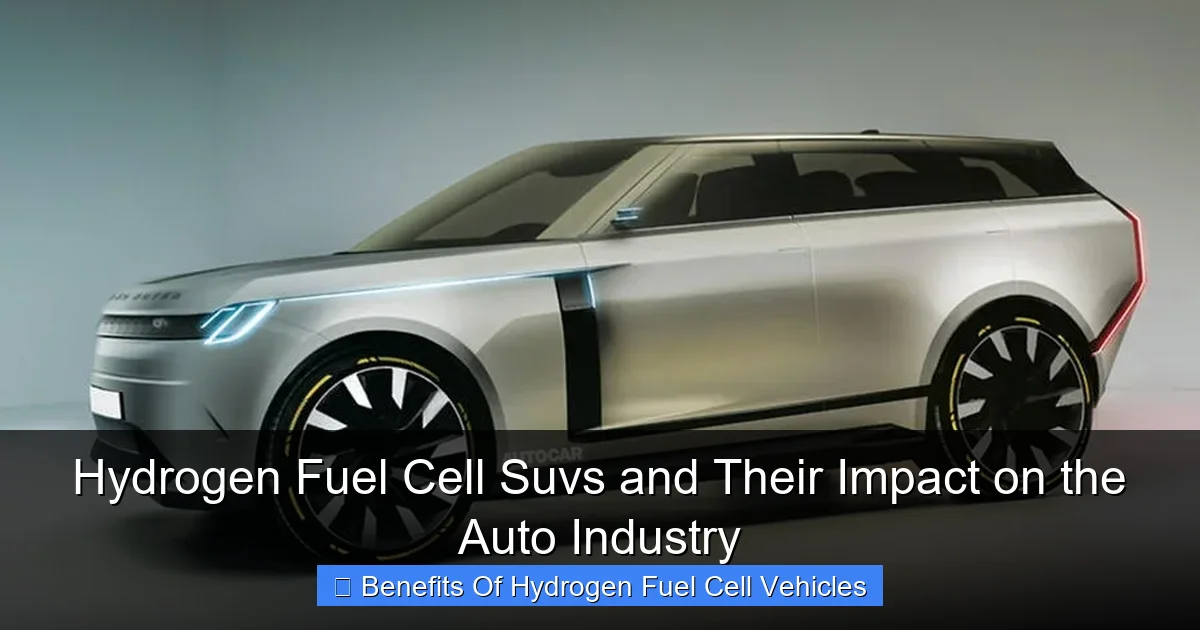
To understand why hydrogen fuel cell SUVs are gaining attention, it helps to know how they actually work. Unlike battery EVs that store electricity in large lithium-ion packs, hydrogen SUVs generate their own power on the go. Here’s the simple breakdown: hydrogen gas is stored in high-pressure tanks inside the vehicle. When you press the accelerator, the hydrogen is sent to a fuel cell stack, where it mixes with oxygen from the air. This chemical reaction produces electricity, which powers the electric motor. The only byproduct? Pure water.
Visual guide about Hydrogen Fuel Cell Suvs and Their Impact on the Auto Industry
Image source: images.autodaily.com.au
The Fuel Cell Stack: The Heart of the System
The fuel cell stack is where the magic happens. It’s made up of hundreds of individual fuel cells layered together, each about the thickness of a credit card. Inside each cell, a catalyst—usually platinum—helps split hydrogen atoms into protons and electrons. The protons pass through a membrane, while the electrons are forced to travel through an external circuit, creating an electric current. This current powers the motor, and the protons and electrons reunite on the other side, combining with oxygen to form water.
Hydrogen Storage: Safe and Efficient
One concern people often have is safety—after all, hydrogen is flammable. But modern hydrogen tanks are built to withstand extreme conditions. They’re made from carbon fiber composites and designed to survive crashes, punctures, and even fire. In fact, hydrogen disperses quickly into the air if leaked, reducing the risk of explosion. These tanks can hold enough hydrogen to give most SUVs a range of 300 to 400 miles, which is competitive with many gasoline-powered vehicles.
Refueling: As Easy as Filling Up at a Gas Station
One of the biggest advantages of hydrogen SUVs is how quickly they can be refueled. While a typical EV might take 30 minutes to an hour to fast-charge, a hydrogen SUV can be filled up in under 10 minutes—just like a traditional car. This makes them ideal for long road trips or busy families who don’t want to wait around at charging stations. The process is simple: you pull up to a hydrogen pump, connect the nozzle, and wait a few minutes while the tank fills. No cords, no waiting, no range anxiety.
Environmental Benefits of Hydrogen Fuel Cell SUVs
When it comes to protecting the planet, hydrogen fuel cell SUVs have a lot to offer. The most obvious benefit is their zero tailpipe emissions. Unlike gasoline or diesel vehicles that spew out carbon dioxide, nitrogen oxides, and particulate matter, hydrogen SUVs emit nothing but water vapor. That means cleaner air in cities, reduced smog, and a smaller carbon footprint for drivers.
Reducing Greenhouse Gas Emissions
While the vehicle itself doesn’t produce emissions, the environmental impact depends on how the hydrogen is made. Currently, most hydrogen is produced from natural gas through a process called steam methane reforming, which does release CO2. However, a growing amount of hydrogen is being made using renewable energy—like wind or solar—through electrolysis. This “green hydrogen” is completely clean from production to use. As renewable energy becomes more widespread, the carbon footprint of hydrogen vehicles will continue to shrink.
Less Strain on Battery Supply Chains
Another environmental advantage is the reduced need for rare earth minerals. Battery EVs rely heavily on lithium, cobalt, and nickel—materials that are often mined in environmentally damaging ways and come from geopolitically sensitive regions. Hydrogen fuel cells use much smaller amounts of these materials, and they don’t require large battery packs. This means less mining, less pollution, and a more sustainable supply chain overall.
Energy Efficiency: A Balanced View
It’s true that hydrogen vehicles are less energy-efficient than battery EVs when you look at the full lifecycle—from production to use. Converting electricity to hydrogen, compressing it, transporting it, and converting it back to electricity in the vehicle loses energy at each step. However, for certain uses—like large SUVs, trucks, or long-haul transport—hydrogen can be more practical. It’s not about replacing EVs, but offering a complementary solution where batteries fall short.
Performance and Practicality: Why SUVs Are a Great Fit
Hydrogen fuel cell technology isn’t just for small cars. In fact, it’s especially well-suited for larger vehicles like SUVs. These vehicles need more power and longer range, and hydrogen delivers on both fronts. With instant torque from the electric motor and a smooth, quiet ride, hydrogen SUVs offer performance that rivals or exceeds traditional gas-powered models.
Power and Towing Capacity
Many hydrogen SUVs are designed with performance in mind. The Hyundai NEXO, for example, delivers 161 horsepower and can tow up to 3,500 pounds. That’s more than enough for a small trailer, a boat, or a camper. The Toyota Mirai, while technically a sedan, shares much of its technology with SUV platforms and offers a sporty driving experience with responsive acceleration. As automakers develop more hydrogen SUVs, expect even greater power and capability.
Interior Space and Comfort
Unlike early electric vehicles that sacrificed space for batteries, hydrogen SUVs often have a more traditional layout. The fuel cell stack and hydrogen tanks are compact and can be placed under the floor or in the rear, leaving plenty of room for passengers and cargo. The Hyundai NEXO, for instance, offers a spacious cabin with premium materials, a large touchscreen, and advanced driver-assistance features. It feels like a luxury SUV—because it is.
Ideal for Long-Distance Travel
One of the biggest pain points for EV owners is range anxiety—especially on long trips. Charging stations can be sparse in rural areas, and charging times add up. Hydrogen SUVs eliminate this problem. With a range of 300–400 miles and refueling in under 10 minutes, they’re perfect for cross-country drives, family vacations, or daily commutes in areas with limited charging infrastructure. You can fill up quickly and keep going, just like you would with a gas car.
Current Models and Market Availability
While hydrogen fuel cell SUVs are still a niche market, several production models are already on the road. These vehicles are paving the way for broader adoption and proving that hydrogen technology is viable for everyday use.
Hyundai NEXO: The Flagship Hydrogen SUV
The Hyundai NEXO is currently one of the most advanced hydrogen SUVs available. It offers a range of up to 380 miles, a sleek design, and a host of smart features like remote parking and air purification. Hyundai has been a leader in hydrogen technology, and the NEXO showcases what’s possible. It’s available in select markets, primarily in California, where hydrogen infrastructure is most developed.
Toyota Mirai: A Sedan with SUV Potential
While the Toyota Mirai is technically a sedan, it uses the same fuel cell technology that could easily be scaled up for SUVs. The latest Mirai offers over 400 miles of range and a luxurious interior. Toyota has also partnered with companies like Kenworth to develop hydrogen-powered trucks, showing its commitment to expanding hydrogen use across vehicle types.
Honda Clarity Fuel Cell: A Discontinued but Influential Model
The Honda Clarity Fuel Cell was one of the first hydrogen SUVs to hit the market. Though Honda has paused production, the Clarity helped demonstrate the real-world viability of fuel cell vehicles. It offered a smooth ride, quiet operation, and a range of over 360 miles. Its legacy lives on in Honda’s continued research and development efforts.
Upcoming Models and Future Plans
Several automakers have announced plans for new hydrogen SUVs. General Motors is working with Honda on next-generation fuel cells, and BMW has hinted at a hydrogen version of its X5 SUV. Even luxury brands like Mercedes-Benz have experimented with hydrogen models. As infrastructure improves and costs come down, we can expect more hydrogen SUVs to hit the market in the coming years.
Challenges and Barriers to Adoption
Despite their many benefits, hydrogen fuel cell SUVs face several challenges that have slowed widespread adoption. Understanding these barriers is key to seeing how the technology might evolve.
Limited Refueling Infrastructure
The biggest hurdle is the lack of hydrogen refueling stations. As of 2024, there are fewer than 100 public hydrogen stations in the United States, with most located in California. This makes it difficult for drivers outside of major urban areas to own a hydrogen vehicle. While governments and private companies are investing in expansion, progress has been slow compared to EV charging networks.
High Production Costs
Hydrogen fuel cell systems are still expensive to produce. The use of platinum in the fuel cell stack drives up costs, and manufacturing at scale hasn’t yet been achieved. As a result, hydrogen SUVs are priced higher than comparable EVs or gas-powered models. For example, the Hyundai NEXO starts around $60,000, which puts it out of reach for many buyers.
Hydrogen Production and Transportation
Producing and transporting hydrogen is complex and energy-intensive. Most hydrogen is still made from fossil fuels, which undermines its environmental benefits. Green hydrogen is cleaner but more expensive and not yet widely available. Additionally, transporting hydrogen requires high-pressure tanks or cryogenic cooling, which adds logistical challenges.
Public Awareness and Perception
Many consumers are simply unaware that hydrogen vehicles exist. When they think of green cars, they think of Tesla or other EVs. Hydrogen SUVs haven’t had the same marketing push, and misconceptions about safety and practicality persist. Educating the public and building trust will be essential for broader adoption.
The Future of Hydrogen Fuel Cell SUVs
Despite the challenges, the future looks promising for hydrogen fuel cell SUVs. As technology improves and infrastructure expands, these vehicles could play a major role in the transition to sustainable transportation.
Government Support and Incentives
Governments around the world are investing in hydrogen as part of their clean energy strategies. The U.S. Department of Energy has launched initiatives to reduce the cost of hydrogen production, and the European Union has included hydrogen in its Green Deal. Incentives like tax credits and rebates can help make hydrogen SUVs more affordable for consumers.
Advancements in Fuel Cell Technology
Researchers are working to make fuel cells more efficient and less reliant on expensive materials. New catalysts made from non-precious metals could reduce costs, while improved membrane designs could boost performance. Solid-state hydrogen storage is also being explored, which could make tanks smaller and safer.
Integration with Renewable Energy
As solar and wind power become more widespread, green hydrogen production will become more viable. Excess renewable energy can be used to produce hydrogen during off-peak hours, storing it for later use. This creates a sustainable cycle where clean energy powers clean vehicles.
Hydrogen in the Broader Transportation Ecosystem
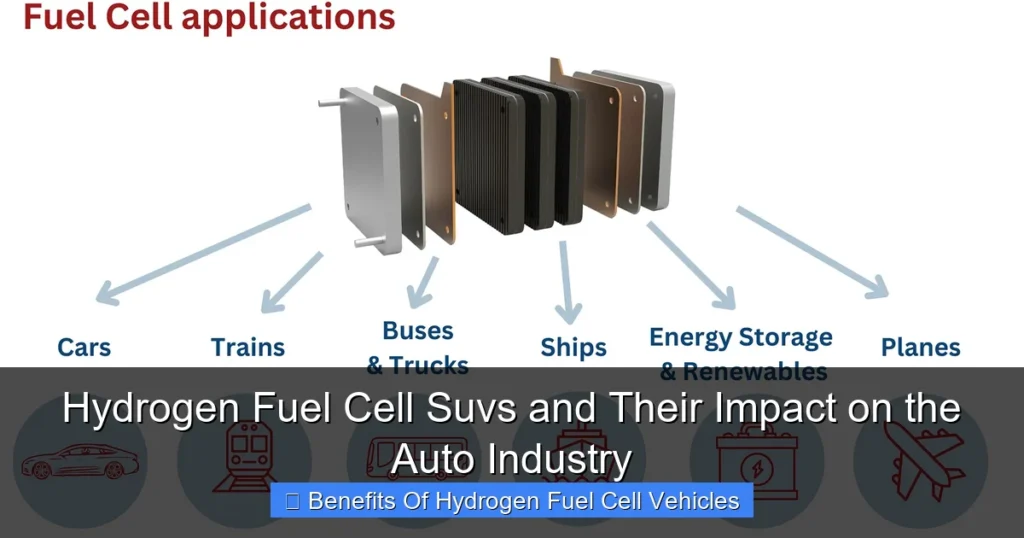
Hydrogen isn’t just for passenger vehicles. It’s also being used in buses, trucks, trains, and even ships. As the hydrogen economy grows, the infrastructure and supply chains will improve, benefiting SUVs and other vehicles. A robust hydrogen network could make refueling as common as filling up with gas.
Conclusion: A Cleaner, More Flexible Future
Hydrogen fuel cell SUVs represent a bold step forward in the quest for sustainable transportation. They offer zero emissions, fast refueling, and long-range capability—features that make them ideal for families, road trippers, and anyone who values convenience and performance. While challenges remain, the technology is advancing rapidly, and support from automakers and governments is growing.
These SUVs aren’t meant to replace battery EVs, but to complement them. Just as some people prefer sedans over trucks, some drivers will choose hydrogen over battery power based on their needs. For long-distance travel, heavy-duty use, or areas with limited charging, hydrogen SUVs fill an important gap. As infrastructure expands and costs come down, they could become a common sight on roads around the world. The future of clean driving isn’t one-size-fits-all—and hydrogen fuel cell SUVs are helping to make that future a reality.
Frequently Asked Questions
Are hydrogen fuel cell SUVs really emission-free?
Hydrogen fuel cell SUVs produce zero tailpipe emissions—only water vapor comes out of the exhaust. However, the overall environmental impact depends on how the hydrogen is produced. If made from renewable energy, the entire lifecycle is nearly emission-free.
How long does it take to refuel a hydrogen SUV?
Refueling a hydrogen SUV takes about 5 to 10 minutes, similar to filling up a gas-powered vehicle. This is much faster than charging a battery EV, making hydrogen SUVs ideal for long trips.
Where can I refuel a hydrogen SUV?
Hydrogen refueling stations are currently limited, with most located in California, Japan, and parts of Europe. Expansion is underway, but availability remains a challenge in many regions.
Are hydrogen SUVs safe?
Yes, hydrogen SUVs are designed with safety in mind. The hydrogen tanks are made from strong composite materials and tested to withstand crashes and extreme conditions. Hydrogen also disperses quickly if leaked, reducing fire risk.
How much do hydrogen fuel cell SUVs cost?
Currently, hydrogen SUVs are more expensive than comparable EVs or gas vehicles, with prices starting around $60,000. However, incentives and falling production costs may make them more affordable in the future.
Can hydrogen SUVs tow or haul heavy loads?
Yes, many hydrogen SUVs are built for performance and can tow several thousand pounds. The Hyundai NEXO, for example, can tow up to 3,500 pounds, making it suitable for trailers, boats, and campers.