Hydrogen fuel cell SUVs are emerging as a clean, powerful, and practical alternative in the US automotive market. With zero tailpipe emissions, quick refueling, and long range, they offer a compelling solution for eco-conscious drivers who need space and performance.
The race toward cleaner transportation is heating up, and while electric vehicles (EVs) have grabbed most of the headlines, there’s another quiet contender gaining momentum: hydrogen fuel cell SUVs. These vehicles might not be as common as Tesla’s or Ford’s electric models yet, but they’re carving out a unique space in the US market—especially for drivers who want sustainability without sacrificing convenience. Imagine pulling up to a fueling station, topping off your tank in under five minutes, and driving 350 miles on pure hydrogen—all while emitting nothing but water vapor. That’s the promise of hydrogen fuel cell technology, and it’s becoming more real every year.
Hydrogen fuel cell SUVs work by converting hydrogen gas into electricity through a chemical reaction inside the fuel cell stack. This electricity powers an electric motor, just like in a battery EV, but instead of relying on a large, heavy battery, the vehicle stores energy in the form of compressed hydrogen. The result? A vehicle that drives like an EV—smooth, quiet, and responsive—but refuels like a gas-powered car. For families, road trippers, and anyone who values time and range, this combination is hard to beat. And while the technology isn’t new, recent advancements in efficiency, cost, and infrastructure are finally making hydrogen SUVs a viable option for everyday Americans.
Key Takeaways
- Zero Emissions Driving: Hydrogen fuel cell SUVs produce only water vapor as exhaust, making them a truly green transportation option.
- Fast Refueling: Unlike battery-electric vehicles, hydrogen SUVs refuel in 3–5 minutes—similar to gasoline vehicles.
- Long Driving Range: Most hydrogen SUVs offer 300–400 miles per fill-up, ideal for road trips and daily commutes.
- Spacious and Powerful: These SUVs combine the roominess of traditional SUVs with smooth, quiet electric motor performance.
- Government and Industry Support: Federal and state incentives, plus growing infrastructure, are boosting adoption across the US.
- Limited but Growing Infrastructure: While hydrogen stations are still sparse, California leads the way with over 50 public stations.
- Future-Ready Technology: As green hydrogen production scales up, these vehicles could play a major role in decarbonizing transportation.
📑 Table of Contents
How Hydrogen Fuel Cell SUVs Work
Hydrogen fuel cell SUVs might sound like science fiction, but the science behind them is both elegant and practical. At the heart of every hydrogen SUV is a fuel cell stack—a series of thin, layered cells that use hydrogen and oxygen to generate electricity. Here’s how it works in simple terms: hydrogen gas from the onboard tank flows into the fuel cell, where it’s split into protons and electrons. The protons pass through a membrane, while the electrons are forced to travel through an external circuit, creating an electric current. This current powers the vehicle’s electric motor. Meanwhile, oxygen from the air enters the fuel cell and combines with the protons and electrons to form water—the only byproduct.
The Role of the Fuel Cell Stack
The fuel cell stack is the engine of a hydrogen SUV. Modern stacks are compact, durable, and highly efficient. For example, the Toyota Mirai’s second-generation fuel cell system is 30% smaller and 20% more powerful than its predecessor, yet it delivers over 400 miles of range. These stacks are designed to last for hundreds of thousands of miles with minimal maintenance, thanks to the absence of moving parts and combustion. Unlike internal combustion engines, there’s no friction, no oil changes, and no exhaust system to worry about.
Hydrogen Storage and Safety
One common concern about hydrogen vehicles is safety—after all, hydrogen is flammable. But modern hydrogen SUVs are built with multiple layers of protection. Hydrogen is stored in high-strength carbon-fiber tanks that can withstand extreme pressure and impact. These tanks are rigorously tested and designed to prevent leaks. In the rare event of a leak, hydrogen is lighter than air and disperses quickly, reducing fire risk. Plus, sensors throughout the vehicle detect hydrogen levels and shut down the system if needed. In fact, studies by the National Renewable Energy Laboratory (NREL) show that hydrogen vehicles are as safe as conventional cars—and often safer in collision tests.
Electric Motor and Performance
Despite running on hydrogen, these SUVs are fully electric in operation. The electricity generated by the fuel cell powers an electric motor, delivering instant torque and a smooth, quiet ride. For example, the Hyundai NEXO accelerates from 0 to 60 mph in about 8.5 seconds—comparable to many gas-powered SUVs—while offering a serene driving experience. There’s no engine noise, no gear shifts, and no vibrations. It’s the kind of ride that makes you forget you’re driving a vehicle at all.
Top Hydrogen Fuel Cell SUVs Available in the US
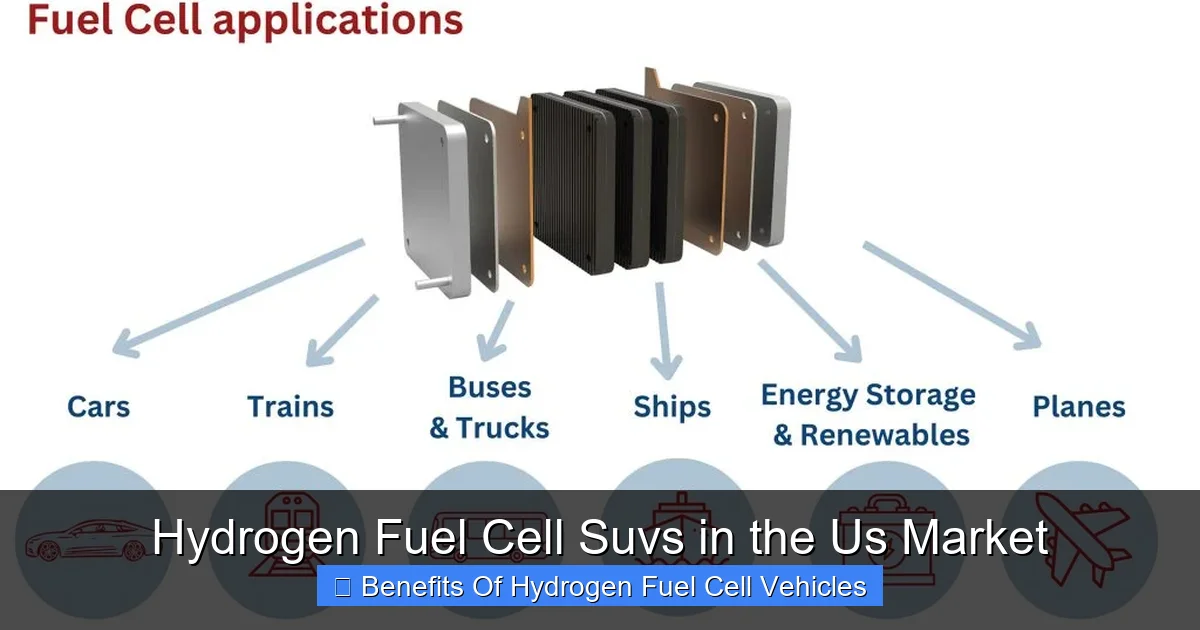
Visual guide about Hydrogen Fuel Cell Suvs in the Us Market
Image source: innovationnewsnetwork.com
While the selection is still limited compared to EVs or gas-powered SUVs, a few standout models are currently available or coming soon to the US market. These vehicles represent the cutting edge of hydrogen technology and offer a glimpse into the future of clean transportation.
Toyota Mirai
The Toyota Mirai is arguably the most well-known hydrogen fuel cell vehicle in the US. Now in its second generation, the Mirai is a sleek, midsize sedan, but Toyota has hinted at expanding its hydrogen lineup to include SUVs. The current Mirai offers up to 402 miles of range on a single tank and refuels in about five minutes. It’s available in select California markets, where hydrogen infrastructure is most developed. Toyota also offers free hydrogen fuel for up to $15,000 over three years, making it an attractive option for early adopters.
Hyundai NEXO
The Hyundai NEXO is a true hydrogen fuel cell SUV and one of the most advanced models on the market. It features a futuristic design, a spacious interior, and cutting-edge driver-assistance technology. With a range of up to 380 miles and a refueling time of just 5–7 minutes, the NEXO is ideal for families and long-distance travelers. Hyundai has partnered with FirstElement Fuel to expand hydrogen access in California, and the company is actively working to bring the NEXO to more US states.
Honda CR-V Fuel Cell (Coming Soon)
Honda has announced plans to launch a hydrogen fuel cell version of its popular CR-V SUV by 2024. This model will combine the practicality of a compact SUV with the clean energy of hydrogen power. While details are still emerging, early reports suggest it will offer over 300 miles of range and be available in both hydrogen and plug-in hybrid configurations. Honda’s entry into the hydrogen SUV space could be a game-changer, given the brand’s strong reputation and widespread dealership network.
Future Models from Other Automakers
Other automakers are also exploring hydrogen SUVs. General Motors has partnered with Honda to develop fuel cell systems, and GM’s Hydrotec division is supplying hydrogen technology for commercial vehicles, with potential for passenger SUVs. BMW has tested a hydrogen version of the X5, and while it’s not yet available in the US, the company has expressed interest in bringing it to market. As demand grows and infrastructure improves, we can expect more hydrogen SUVs to hit American roads.
Benefits of Driving a Hydrogen Fuel Cell SUV
Hydrogen fuel cell SUVs offer a unique set of advantages that make them appealing to a wide range of drivers. From environmental benefits to practical conveniences, here’s why these vehicles are worth considering.
Zero Tailpipe Emissions
The most obvious benefit is environmental. Hydrogen fuel cell SUVs emit only water vapor—no carbon dioxide, no nitrogen oxides, no particulate matter. This makes them one of the cleanest ways to drive, especially when the hydrogen is produced using renewable energy. Even when hydrogen is made from natural gas (the current majority source), the overall emissions are still lower than gasoline vehicles. As green hydrogen production increases—using wind, solar, or hydroelectric power—the carbon footprint shrinks even further.
Fast Refueling and Long Range
One of the biggest drawbacks of battery EVs is charging time. Even with fast chargers, it can take 30 minutes or more to recharge an EV to 80%. Hydrogen SUVs, on the other hand, refuel in 3–5 minutes—just like filling up at a gas station. And with ranges of 300–400 miles, they’re perfect for road trips, long commutes, or families who need flexibility. No more planning routes around charging stations or waiting hours to “fill up.”
Quiet and Smooth Driving Experience
Because hydrogen SUVs use electric motors, they deliver the same quiet, smooth ride as battery EVs. There’s no engine noise, no vibration, and no gear changes. Acceleration is instant and responsive, making city driving and highway merging effortless. For drivers who value comfort and refinement, this is a major plus.
Spacious Interiors and SUV Utility
Unlike some early hydrogen prototypes, modern fuel cell SUVs are designed with real-world needs in mind. They offer ample cargo space, comfortable seating for five, and all the features you’d expect from a premium SUV—heated seats, advanced infotainment, panoramic sunroofs, and more. The Hyundai NEXO, for example, has a roomy cabin with high-quality materials and a minimalist dashboard. It’s a vehicle that doesn’t force you to choose between sustainability and comfort.
Lower Maintenance Costs
With no engine oil, no spark plugs, no exhaust system, and fewer moving parts, hydrogen SUVs require less maintenance than traditional vehicles. There’s no need for oil changes, transmission servicing, or emissions checks. The fuel cell stack and electric motor are designed for long life, and many automakers offer extended warranties on hydrogen components. Over time, this can lead to significant savings.
Challenges and Limitations
Despite their many benefits, hydrogen fuel cell SUVs face several challenges that have slowed widespread adoption in the US.
Limited Hydrogen Refueling Infrastructure
The biggest hurdle is infrastructure. As of 2024, there are only about 60 public hydrogen refueling stations in the US, with over 50 located in California. This makes it difficult to drive hydrogen SUVs outside of the state or on long cross-country trips. While companies like Shell, Air Liquide, and FirstElement Fuel are expanding the network, progress is slow and costly. Building a hydrogen station can cost $1–2 million, compared to $100,000–$500,000 for an EV fast charger.
High Cost of Hydrogen Fuel
Hydrogen is currently expensive to produce and distribute. The average cost per kilogram is around $16, and most SUVs use about 1 kg per 60–70 miles. That means a 350-mile trip could cost $80–$90—comparable to premium gasoline but more than home EV charging. However, some automakers, like Toyota and Hyundai, offer free hydrogen fuel for the first few years, which helps offset the cost for early adopters.
Energy Efficiency Concerns
Hydrogen is less energy-efficient than batteries. It takes about three times more energy to power a hydrogen vehicle than a battery EV, due to losses in production, compression, transport, and conversion. This means that while hydrogen SUVs are clean at the tailpipe, their overall environmental impact depends heavily on how the hydrogen is made. Green hydrogen—produced using renewable energy—is the ideal, but it currently makes up less than 1% of global production.
Consumer Awareness and Perception
Many Americans still don’t know what hydrogen fuel cell vehicles are, or they confuse them with hydrogen combustion engines (which are different). There’s also lingering skepticism about safety and reliability. Education and real-world experience will be key to building trust and driving adoption.
The Future of Hydrogen SUVs in the US
The future of hydrogen fuel cell SUVs in the US looks promising, but it will depend on several factors: infrastructure growth, cost reductions, and supportive policies.
Government Support and Incentives
Federal and state governments are stepping up. The Inflation Reduction Act includes tax credits for hydrogen production and clean vehicle purchases. California offers rebates of up to $5,000 for hydrogen vehicle buyers and has set a goal of 200 hydrogen stations by 2025. Other states, like New York and Connecticut, are beginning to invest in hydrogen infrastructure as well.
Advances in Green Hydrogen Production
The key to sustainable hydrogen vehicles is green hydrogen—hydrogen made using renewable energy. Companies like Plug Power, Nel Hydrogen, and Bloom Energy are scaling up electrolyzer technology to produce hydrogen from wind and solar power. As costs fall and production increases, hydrogen could become a truly carbon-free fuel.
Expansion of Refueling Networks
Private companies and automakers are investing in hydrogen stations. Toyota and Hyundai are partnering with fuel providers to build new stations along major highways. Mobile refueling units and home hydrogen generators are also being tested, which could one day allow drivers to refuel at home.
Growing Consumer Interest
As more people experience hydrogen SUVs—through test drives, rentals, or ride-sharing programs—interest is growing. Ride-hailing services like Uber and Lyft are exploring hydrogen vehicles for their fleets, which could expose millions of riders to the technology. And as automakers introduce more models, competition will drive innovation and lower prices.
Should You Buy a Hydrogen Fuel Cell SUV?
Deciding whether to buy a hydrogen fuel cell SUV depends on your lifestyle, location, and priorities.
If you live in California or another state with growing hydrogen infrastructure, and you value fast refueling, long range, and zero emissions, a hydrogen SUV could be a great fit. The Hyundai NEXO and Toyota Mirai are excellent choices, and upcoming models like the Honda CR-V Fuel Cell will offer even more options.
However, if you frequently travel outside major metropolitan areas or live in a region with no hydrogen stations, a battery EV might be more practical—at least for now. EVs have a much larger charging network and lower fueling costs, especially if you charge at home.
That said, hydrogen SUVs are ideal for:
– Families who need space and range
– Road trippers who don’t want to wait at chargers
– Eco-conscious drivers who want zero emissions
– Fleet operators (like delivery or taxi services) that need quick turnaround times
And with automakers and governments investing heavily in hydrogen, the ecosystem is likely to grow rapidly in the next decade.
Conclusion
Hydrogen fuel cell SUVs represent a bold step toward a cleaner, more sustainable future of transportation. They combine the environmental benefits of electric driving with the convenience of fast refueling and long range—something no other vehicle type currently offers. While challenges remain, particularly around infrastructure and cost, the momentum is building. With strong support from automakers, governments, and energy companies, hydrogen SUVs are poised to play a bigger role in the US market.
For now, they’re a niche but growing segment, perfect for early adopters and eco-minded drivers in hydrogen-friendly regions. But as technology improves and networks expand, hydrogen could become a mainstream alternative—not just for SUVs, but for trucks, buses, and even airplanes. The road ahead is long, but the destination—a zero-emission transportation system—is worth the journey.
Frequently Asked Questions
Are hydrogen fuel cell SUVs really zero emission?
Yes, hydrogen fuel cell SUVs produce only water vapor as exhaust, making them zero-emission at the tailpipe. However, the overall environmental impact depends on how the hydrogen is produced—green hydrogen from renewables is the cleanest option.
How long does it take to refuel a hydrogen SUV?
Refueling a hydrogen SUV takes just 3–5 minutes, similar to filling up a gas-powered vehicle. This is much faster than charging a battery EV, even with fast chargers.
Where can I refuel a hydrogen SUV in the US?
Most hydrogen refueling stations are in California, with over 50 public stations. A few are also available in Hawaii and the Northeast. Check apps like H2USA or PlugShare to find locations near you.
Are hydrogen SUVs safe?
Yes, hydrogen SUVs are designed with multiple safety features, including high-strength fuel tanks, leak detection systems, and automatic shutoffs. Studies show they are as safe as conventional vehicles.
How much does it cost to fuel a hydrogen SUV?
Hydrogen currently costs around $16 per kilogram, and most SUVs get 60–70 miles per kg. This makes fueling comparable to premium gasoline, though some automakers offer free hydrogen for the first few years.
Will hydrogen SUVs become more common in the future?
Yes, with growing investment in infrastructure, government support, and new models from major automakers, hydrogen SUVs are expected to become more accessible and popular in the coming decade.