Hydrogen fuel cell SUVs combine zero-emission driving with generous interior space, making them ideal for families and long trips. These vehicles offer quiet rides, quick refueling, and roomy cabins without sacrificing performance or style.
Key Takeaways
- Spacious Interiors: Hydrogen SUVs like the Toyota Mirai and Hyundai NEXO offer ample legroom, headroom, and cargo space, rivaling traditional SUVs.
- Zero Emissions: These vehicles produce only water vapor, making them a clean alternative to gasoline-powered models.
- Quick Refueling: Unlike battery EVs, hydrogen SUVs refuel in under 10 minutes, similar to gas cars.
- Quiet and Smooth Rides: Electric motors powered by fuel cells deliver silent, vibration-free driving experiences.
- Advanced Technology: Many models include premium infotainment, driver-assist features, and smart connectivity.
- Eco-Friendly Materials: Manufacturers are using sustainable upholstery and recycled components in cabin design.
- Growing Infrastructure: While still limited, hydrogen refueling stations are expanding in key regions like California and parts of Europe.
📑 Table of Contents
- Why Hydrogen Fuel Cell SUVs Are Gaining Popularity
- Top Hydrogen Fuel Cell SUVs with the Best Interior Space
- Benefits of Hydrogen Fuel Cell Technology
- Interior Design and Comfort Features
- Challenges and Considerations
- Who Should Consider a Hydrogen Fuel Cell SUV?
- The Future of Hydrogen SUVs
- Conclusion
Why Hydrogen Fuel Cell SUVs Are Gaining Popularity
The automotive world is shifting toward cleaner, greener transportation, and hydrogen fuel cell SUVs are emerging as a compelling option. Unlike electric vehicles (EVs) that rely on large batteries, hydrogen SUVs generate electricity on board using a chemical reaction between hydrogen and oxygen. The only byproduct? Pure water vapor. This makes them a truly zero-emission vehicle, perfect for environmentally conscious drivers.
But what really sets these vehicles apart—especially for families and road-trippers—is their interior space. Many hydrogen SUVs are designed with comfort and practicality in mind, offering roomy cabins, flexible seating, and generous cargo areas. Unlike some compact EVs that sacrifice space for efficiency, hydrogen models often match or exceed the interior dimensions of traditional SUVs. This means you don’t have to choose between sustainability and comfort.
The Rise of Green Mobility
As climate change concerns grow, governments and consumers alike are pushing for cleaner transportation. Electric vehicles have led the charge, but they come with limitations—long charging times, range anxiety, and battery degradation. Hydrogen fuel cell vehicles (FCEVs) offer a different path. They refuel in minutes, travel long distances, and maintain consistent performance in cold weather. And when it comes to SUVs, the combination of spacious interiors and eco-friendly powertrains is a game-changer.
Imagine driving from Los Angeles to San Francisco with your family, stopping just once to refuel in under 10 minutes, all while enjoying a quiet, smooth ride in a roomy cabin. That’s the promise of hydrogen fuel cell SUVs. They’re not just for early adopters—they’re becoming a realistic option for everyday drivers who want space, safety, and sustainability.
Interior Space: A Key Selling Point
When shopping for an SUV, interior space is often a top priority. Families need room for car seats, strollers, luggage, and passengers. Commuters want comfort on long drives. And everyone appreciates a clutter-free, well-designed cabin. Hydrogen SUVs are stepping up to meet these needs.
Take the Hyundai NEXO, for example. It offers one of the most spacious interiors in its class, with legroom and headroom that rival luxury SUVs. The flat floor design—made possible by the compact fuel cell stack—means no center tunnel to cramp your feet. Plus, the rear seats fold flat, creating a massive cargo area perfect for weekend getaways.
Similarly, the Toyota Mirai—though technically a sedan—offers SUV-like interior volume thanks to its long wheelbase and efficient packaging. Its cabin feels open and airy, with premium materials and thoughtful storage solutions. These design choices show that hydrogen vehicles aren’t just about the powertrain—they’re about the overall driving experience.
Top Hydrogen Fuel Cell SUVs with the Best Interior Space
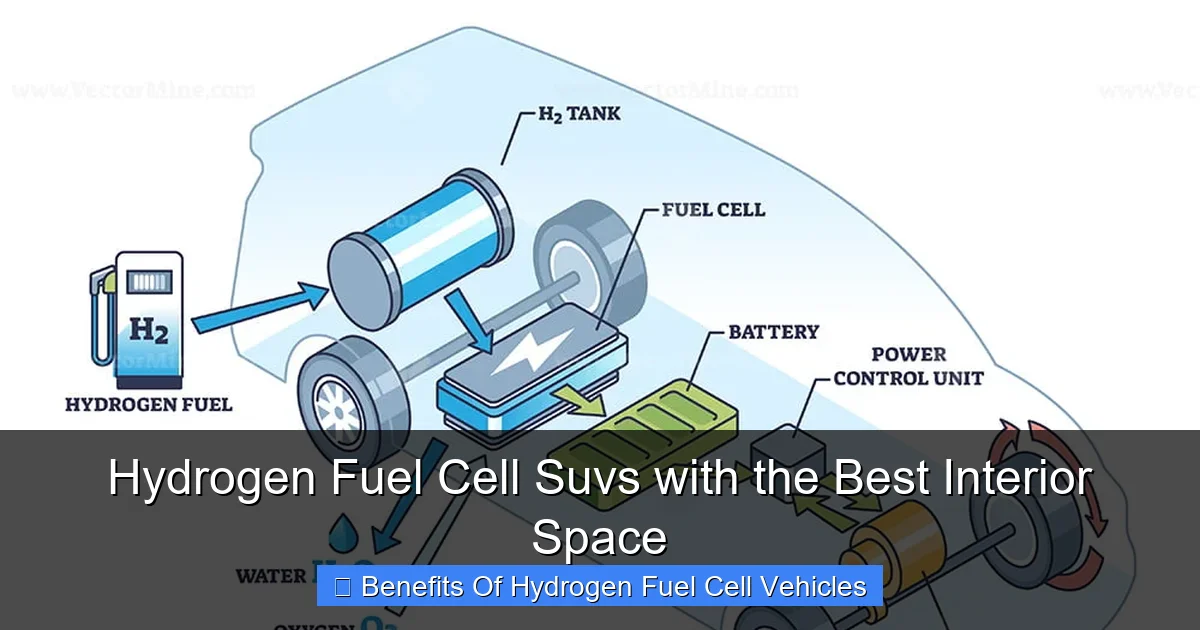
Visual guide about Hydrogen Fuel Cell Suvs with the Best Interior Space
Image source: vectormine.com
While the hydrogen vehicle market is still developing, a few standout models are leading the way in combining eco-friendly technology with spacious, comfortable interiors. Let’s take a closer look at the top contenders.
Hyundai NEXO: The Spacious Family Hauler
The Hyundai NEXO is one of the most advanced hydrogen SUVs on the market. It’s a midsize crossover designed for families who want both sustainability and space. With seating for five and a roomy cabin, the NEXO feels more like a luxury SUV than a niche eco-vehicle.
The front seats are wide and supportive, with plenty of legroom even for taller drivers. The rear seats offer generous space for adults, and the flat floor makes it easy for three passengers to sit comfortably. Cargo space is equally impressive—31.9 cubic feet behind the rear seats, expanding to 56.8 cubic feet with the seats folded. That’s enough room for groceries, sports gear, or camping equipment.
But it’s not just about size. The NEXO’s interior is packed with smart features. The dashboard includes a 12.3-inch touchscreen with Apple CarPlay and Android Auto, plus a digital instrument cluster. Hyundai’s Blue Link system offers remote start, climate control, and vehicle tracking. And the cabin uses eco-friendly materials, including recycled plastics and bio-based fabrics.
One of the NEXO’s standout features is its air purification system. It can filter out 99.9% of fine dust and pollutants, making it ideal for city driving. Plus, the hydrogen fuel cell system is whisper-quiet, so you’ll enjoy a peaceful ride even in traffic.
Toyota Mirai: Sedan Comfort with SUV-Like Space
Though the Toyota Mirai is classified as a sedan, its interior space rivals many compact SUVs. Thanks to its long wheelbase and efficient packaging, the Mirai offers exceptional room for passengers and cargo.
The front seats are spacious and supportive, with ample headroom and legroom. The rear seats are equally comfortable, with enough space for two adults to sit without feeling cramped. The trunk holds 14.7 cubic feet of cargo—more than some small SUVs—and the rear seats fold down for additional storage.
The Mirai’s cabin is a masterclass in modern design. Soft-touch materials, ambient lighting, and a minimalist dashboard create a premium feel. The 12.3-inch touchscreen is intuitive and responsive, with standard navigation and wireless smartphone integration. Toyota’s Safety Sense 2.0 suite includes adaptive cruise control, lane departure warning, and automatic emergency braking.
One of the Mirai’s most impressive features is its ride quality. The fuel cell system delivers smooth, instant torque, and the suspension is tuned for comfort. Whether you’re commuting or road-tripping, the Mirai feels relaxed and refined.
Future Contenders: What’s Coming Next
While the NEXO and Mirai are the current leaders, other automakers are developing hydrogen SUVs with even more interior space. General Motors, for example, has announced plans for hydrogen-powered pickups and SUVs under its Hydrotec fuel cell program. These vehicles are expected to offer full-size interiors with the efficiency of electric power.
BMW is also exploring hydrogen technology, with a hydrogen version of the X5 in development. The iX5 Hydrogen will feature a spacious cabin, advanced infotainment, and BMW’s signature driving dynamics. While still in testing, it could become a serious competitor in the luxury hydrogen SUV market.
As hydrogen infrastructure expands, we can expect more manufacturers to enter the space. This means more choices for consumers who want roomy, eco-friendly SUVs.
Benefits of Hydrogen Fuel Cell Technology
Hydrogen fuel cell SUVs aren’t just about space—they offer a range of advantages that make them a smart choice for modern drivers.
Zero Emissions, Maximum Impact
The biggest benefit of hydrogen SUVs is their environmental impact. Unlike gasoline or diesel vehicles, they produce no tailpipe emissions. The only thing that comes out of the exhaust is water vapor. This makes them ideal for reducing urban air pollution and fighting climate change.
Even when you consider the full lifecycle—including hydrogen production—FCEVs are cleaner than conventional vehicles. Most hydrogen is currently produced from natural gas, but green hydrogen (made using renewable energy) is growing rapidly. As the grid becomes greener, so will hydrogen fuel.
Quick Refueling, Long Range
One of the biggest drawbacks of battery EVs is charging time. Even fast chargers can take 30 minutes or more to reach 80% capacity. Hydrogen SUVs, on the other hand, refuel in under 10 minutes—just like a gas car. This makes them perfect for long trips or busy schedules.
Most hydrogen SUVs offer a range of 300 to 400 miles on a full tank. The Hyundai NEXO, for example, can travel up to 380 miles, while the Toyota Mirai reaches 402 miles. That’s more than enough for daily commutes and weekend adventures.
Quiet and Smooth Driving
Hydrogen fuel cells power electric motors, which means you get the same quiet, smooth performance as an EV. There’s no engine noise, no vibrations, and no gear shifts. Just instant torque and a serene driving experience.
This is especially noticeable in urban environments, where stop-and-go traffic can be stressful. With a hydrogen SUV, you’ll glide through city streets in near silence, enjoying the comfort of a well-insulated cabin.
Performance in Cold Weather
Battery EVs often lose range in cold weather, as low temperatures reduce battery efficiency. Hydrogen SUVs, however, perform consistently in all climates. The fuel cell system generates its own heat, so you don’t lose range when it’s cold outside. This makes them a great choice for drivers in northern regions.
Interior Design and Comfort Features
When it comes to interior space, it’s not just about size—it’s about how that space is used. Hydrogen SUVs are designed with comfort, convenience, and sustainability in mind.
Smart Storage Solutions
Modern hydrogen SUVs include clever storage features to keep your cabin organized. The Hyundai NEXO has a large center console, door pockets, and a hidden compartment under the rear floor. The Toyota Mirai offers a dual-level glove box and cup holders that can accommodate large bottles.
Many models also include wireless charging pads, USB ports, and 12-volt outlets. This ensures your devices stay powered on the go, without cluttering the cabin with cables.
Premium Materials and Eco-Friendly Choices
Automakers are increasingly using sustainable materials in their interiors. The NEXO features bio-based leather and recycled plastics. The Mirai uses plant-derived fabrics and soy-based foam in its seats. These choices reduce environmental impact without sacrificing comfort or style.
Ambient lighting, soft-touch surfaces, and ergonomic controls add to the premium feel. Whether you’re driving to work or on a family vacation, the cabin should feel inviting and relaxing.
Advanced Infotainment and Connectivity
Hydrogen SUVs come equipped with the latest technology. Large touchscreens, voice control, and smartphone integration are standard. Many models offer over-the-air updates, so your vehicle stays current with new features and improvements.
Safety is also a priority. Features like blind-spot monitoring, rear cross-traffic alert, and 360-degree cameras help you navigate tight spaces with confidence. Some models even offer semi-autonomous driving modes for highway use.
Challenges and Considerations
Despite their many benefits, hydrogen fuel cell SUVs face some challenges. Understanding these can help you make an informed decision.
Limited Refueling Infrastructure
The biggest hurdle for hydrogen vehicles is the lack of refueling stations. As of 2024, there are fewer than 100 hydrogen stations in the U.S., mostly in California. This makes long-distance travel difficult unless you plan your route carefully.
However, the infrastructure is growing. Governments and private companies are investing in new stations, and countries like Germany, Japan, and South Korea are leading the way. If you live in a region with good hydrogen access, an FCEV could be a viable option.
Higher Upfront Cost
Hydrogen SUVs are currently more expensive than comparable gasoline or electric vehicles. The Hyundai NEXO starts around $60,000, and the Toyota Mirai is similarly priced. This is due to the high cost of fuel cell technology and limited production volumes.
However, incentives can help offset the cost. In California, for example, buyers may qualify for a $5,000 state rebate and a $5,000 federal tax credit. Some automakers also offer free hydrogen fuel for several years.
Hydrogen Production and Sustainability
Not all hydrogen is created equal. Most hydrogen today is “gray hydrogen,” produced from natural gas, which still emits CO2. “Blue hydrogen” captures and stores those emissions, while “green hydrogen” uses renewable energy and is truly carbon-free.
As the market grows, the shift toward green hydrogen is accelerating. By choosing a hydrogen SUV, you’re supporting a technology that can become even cleaner over time.
Who Should Consider a Hydrogen Fuel Cell SUV?
Hydrogen fuel cell SUVs are ideal for certain types of drivers. If you value space, comfort, and sustainability, they could be a great fit.
Families and Road Trippers
If you frequently travel with kids, pets, or gear, a hydrogen SUV offers the space and range you need. The quick refueling means less time at stations and more time enjoying your trip.
Environmentally Conscious Drivers
If reducing your carbon footprint is a priority, hydrogen SUVs offer a zero-emission alternative with real-world practicality. They’re a great choice for drivers who want to go green without sacrificing convenience.
Tech-Savvy Commuters
If you enjoy advanced features and smooth, quiet rides, hydrogen SUVs deliver a premium experience. The combination of cutting-edge technology and spacious interiors makes them a joy to drive.
Drivers in Hydrogen-Friendly Regions
If you live in California, parts of Europe, or other areas with hydrogen infrastructure, an FCEV could be a smart investment. You’ll have access to refueling stations and potential incentives.
The Future of Hydrogen SUVs
The future looks bright for hydrogen fuel cell SUVs. As technology improves and infrastructure expands, these vehicles will become more accessible and affordable.
Expanding Infrastructure
Governments and private companies are investing billions in hydrogen infrastructure. California plans to have 200 hydrogen stations by 2025. Europe is building a network across major highways. These developments will make long-distance travel easier and more convenient.
Lower Costs and More Models
As production scales up, costs will come down. Automakers are working to make fuel cell technology more affordable, and we can expect more models in the coming years. From compact crossovers to full-size SUVs, the options will grow.
Integration with Renewable Energy
The future of hydrogen is green. As solar and wind power become more widespread, green hydrogen production will increase. This will make hydrogen SUVs even cleaner and more sustainable.
Conclusion
Hydrogen fuel cell SUVs with the best interior space offer a unique combination of sustainability, comfort, and practicality. Models like the Hyundai NEXO and Toyota Mirai prove that you don’t have to sacrifice space or style to drive green. With quick refueling, long range, and zero emissions, they’re a compelling alternative to traditional vehicles.
While challenges remain—especially around infrastructure and cost—the future is promising. As hydrogen technology advances and becomes more accessible, these SUVs could become a mainstream choice for families, commuters, and eco-conscious drivers alike.
If you’re looking for a spacious, quiet, and environmentally friendly SUV, it’s worth considering a hydrogen fuel cell model. The ride is smooth, the cabin is roomy, and the planet will thank you.
Frequently Asked Questions
Are hydrogen fuel cell SUVs really zero emission?
Yes, hydrogen fuel cell SUVs produce only water vapor as a byproduct, making them truly zero-emission vehicles at the tailpipe. However, the environmental impact depends on how the hydrogen is produced—green hydrogen from renewable sources is the cleanest option.
How long does it take to refuel a hydrogen SUV?
Refueling a hydrogen SUV takes about 5 to 10 minutes, similar to filling up a gasoline vehicle. This is much faster than charging a battery electric vehicle, which can take 30 minutes to several hours.
How much interior space do hydrogen SUVs offer?
Hydrogen SUVs like the Hyundai NEXO and Toyota Mirai offer spacious interiors with ample legroom, headroom, and cargo space. The NEXO, for example, provides over 56 cubic feet of cargo volume with the rear seats folded.
Where can I refuel a hydrogen SUV?
Hydrogen refueling stations are currently limited, with most located in California, parts of Europe, Japan, and South Korea. Infrastructure is expanding, but availability depends on your location.
Are hydrogen SUVs safe?
Yes, hydrogen SUVs undergo rigorous safety testing. Hydrogen tanks are designed to withstand high pressure and impact, and the vehicles include multiple safety systems to prevent leaks or accidents.
What is the range of a hydrogen fuel cell SUV?
Most hydrogen SUVs offer a range of 300 to 400 miles on a full tank. The Toyota Mirai, for instance, can travel up to 402 miles, making it suitable for long-distance travel.