Hydrogen fuel cell SUVs offer an exciting blend of zero-emission driving and impressive range, making them ideal for long trips and eco-conscious families. With rapid refueling and quiet operation, these vehicles are redefining sustainable transportation—especially for those who need space, power, and reliability.
Key Takeaways
- Zero Emissions, Big Range: Hydrogen fuel cell SUVs produce only water vapor and can travel 300–400+ miles on a single tank, rivaling gasoline vehicles.
- Fast Refueling: Unlike battery EVs, hydrogen SUVs refuel in 3–5 minutes—similar to pumping gas—making them perfect for road trips.
- Top Models Lead the Way: The Toyota Mirai, Hyundai NEXO, and upcoming Honda CR-V Fuel Cell are among the leaders in range and performance.
- Ideal for Cold Climates: Hydrogen vehicles maintain efficiency in cold weather, unlike some battery EVs that lose range in winter.
- Infrastructure Is Growing: While still limited, hydrogen stations are expanding in California, Japan, and parts of Europe, with more on the way.
- Long-Term Savings: Lower fuel costs and fewer moving parts mean reduced maintenance over time, despite higher upfront prices.
- Future-Proof Technology: As green hydrogen production scales up, these SUVs will become even cleaner and more accessible.
📑 Table of Contents
- Why Hydrogen Fuel Cell SUVs Are Gaining Momentum
- How Hydrogen Fuel Cell SUVs Achieve Long Range
- Top Hydrogen Fuel Cell SUVs with the Best Range
- The Benefits of Driving a Hydrogen Fuel Cell SUV
- Challenges and How They’re Being Addressed
- The Future of Hydrogen Fuel Cell SUVs
- Is a Hydrogen Fuel Cell SUV Right for You?
- Conclusion
Why Hydrogen Fuel Cell SUVs Are Gaining Momentum
The future of clean transportation isn’t just electric—it’s also hydrogen. While battery electric vehicles (BEVs) have dominated the headlines, hydrogen fuel cell SUVs are quietly emerging as a powerful alternative, especially for drivers who need long range, quick refueling, and spacious interiors. These vehicles combine the best of both worlds: zero tailpipe emissions and the convenience of traditional gas-powered cars.
Imagine driving from Los Angeles to San Francisco—over 380 miles—without stopping to charge for hours. With a hydrogen fuel cell SUV, that’s not just possible; it’s practical. Refuel in under five minutes, and you’re back on the road. No range anxiety, no long waits, and no compromise on performance. That’s the promise of hydrogen-powered SUVs, and it’s becoming a reality faster than many realize.
Hydrogen fuel cell technology works by converting hydrogen gas into electricity through a chemical reaction inside the fuel cell stack. This electricity powers the vehicle’s motor, and the only byproduct is water vapor. Unlike battery EVs, which rely on heavy lithium-ion packs, hydrogen vehicles store energy in lightweight tanks, allowing for greater range without sacrificing cargo space or towing capacity. This makes them especially appealing for families, outdoor enthusiasts, and commercial fleets.
How Hydrogen Fuel Cell SUVs Achieve Long Range
One of the biggest concerns with electric vehicles is range—especially for larger vehicles like SUVs. But hydrogen fuel cell SUVs are breaking through that barrier. Thanks to high energy density, hydrogen stores more energy per pound than batteries. This means you can go farther on less weight, which is a game-changer for long-distance travel.
Visual guide about Hydrogen Fuel Cell Suvs with the Best Range
Image source: evcentral.com.au
Energy Density Advantage
Hydrogen has nearly three times the energy density of gasoline by weight and far exceeds that of lithium-ion batteries. While a typical EV battery might store about 0.25 kWh per kilogram, compressed hydrogen can deliver over 33 kWh per kilogram. This allows hydrogen SUVs to pack more range into a lighter system, improving efficiency and performance.
Efficient Fuel Cell Systems
Modern fuel cells are more efficient than ever. The latest models convert over 60% of the hydrogen’s energy into usable electricity—compared to about 20–30% for internal combustion engines. Combined with regenerative braking and smart energy management, these systems maximize every drop of hydrogen, extending range without increasing tank size.
Larger Hydrogen Tanks
Hydrogen is stored in high-pressure tanks (typically at 700 bar), and newer SUVs are designed with larger or multiple tanks to hold more fuel. For example, the Hyundai NEXO features three carbon-fiber tanks that store up to 6.3 kg of hydrogen, enabling a range of over 380 miles. As materials science improves, tanks are becoming lighter, safer, and more compact—allowing even more range in future models.
Top Hydrogen Fuel Cell SUVs with the Best Range
Not all hydrogen SUVs are created equal. Some stand out for their impressive range, advanced technology, and real-world usability. Here are the top performers currently on the market or coming soon.
Toyota Mirai – Up to 402 Miles
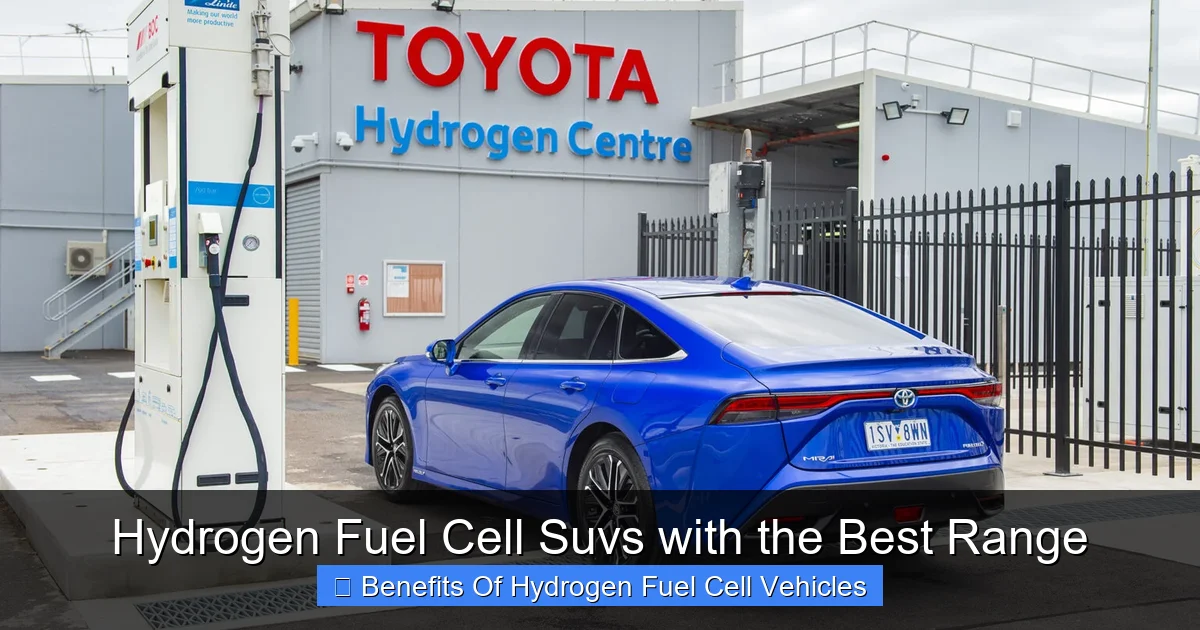
The Toyota Mirai is one of the most well-known hydrogen vehicles and currently holds the title for the longest range among production hydrogen cars. The 2023 Mirai XLE trim delivers an EPA-estimated 402 miles on a single tank—more than many gasoline SUVs. It’s a sleek, midsize sedan, but Toyota is expanding its hydrogen lineup with SUV concepts and fleet vehicles.
What makes the Mirai special? Its advanced fuel cell stack is 25% smaller and 30% lighter than the previous generation, yet more powerful. It also features a refined interior with premium materials, a quiet cabin, and Toyota’s full suite of safety tech. While not a traditional SUV, the Mirai proves that hydrogen can deliver exceptional range and luxury.
Hyundai NEXO – 380 Miles of Pure Efficiency
The Hyundai NEXO is a dedicated hydrogen SUV designed from the ground up for fuel cell technology. With an EPA-estimated range of 380 miles, it’s one of the longest-range hydrogen vehicles available today. It’s available in select markets, primarily in California, where hydrogen infrastructure is most developed.
The NEXO isn’t just about range—it’s packed with innovation. It features a solar roof that can generate up to 210 watts of power to assist the battery, improving efficiency. It also includes advanced driver-assistance systems (ADAS), a 12.3-inch touchscreen, and a spacious, modern interior. Hyundai has also focused on sustainability, using recycled materials and bio-based fabrics throughout the cabin.
Honda CR-V Fuel Cell (2025) – Coming Soon with 300+ Miles
Honda is entering the hydrogen SUV space with the 2025 CR-V Fuel Cell, a plug-in hybrid version of its popular compact SUV. This model combines a hydrogen fuel cell with a small battery, allowing it to run on hydrogen for long-range driving or plug in for short electric-only trips. Honda estimates a range of over 300 miles, with the added flexibility of dual power sources.
The CR-V Fuel Cell will be available in select U.S. markets, starting with California. It’s designed for everyday use, with familiar styling, ample cargo space, and Honda’s reputation for reliability. This model could be a game-changer, bringing hydrogen technology to mainstream buyers who already trust the CR-V brand.
Mercedes-Benz GLC F-CELL – Limited but Impressive
Mercedes-Benz offered the GLC F-CELL as a plug-in hydrogen hybrid, combining a fuel cell with a 13.5 kWh battery. While production has been limited and the model is no longer widely available, it demonstrated the potential of hydrogen in luxury SUVs. It delivered around 310 miles of range and could be charged via plug or hydrogen refill.
The GLC F-CELL showcased Mercedes’ commitment to alternative fuels and advanced engineering. Its quiet ride, premium interior, and smooth acceleration made it a standout in the hydrogen space. While not currently in production, it paved the way for future hydrogen luxury SUVs.
The Benefits of Driving a Hydrogen Fuel Cell SUV
Choosing a hydrogen fuel cell SUV isn’t just about being eco-friendly—it’s about enjoying a superior driving experience. These vehicles offer a unique combination of benefits that make them ideal for modern lifestyles.
Zero Emissions, Real Impact
Hydrogen fuel cell SUVs produce zero tailpipe emissions. The only thing that comes out of the exhaust is water vapor—literally clean enough to drink. This makes them a powerful tool in the fight against climate change and urban air pollution. For families living in cities or near highways, this means cleaner air and a healthier environment.
Even when considering the full lifecycle, hydrogen vehicles can be much cleaner than gasoline cars—especially when the hydrogen is produced using renewable energy (known as “green hydrogen”). As the grid becomes greener, the environmental benefits will only increase.
Fast Refueling—No Waiting Around
One of the biggest advantages over battery EVs is refueling time. Charging a large EV battery can take 30 minutes to several hours, depending on the charger. Hydrogen refueling takes just 3–5 minutes—about the same as filling up a gas tank. This is a huge win for road trips, busy families, and commercial users who can’t afford downtime.
Imagine pulling into a hydrogen station, swiping your card, and being back on the highway in under five minutes. No need to plan charging stops or worry about battery degradation over time. It’s the convenience of gasoline with the cleanliness of electric power.
Performance and Comfort
Hydrogen SUVs deliver smooth, quiet, and powerful performance. Electric motors provide instant torque, giving these vehicles quick acceleration and responsive handling. The absence of engine noise makes for a serene driving experience—perfect for long commutes or weekend getaways.
They also maintain cabin comfort in extreme temperatures. Unlike some EVs that lose range in cold weather due to battery inefficiency, hydrogen vehicles aren’t affected by the cold. The fuel cell operates efficiently in winter, and waste heat can be used to warm the cabin, reducing the need for electric heaters.
Lower Maintenance Costs
With fewer moving parts than internal combustion engines, hydrogen fuel cell vehicles require less maintenance. No oil changes, no spark plugs, no exhaust systems to replace. The fuel cell stack is designed to last over 100,000 miles, and many components are built for durability.
Over time, this translates to significant savings. While the upfront cost is higher, lower fuel and maintenance expenses can offset the difference—especially for high-mileage drivers or fleets.
Challenges and How They’re Being Addressed
Despite their advantages, hydrogen fuel cell SUVs face some real challenges—mainly around infrastructure, cost, and hydrogen production. But progress is being made on all fronts.
Limited Refueling Stations
The biggest hurdle is the lack of hydrogen stations. As of 2024, there are fewer than 100 public hydrogen stations in the U.S., mostly in California. This makes long-distance travel difficult outside of specific corridors.
However, the infrastructure is growing. California has a goal of 200 stations by 2025, and states like New York and Hawaii are expanding their networks. In Europe and Asia, countries like Germany, Japan, and South Korea are investing heavily in hydrogen infrastructure. Private companies like Shell and Air Liquide are also building stations along major highways.
High Upfront Cost
Hydrogen SUVs are currently more expensive than comparable gasoline or electric models. The Toyota Mirai starts around $50,000, and the Hyundai NEXO is similarly priced. This is due to the cost of fuel cell technology, carbon-fiber tanks, and low production volumes.
But prices are expected to fall as production scales up. Toyota and Hyundai are working to reduce costs through mass production and improved manufacturing. Government incentives, such as tax credits and rebates, can also help offset the initial investment.
Hydrogen Production and Sustainability
Not all hydrogen is created equal. Most hydrogen today is produced from natural gas (“gray hydrogen”), which still emits carbon. However, “green hydrogen”—made using renewable energy to split water—is the goal. It’s cleaner, sustainable, and essential for maximizing environmental benefits.
Investments in electrolysis technology and renewable energy are driving down the cost of green hydrogen. Countries like Australia, Canada, and Norway are becoming major producers, exporting hydrogen to global markets. As this supply grows, hydrogen vehicles will become even greener.
The Future of Hydrogen Fuel Cell SUVs
The future looks bright for hydrogen fuel cell SUVs. Automakers are investing billions in hydrogen technology, and governments are supporting the transition with funding and policy. By 2030, we could see a significant expansion of hydrogen models, infrastructure, and affordability.
New Models on the Horizon
Several automakers have announced plans for new hydrogen SUVs. General Motors is developing hydrogen versions of its trucks and SUVs for fleet use. BMW is testing a hydrogen-powered X5, and Renault is exploring hydrogen options for commercial vehicles. Even startups like Hyperion and Nikola are working on high-performance hydrogen SUVs.
These vehicles will likely offer even greater range, faster refueling, and lower costs. Advances in fuel cell durability, tank design, and onboard systems will make hydrogen SUVs more practical for everyday use.
Integration with Renewable Energy
Hydrogen can play a key role in the broader clean energy ecosystem. Excess solar and wind power can be used to produce hydrogen during off-peak hours, storing energy for later use. This “power-to-gas” approach helps stabilize the grid and makes renewable energy more reliable.
Hydrogen SUVs could become mobile energy storage units, feeding power back into homes or the grid when needed. This vehicle-to-grid (V2G) capability adds another layer of value to hydrogen ownership.
Global Expansion
While the U.S. is currently the largest market for hydrogen vehicles, global adoption is accelerating. Japan and South Korea have national hydrogen strategies, with thousands of vehicles on the road. Europe is investing in hydrogen corridors for trucks and buses, with passenger vehicles following close behind.
As international collaboration grows, we’ll see more standardized refueling systems, cross-border travel, and shared technology. This global momentum will drive innovation and reduce costs for everyone.
Is a Hydrogen Fuel Cell SUV Right for You?
Deciding whether a hydrogen fuel cell SUV fits your lifestyle depends on several factors. If you value long range, quick refueling, and zero emissions, it could be a great choice—especially if you live in an area with hydrogen stations.
Who Should Consider One?
- Long-Distance Commuters: If you drive 100+ miles daily, hydrogen’s fast refueling and range make it ideal.
- Eco-Conscious Families: Want a spacious, safe SUV without pollution? Hydrogen delivers.
- Fleet Operators: Delivery companies, taxi services, and government fleets can benefit from quick refueling and low emissions.
- Outdoor Enthusiasts: Need to tow a trailer or drive in remote areas? Hydrogen’s range and cold-weather performance are big pluses.
Things to Keep in Mind
- Location Matters: Check if hydrogen stations are available near you or along your regular routes.
- Cost vs. Benefit: Weigh the higher purchase price against fuel savings and environmental impact.
- Future-Proofing: As infrastructure grows, resale value and usability will improve.
For many, the benefits outweigh the current limitations. And as the technology matures, hydrogen fuel cell SUVs will become more accessible, affordable, and essential to a sustainable future.
Conclusion
Hydrogen fuel cell SUVs with the best range represent a bold step forward in clean transportation. They offer the freedom of long-distance driving, the convenience of fast refueling, and the peace of mind that comes with zero emissions. Models like the Toyota Mirai, Hyundai NEXO, and upcoming Honda CR-V Fuel Cell are proving that hydrogen isn’t just a niche technology—it’s a viable, exciting alternative for modern drivers.
While challenges remain, the momentum is undeniable. With growing infrastructure, falling costs, and increasing support from automakers and governments, hydrogen SUVs are poised to play a major role in the future of mobility. Whether you’re a family looking for a greener ride or a business seeking efficient fleet solutions, hydrogen fuel cell SUVs offer a compelling blend of performance, sustainability, and innovation.
The road ahead is clean, quiet, and powered by hydrogen. And it’s closer than you think.
Frequently Asked Questions
How far can a hydrogen fuel cell SUV go on a single tank?
Most hydrogen fuel cell SUVs offer a range between 300 and 400 miles, with the Toyota Mirai leading at 402 miles. This rivals many gasoline vehicles and exceeds the range of most battery electric SUVs.
How long does it take to refuel a hydrogen SUV?
Refueling a hydrogen SUV takes just 3 to 5 minutes—about the same as filling up a gas tank. This is significantly faster than charging a battery EV, making it ideal for long trips.
Are hydrogen fuel cell SUVs really zero emission?
Yes, hydrogen fuel cell SUVs produce only water vapor as exhaust. However, the environmental impact depends on how the hydrogen is produced. Green hydrogen, made from renewable energy, offers the cleanest footprint.
Where can I refuel a hydrogen SUV?
Hydrogen refueling stations are currently limited, with most located in California, Japan, and parts of Europe. Infrastructure is expanding, but availability varies by region.
Are hydrogen SUVs safe?
Yes, hydrogen SUVs are designed with multiple safety features, including reinforced tanks, leak detection, and automatic shut-off systems. They undergo rigorous testing and meet strict safety standards.
Will hydrogen SUVs become more affordable?
Yes, as production scales up and technology improves, prices are expected to drop. Government incentives and lower fuel and maintenance costs also improve long-term affordability.