Hydrogen fuel cell SUVs offer zero-emission driving with quick refueling and long range, making them a promising alternative to electric and gas vehicles. However, limited fueling stations, high costs, and energy inefficiencies remain significant challenges for widespread adoption.
Imagine driving a powerful, spacious SUV that glides silently down the highway, leaves no carbon footprint, and refuels in minutes—not hours. Sounds like a dream, right? That’s the promise of hydrogen fuel cell SUVs. These vehicles use cutting-edge technology to combine hydrogen and oxygen in a fuel cell, generating electricity to power the motor—and the only thing that comes out of the tailpipe is water vapor. No smog, no greenhouse gases, just clean, quiet driving.
But before you start picturing hydrogen-powered family road trips across the country, it’s important to understand the full picture. While hydrogen fuel cell SUVs offer some impressive advantages, they also come with serious drawbacks that make them a tough sell for most drivers today. From sparse refueling stations to high costs and energy inefficiencies, the road to mainstream adoption is still long and winding.
In this article, we’ll dive deep into the pros and cons of hydrogen fuel cell SUVs. Whether you’re an eco-conscious driver, a tech enthusiast, or just curious about the future of transportation, this guide will help you understand what these vehicles offer, where they fall short, and whether they might be right for you. We’ll explore how they work, compare them to electric and gas-powered SUVs, and look at real-world examples from automakers leading the charge.
Key Takeaways
- Zero tailpipe emissions: Hydrogen fuel cell SUVs only emit water vapor, making them environmentally friendly during operation.
- Fast refueling: Refill a hydrogen tank in 3–5 minutes, similar to gasoline, unlike hours needed for EV charging.
- Long driving range: Most hydrogen SUVs offer 300–400 miles per tank, ideal for long-distance travel.
- Limited infrastructure: Fewer than 100 hydrogen refueling stations exist in the U.S., mostly in California.
- High upfront and fuel costs: Vehicles and hydrogen fuel are significantly more expensive than EVs or gasoline.
- Energy inefficiency: Producing, transporting, and converting hydrogen uses more energy than direct battery charging.
- Growing but niche market: Automakers like Toyota and Hyundai are investing, but adoption remains slow due to barriers.
📑 Table of Contents
- How Hydrogen Fuel Cell SUVs Work
- Environmental Benefits: Clean Driving with Zero Emissions
- Performance and Convenience: Fast Refueling and Long Range
- Infrastructure and Accessibility Challenges
- Cost Considerations: High Price Tags and Operating Expenses
- Energy Efficiency and Sustainability Concerns
- The Future of Hydrogen Fuel Cell SUVs
- Conclusion
How Hydrogen Fuel Cell SUVs Work
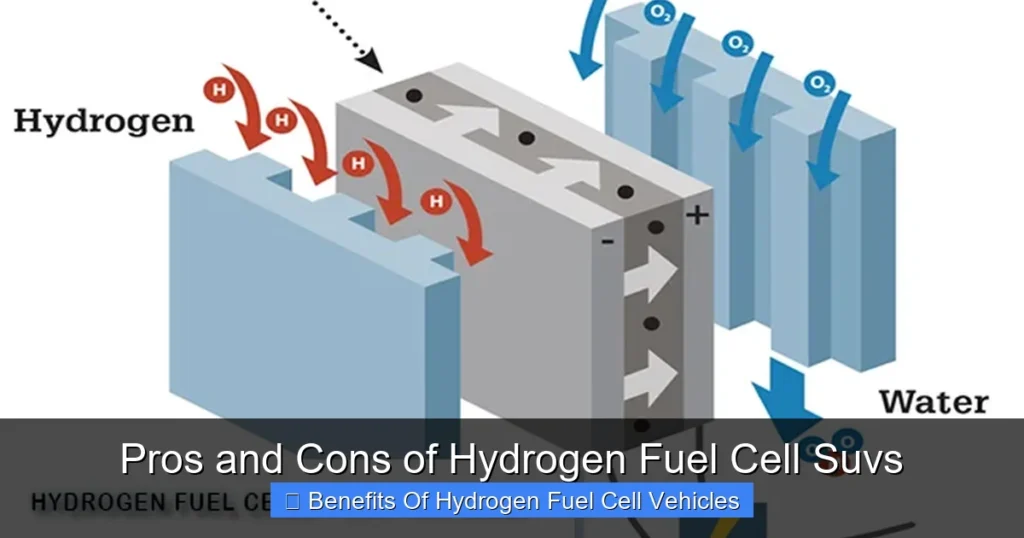
At the heart of every hydrogen fuel cell SUV is a fuel cell stack—a sophisticated system that converts hydrogen gas into electricity through a chemical reaction. Here’s how it works in simple terms: hydrogen from the onboard tank flows into the fuel cell, where it meets oxygen from the air. Inside the fuel cell, a catalyst (usually platinum) splits the hydrogen atoms into protons and electrons. The protons pass through a membrane, while the electrons are forced to travel through an external circuit, creating an electric current. This electricity powers the vehicle’s motor, and when the protons and electrons reunite with oxygen, they form water—hence the “water vapor only” emission.
Unlike battery-electric vehicles (BEVs), which store energy in large lithium-ion batteries, hydrogen SUVs generate electricity on demand. This means they don’t rely on heavy battery packs, which can reduce vehicle weight and improve efficiency in some cases. The hydrogen is stored in high-pressure tanks—typically made of carbon fiber—that can hold enough fuel for a range of 300 to 400 miles, comparable to many gasoline SUVs.
One of the most appealing aspects of this technology is its scalability. Because the fuel cell system is modular, it can be adapted to different vehicle sizes, from compact crossovers to full-size SUVs. This makes it a versatile option for automakers looking to offer clean transportation across their lineup.
Real-World Examples
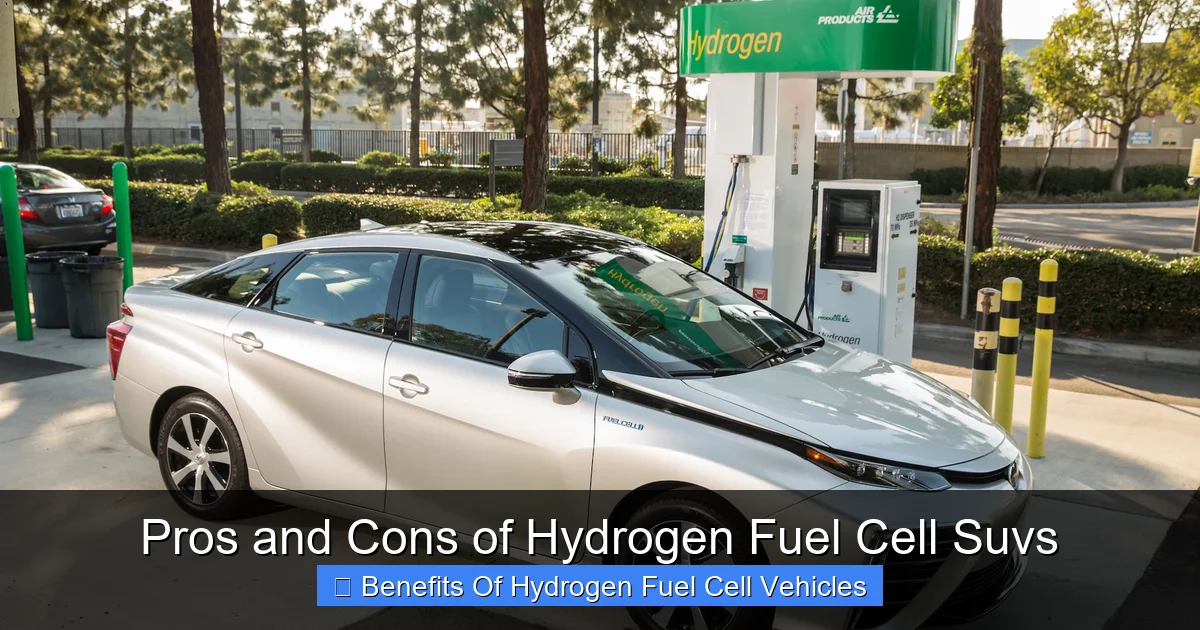
Toyota’s Mirai, though technically a sedan, paved the way for hydrogen passenger vehicles and demonstrated the feasibility of fuel cell technology. Building on that success, Hyundai introduced the NEXO, a dedicated hydrogen fuel cell SUV that offers 380 miles of range, advanced driver-assistance features, and a sleek, modern design. The NEXO is currently available in select markets, primarily California, where hydrogen infrastructure is most developed.
Another notable example is the upcoming Honda CR-V Fuel Cell, set to launch in the mid-2020s. This model will combine a hydrogen fuel cell with a plug-in hybrid system, allowing it to run on hydrogen, battery power, or a combination of both. This dual approach could help overcome some of the limitations of pure hydrogen vehicles, such as range anxiety and refueling delays.
These vehicles showcase the potential of hydrogen technology, but they also highlight the challenges. For instance, the NEXO costs around $60,000—significantly more than a comparable electric SUV like the Tesla Model Y or Ford Mustang Mach-E. And while the driving experience is smooth and quiet, the lack of refueling options outside California makes long-distance travel impractical for most owners.
Environmental Benefits: Clean Driving with Zero Emissions
Visual guide about Pros and Cons of Hydrogen Fuel Cell Suvs
Image source: sustainableamerica.org
One of the strongest arguments for hydrogen fuel cell SUVs is their environmental impact—or lack thereof. When it comes to tailpipe emissions, these vehicles are as clean as it gets. The only byproduct of the fuel cell reaction is water vapor, meaning no carbon dioxide (CO₂), no nitrogen oxides (NOx), and no particulate matter. This makes them a powerful tool in the fight against air pollution and climate change, especially in urban areas where vehicle emissions contribute significantly to smog and respiratory illnesses.
But it’s important to look beyond the tailpipe. The environmental benefits of hydrogen vehicles depend heavily on how the hydrogen is produced. Currently, about 95% of hydrogen is made through a process called steam methane reforming (SMR), which uses natural gas and releases CO₂. This “gray hydrogen” undermines the clean image of fuel cell vehicles. However, “green hydrogen”—produced using renewable energy sources like wind or solar to power electrolysis—offers a truly sustainable alternative. When green hydrogen powers a fuel cell SUV, the entire lifecycle emissions can be dramatically lower than gasoline or even battery-electric vehicles.
Lifecycle Emissions Compared
Studies show that hydrogen fuel cell vehicles powered by green hydrogen can have lifecycle emissions up to 60% lower than gasoline vehicles. Even when using gray hydrogen, they often outperform conventional SUVs, especially in regions with clean electricity grids. In contrast, battery-electric vehicles (BEVs) also have low tailpipe emissions, but their environmental impact depends on the source of electricity used for charging and the mining of raw materials like lithium and cobalt.
For example, a study by the International Council on Clean Transportation (ICCT) found that over its lifetime, a hydrogen fuel cell SUV powered by green hydrogen emits about 150 grams of CO₂ per mile. A comparable BEV charged with the U.S. average grid mix emits around 180 grams per mile. But if the BEV is charged with renewable energy, its emissions drop to about 50 grams per mile—making it the cleaner option in that scenario.
The key takeaway? Hydrogen fuel cell SUVs can be environmentally superior, but only if the hydrogen is produced sustainably. As renewable energy becomes more widespread and green hydrogen production scales up, the environmental case for these vehicles will only get stronger.
Performance and Convenience: Fast Refueling and Long Range
One of the biggest advantages of hydrogen fuel cell SUVs over battery-electric vehicles is refueling time. While charging an EV can take anywhere from 30 minutes (at a fast charger) to several hours (at home), refueling a hydrogen SUV takes just 3 to 5 minutes—about the same as filling up a gas tank. This makes hydrogen vehicles far more convenient for long trips, ride-sharing services, or anyone who doesn’t have time to wait around for a charge.
Range is another strong point. Most hydrogen SUVs offer between 300 and 400 miles on a single tank, which is competitive with gasoline vehicles and often exceeds the range of many EVs. For example, the Hyundai NEXO has an EPA-estimated range of 380 miles, while the Toyota Mirai achieves up to 402 miles. This eliminates range anxiety—a common concern among EV drivers—especially in areas with sparse charging infrastructure.
Driving Experience and Practicality
Hydrogen fuel cell SUVs deliver a smooth, quiet ride similar to electric vehicles. The electric motor provides instant torque, resulting in responsive acceleration and a calm cabin environment. They also offer the space and versatility expected from SUVs, with room for passengers, cargo, and modern tech features like touchscreens, advanced safety systems, and smartphone integration.
For commercial applications, hydrogen SUVs could be a game-changer. Fleet operators, delivery services, and emergency responders benefit from quick refueling and long range, allowing them to stay on the road longer without downtime. In Japan and South Korea, hydrogen-powered buses and taxis are already in use, demonstrating the technology’s potential beyond personal vehicles.
However, convenience comes at a cost. Hydrogen fuel is expensive—currently around $16 per kilogram in the U.S., and it takes about 5–6 kilograms to fill a typical SUV tank. That means a full refuel can cost $80 to $100, compared to $20–$40 for a comparable electric charge or $60–$80 for gasoline. While some manufacturers offer free hydrogen for the first few years of ownership (as Hyundai does with the NEXO), long-term fuel costs remain a barrier.
Infrastructure and Accessibility Challenges
Despite their advantages, hydrogen fuel cell SUVs face a major hurdle: infrastructure. As of 2024, there are fewer than 100 hydrogen refueling stations in the United States, and nearly all of them are in California. This makes owning a hydrogen SUV impractical for anyone outside the Golden State. Even within California, station availability can be spotty, with some areas having only one or two options within a 50-mile radius.
Building a nationwide hydrogen network is expensive and complex. Hydrogen is difficult to transport and store due to its low energy density and tendency to leak. Pipelines, tanker trucks, and compression equipment all require specialized materials and safety protocols. Additionally, hydrogen stations need significant space and regulatory approvals, which can delay construction.
Global Comparisons
Other countries are further ahead. Japan has over 160 hydrogen stations and aims to reach 1,000 by 2030. South Korea has around 200 stations and is investing heavily in hydrogen infrastructure as part of its national energy strategy. Germany and the UK are also expanding their networks, with government incentives and partnerships between automakers and energy companies.
In contrast, the U.S. has been slower to adopt hydrogen infrastructure. While the Inflation Reduction Act includes funding for clean hydrogen production, it doesn’t directly support refueling stations. Without a coordinated national effort, hydrogen vehicles will remain a niche option for the foreseeable future.
For consumers, this means limited usability. If you live outside California or plan to travel across state lines, a hydrogen SUV may not be a practical choice. Even in California, drivers must plan routes carefully to ensure they can refuel when needed. This lack of accessibility is one of the biggest reasons hydrogen vehicles haven’t gained traction compared to EVs, which can be charged at home, work, or public stations.
Cost Considerations: High Price Tags and Operating Expenses
Hydrogen fuel cell SUVs are among the most expensive vehicles on the market. The Hyundai NEXO starts at around $60,000, while the Toyota Mirai (a sedan, but in the same category) costs about $50,000. In comparison, a Tesla Model Y starts at $47,000, and a Ford Mustang Mach-E begins at $43,000. Even luxury gas-powered SUVs like the Lexus RX or BMW X5 are often cheaper than their hydrogen counterparts.
The high cost is due to several factors. Fuel cell systems require expensive materials like platinum, which is used as a catalyst. The hydrogen storage tanks are made of advanced composites to withstand high pressure, adding to the price. Additionally, low production volumes mean economies of scale haven’t been achieved yet.
Fuel and Maintenance Costs
As mentioned earlier, hydrogen fuel is costly. At $16 per kilogram and a consumption rate of about 1 kg per 60–70 miles, driving 15,000 miles a year could cost $3,400 to $4,000 in fuel. In contrast, a comparable EV might cost $600–$1,200 in electricity, depending on local rates.
Maintenance, however, can be lower. Hydrogen fuel cell vehicles have fewer moving parts than internal combustion engines, reducing the need for oil changes, transmission repairs, and exhaust system maintenance. The electric motor and fuel cell require minimal upkeep, and regenerative braking reduces wear on brake pads.
Still, repairs can be expensive if something goes wrong. Fuel cells have a limited lifespan—typically 5,000 to 10,000 hours of operation—and replacing one can cost $10,000 or more. Insurance premiums may also be higher due to the vehicle’s complexity and limited service network.
Energy Efficiency and Sustainability Concerns
While hydrogen fuel cell SUVs produce zero emissions on the road, their overall energy efficiency is a point of contention. The process of producing, transporting, and using hydrogen is far less efficient than simply charging a battery-electric vehicle.
Here’s a simplified breakdown: to produce hydrogen via electrolysis, electricity is used to split water into hydrogen and oxygen. This process is about 70–80% efficient. Then, the hydrogen must be compressed, cooled, and transported—steps that consume additional energy. At the fueling station, more energy is used to compress the hydrogen for storage in the vehicle. Finally, the fuel cell converts hydrogen back into electricity at about 60% efficiency.
When you add it all up, only about 25–35% of the original energy ends up powering the wheels. In contrast, battery-electric vehicles are 77–90% efficient from grid to wheel, depending on charging and driving conditions.
The Case for Green Hydrogen
This inefficiency is less of a concern if the hydrogen is produced using surplus renewable energy—such as wind or solar power that would otherwise go to waste. In that case, green hydrogen acts as a form of energy storage, helping to balance the grid and make better use of clean power. Countries with abundant renewable resources, like Iceland or Norway, are exploring hydrogen as a way to export clean energy.
However, scaling up green hydrogen production requires massive investments in renewable infrastructure and electrolyzers. Currently, green hydrogen accounts for less than 1% of global production. Until that changes, most hydrogen will continue to be made from fossil fuels, reducing the environmental benefits of fuel cell vehicles.
The Future of Hydrogen Fuel Cell SUVs
Despite the challenges, hydrogen fuel cell SUVs are not going away. Automakers continue to invest in the technology, and governments are beginning to recognize its potential. The European Union, for example, has included hydrogen in its Green Deal, aiming to install 10 million tons of renewable hydrogen production capacity by 2030.
In the U.S., the Department of Energy’s Hydrogen Shot initiative aims to reduce the cost of clean hydrogen to $1 per kilogram within a decade—a tenfold decrease from current levels. If achieved, this could make hydrogen fuel competitive with gasoline and electricity.
Innovations on the Horizon
New technologies are also emerging to improve efficiency and reduce costs. Solid-state hydrogen storage, for example, could allow hydrogen to be stored at lower pressures, making tanks lighter and safer. Advances in catalysts may reduce or eliminate the need for platinum, lowering production costs. And as renewable energy becomes cheaper, green hydrogen will become more viable.
For consumers, the future may include more choices. Automakers like General Motors, BMW, and even Ford are exploring hydrogen options, and partnerships with energy companies could accelerate infrastructure development. In the long term, hydrogen could play a key role in decarbonizing heavy transport, aviation, and shipping—sectors where batteries are less practical.
But for now, hydrogen fuel cell SUVs remain a niche product. They offer a compelling vision of clean, convenient driving, but real-world limitations make them a tough sell for most buyers. As infrastructure improves and costs come down, that could change—but it will take time, investment, and a shift in consumer mindset.
Conclusion
Hydrogen fuel cell SUVs represent a bold step toward a cleaner, more sustainable future. With zero tailpipe emissions, fast refueling, and long range, they offer a unique combination of benefits that set them apart from both gasoline and electric vehicles. For drivers who value environmental responsibility without sacrificing convenience, they’re an intriguing option.
However, significant challenges remain. Limited refueling infrastructure, high costs, and energy inefficiencies make hydrogen SUVs impractical for most people today. While countries like Japan and South Korea are making progress, the U.S. lags behind in both infrastructure and adoption.
Ultimately, hydrogen fuel cell SUVs are not a silver bullet—but they could be part of a broader solution. As green hydrogen production scales up and technology improves, these vehicles may find their place in a diversified clean transportation ecosystem. For now, they’re best suited for early adopters, fleet operators, and those in regions with strong hydrogen support.
If you’re considering a hydrogen SUV, weigh the pros and cons carefully. Ask yourself: Do I live near a refueling station? Can I afford the upfront and ongoing costs? Am I willing to accept the current limitations for the sake of innovation? The answers will help you decide if this cutting-edge technology is right for you.
Frequently Asked Questions
Are hydrogen fuel cell SUVs really zero emission?
Yes, hydrogen fuel cell SUVs produce only water vapor from the tailpipe, making them zero-emission during operation. However, the overall environmental impact depends on how the hydrogen is produced—green hydrogen from renewables is truly clean, while gray hydrogen from natural gas still generates emissions.
How long does it take to refuel a hydrogen SUV?
Refueling a hydrogen SUV takes just 3 to 5 minutes, similar to filling up a gasoline vehicle. This is much faster than charging an electric SUV, which can take 30 minutes to several hours depending on the charger type.
Where can I refuel a hydrogen fuel cell SUV in the U.S.?
As of 2024, nearly all hydrogen refueling stations in the U.S. are located in California, with fewer than 100 stations nationwide. This makes owning a hydrogen SUV impractical outside the state.
Are hydrogen SUVs more expensive than electric SUVs?
Yes, hydrogen SUVs typically cost $10,000 to $20,000 more than comparable electric SUVs. Fuel costs are also higher—hydrogen can cost $80–$100 per fill-up, while charging an EV costs significantly less.
Can hydrogen fuel cell SUVs be charged at home?
No, hydrogen SUVs cannot be refueled at home like electric vehicles. They require specialized high-pressure refueling stations, which are not available for residential use.
Will hydrogen SUVs replace electric vehicles?
Unlikely in the near term. While hydrogen has advantages for long-range and heavy-duty applications, electric vehicles are more energy-efficient and benefit from widespread charging infrastructure. Both technologies will likely coexist, serving different needs.