Hydrogen fuel cell SUVs offer a clean, efficient alternative to gas-powered vehicles, emitting only water vapor. With growing infrastructure and impressive range, these eco-friendly SUVs are ideal for environmentally conscious drivers seeking performance and sustainability.
Key Takeaways
- Zero Emissions: Hydrogen fuel cell SUVs produce only water vapor, making them one of the cleanest transportation options available today.
- Fast Refueling: Unlike electric vehicles, hydrogen SUVs refuel in under 10 minutes, offering convenience similar to gasoline vehicles.
- Long Driving Range: Most hydrogen SUVs offer 300–400 miles per fill-up, ideal for long-distance travel and road trips.
- Growing Infrastructure: While still limited, hydrogen refueling stations are expanding, especially in California and parts of Europe.
- Government Incentives: Many regions offer tax credits, rebates, and HOV lane access to encourage adoption of hydrogen vehicles.
- Quiet and Smooth Ride: Fuel cell technology delivers a quiet, vibration-free driving experience with instant torque.
- Future-Proof Technology: As green hydrogen production grows, these vehicles will become even more sustainable and widely available.
📑 Table of Contents
Why Hydrogen Fuel Cell SUVs Are the Future for Environmentalists
If you’re passionate about protecting the planet but still want the space, power, and versatility of an SUV, hydrogen fuel cell vehicles (FCVs) might be your perfect match. Unlike traditional gas-guzzlers or even some battery-electric SUVs, hydrogen-powered SUVs offer a truly clean driving experience—without sacrificing performance or convenience. They emit nothing but water vapor from the tailpipe, making them one of the most environmentally friendly options on the road today.
But it’s not just about being green. Hydrogen fuel cell SUVs are also practical. They refuel in under 10 minutes, just like a gasoline vehicle, and offer ranges that rival or exceed many electric SUVs. For environmentalists who want to reduce their carbon footprint without giving up long road trips or family-friendly cargo space, these vehicles represent a powerful step forward.
As the world shifts toward sustainable transportation, hydrogen technology is gaining momentum. With major automakers investing in fuel cell development and governments supporting infrastructure growth, now is the perfect time to explore the top hydrogen fuel cell SUVs available. Whether you’re commuting daily or planning a cross-country adventure, these vehicles prove that eco-conscious driving doesn’t have to mean compromise.
How Hydrogen Fuel Cell SUVs Work
Visual guide about Top Hydrogen Fuel Cell Suvs for Environmentalists
Image source: totalshield.com
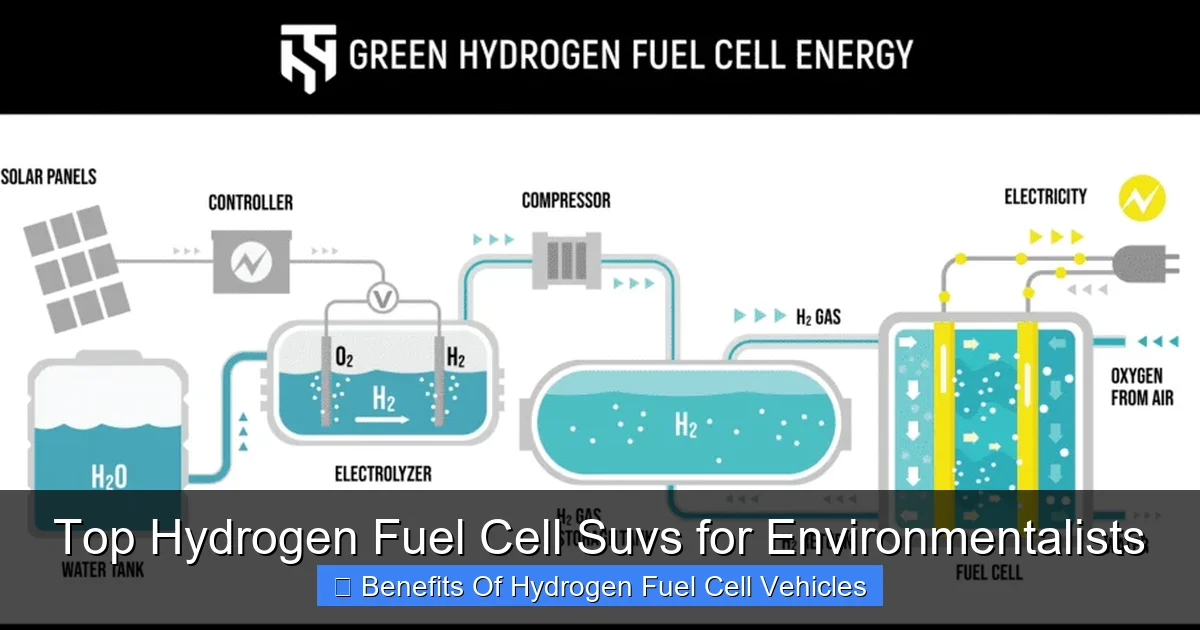
Before diving into the best models, it helps to understand how hydrogen fuel cell SUVs actually work. At their core, these vehicles use a fuel cell stack to convert hydrogen gas into electricity, which then powers an electric motor. The process is clean, quiet, and highly efficient.
The Science Behind the Clean Drive
Inside the fuel cell, hydrogen from the onboard tank flows into the anode, where a catalyst—usually platinum—splits the hydrogen molecules into protons and electrons. The protons pass through a membrane to the cathode, while the electrons travel through an external circuit, creating an electric current. This electricity powers the vehicle’s motor and charges a small battery that helps with acceleration and energy recovery.
At the cathode, the protons, electrons, and oxygen from the air combine to form water—H₂O—which is the only emission released. No carbon dioxide, no nitrogen oxides, no particulate matter. Just pure water vapor. This makes hydrogen fuel cell SUVs not only zero-emission but also a breath of fresh air for urban air quality.
Hydrogen Storage and Safety
One common concern is the safety of storing hydrogen, a highly flammable gas. However, modern hydrogen SUVs use advanced composite tanks designed to withstand extreme conditions, including high-pressure impacts and fires. These tanks are rigorously tested and meet strict safety standards.
Hydrogen is also lighter than air, so in the rare event of a leak, it disperses quickly into the atmosphere instead of pooling like gasoline vapors. Automakers like Toyota and Hyundai have decades of experience in hydrogen safety, and their vehicles are engineered with multiple fail-safes, including automatic shut-off valves and leak detection systems.
Refueling: Quick and Convenient
One of the biggest advantages of hydrogen SUVs over battery-electric vehicles is refueling time. While EVs can take 30 minutes to several hours to recharge—depending on the charger—hydrogen vehicles can be refueled in just 5 to 10 minutes. This makes them ideal for drivers who value time and convenience, especially on long trips.
Refueling is as simple as pulling up to a hydrogen station, connecting the nozzle, and waiting a few minutes. The process is similar to pumping gas, but cleaner and quieter. While hydrogen stations are still limited compared to gas stations, they are expanding rapidly in key regions like California, Japan, and parts of Europe.
Top Hydrogen Fuel Cell SUVs for Environmentalists
Now that you understand how they work, let’s explore the best hydrogen fuel cell SUVs currently available. These models combine eco-friendly technology with the space, comfort, and performance that SUV drivers love.
Toyota Mirai: The Pioneer of Hydrogen Mobility
The Toyota Mirai has been a trailblazer in the hydrogen vehicle market since its debut. While it started as a sedan, the second-generation Mirai has evolved into a sleek, premium SUV-like vehicle with a spacious interior and advanced technology.
With a range of up to 402 miles on a single tank, the Mirai offers one of the longest driving ranges among hydrogen vehicles. It’s powered by Toyota’s advanced fuel cell system, which delivers smooth, quiet acceleration and a refined driving experience. The interior features premium materials, a 12.3-inch touchscreen, and Toyota’s Safety Sense suite of driver-assist features.
One of the Mirai’s standout features is its environmental footprint. Toyota uses sustainable materials throughout the cabin, including plant-based fabrics and recycled plastics. Plus, the company is committed to producing green hydrogen—hydrogen made using renewable energy—which further reduces the vehicle’s overall emissions.
The Mirai is currently available in select markets, primarily California, where hydrogen infrastructure is most developed. Toyota also offers attractive lease programs and incentives, making it more accessible for early adopters.
Hyundai NEXO: Innovation Meets Practicality
The Hyundai NEXO is another top contender in the hydrogen SUV space. Designed specifically as a fuel cell SUV, the NEXO combines futuristic styling with real-world functionality.
It boasts an impressive range of up to 380 miles and features Hyundai’s third-generation fuel cell system, which is lighter, more efficient, and more durable than previous versions. The NEXO also includes advanced air purification technology—its fuel cell system can filter out 99.9% of fine dust from the air as it drives, making it not just clean but actively beneficial for air quality.
Inside, the NEXO offers a high-tech cabin with dual 12.3-inch displays, wireless charging, and Hyundai’s SmartSense safety suite. It seats five comfortably and includes ample cargo space, making it ideal for families or weekend adventurers.
Hyundai has been a leader in hydrogen technology for over two decades and continues to expand its FCV lineup. The NEXO is available in limited numbers in the U.S., primarily in California, but Hyundai is actively working to increase availability as infrastructure grows.
BMW iX5 Hydrogen: Luxury and Sustainability Combined
BMW has entered the hydrogen arena with the iX5 Hydrogen, a luxury SUV that blends the brand’s signature performance with zero-emission driving. Based on the popular X5 platform, the iX5 Hydrogen offers the comfort and prestige BMW drivers expect, powered by a hydrogen fuel cell system developed in partnership with Toyota.
The iX5 Hydrogen delivers over 300 miles of range and accelerates from 0 to 60 mph in under 6 seconds—impressive for a vehicle of its size. It features a spacious, high-end interior with sustainable materials, including recycled plastics and responsibly sourced wood trim.
BMW is using the iX5 Hydrogen as a testbed for future hydrogen models, with a small fleet deployed in Europe and the Middle East for real-world evaluation. While not yet available for public purchase, the iX5 Hydrogen signals BMW’s commitment to hydrogen as a viable alternative to battery-electric vehicles, especially for larger, performance-oriented SUVs.
Mercedes-Benz GLC F-CELL: Plug-In Hybrid Innovation
The Mercedes-Benz GLC F-CELL is a unique hybrid that combines a hydrogen fuel cell with a plug-in battery. This dual-power system allows the vehicle to run on hydrogen for long-range driving or switch to battery power for short trips, offering flexibility that pure FCVs can’t match.
With a total range of over 300 miles—130 miles on battery alone and the rest on hydrogen—the GLC F-CELL is ideal for drivers who want the benefits of both technologies. It can be charged at home or public stations, and refueled with hydrogen when needed.
The GLC F-CELL features Mercedes’ signature luxury interior, advanced driver assistance systems, and a smooth, quiet ride. It’s currently available in limited numbers in Europe, with plans for broader rollout as hydrogen infrastructure improves.
Honda CR-V Fuel Cell (Upcoming)
Honda has announced plans to launch a hydrogen-powered version of its popular CR-V SUV in the coming years. Expected to arrive in 2024, the CR-V Fuel Cell will offer the reliability and practicality Honda is known for, with the added benefit of zero-emission driving.
While details are still emerging, early reports suggest the CR-V Fuel Cell will feature a next-generation fuel cell system with improved efficiency and durability. It will likely include Honda Sensing safety technology, a spacious interior, and a range comparable to other hydrogen SUVs.
Honda’s entry into the hydrogen SUV market is significant, as the CR-V is one of the best-selling vehicles in the U.S. If successful, the CR-V Fuel Cell could help bring hydrogen technology to mainstream consumers.
Environmental Benefits of Hydrogen Fuel Cell SUVs
Choosing a hydrogen fuel cell SUV isn’t just about driving a cool car—it’s a meaningful step toward reducing your environmental impact. Here’s how these vehicles contribute to a cleaner planet.
Zero Tailpipe Emissions
The most obvious benefit is the lack of harmful emissions. Unlike gasoline or diesel vehicles, hydrogen SUVs produce no CO₂, NOx, or particulate matter. This is especially important in urban areas, where air pollution contributes to respiratory diseases and climate change.
Even when compared to battery-electric vehicles, hydrogen SUVs have an edge in certain scenarios. While EVs are clean to drive, their environmental benefit depends on how the electricity used to charge them is generated. In regions where coal or natural gas dominates the grid, EVs still contribute to emissions indirectly.
Hydrogen, especially when produced using renewable energy (known as green hydrogen), offers a truly clean cycle from production to propulsion.
Reduced Dependence on Fossil Fuels
Hydrogen can be produced from a variety of sources, including water, natural gas, and biomass. When made using renewable energy—such as solar or wind power—hydrogen becomes a sustainable, carbon-neutral fuel.
By choosing a hydrogen SUV, you’re supporting a shift away from oil dependence and toward a more diverse, resilient energy system. This reduces geopolitical risks and helps stabilize energy prices over the long term.
Energy Efficiency and Grid Relief
While hydrogen production and distribution are less efficient than direct electricity use, fuel cell vehicles are highly efficient at converting hydrogen to motion—often more so than internal combustion engines. Additionally, hydrogen can be produced during off-peak hours, helping balance the electrical grid and make better use of renewable energy.
For example, excess solar power generated during the day can be used to electrolyze water into hydrogen, which is then stored and used to power vehicles later. This creates a closed-loop system that maximizes clean energy use.
Challenges and Considerations
Despite their many benefits, hydrogen fuel cell SUVs face some real challenges. Understanding these can help you make an informed decision.
Limited Refueling Infrastructure
The biggest hurdle is the lack of hydrogen stations. As of 2024, there are fewer than 100 public hydrogen stations in the U.S., with most located in California. This makes long-distance travel difficult unless you plan your route carefully.
However, infrastructure is growing. The U.S. Department of Energy and private companies are investing in new stations, and countries like Japan, South Korea, and Germany are leading the way with extensive networks.
Higher Upfront Cost
Hydrogen SUVs are currently more expensive than comparable gasoline or electric SUVs. The Toyota Mirai and Hyundai NEXO start around $60,000–$70,000, and availability is limited. However, government incentives can reduce the effective cost. California, for example, offers rebates of up to $5,000 for hydrogen vehicle purchases.
Leasing is often a more affordable option, with some programs offering low monthly payments and free hydrogen fuel for several years.
Hydrogen Production Methods
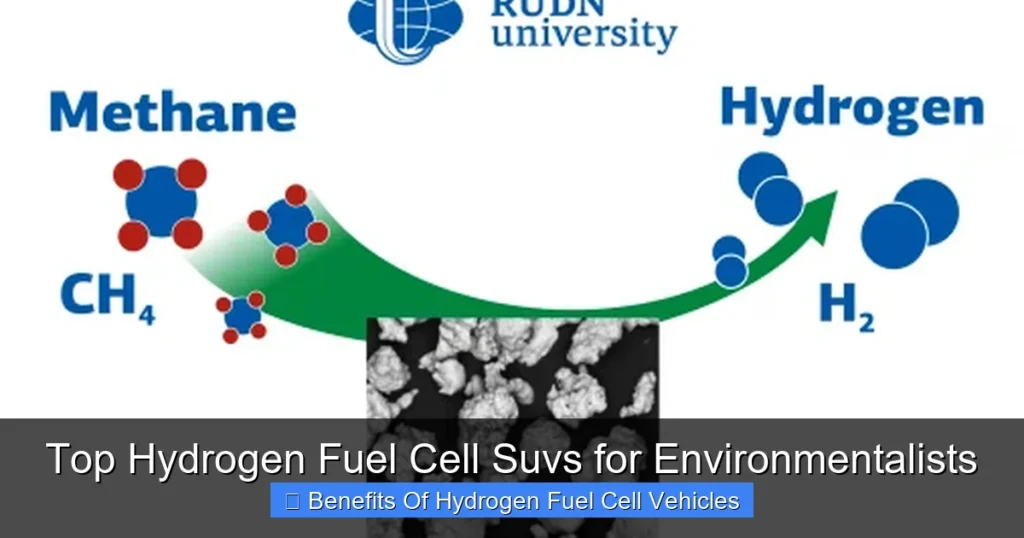
Not all hydrogen is created equal. Most hydrogen today is produced from natural gas through a process called steam methane reforming, which still emits CO₂. This “gray hydrogen” reduces the environmental benefit.
However, green hydrogen—made using renewable energy—is on the rise. As solar and wind power become cheaper, green hydrogen production is expected to grow rapidly. Choosing a hydrogen SUV supports demand for cleaner production methods.
The Future of Hydrogen SUVs
The future looks bright for hydrogen fuel cell SUVs. Automakers are investing heavily in the technology, and governments are supporting infrastructure development. As green hydrogen production scales up, these vehicles will become even more sustainable and accessible.
In the next decade, we can expect more models, lower prices, and a broader network of refueling stations. Hydrogen could play a key role in decarbonizing not just passenger vehicles, but also trucks, buses, and even ships and planes.
For environmentalists, hydrogen SUVs represent a powerful way to drive change—without sacrificing the comfort and capability they need.
Conclusion
Hydrogen fuel cell SUVs are more than just a niche alternative—they’re a practical, powerful, and planet-friendly choice for eco-conscious drivers. With zero emissions, fast refueling, and impressive range, models like the Toyota Mirai, Hyundai NEXO, and upcoming Honda CR-V Fuel Cell offer a compelling vision of sustainable mobility.
While challenges remain, the momentum behind hydrogen technology is undeniable. As infrastructure expands and production becomes greener, these vehicles will play an increasingly important role in the transition to a clean transportation future.
If you’re ready to make a difference behind the wheel, a hydrogen fuel cell SUV might just be the perfect fit.
Frequently Asked Questions
Are hydrogen fuel cell SUVs really zero emission?
Yes, hydrogen fuel cell SUVs emit only water vapor from the tailpipe, making them truly zero-emission vehicles. However, the environmental impact depends on how the hydrogen is produced—green hydrogen made with renewable energy is the cleanest option.
How long does it take to refuel a hydrogen SUV?
Refueling a hydrogen SUV takes just 5 to 10 minutes, similar to filling up a gasoline vehicle. This is much faster than charging most electric SUVs, which can take 30 minutes to several hours.
Where can I refuel a hydrogen SUV in the U.S.?
Most hydrogen refueling stations in the U.S. are located in California, with a growing number in the Bay Area, Los Angeles, and San Diego. A few stations are also planned in the Northeast and Hawaii.
Are hydrogen SUVs safe?
Yes, hydrogen SUVs are designed with multiple safety features, including high-strength fuel tanks, leak detection systems, and automatic shut-off valves. Hydrogen is also lighter than air, so it disperses quickly in case of a leak.
What is the range of a hydrogen fuel cell SUV?
Most hydrogen SUVs offer a range of 300 to 400 miles on a single tank, which is comparable to or better than many gasoline and electric SUVs.
Can I get incentives for buying a hydrogen SUV?
Yes, many regions offer incentives such as tax credits, rebates, and HOV lane access. In California, buyers may qualify for a $5,000 rebate and access to carpool lanes, even with a single occupant.