Hydrogen fuel cell SUVs are emerging as a game-changing solution for sustainable, high-performance mobility. With zero emissions, quick refueling, and impressive range, they offer a practical alternative to both gasoline and battery-electric vehicles—especially for families and long-distance drivers.
Imagine driving a powerful, spacious SUV that emits nothing but clean water vapor—no smog, no noise, no guilt. You pull up to a fueling station, refill your tank in under 10 minutes, and hit the road for another 350 miles. Sounds like science fiction? It’s not. This is the reality of hydrogen fuel cell SUVs, and they’re quietly reshaping the future of mobility.
While electric vehicles (EVs) have dominated the green car conversation, hydrogen-powered SUVs are emerging as a compelling alternative—especially for drivers who need range, performance, and convenience. Unlike battery-electric SUVs that require hours to recharge, hydrogen fuel cell vehicles (FCEVs) refuel as quickly as gasoline-powered cars. And unlike traditional SUVs, they produce zero harmful emissions. It’s the best of both worlds: the power and practicality of an SUV with the environmental benefits of a zero-emission vehicle.
The shift toward hydrogen isn’t just about technology—it’s about solving real-world problems. Range anxiety, long charging times, and the environmental cost of battery production have left many consumers hesitant to go fully electric. Hydrogen fuel cell SUVs address these concerns head-on. They’re ideal for families, outdoor adventurers, and professionals who need reliable, long-range transportation without sacrificing sustainability.
Key Takeaways
- Zero Tailpipe Emissions: Hydrogen fuel cell SUVs emit only water vapor, making them a truly clean transportation option that helps combat climate change.
- Fast Refueling Times: Unlike battery-electric vehicles that can take hours to charge, hydrogen SUVs refuel in under 10 minutes—comparable to gasoline vehicles.
- Long Driving Range: Most hydrogen fuel cell SUVs offer 300–400 miles per tank, ideal for road trips and daily commuting without range anxiety.
- High Towing and Payload Capacity: These SUVs maintain strong performance under load, making them perfect for hauling trailers, boats, or heavy cargo.
- Reduced Dependence on Rare Earth Metals: Unlike EVs, hydrogen vehicles don’t rely heavily on lithium, cobalt, or nickel, reducing environmental and ethical mining concerns.
- Growing Infrastructure and Government Support: Countries like Japan, South Korea, Germany, and the U.S. are investing heavily in hydrogen refueling networks and incentives.
- Future-Proof Technology: As green hydrogen production scales up, fuel cell SUVs will become even cleaner and more cost-effective over time.
📑 Table of Contents
How Hydrogen Fuel Cell SUVs Work
At the heart of every hydrogen fuel cell SUV is a fuel cell stack—a clean energy generator that converts hydrogen into electricity. Here’s how it works in simple terms: hydrogen gas from the onboard tank flows into the fuel cell, where it reacts with oxygen from the air. This chemical reaction produces electricity, which powers the vehicle’s electric motor. The only byproduct? Pure water vapor, which exits through the tailpipe.
This process is remarkably efficient and silent. Unlike internal combustion engines, which lose a lot of energy as heat, fuel cells convert chemical energy directly into electricity with minimal waste. The result is a smooth, quiet ride with instant torque—just like an electric vehicle, but without the need for massive batteries.
The Role of the Fuel Cell Stack
The fuel cell stack is the engine of a hydrogen SUV. It’s made up of hundreds of individual fuel cells layered together, each about the thickness of a credit card. These cells contain a proton exchange membrane (PEM) that allows hydrogen protons to pass through while blocking electrons. The electrons are forced to travel through an external circuit, creating an electric current that powers the car.
This technology isn’t new—NASA has used fuel cells in spacecraft since the 1960s. But recent advances in materials and manufacturing have made them compact, durable, and affordable enough for everyday vehicles. Modern fuel cell stacks can last over 100,000 miles with minimal maintenance, making them a reliable long-term investment.
Hydrogen Storage and Safety
One common concern about hydrogen is safety. After all, it’s a flammable gas. But hydrogen is actually safer than gasoline when handled properly. It’s lighter than air, so it disperses quickly if leaked, reducing the risk of fire. Plus, hydrogen tanks are built to withstand extreme conditions—including crashes, punctures, and high-pressure impacts.
Most hydrogen SUVs store hydrogen in carbon fiber-reinforced tanks at pressures up to 10,000 psi. These tanks are rigorously tested and designed to prevent leaks or ruptures. In fact, studies by the National Renewable Energy Laboratory (NREL) show that hydrogen vehicles are as safe—or safer—than conventional gasoline vehicles.
Environmental Benefits of Hydrogen SUVs
Visual guide about Why Hydrogen Fuel Cell Suvs Are the Future of Mobility
Image source: automology.com
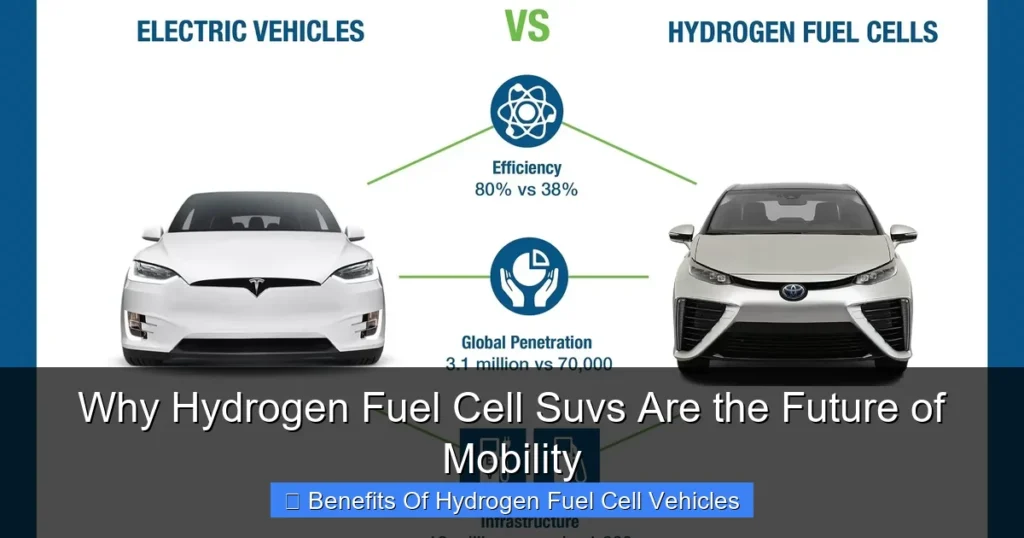
When it comes to protecting the planet, hydrogen fuel cell SUVs offer a powerful advantage: zero tailpipe emissions. Unlike gasoline or diesel SUVs, they don’t release carbon dioxide (CO₂), nitrogen oxides (NOx), or particulate matter—pollutants that contribute to smog, respiratory illness, and climate change.
But the environmental benefits go beyond the tailpipe. The true impact depends on how the hydrogen is produced. Currently, about 95% of hydrogen is made from natural gas through a process called steam methane reforming (SMR), which does emit CO₂. However, this is changing rapidly.
Green Hydrogen: The Clean Future
Green hydrogen is produced using renewable energy—like wind, solar, or hydropower—to split water into hydrogen and oxygen via electrolysis. This process emits no greenhouse gases and is becoming more efficient and affordable every year. Countries like Germany, Australia, and Canada are investing billions in green hydrogen infrastructure.
As green hydrogen scales up, the carbon footprint of fuel cell SUVs will shrink dramatically. In fact, lifecycle analyses show that hydrogen vehicles powered by renewable hydrogen can reduce emissions by up to 70% compared to gasoline vehicles—even when accounting for production and distribution.
Reduced Mining and Resource Strain
Another environmental benefit? Hydrogen SUVs don’t rely on rare earth metals like lithium, cobalt, or nickel, which are essential for EV batteries. Mining these materials has significant environmental and human rights concerns, including water pollution, deforestation, and unsafe labor conditions.
By shifting to hydrogen, we can reduce the demand for these controversial materials and create a more sustainable supply chain. Plus, hydrogen fuel cells are easier to recycle than large lithium-ion batteries, further reducing waste.
Performance and Practicality: Why SUVs Are the Perfect Fit
Hydrogen fuel cell technology isn’t just clean—it’s also incredibly practical, especially in SUV form. These vehicles combine the spaciousness, towing capacity, and off-road capability of traditional SUVs with the efficiency and quiet operation of electric drivetrains.
Long Range Without the Wait
One of the biggest drawbacks of battery-electric SUVs is range anxiety. Even the longest-range EVs typically max out at 300–350 miles, and charging can take 30 minutes to several hours depending on the station. For road trips or rural driving, this can be a major hurdle.
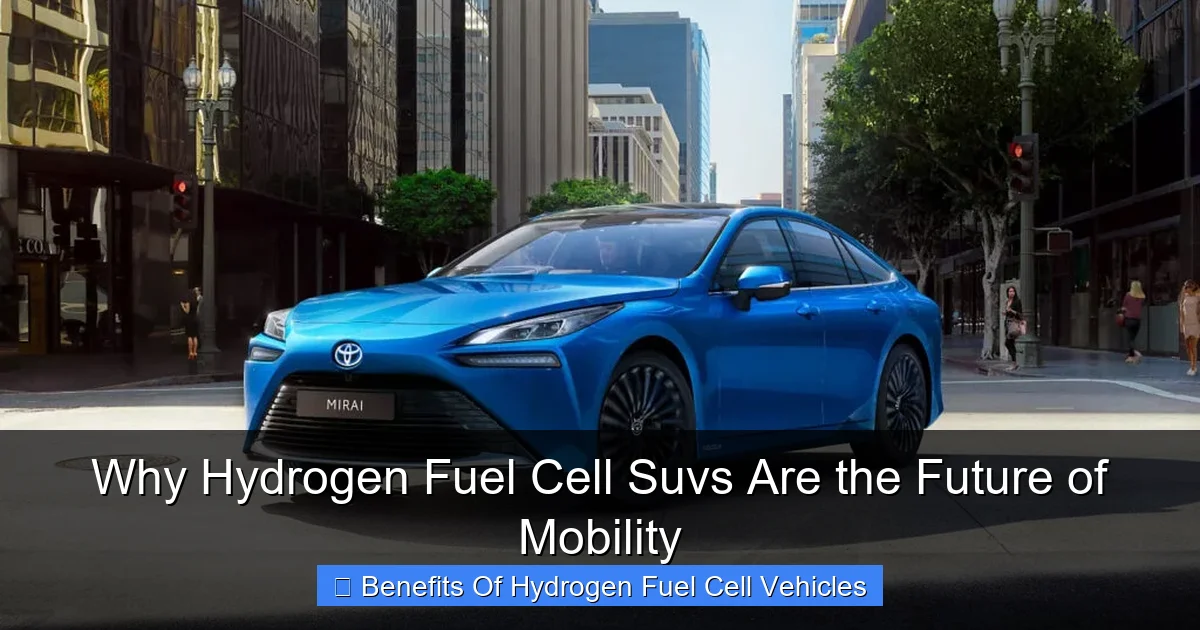
Hydrogen SUVs solve this problem. Models like the Toyota Mirai and Hyundai NEXO offer ranges of 350–400 miles on a single tank—comparable to gasoline SUVs. And refueling takes just 5–10 minutes, whether you’re at home or on the highway. No more planning your trip around charging stations.
Strong Towing and Payload Capacity
Families, outdoor enthusiasts, and contractors need SUVs that can handle heavy loads. Hydrogen fuel cell SUVs deliver. Because they use compact fuel cells instead of bulky battery packs, they maintain excellent weight distribution and cargo space. The Hyundai NEXO, for example, can tow up to 1,500 pounds—enough for a small trailer or jet skis.
Plus, the electric motor provides instant torque, making acceleration smooth and responsive even when fully loaded. Whether you’re hauling gear to a campsite or towing a boat to the lake, a hydrogen SUV won’t let you down.
Quiet and Comfortable Ride
Without a loud engine or transmission, hydrogen SUVs offer a serene driving experience. The only sounds you’ll hear are the hum of the electric motor and the wind outside. This makes for a more relaxing ride, especially on long journeys.
Many hydrogen SUVs also come with advanced driver-assistance systems (ADAS), panoramic sunroofs, and premium interiors—proving that sustainability doesn’t mean sacrificing comfort or style.
Refueling Infrastructure: Is It Ready?
One of the biggest questions about hydrogen SUVs is: Where do you fill them up? It’s true that hydrogen refueling stations are still limited compared to gas stations or EV chargers. But the infrastructure is growing fast.
Current State of Hydrogen Stations
As of 2024, there are over 1,000 hydrogen refueling stations worldwide, with the majority in California, Japan, South Korea, and parts of Europe. California leads the U.S. with more than 60 stations, mostly along major highways and in urban centers like Los Angeles and San Francisco.
While this may seem sparse, it’s important to remember that hydrogen stations serve multiple vehicles and can refuel a car in minutes—unlike EV chargers, which require longer dwell times. A single station can support dozens of vehicles per day.
Government and Industry Investment
Governments and automakers are investing heavily in hydrogen infrastructure. The U.S. Department of Energy has committed $8 billion to develop regional hydrogen hubs, while the European Union’s “Hydrogen Strategy” aims for 10 million tons of renewable hydrogen production by 2030.
Automakers like Toyota, Hyundai, and BMW are also expanding their hydrogen vehicle lineups and partnering with energy companies to build more stations. Toyota, for instance, has partnered with Shell and Air Liquide to increase hydrogen availability in California.
Home Refueling: The Future Is Coming
Imagine refueling your SUV at home, just like you charge your phone. That future is closer than you think. Companies like Plug Power and Hy2Gen are developing compact hydrogen refueling units for residential use. These systems use solar or grid electricity to produce hydrogen via electrolysis, storing it safely for daily use.
While home refueling isn’t widespread yet, it’s a promising solution for early adopters and could become mainstream as green hydrogen production grows.
Cost and Affordability: Are Hydrogen SUVs Worth It?
Let’s be honest: hydrogen SUVs are still more expensive than their gasoline or electric counterparts. The Toyota Mirai starts around $50,000, and the Hyundai NEXO is priced similarly. But it’s important to look beyond the sticker price.
Total Cost of Ownership
When you factor in fuel costs, maintenance, and incentives, hydrogen SUVs can be surprisingly affordable. Hydrogen fuel currently costs about $16 per kilogram in the U.S., and a typical SUV uses about 1 kg per 60–70 miles. That’s roughly $0.23 per mile—comparable to gasoline and cheaper than some EVs when accounting for electricity rates.
Maintenance is also simpler. Hydrogen SUVs have fewer moving parts than internal combustion engines, meaning fewer oil changes, no spark plugs, and less wear on brakes (thanks to regenerative braking). Over time, this can save thousands in repair costs.
Incentives and Tax Credits
Many governments offer generous incentives for hydrogen vehicles. In the U.S., buyers of new FCEVs may qualify for federal tax credits of up to $8,000, plus state rebates in places like California, which offers up to $5,000. Some utilities also provide free or discounted hydrogen fuel for the first few years.
These incentives, combined with lower operating costs, can make hydrogen SUVs a smart financial choice—especially for high-mileage drivers.
Resale Value and Long-Term Outlook
As hydrogen technology matures and infrastructure expands, resale values are expected to stabilize. Early adopters may see depreciation, but as demand grows, hydrogen SUVs could become more desirable—particularly in regions with strong green energy policies.
Plus, with no battery degradation concerns (a common issue in EVs), hydrogen vehicles may retain their performance and efficiency for decades.
The Road Ahead: Why Hydrogen SUVs Are the Future
The future of mobility isn’t just electric—it’s diverse, flexible, and sustainable. While battery-electric vehicles are ideal for city driving and short commutes, hydrogen fuel cell SUVs are better suited for long-distance travel, heavy-duty use, and regions with limited charging infrastructure.
As green hydrogen production scales up and refueling networks expand, hydrogen SUVs will become more accessible, affordable, and widespread. They offer a realistic path to decarbonizing transportation without sacrificing the performance, range, and convenience that drivers expect.
A Complement, Not a Competitor
It’s important to note that hydrogen SUVs aren’t meant to replace EVs—they’re meant to complement them. Just as we have different tools for different jobs, we need different vehicle types for different needs. For families, adventurers, and professionals who need range and power, hydrogen SUVs are a perfect fit.
Global Momentum
Countries around the world are embracing hydrogen as a key part of their clean energy strategy. Japan’s “Basic Hydrogen Strategy” aims for 800,000 FCEVs by 2030. South Korea plans to build 1,200 hydrogen stations by 2040. Germany is investing €9 billion in hydrogen infrastructure.
This global momentum signals a shift toward a hydrogen-powered future—one where clean, efficient, and powerful SUVs are the norm, not the exception.
What You Can Do Today
Even if hydrogen SUVs aren’t widely available in your area yet, you can still support the transition. Advocate for hydrogen infrastructure in your community, stay informed about new models and incentives, and consider a hydrogen-capable vehicle if it fits your needs.
The future of mobility is being written now—and hydrogen fuel cell SUVs are helping to write it.
Conclusion
Hydrogen fuel cell SUVs represent a bold step forward in sustainable transportation. They combine the environmental benefits of zero emissions with the performance, range, and convenience that modern drivers demand. With fast refueling, long range, and strong towing capacity, they’re ideal for families, adventurers, and professionals alike.
While challenges remain—particularly in infrastructure and cost—the momentum behind hydrogen technology is undeniable. As green hydrogen production grows and refueling networks expand, these vehicles will become more accessible and affordable.
The future of mobility isn’t just about going electric—it’s about choosing the right tool for the job. For those who need power, space, and freedom to roam, hydrogen fuel cell SUVs are not just an option. They’re the future.
Frequently Asked Questions
Are hydrogen fuel cell SUVs really emission-free?
Yes, hydrogen fuel cell SUVs emit only water vapor from the tailpipe, making them zero-emission vehicles. However, the overall environmental impact depends on how the hydrogen is produced—green hydrogen from renewables is the cleanest option.
How long does it take to refuel a hydrogen SUV?
Refueling a hydrogen SUV takes just 5 to 10 minutes, similar to filling up a gasoline vehicle. This is much faster than charging a battery-electric SUV, which can take 30 minutes to several hours.
Are hydrogen SUVs safe in a crash?
Yes, hydrogen SUVs are designed with safety in mind. Their hydrogen tanks are made of strong carbon fiber and tested to withstand crashes, fires, and punctures. Hydrogen also disperses quickly if leaked, reducing fire risk.
Can I drive a hydrogen SUV in cold weather?
Absolutely. Hydrogen fuel cell SUVs perform well in cold climates, unlike some EVs that lose range in low temperatures. The fuel cell system generates heat, which helps maintain cabin warmth and battery efficiency.
Where can I find hydrogen refueling stations?
Hydrogen stations are currently concentrated in California, Japan, South Korea, and parts of Europe. The network is expanding rapidly, with new stations being built along major highways and in urban areas.
Will hydrogen SUVs become cheaper in the future?
Yes, as production scales up and technology improves, the cost of hydrogen SUVs is expected to decrease. Government incentives and lower fuel and maintenance costs also improve their long-term affordability.