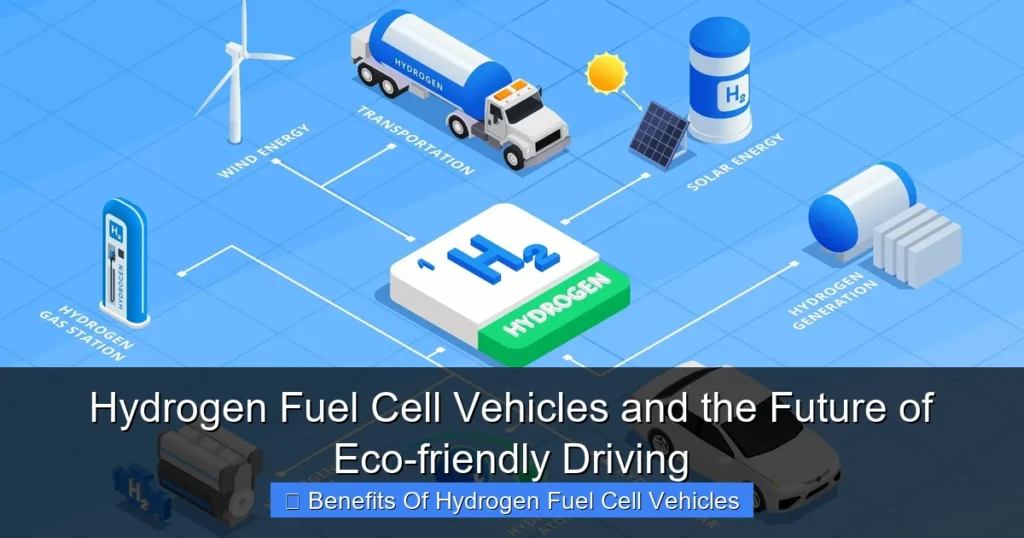
Hydrogen fuel cell vehicles (FCVs) are paving the way for a greener future by offering zero-emission driving, longer ranges than EVs, and rapid refueling times. As infrastructure expands and costs drop, FCVs could become mainstream, transforming how we travel sustainably.
This is a comprehensive guide about Hydrogen fuel cell vehicles and the future of eco-friendly driving.
Key Takeaways
- Zero Emissions: FCVs only produce water vapor, eliminating tailpipe pollution.
- Fast Refueling: Fill up in minutes, unlike electric vehicles that take hours to charge.
- Long Range: Many FCVs offer 300-400 miles per tank, comparable to gas-powered cars.
- Cost Efficiency: Hydrogen production is becoming cheaper, especially from renewable sources.
- Challenges Remain: Limited refueling stations and higher upfront costs hinder adoption.
- Government Support: Incentives and policies are accelerating FCV development globally.
- Synergy with Renewables: Green hydrogen from wind/solar makes FCVs truly sustainable.
—
[FEATURED_IMAGE_PLACEHOLDER]
# Hydrogen Fuel Cell Vehicles and the Future of Eco-friendly Driving
## Introduction
Picture this: you pull into a hydrogen refueling station, fill up in under five minutes, and hit the road—no waiting, no range anxiety. That’s the promise of hydrogen fuel cell vehicles (FCVs), a game-changer in the race toward sustainable transportation. Unlike electric vehicles (EVs) that rely on batteries, FCVs generate electricity through an electrochemical reaction between hydrogen and oxygen, leaving behind only water vapor as their byproduct.
The world is shifting away from fossil fuels, and FCVs are emerging as a compelling alternative. With governments pledging net-zero targets and automakers investing billions in R&D, these vehicles could soon rival or even surpass EVs in popularity. But what exactly makes FCVs so special? How do they work, and where are they headed next? Let’s dive in!
—
## How Hydrogen Fuel Cell Vehicles Work
### The Science Behind FCVs
At its core, a hydrogen fuel cell vehicle operates like a battery but without recharging. Instead, it uses two key components:
- Hydrogen Tank: Stores compressed hydrogen gas (typically at 700 bar pressure).
- Fuel Stack: A series of cells that combine hydrogen and oxygen from ambient air to produce electricity, powering the car’s motor.
Unlike combustion engines, FCVs don’t burn fuel—they convert hydrogen directly into energy with 60% efficiency, making them more efficient than gasoline engines (which average 20-30% efficiency).
### Key Components Explained
1. Membrane Electrode Assembly (MEA): Where the magic happens. Platinum-coated catalysts split hydrogen into protons and electrons.
2. Proton Exchange Membrane (PEM): Allows protons to pass while blocking electrons, forcing them to flow through an external circuit (creating electricity).
3. Air Intake: Brings in oxygen from the air to react with hydrogen.
4. Cooling System: Prevents overheating during operation.
—
## Advantages Over Traditional Cars and EVs
### Zero Tailpipe Emissions
FCVs are among the cleanest vehicles available. Their only emission is water vapor, making them ideal for urban areas battling smog and climate change. In contrast:
– Gasoline cars emit CO₂, NOx, and particulate matter.
– Even plug-in hybrids (PHEVs) rely partly on fossil fuels.
### Faster Refueling Than Charging
Ever waited 30+ minutes to charge an EV? FCVs fix that:
“Refueling a Toyota Mirai takes about 5 minutes, matching the speed of gas pumps.”
This convenience addresses one of the biggest pain points for potential EV buyers.
### Longer Range and Less Degradation
Battery EVs often lose capacity after years of use, reducing their effective range. FCVs don’t suffer from this issue because:
– Their fuel tanks aren’t subject to chemical degradation.
– Range is less affected by weather (unlike cold-weather EV performance drops).
Many FCVs already achieve 300–400 miles per tank, rivaling gasoline SUVs.
—
## Current Market Leaders and Models
### Top Manufacturers and Models
Here are some standout FCVs hitting the market today:
| Model | Range | Price (USD) |
|---|---|---|
| Nissan X-Trail FCV | 365 miles | $65,000 |
| Honda Clarity Fuel Cell | 366 miles | $68,000 |
| Toyota Mirai | 402 miles | $58,000 |
### Real-World Examples
Japan operates over 1,000 hydrogen buses, cutting CO₂ emissions by 15,000 tons annually.
Cities like Los Angeles and London are also piloting FCVs for public transit, proving their scalability.
—
## Challenges and Solutions
### Infrastructure Gaps
Despite progress, refueling stations are scarce. As of 2023, there are only over 1,000 worldwide, compared to millions of gas stations. Solutions include:
– Government funding for hydrogen hubs (e.g., U.S. $8 billion in the Inflation Reduction Act).
– Partnerships between automakers and energy companies (e.g., Shell’s hydrogen network plans).
### Cost Barriers
FCVs currently cost $50,000–$70,000 due to expensive materials (like platinum in catalysts). However:
– Advances in nickel-based catalysts could cut costs by 50%.
– Economies of scale will lower prices as production ramps up.
—
## The Road Ahead: What’s Next?
### Policy and Investment Momentum
Governments are betting big on hydrogen:
– EU: Targets 1 million FCVs by 2025.
– South Korea: Plans 7,600 hydrogen stations by 2030.
– Australia: Pilots heavy-duty hydrogen trucks for mining fleets.
### Synergy with Renewables
Green hydrogen—made using wind/solar power—is key to making FCVs truly sustainable. Companies like Plug Power are scaling electrolyzer technology to produce affordable green H₂.
### Consumer Adoption Tips
If you’re curious about FCVs:
1. Check local hydrogen stations (apps like Hydrogen Fuel Stations can help).
2. Consider leasing options to test-drive before buying.
3. Advocate for better infrastructure in your area.
—
## Conclusion
Hydrogen fuel cell vehicles aren’t just a niche option—they’re a critical piece of the puzzle in achieving net-zero transportation. While challenges remain, the combination of policy support, technological advances, and consumer demand means FCVs could soon become as common as EVs. Imagine a future where every city has hydrogen pumps, families enjoy hassle-free refueling, and our planet breathes easier. The choice to adopt FCVs isn’t just about personal convenience; it’s about securing a cleaner, healthier tomorrow.
—
### Quick Q&A
Question 1?
Do FCVs require rare earth metals? Not necessarily—while some use platinum, research aims to replace it with cheaper alternatives like iridium or nickel.
Question 2?
Can I drive a hydrogen car cross-country? Yes! With a range of 400+ miles, trips like coast-to-coast are feasible, though station availability varies.
Question 3?
Is hydrogen flammable? Yes, but FCVs store hydrogen safely under high pressure with multiple fail-safes (similar to aviation standards).
Question 4?
How much does hydrogen refueling cost? Typically $12–$15 per kg, which powers ~200 miles. This is competitive with gasoline when accounting for emissions.
Question 5?
Will FCVs replace EVs? Unlikely—both technologies serve different needs (urban vs. long-haul). They’ll likely coexist, each excelling in specific niches.
—
### FAQs
What’s the difference between hydrogen and electric vehicles?
EVs store energy in batteries; FCVs generate electricity onboard via hydrogen. EVs excel in short-range urban driving, while FCVs shine in long-distance applications.
Are hydrogen stations widely available?
Not yet, but major cities in Japan, South Korea, and California have dense networks. Global expansion is accelerating, especially in Europe and Asia.
How safe are hydrogen fuel cells?
Extremely safe. Hydrogen ignites at a very low concentration, and modern FCVs have leak detection systems. No major accidents have been reported in decades.
Who benefits most from FCVs?
Heavy-duty transport (trucks, buses) stands to gain most due to hydrogen’s energy density. Passenger cars benefit too, especially for drivers who value quick refueling.
How long do hydrogen fuel cells last?
Modern stacks typically last 15–20 years with minimal degradation, thanks to advanced materials and cooling systems.
What’s the environmental impact of hydrogen production?
Grey hydrogen (from natural gas) emits CO₂. Blue hydrogen adds carbon capture, while green hydrogen (from renewables) is truly clean. The industry is shifting toward green H₂.
Quick Answers to Common Questions
What is Hydrogen fuel cell vehicles and the future of eco-friendly driving?
Hydrogen fuel cell vehicles and the future of eco-friendly driving refers to essential knowledge and techniques.
Frequently Asked Questions
What is Hydrogen fuel cell vehicles and the future of eco-friendly driving?
Hydrogen fuel cell vehicles and the future of eco-friendly driving is an important topic with many practical applications.