Hydrogen fuel cell vehicles (FCVs) offer exceptional energy efficiency by converting 60-70% of stored hydrogen into electricity, far surpassing conventional internal combustion engines. With zero tailpipe emissions, rapid refueling, and compatibility with renewable energy sources, FCVs are poised to transform transportation while reducing our carbon footprint.
This is a comprehensive guide about Hydrogen fuel cell vehicles and their potential for energy efficiency.
Key Takeaways
- High Efficiency: FCVs convert 60-70% of hydrogen into usable energy, outperforming gasoline cars (20-30%).
- Zero Emissions: Only water vapor is emitted, making them ideal for clean air cities.
- Fast Refueling: FCVs recharge in minutes, unlike EVs that need hours.
- Renewable Synergy: Hydrogen can be produced from wind/solar power, enhancing sustainability.
- Range Advantage: FCVs often exceed 300 miles per tank, rivaling traditional vehicles.
- Challenges Remain: Infrastructure costs and production scalability need improvement.
—
[FEATURED_IMAGE_PLACEHOLDER]
# Hydrogen Fuel Cell Vehicles and Their Potential for Energy Efficiency
## Introduction: The Rise of FCVs
Imagine driving a car that never needs a full day to charge, emits nothing but water, and has a range that rivals gas-powered vehicles. That’s the promise of hydrogen fuel cell vehicles (FCVs)—a technology gaining traction as the world shifts toward cleaner energy. Unlike electric vehicles (EVs), which rely on battery storage, FCVs generate electricity onboard using hydrogen and oxygen. This process produces only water vapor, making them a compelling solution for decarbonizing transport.
Why does energy efficiency matter? Because it directly impacts cost savings, environmental impact, and consumer adoption. FCVs excel here, offering unmatched efficiency compared to fossil fuel alternatives. But what makes them so special? Let’s dive deep into their mechanics, benefits, and challenges.
## How Do Hydrogen Fuel Cell Vehicles Work?
### The Science Behind FCVs
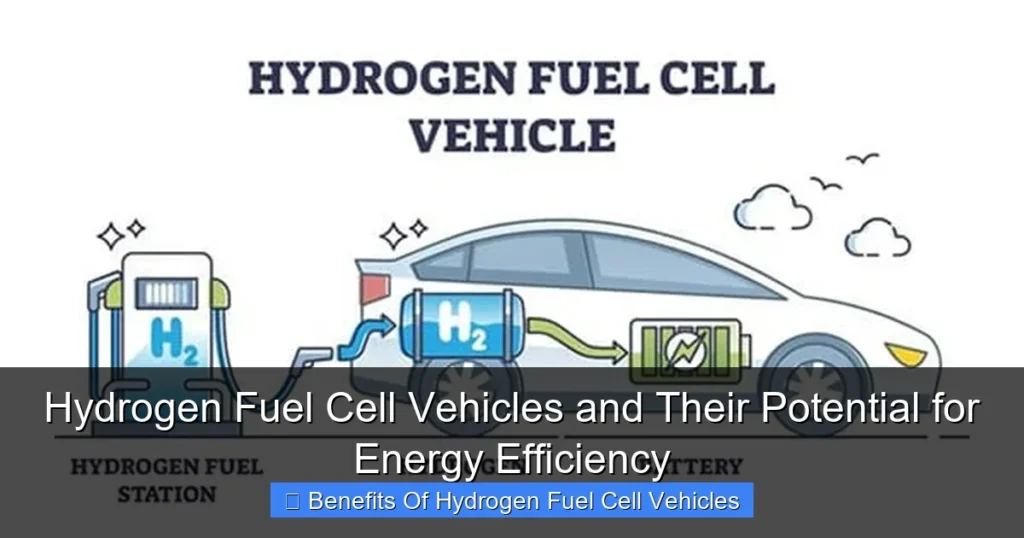
At its core, an FCV operates like a tiny, mobile power plant. Here’s the breakdown:
1. Hydrogen Storage: Compressed hydrogen gas is stored in tanks (usually at 700 bar pressure).
2. Electrochemical Reaction: Hydrogen enters the fuel cell stack, where it combines with oxygen from the air.
3. Electricity Generation: This reaction produces direct current (DC) electricity, powers the electric motor, and releases water vapor as the only byproduct.
Fun Fact: Toyota Mirai (one of the first mass-produced FCVs) achieves 67% well-to-wheel efficiency, meaning over two-thirds of the hydrogen’s energy reaches your wheels—compared to just 20-30% for gasoline cars.
### Why Efficiency Outperforms ICE and EVs
– Internal Combustion Engines (ICE): Only 20-30% of gasoline’s energy becomes motion; the rest is lost as heat.
– Battery EVs: Even efficient models lose ~30% energy during charging/discharging due to battery inefficiencies.
– FCVs: Minimize losses because hydrogen isn’t burned—it’s chemically converted to electricity directly.
## Advantages: Why FCVs Excel in Energy Efficiency
### Zero Tailpipe Emissions
Unlike ICE or even BEVs (which rely on grid electricity), FCVs produce zero CO₂ or harmful pollutants at the point of use. This is critical for urban areas struggling with air pollution. Cities like Tokyo and Paris are piloting FCVs to cut smog-forming NOx and particulate matter.
### Fast Refueling = Less Downtime
Recharging an EV can take hours, but FCVs refuel in 3-5 minutes, similar to gasoline cars. Imagine stopping for coffee instead of waiting for a “range anxiety” fix. Companies like Hyundai and Honda are building dedicated hydrogen stations to address this convenience gap.
### Renewable Hydrogen Integration
The future hinges on producing hydrogen sustainably:
– Green Hydrogen: Made via electrolysis using wind/solar energy (e.g., Norway’s HyNor project aims for 100% green H₂ by 2024).
– Blue Hydrogen: Uses natural gas with carbon capture, bridging the transition to renewables.
This synergy boosts FCVs’ overall sustainability score.
### Range Confidence
FCVs typically offer 300+ miles per tank, matching most sedans. For long-haul drivers or rural communities, this eliminates “range anxiety”—a major pain point for early EV adopters.
## Challenges and Limitations
### Infrastructure Gaps
While FCVs are efficient, widespread adoption depends on hydrogen supply chains:
– Limited Stations: As of 2023, there are ~900 globally, with most in Japan, Europe, and California.
– High Costs: Building a station costs $1–2 million, and transporting hydrogen requires specialized pipelines or cryogenic trucks.
### Production Costs
Current hydrogen production relies heavily on steam methane reforming (SMR), which emits CO₂. Green hydrogen remains expensive ($4–6/kg vs. SMR’s $1–2/kg). Scaling up renewables and electrolyzers is key.
### Energy Losses in Production
Even with green H₂, some energy is lost during compression, transport, and refueling. Research is ongoing to minimize these losses.
## Real-World Examples: FCVs in Action
### Toyota Mirai (Japan & U.S.)
– Sold over 20,000 units globally since 2014.
– Achieves 42 mpg equivalent (U.S. EPA rating).
### Hyundai Nexo (South Korea & Europe)
– SUV with 660-mile range (WLTP) and autonomous features.
– Powers buses and taxis in Seoul.
### Hydrogen-Powered Trains
Germany’s Coradia iLint runs on hydrogen, replacing diesel trains in regions with low electrification.
## Tips for Consumers Considering FCVs
1. Check Local Infrastructure: Use apps like Hydrogen Stations Map to find refueling options near you.
2. Evaluate Total Cost of Ownership (TCO): FCVs may have higher upfront prices but lower maintenance (no oil changes, fewer moving parts).
3. Look for Incentives: Governments offer subsidies (e.g., U.S. $7,500 tax credit for FCVs under the Inflation Reduction Act).
4. Test Drive First: FCVs feel identical to EVs but with faster refueling—try one before committing!
## The Future of FCVs and Energy Efficiency
By 2030, analysts predict FCVs could reach 1 million global sales annually, driven by:
– Cheaper green hydrogen (projected to drop below $2/kg).
– Partnerships between automakers and energy firms (e.g., Shell’s hydrogen hubs).
– Policy support (EU’s Green Deal targets 10M FCVs by 2030).
However, FCVs won’t replace all EVs. Instead, they’ll complement them, serving niche markets like freight trucks and off-grid applications where batteries fall short.
## Conclusion: A Sustainable Horizon
Hydrogen fuel cell vehicles represent a leap forward in energy-efficient transportation. By leveraging hydrogen’s high energy density and electrochemical conversion, FCVs outperform both ICE and BEVs in key metrics—especially when powered by renewables. While infrastructure and costs remain hurdles, the technology’s potential is undeniable.
For policymakers, automakers, and consumers, now is the time to invest in R&D, infrastructure, and incentives. The road to a greener future isn’t just about switching to electric—it’s about embracing diverse solutions, like hydrogen, to maximize efficiency and reduce emissions.
—
### QUICK Q&A
Quick Answers to Common Questions
What is Hydrogen fuel cell vehicles and their potential for energy efficiency?
Hydrogen fuel cell vehicles and their potential for energy efficiency refers to essential knowledge and techniques.
Frequently Asked Questions
What is Hydrogen fuel cell vehicles and their potential for energy efficiency?
Hydrogen fuel cell vehicles and their potential for energy efficiency is an important topic with many practical applications.