Hydrogen fuel cell vehicles (FCEVs) are a key player in the clean energy transition, offering zero-emission driving with only water as a byproduct. Unlike electric cars, FCEVs refuel quickly and have longer ranges, making them ideal for heavy-duty transport and long-distance travel.
This is a comprehensive guide about Hydrogen fuel cell vehicles as part of a clean energy transition.
Key Takeaways
- Zero Emissions: FCEVs produce only water vapor, eliminating tailpipe pollutants like CO₂ and NOx.
- Faster Refueling: Refueling takes 3-5 minutes compared to hours for battery-electric vehicles (BEVs).
- Longer Range: FCEVs often exceed 400 miles on a single tank, better suited for freight and aviation.
- Energy Diversification: Hydrogen can be produced from renewables, fossil fuels, or nuclear, reducing reliance on batteries.
- Challenges Remain: High production costs, infrastructure gaps, and storage limitations need addressing.
- Growing Adoption: Toyota, Hyundai, and major automakers plan millions of FCEVs by 2030.
—
[FEATURED_IMAGE_PLACEHOLDER]
# Hydrogen Fuel Cell Vehicles as Part of a Clean Energy Transition
## Introduction
The race toward net-zero emissions is heating up, and hydrogen fuel cell vehicles (FCEVs) are emerging as a promising solution. Unlike traditional gasoline cars or even battery-electric vehicles (BEVs), FCEVs combine hydrogen’s energy density with the environmental benefits of electrification. They emit nothing but water vapor, refuel in minutes, and excel in applications where BEVs struggle—like trucks, buses, and ships. But what exactly makes FCEVs a game-changer? And how do they fit into the broader clean energy transition? Let’s dive in.
### Why FCEVs Matter
With climate change accelerating, governments worldwide are pushing for cleaner transportation. The International Energy Agency (IEA) estimates that hydrogen could meet 18% of global energy demand by 2050, with FCEVs playing a starring role. For industries reliant on long-haul freight or heavy machinery, FCEVs offer practicality that BEVs currently lack. Plus, hydrogen can be produced using renewable energy, turning it into a truly green alternative when made sustainably.
## How FCEVs Work: A Simple Breakdown
###
The Science Behind Hydrogen Fuel Cells
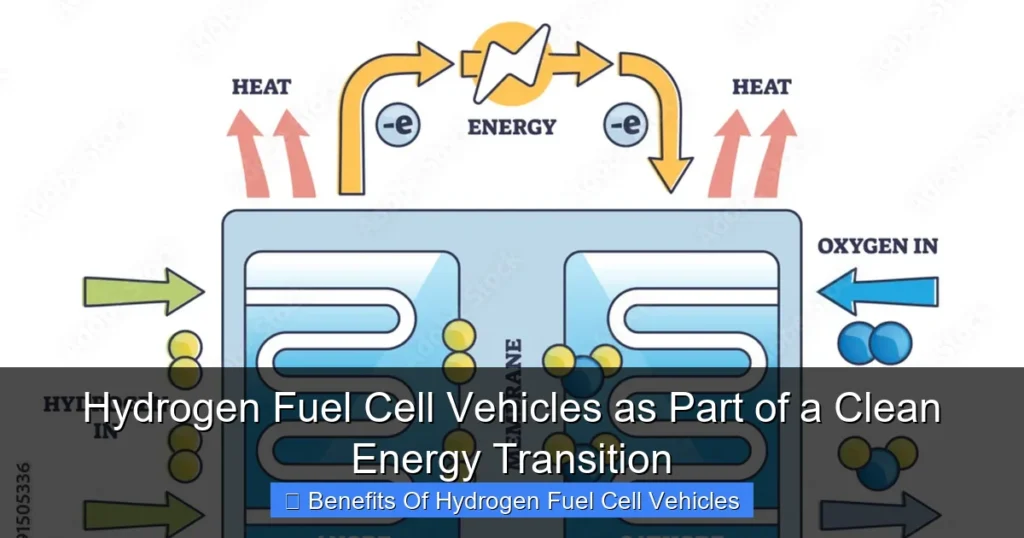
An FCEV’s heart is its fuel cell stack—a series of electrochemical reactors. Here’s how it works:
1. Hydrogen Input: Hydrogen gas flows into the fuel cell from the tank.
2. Electrochemical Reaction: The hydrogen combines with oxygen from the air, splitting into electrons (electricity) and protons (water).
3. Electricity Generation: Electrons power an electric motor, while protons recombine with oxygen to form water vapor.
4. Exhaust: Only water vapor exits the tailpipe—no CO₂, no particulate matter.
Unlike BEVs, which store electricity in large batteries, FCEVs generate electricity on-the-go, making them lighter and more efficient for certain use cases.
###
Advantages Over Battery-Electric Vehicles
While BEVs dominate headlines, FCEVs have unique strengths:
– Speed: Refueling takes 3–5 minutes vs. 60+ minutes for BEV charging.
– Range: Many FCEVs boast 300–400+ miles per fill-up—critical for commercial fleets.
– Weight: No bulky battery means more payload capacity for trucks and buses.
## Environmental Benefits: Beyond Zero Tailpipe Emissions
###
A Cleaner Transportation Future
FCEVs aren’t just about individual cars—they’re part of a larger ecosystem:
– Heavy-Duty Transport: Trucks, trains, and ships contribute ~70% of global freight emissions. FCEVs can decarbonize these sectors faster than BEVs due to their weight advantages.
– Air Quality: Cities like Tokyo and Los Angeles are testing FCEV buses to cut smog-forming pollutants.
– Circular Economy: Green hydrogen (made via electrolysis using renewables) ensures a closed-loop system where water is both input and output.
###
Lifecycle Emissions Considerations
Critics argue that if hydrogen is produced from fossil fuels (“grey hydrogen”), FCEVs aren’t truly green. However:
– Blue Hydrogen: Uses natural gas with carbon capture, cutting emissions by 95%.
– Green Hydrogen: Electrolysis powered by wind/solar achieves near-zero lifecycle emissions. The IEA projects green hydrogen could supply 30% of global hydrogen by 2050.
## Infrastructure Challenges and Solutions
###
The Hurdles Ahead
Despite their promise, FCEVs face roadblocks:
1. Production Costs: Producing green hydrogen remains expensive ($3–6/kg vs. $1–2/kg for grey hydrogen).
2. Refueling Stations: As of 2023, there are only ~700 globally, concentrated in Japan, South Korea, and California.
3. Storage & Transport: Hydrogen requires high-pressure tanks or cryogenic liquefaction, adding complexity.
###
Innovations Driving Change
Progress is happening:
– Government Funding: The U.S. Inflation Reduction Act allocates $9 billion for hydrogen hubs, while the EU targets 10 million tons/year by 2030.
– Private Sector Push: Companies like Plug Power and Nikola are scaling hydrogen production and distribution networks.
– Tech Advances: Solid-state electrolyzers could cut green hydrogen costs by 50% by 2030 (McKinsey estimate).
## Real-World Examples: FCEVs in Action
###
Commercial Fleets Lead the Way
– Hyundai XCIENT: Used in Switzerland for heavy-duty hauling, with over 100 units deployed.
– Toyota Mirai: Sold in Europe since 2020, now available in 14 countries.
– Hydrogen Buses: London’s fleet includes 40 FCEV buses, cutting emissions by 10,000 tons annually.
###
Emerging Applications
– Aviation: Airbus aims for hydrogen-powered planes by 2035 (e.g., ZEROe concept).
– Shipping: Maersk’s “EcoUpdate” project tests ammonia-powered vessels, another hydrogen derivative.
## The Road Ahead: What’s Next for FCEVs?
###
Policy and Investment Trends
Governments are betting big:
– Japan: Plans 320,000 FCEVs on roads by 2030.
– South Korea: Targets 70,000 FCEVs and 1,200 stations by 2025.
– California: Requires all new trucks sold after 2045 to be zero-emission, favoring FCEVs for heavy-duty use.
###
Consumer Adoption Barriers
For mass adoption to happen:
1. Price Parity: FCEVs must match BEVs’ affordability ($20–$40/kWh battery cost vs. $5–$10/kg green hydrogen target).
2. Public Awareness: Many consumers still associate hydrogen with industrial use rather than daily driving.
3. Safety Perceptions: Though hydrogen is safer than gasoline in controlled environments, public education is needed.
## Conclusion: A Balanced Path Forward
Hydrogen fuel cell vehicles are not a silver bullet, but they’re vital for decarbonizing hard-to-electrify sectors. When paired with renewable energy and smart policy, FCEVs can complement BEVs in a diversified clean energy mix. While challenges remain—especially around cost and infrastructure—the momentum is undeniable. With automakers, governments, and startups collaborating, we’re closer than ever to a world where zero-emission transportation is the norm, not the exception.
—
### QUICK Q&A
Question 1?
How much does a hydrogen fuel cell car cost today? Current models like the Toyota Mirai start at ~$40,000–$50,000, dropping as technology scales.
Question 2?
Are FCEVs really better for the environment than BEVs? It depends. If green hydrogen powers FCEVs, yes—but grey hydrogen undermines gains. BEVs win when charged with renewable grid electricity.
Question 3?
How fast is hydrogen refueling? Similar to gasoline—just 3–5 minutes, unlike BEV charging.
Question 4?
Can hydrogen be used in homes too? Yes! Hydrogen boilers are being tested in the UK and Germany for residential heating.
Question 5?
Will FCEVs replace BEVs entirely? Unlikely. Each suits different needs: BEVs for urban commuting, FCEVs for freight and long trips.
—
### FAQs
Question 1?
What are the biggest obstacles to FCEV adoption? High hydrogen production costs, limited infrastructure, and consumer awareness are the top hurdles.
Question 2?
Is hydrogen dangerous to handle? Properly managed, hydrogen is safer than gasoline. Modern vehicles use leak-proof tanks and fail-safe designs.
Question 3?
How far can you drive on a full hydrogen tank? Most FCEVs achieve 300–400+ miles, rivaling gasoline cars.
Question 4?
Where are the most FCEV stations located? Japan (over 200) and California (100+) lead, but global expansion is underway.
Question 5?
Can hydrogen power other industries besides cars? Absolutely. Steelmaking, shipping, and data centers are exploring hydrogen solutions.
Question 6?
When will FCEVs become mainstream? Analysts predict 5–10% of light-duty vehicles could be FCEVs by 2030, growing with policy support.
Quick Answers to Common Questions
What is Hydrogen fuel cell vehicles as part of a clean energy transition?
Hydrogen fuel cell vehicles as part of a clean energy transition refers to essential knowledge and techniques.
Frequently Asked Questions
What is Hydrogen fuel cell vehicles as part of a clean energy transition?
Hydrogen fuel cell vehicles as part of a clean energy transition is an important topic with many practical applications.