Hydrogen fuel cell vehicles (FCEVs) are poised to lead the future of sustainable mobility, combining zero-emission power with fast refueling and longer ranges than electric cars. By leveraging hydrogen’s clean energy potential, these vehicles offer a practical solution to reduce our carbon footprint while maintaining convenience.
This is a comprehensive guide about Hydrogen fuel cell vehicles as the next generation of eco-friendly cars.
Key Takeaways
- Zero Emissions: FCEVs emit only water vapor, eliminating harmful CO2 and particulate matter.
- Fast Refueling: Unlike EVs, hydrogen refuels in minutes, similar to gasoline vehicles.
- Longer Range: Many FCEVs offer 300–400 miles per fill, ideal for long-distance travel.
- Energy Efficiency: Fuel cells convert over 60% of hydrogen’s energy into motion, rivaling ICE vehicles.
- Scalability Challenges: Infrastructure gaps remain but are rapidly expanding globally.
- Cost Reduction: Prices for fuel cells and hydrogen production are falling, making FCEVs more affordable.
- Government Support: Policies and subsidies are accelerating adoption in key markets like Japan and California.
—
[FEATURED_IMAGE_PLACEHOLDER]
# Hydrogen Fuel Cell Vehicles as the Next Generation of Eco-friendly Cars
## Introduction: The Rise of Green Mobility
Imagine driving a car that never spits out smog, never requires hours of charging, and can go hundreds of miles on just a few minutes at a fueling station. That’s the promise of hydrogen fuel cell vehicles (FCEVs)—the next big leap in eco-friendly transportation. While electric vehicles (EVs) have dominated headlines, FCEVs offer unique advantages that make them a compelling alternative for those seeking sustainability without compromise.
Hydrogen isn’t new—it powers rockets and industrial processes for decades. But now, automakers like Toyota, Hyundai, and Honda are bringing it mainstream, proving that FCEVs aren’t just a niche technology but a scalable solution for decarbonizing transport. In this article, we’ll explore why FCEVs could redefine green cars, their benefits, challenges, and what the future holds.
## How Hydrogen Fuel Cell Vehicles Work
###
The Science Behind FCEVs
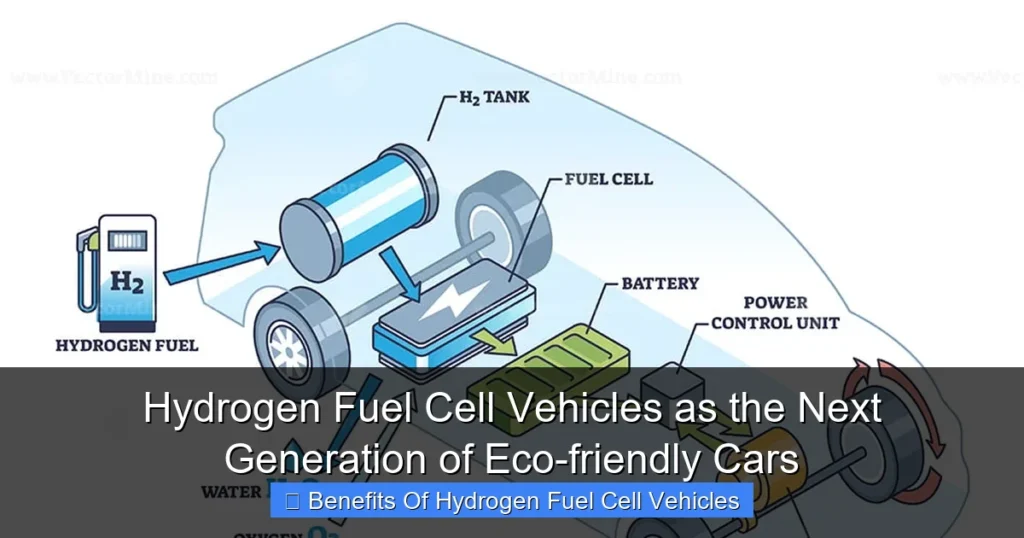
At its core, an FCEV uses a fuel cell stack to combine hydrogen gas (H₂) with oxygen (O₂) from the air, producing electricity, heat, and water vapor as byproducts. Here’s the breakdown:
1. Hydrogen Supply: Stored in high-pressure tanks (700 bar), hydrogen flows into the fuel cell.
2. Electricity Generation: Electrodes split hydrogen into protons and electrons. Protons pass through a membrane, while electrons create current.
3. Motor Power: This electricity drives the vehicle’s electric motor, with excess energy stored in batteries for acceleration.
4. Exhaust: Only water (H₂O) exits the tailpipe—no pollution!
###
Fuel Cells vs. Batteries
Unlike EVs that rely on lithium-ion batteries, FCEVs don’t need massive storage units. Instead, they generate electricity on-demand, reducing weight and range anxiety. For example:
– Toyota Mirai: Offers 402-mile range (EPA-estimated) and refuels in 5 minutes.
– Hyundai Nexo: Combines fuel cells with a small battery for instant torque.
## Benefits Over Traditional Cars
###
1. Zero Tailpipe Emissions
FCEVs produce only water vapor, unlike gasoline or diesel engines. Even if hydrogen is produced from fossil fuels (via steam methane reforming), the combustion phase is emission-free. Over time, green hydrogen (from renewables) will eliminate lifecycle emissions entirely.
###
2. Fast Refueling = No Charging Anxiety
While EV charging times vary (30 mins for Level 2, 8+ hours for home chargers), FCEVs match gasoline cars:
– Average refuel time: 3–5 minutes.
– No “range anxiety”: With stations planned in urban hubs and highways, drivers won’t worry about dead batteries.
###
3. Longer Range for Adventurers
Most FCEVs exceed 300 miles per fill—more than most EVs today. The Nissan X-Technology concept, for instance, targets 500+ miles, perfect for cross-country trips.
###
4. Energy Efficiency & Durability
Fuel cells convert ~60% of hydrogen’s energy into motion, comparable to internal combustion engines (ICE). Modern fuel cells last 2,000+ hours (equivalent to 10 years of daily use), far exceeding early iterations.
## Real-World Examples & Adoption Trends
###
Leading Models
– Toyota Mirai: First mass-produced FCEV since 2014, now sold in 20+ countries.
– Hyundai Nexo: SUV with 499-mile combined range (WLTP) and advanced safety tech.
– Honda Clarity Fuel Cell: Budget-friendly option with 366-mile EPA range.
###
Growing Infrastructure
As of 2023, over 1,100 hydrogen stations exist worldwide, with 400+ in Japan alone. The U.S. has 47 stations, mostly clustered in California, where incentives like tax credits ($4,500 rebate) accelerate adoption.
## Challenges & Solutions
###
1. High Production Costs
Fuel cells cost $100–$200/kW (down from $1,000+/kW in 2015). Scaling up manufacturing and recycling platinum catalysts (a key material) will cut prices further.
###
2. Hydrogen Supply Chain
Green hydrogen (made via electrolysis powered by renewables) is still expensive ($4–6/kg vs. $1.50/kg for gray hydrogen). Projects like Australia’s Asian Renewable Energy Hub aim to change that.
###
3. Safety Concerns
Hydrogen is flammable, but modern FCEVs use ultra-strong tanks (tested to 1,000 psi) and leak-detection systems. Regulations (ISO/TS 20377) ensure safety standards are met.
## The Future: Policy & Innovation
###
Government Push
– California: Mandates 200+ hydrogen stations by 2025 under its ZEV program.
– EU: Targets 40 million FCEVs by 2050, with grants for infrastructure.
– China: Plans 1,000 stations by 2025 to support its EV transition.
###
Technological Breakthroughs
Researchers are exploring:
– Solid oxide fuel cells (SOFCs): Higher efficiency at lower temps.
– Metal hydrides: Safer hydrogen storage alternatives.
– On-site electrolysis: Factories could produce hydrogen directly from renewable energy.
## Practical Tips for Buyers
1. Check Incentives: Look for local rebates (e.g., Canada’s $5,000 credit).
2. Plan Routes: Use apps like [H2stations.eu](https://www.h2stations.eu) to locate stations.
3. Compare Models: Focus on range, fuel economy (e.g., Nexo gets 67 MPGe), and warranty terms.
4. Maintenance: Fewer moving parts mean lower upkeep costs vs. ICE vehicles.
## Conclusion: A Greener Tomorrow
Hydrogen fuel cell vehicles aren’t just a fleeting trend—they’re a scalable, zero-emission solution for industries and consumers who demand both performance and planet-friendliness. While challenges like infrastructure and cost persist, rapid innovation and policy support suggest FCEVs will play a pivotal role in achieving net-zero goals. Whether you’re an environmentalist, road trip enthusiast, or tech-savvy driver, FCEVs offer a thrilling glimpse into the future of mobility.
—
###
QUICK Q&A
Question 1?
Do FCEVs require special maintenance? Unlike ICE vehicles, FCEVs have fewer moving parts, reducing maintenance needs. Regular checks focus on hydrogen system integrity and battery health.
Question 2?
Is hydrogen fuel safe? Yes! Modern FCEVs use pressurized tanks designed to withstand extreme conditions, and hydrogen leaks dissipate quickly due to low density.
Question 3?
How much does fueling cost? In Japan, a full tank averages ¥5,000 (~$35), while U.S. prices range from $8–$15 per kg (varies by region).
Question 4?
Can I retrofit an existing car to run on hydrogen? Most FCEVs are purpose-built; however, some manufacturers (like BMW) offer hydrogen-powered versions of popular models.
Question 5?
What’s the lifespan of a fuel cell? With proper care, fuel cells last 2,000–5,000 hours, equivalent to 10–20 years of daily driving.
###
FAQs
Are hydrogen fuel cells better than batteries?
FCEVs excel in fast refueling and long-range, while batteries dominate in cost and grid integration. Both technologies serve different needs.
Where can I buy a hydrogen car?
Major automakers (Toyota, Hyundai, Honda) sell FCEVs in select markets. Check local dealerships or online platforms like Tesla (for future plans).
How common are hydrogen stations?
Over 1,100 stations globally, concentrated in Japan, California, and Europe. Expansion is ongoing, especially in Asia.
Is hydrogen production polluting?
Gray hydrogen (from natural gas) emits CO2, but green hydrogen (renewable-powered electrolysis) is emission-free. Investments in green H₂ are growing.
Will FCEVs replace EVs?
Unlikely outright. They’ll coexist, with FCEVs suited for heavy-duty transport (trucks, buses) and EVs for short-range urban use.
What’s the biggest hurdle for FCEVs?
Infrastructure development. Building thousands of stations and lowering hydrogen production costs are critical milestones.
Quick Answers to Common Questions
What is Hydrogen fuel cell vehicles as the next generation of eco-friendly cars?
Hydrogen fuel cell vehicles as the next generation of eco-friendly cars refers to essential knowledge and techniques.
Frequently Asked Questions
What is Hydrogen fuel cell vehicles as the next generation of eco-friendly cars?
Hydrogen fuel cell vehicles as the next generation of eco-friendly cars is an important topic with many practical applications.