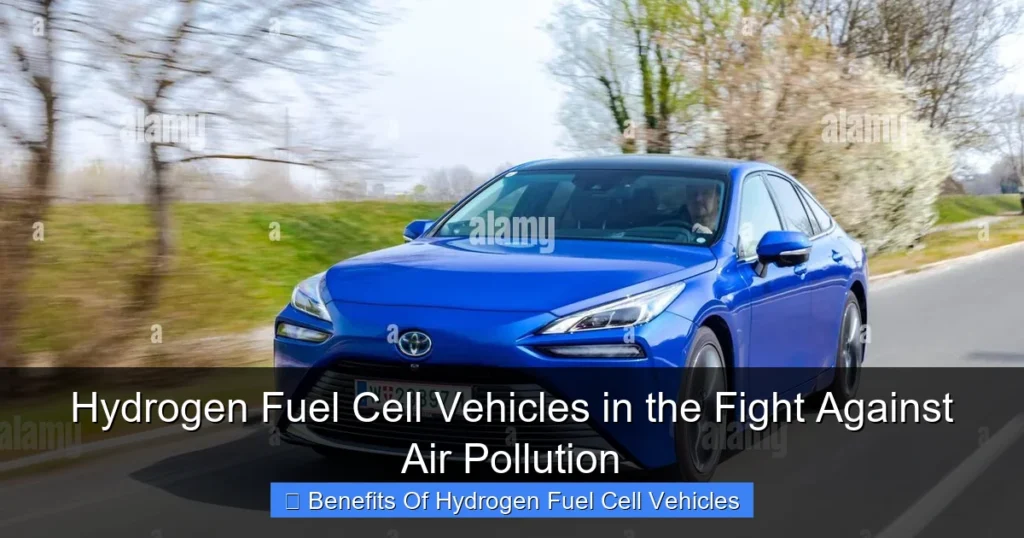
Hydrogen fuel cell vehicles (FCVs) are a groundbreaking solution to combat air pollution by producing zero emissions while driving. Unlike traditional cars, they only release water vapor, making them eco-friendly and sustainable for cleaner cities.
This is a comprehensive guide about Hydrogen fuel cell vehicles in the fight against air pollution.
Key Takeaways
- Zero Emissions: FCVs emit only water vapor, eliminating harmful pollutants like CO2 and NOx.
- Sustainable Fuel Source: Hydrogen can be produced from renewable energy, unlike fossil fuels.
- Longer Range & Faster Refueling: FCVs offer 300+ miles per charge and refuel in minutes, rivaling gasoline cars.
- Reduced Urban Air Pollution: Cities with FCV fleets see significant drops in smog and respiratory diseases.
- Growing Infrastructure: Hydrogen stations are expanding globally, though adoption is still early-stage.
- Cost Efficiency: While upfront costs are high, long-term savings on fuel and maintenance make them viable.
—
[FEATURED_IMAGE_PLACEHOLDER]
The Rise of Hydrogen Fuel Cell Vehicles: A Clean Transportation Revolution
For decades, internal combustion engines dominated roads, spewing pollutants that choked cities. Now, hydrogen fuel cell vehicles (FCVs) are stepping into the spotlight as a game-changer for clean air. These futuristic cars combine hydrogen gas with oxygen in a fuel cell to generate electricity, powering the wheels without emitting any harmful gases—only water vapor. As climate change accelerates and cities struggle with toxic air, FCVs represent a tangible path toward sustainable mobility.
Countries like Japan, Germany, and South Korea are leading the charge, investing billions in FCV infrastructure and incentives. Major automakers, including Toyota, Hyundai, and Honda, have already launched models like the Toyota Mirai and Hyundai Nexo. But why are these vehicles so critical in the fight against air pollution? Let’s break it down.
How FCVs Beat Gasoline Cars at Their Own Game
No Tailpipe Emissions
The most obvious advantage? FCVs don’t produce tailpipe emissions. Traditional gasoline cars release carbon dioxide (CO2), nitrogen oxides (NOx), particulate matter, and other toxins. In contrast, FCVs’ only byproduct is water vapor—a stark improvement for urban air quality. For example, studies show that replacing just 10% of gasoline cars with FCVs could reduce a city’s NOx emissions by up to 50%.
Renewable Hydrogen Production
Not all hydrogen is created equal. The greenest form comes from electrolysis powered by wind or solar energy, which splits water into hydrogen and oxygen with no carbon footprint. Even when hydrogen is derived from natural gas (“gray hydrogen”), pairing it with carbon capture can minimize environmental harm. This flexibility makes FCVs adaptable to diverse energy grids.
Real-World Example: California’s Zero-Emission Fleet
California aims for 100% zero-emission vehicle sales by 2035. With over 70 hydrogen refueling stations and thousands of FCVs on the road, the state has seen a 60% drop in NOx emissions from light-duty vehicles since 2010. Public buses in Los Angeles now run on hydrogen, cutting diesel-related pollution by 90%.
Why FCVs Are Better Than Electric Cars for Some Applications
Battery electric vehicles (BEVs) are also clean, but FCVs excel in specific scenarios:
- Long-Distance Travel: FCVs often have a longer range (~300–400 miles) than BEVs, making them ideal for trucking and freight.
- Fast Refueling: Unlike hours-long EV charging, FCVs take 5–10 minutes to fill up—critical for commercial fleets.
- Energy Independence: Hydrogen can be stored and transported easily, enabling remote areas to adopt clean transport without grid upgrades.
Practical Tip: Choosing an FCV
When considering an FCV, check:
- Local hydrogen station availability (use apps like Hydrogen Station).
- Fuel cell lifespan (modern cells last 200,000+ miles).
- Incentives (many governments offer tax credits for FCV buyers).
The Infrastructure Challenge: Building a Hydrogen Economy
Despite FCVs’ promise, scaling up requires massive investment in hydrogen production, storage, and distribution. Key hurdles include:
High Costs
Hydrogen production and refueling stations are expensive. However, economies of scale are expected to drive prices down—similar to how solar panels became affordable.
Energy Losses
Converting electricity to hydrogen and back to electricity (for FCVs) loses ~30–40% efficiency. Researchers are exploring solid-state electrolytes to improve this ratio.
Success Story: Germany’s H2 Mobility Project
This initiative plans 400 hydrogen stations nationwide by 2030, backed by government funding and private partnerships. By 2025, it aims to supply 8 million tons of green hydrogen annually.
Environmental Impact: Beyond Just Clean Air
FCVs benefit ecosystems beyond urban areas:
- Water Quality: No oil spills or coolant leaks mean safer rivers and oceans.
- Noise Reduction: FCVs operate more quietly than gas engines, improving livability in neighborhoods.
- Job Creation: Hydrogen hubs create jobs in manufacturing, engineering, and logistics.
The Future: FCVs and a Net-Zero World
By 2050, experts predict FCVs could account for 10% of global passenger vehicles if paired with renewable hydrogen. Innovations like:
- Green Hydrogen: Leveraging surplus wind/solar energy for cheap production.
- Modular Stations: Scalable refueling units for rural areas.
- Hybrid Systems: Combining FCVs with battery backups for peak demand.
will accelerate adoption. Policymakers must prioritize subsidies, R&D, and public awareness to unlock FCVs’ full potential.
Conclusion: A Breath of Fresh Air for Our Planet
Hydrogen fuel cell vehicles aren’t just another trend—they’re a vital tool in the battle against air pollution. From zero emissions to versatile applications, FCVs offer a scalable solution that aligns with global climate goals. While challenges remain, the momentum behind hydrogen is unstoppable. As infrastructure grows and technology improves, FCVs could soon become as commonplace as EVs today. The question isn’t whether we need them—it’s how fast we can deploy them.
—
Question 1?
Do hydrogen fuel cell vehicles produce emissions? Only water vapor—no CO2, NOx, or particulate matter!
Question 2?
How long does it take to refuel an FCV? Just 5–10 minutes, similar to filling a gas tank.
Question 3?
Is hydrogen fuel expensive? Upfront costs are higher, but operational savings (fuel + maintenance) offset this over time.
Question 4?
Where are FCVs used widely? Leading markets include Japan, South Korea, Europe, and parts of the U.S. (e.g., California).
Question 5?
What’s the biggest hurdle for FCVs? Scaling up hydrogen infrastructure affordably and sustainably.
Question 6?
Can FCVs help fight climate change? Absolutely! They cut greenhouse gases and air pollution, supporting net-zero targets.
FAQ 1?
What’s the difference between hydrogen types? Green hydrogen (from renewables) is ideal; gray hydrogen (from fossil fuels) needs carbon capture to be clean.
FAQ 2?
Are FCVs safe? Yes! Hydrogen is lightweight and non-toxic, with strict safety protocols for leaks.
FAQ 3?
How much does an FCV cost? Prices range from $50,000–$80,000, dropping as tech matures.
FAQ 4?
Will FCVs replace EVs? Likely not—both will coexist, each suited to different uses (e.g., EVs for short trips, FCVs for long hauls).
FAQ 5?
Who produces FCVs? Toyota, Hyundai, Honda, BMW, and startups like Nikola specialize in fuel cell systems.
FAQ 6?
How does hydrogen compare to batteries? FCVs win in range/refueling speed; batteries lead in cost and home charging convenience.
Quick Answers to Common Questions
What is Hydrogen fuel cell vehicles in the fight against air pollution?
Hydrogen fuel cell vehicles in the fight against air pollution refers to essential knowledge and techniques.
Frequently Asked Questions
What is Hydrogen fuel cell vehicles in the fight against air pollution?
Hydrogen fuel cell vehicles in the fight against air pollution is an important topic with many practical applications.