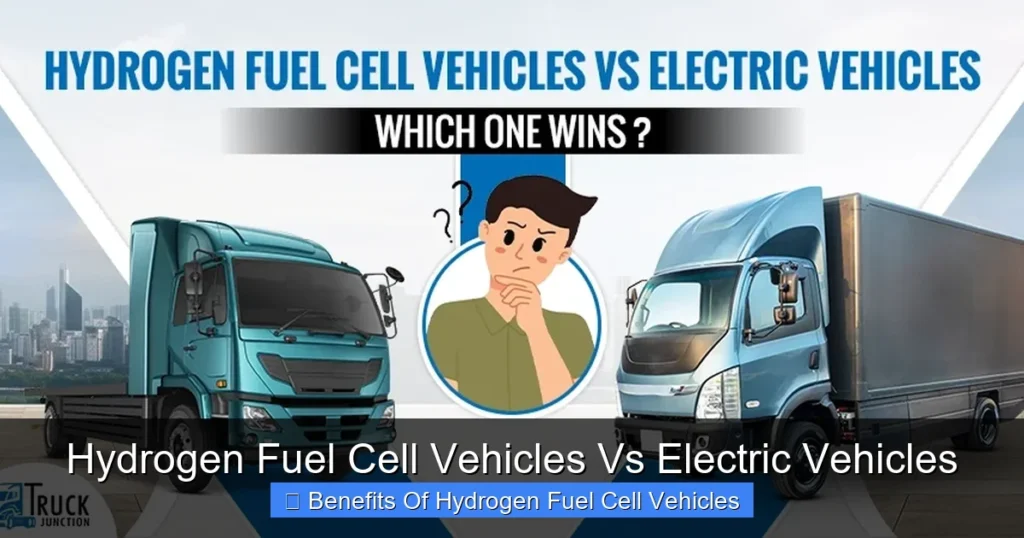
Hydrogen fuel cell vehicles (FCVs) and electric vehicles (EVs) are clean alternatives to gasoline cars but differ in key ways: FCVs refuel quickly like gas cars but face limited infrastructure, while EVs rely on charging networks with growing adoption. Both have unique benefits—FCVs excel in speed and range, while EVs win in cost and scalability.
This is a comprehensive guide about Hydrogen fuel cell vehicles vs electric vehicles.
Key Takeaways
- Fueling Time: FCVs refuel in minutes; EVs take hours unless using fast chargers.
- Infrastructure: EV charging stations outnumber hydrogen stations globally.
- Efficiency: EVs convert more energy into motion than FCVs, which lose energy during hydrogen production.
- Cost: EVs are cheaper upfront; FCVs may save money long-term if hydrogen prices drop.
- Pollution: Both produce zero emissions at the tailpipe, but FCVs’ lifecycle depends on how hydrogen is made.
- Range: FCVs often have longer ranges than most EVs, ideal for heavy-duty use.
—
[FEATURED_IMAGE_PLACEHOLDER]
# Hydrogen Fuel Cell Vehicles Vs Electric Vehicles
## Introduction
The race toward sustainable transportation is heating up, with two leading contenders dominating headlines: hydrogen fuel cell vehicles (FCVs) and electric vehicles (EVs). While both promise a cleaner future than fossil fuels, they work in fundamentally different ways. FCVs use hydrogen gas stored in tanks, which reacts with oxygen in a fuel cell to generate electricity. EVs, meanwhile, rely on batteries charged from the grid or renewable sources.
Choosing between them isn’t just about technology—it’s about practicality, cost, and where you live. This guide breaks down everything you need to know to decide which fits your lifestyle. Whether you’re a daily commuter or an adventurer needing long-range travel, we’ll help you weigh the pros and cons.
—
## 1. How Do They Work?
###
Hydrogen Fuel Cell Vehicles
FCVs combine hydrogen (stored as high-pressure gas) with oxygen from the air in a fuel cell stack. This reaction produces electricity, water vapor, and heat—no CO₂ emitted! The electricity powers an electric motor, similar to an EV but without a battery pack. Examples include Toyota Mirai and Hyundai Nexo.
Key Process:
- Hydrogen enters the fuel cell stack.
- Reacts with oxygen to create electricity + water.
- Electricity drives wheels; excess energy can recharge the small auxiliary battery.
###
Electric Vehicles
EVs store energy in large lithium-ion batteries, which power an electric motor via onboard electronics. Charging can happen overnight at home or faster at public stations. Tesla Model 3 and Nissan Leaf are popular choices.
Key Process:
- Battery stores electricity from grid/renewables.
- Motor converts electricity into mechanical energy.
- Battery recharges when plugged in.
—
## 2. Speed & Refueling/Charging
###
FCVs: Fast Refueling
– Refuel time: Like gasoline cars (~3–5 minutes).
– Limitation: Few hydrogen stations exist (only ~700 globally, per IEA).
– Example: Toyota Mirai refuels in under 5 minutes for a 400-mile range.
###
EVs: Growing Charging Networks
– Level 2 home charger: 6–8 hours for full charge.
– DC fast chargers: 20–30 minutes for 80% charge (e.g., Tesla Superchargers).
– Challenges: Range anxiety persists in areas with sparse chargers.
Pro Tip: Plan routes with apps like PlugShare (EVs) or Hype Hydrogen (FCVs) to find stations.
—
## 3. Environmental Impact
Both technologies cut tailpipe emissions, but their *lifecycle* differs:
###
FCVs
– Pros: Only water vapor exits the tailpipe.
– Cons: Most hydrogen today comes from natural gas reforming (“gray hydrogen”), which emits CO₂. “Green hydrogen” (from renewables) is costly but growing.
###
EVs
– Pros: If powered by renewables, EVs have near-zero emissions.
– Cons: Battery production requires mining lithium/cobalt, raising ethical concerns. Recycling programs are improving.
Statistic: A 2023 study found EVs emit less CO₂ over their lifetime even with a coal-heavy grid.
—
## 4. Cost & Savings
###
Upfront Costs
– EVs: Cheaper ($30k–$50k for models like Chevy Bolt).
– FCVs: More expensive ($50k–$70k due to fuel cells).
###
Operating Costs
– Fuel: Hydrogen costs $16–$20/kg vs. $0.05/kWh for electricity (varies regionally).
– Maintenance: Fewer moving parts = lower maintenance for both, but EVs win here.
Savings Example: An EV owner might save $1,200/year compared to a gas car. FCVs could save if hydrogen prices drop (projected to fall below $4/kg by 2030).
—
## 5. Range & Practical Use Cases
###
FCVs: Long-Range Champions
– Range: 300–400 miles (Toyota Mirai, Hyundai Nexo).
– Best For: Trucks, buses, and fleets needing quick refueling (e.g., Kenworth T680 hydrogen truck).
###
EVs: Versatile Everyday Drivers
– Range: 200–400 miles (Tesla Model S Plaid, Ford Mustang Mach-E).
– Best For: Urban commuting and highway trips with access to chargers.
Tip: If you frequently cross state lines, check [Hydrogen Highway](https://www.hydrogenhighway.ca/) (Canada) or [H2USA](https://www.h2usa.gov/) (US) for station locations.
—
## 6. Future Outlook
###
FCVs
– Growth: Japan and South Korea aim for 10,000 FCVs by 2030.
– Barriers: High infrastructure costs and hydrogen production challenges.
###
EVs
– Adoption: Over 14 million EVs sold globally in 2023.
– Innovation: Solid-state batteries (e.g., QuantumScape) could double range by 2025.
Wild Card: Hydrogen may thrive in sectors where charging is impractical (e.g., aviation, shipping).
—
## Conclusion
So, which is better? It depends on your priorities:
– Choose FCVs if you value fast refueling, long range, and plan to drive in regions with robust hydrogen infrastructure.
– Pick EVs if cost, charging accessibility, and gradual adoption matter more.
Both technologies will evolve, and hybrids (like hydrogen-powered trucks) could bridge gaps in the coming decade. For now, stay informed—your choice today shapes tomorrow’s green mobility landscape.
—
###
Quick Q&A
Question 1?
Do FCVs pollute? No, only water vapor exits the tailpipe, but “green hydrogen” must be used for full sustainability.
Question 2?
Can I charge my EV at home? Yes, Level 2 chargers are common in many homes (240V outlets).
Question 3?
Are EVs quieter? Yes, electric motors operate silently, reducing noise pollution.
Question 4?
How far do FCVs go? Most offer 300–400 miles on a tank, rivaling gas cars.
Question 5?
Which is cheaper to maintain? EVs typically win due to fewer mechanical parts.
###
FAQs
What’s the difference between hydrogen types?
Gray hydrogen (from natural gas) dominates but emits CO₂. Green hydrogen (from electrolysis/wind/solar) is cleaner but expensive.
Can EVs use solar panels?
Yes! Home solar + battery storage can power EVs sustainably, reducing grid dependence.
Do FCVs need special maintenance?
No, but fuel cells require regular inspection (every 10,000–15,000 miles).
Will hydrogen replace batteries?
Unlikely for personal cars, but hydrogen excels in heavy transport (trucks, ships).
Where can I test-drive an FCV?
Dealerships like Toyota Mirai offer demos. Check local automaker websites for availability.
Quick Answers to Common Questions
What is Hydrogen fuel cell vehicles vs electric vehicles?
Hydrogen fuel cell vehicles vs electric vehicles refers to essential knowledge and techniques.
Frequently Asked Questions
What is Hydrogen fuel cell vehicles vs electric vehicles?
Hydrogen fuel cell vehicles vs electric vehicles is an important topic with many practical applications.